






Washington, D.C. | July 19, 2026
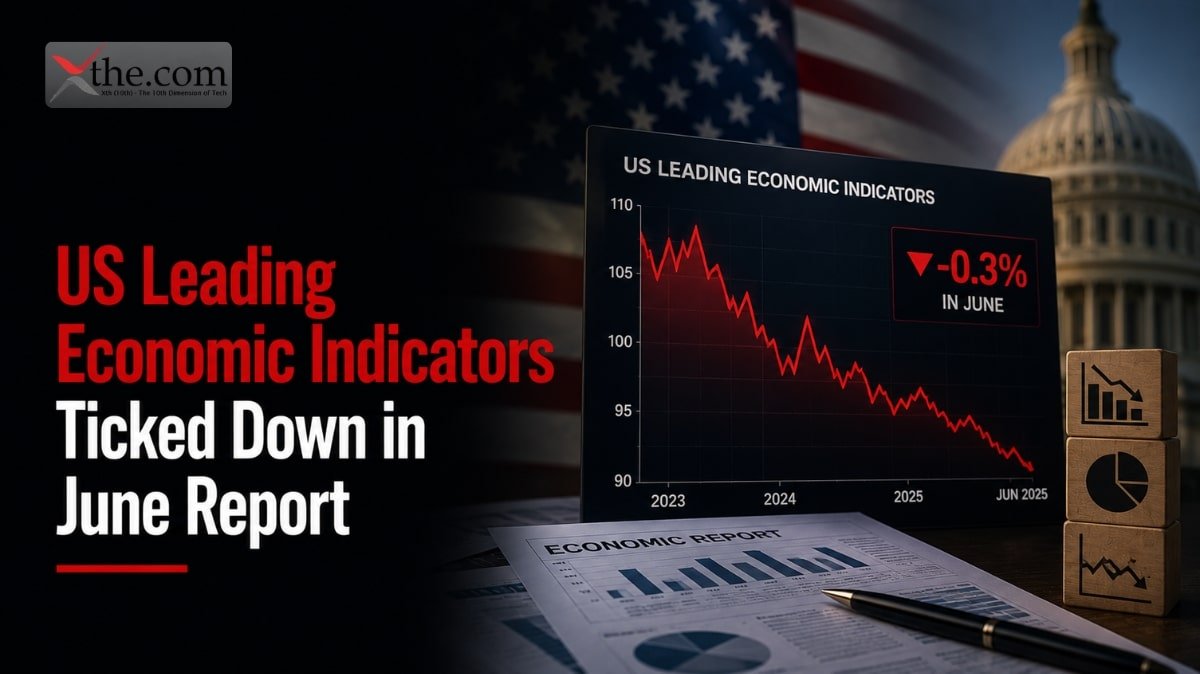
A 0.2% drop may appear minor. But when it comes from an index meant to warn the country months before a recession hits, a small number carries outsized weight. That’s exactly what happened this week, as US leading indicators ticked down in the latest June economic indicators report, erasing the modest gains from April and May and bringing back a debate many economists thought was over.
The leading economic index 2026 came in at 99.1, according to data from the Conference Board leading indicators data released Monday. This is just one data point, not a trend. Still, if no one looks at what’s behind the number, a single data point can turn into a trend.
What the June Report Actually Showed
The Conference Board’s Leading Economic Index (LEI) dropped 0.2% in June, ending up at 99.1 on a scale where 100 equals the 2016 level. This breaks a streak of two small monthly gains: 0.1% in May and 0.2% in April. For the first half of 2026, the index is down only 0.3% overall, which is much less than the 1.1% drop seen in the second half of 2025.
Justyna Zabinska-La Monica, a senior manager at the Conference Board, said the June result partly reversed the gains from earlier in the spring. Financial factors, especially the yield spread, helped, but they couldn’t make up for weaker consumer sentiment and a broad drop in building permits.
Building Permits and Consumer Anticipations Drag
Most of the decline came from fewer building permits for private housing. Permits dropped in most housing types in June, continuing a weak trend since late spring. Household expectations, another forward-looking part of the LEI, also fell. These two areas made up most of the month’s drop, and both are important because they usually change before actual spending and construction do.
This difference is important. When retail sales fall, it shows what has already happened. But when consumer outlook drops, it shows what households think will happen next. That’s why this measure matters in an index meant to predict changes, not just confirm them.
Financial Components Provide a Cushion
Not all parts of the index fell. The yield spread, which is the difference between short- and long-term interest rates, gave the biggest boost to the index in June. Other financial factors also helped a little. This means financial markets are not expecting a downturn soon. Because financial parts are holding steady while real economy parts weaken, most economists see June’s result as a warning to watch, not a reason to panic.
Why Economists Aren’t Sounding the Alarm Yet
This is the part of the story that gets lost in a single headline number. The US economy signal June sent through the LEI is genuinely mixed, not uniformly negative. The Conference Board’s Coincident Economic Index, which tracks current rather than future conditions, rose 0.2% in June, equaling its May gain. All four of its underlying components, payroll employment, personal income excluding transfer payments, manufacturing and trade sales, and industrial production, improved. Those four measures are the same ones economists lean on to identify actual recessions, and right now none of them is flashing red.
What’s even more interesting is that the Conference Board didn’t lower its growth forecast after the weak LEI. Instead, it raised its 2026 GDP growth estimate from 1.8% to 1.9%. It’s unusual to see a weaker leading index at the same time as a stronger growth forecast. The Board believes that business investment in artificial intelligence is helping make up for slower consumer spending.
The AI Investment Buffer
Companies are spending heavily on AI infrastructure, including data centers, special chips, and business software. This investment has become a key support for current economic growth. The Conference Board pointed to this spending, along with better inflation numbers, as reasons the economy is still moving forward even as consumer-focused areas slow down. Whether this support lasts depends on how long companies keep investing in AI, which is something a monthly index can’t predict by itself.
Reading the Index as a Macroeconomic Warning Sign
Any single-month decline in the LEI deserves scrutiny rather than an alarm. The index has a track record of anticipating slowdowns three to nine months ahead, but it has also produced false signals before, particularly when financial conditions are easing at the same time real-economy components soften. That’s roughly what the setup investors are looking at now, and it’s why most analysts are describing June’s reading as a macroeconomic warning sign worth monitoring rather than a definitive turning point.
The “US leading indicators ticked down in June” headline will likely dominate coverage this week, but the more useful exercise is component-level. Watch building permits for a second consecutive monthly decline, and watch whether consumer outlook stabilizes or keeps drifting lower. A repeat of either pattern in July would hold more significance than June’s number does on its own.
What to Watch in the Next Release
The Conference Board’s next scheduled release will show whether June was a blip tied to recent AI-trade volatility in equity markets, or the start of something more durable. Economists will be parsing the “Leading economic index report signal 2026” to confirm on two fronts: a sustained pickup in permits and any stabilization in household sentiment surveys, which have been choppy since the spring.
Right now, the data suggests it’s best to wait and see instead of reacting defensively. The coincident index is growing, GDP forecasts are going up, and the parts pulling down the LEI—permits and sentiment—are the types that can bounce back quickly if mortgage rates drop or consumer confidence improves. The next two reports will give a clearer picture than this one. For now, the leading index has done its job by raising a question that other data hasn’t answered yet.
Source: U.S. Leading Economic Index Falls 0.2% in June, Missing Forecasts; AI Investment Provides Support








