






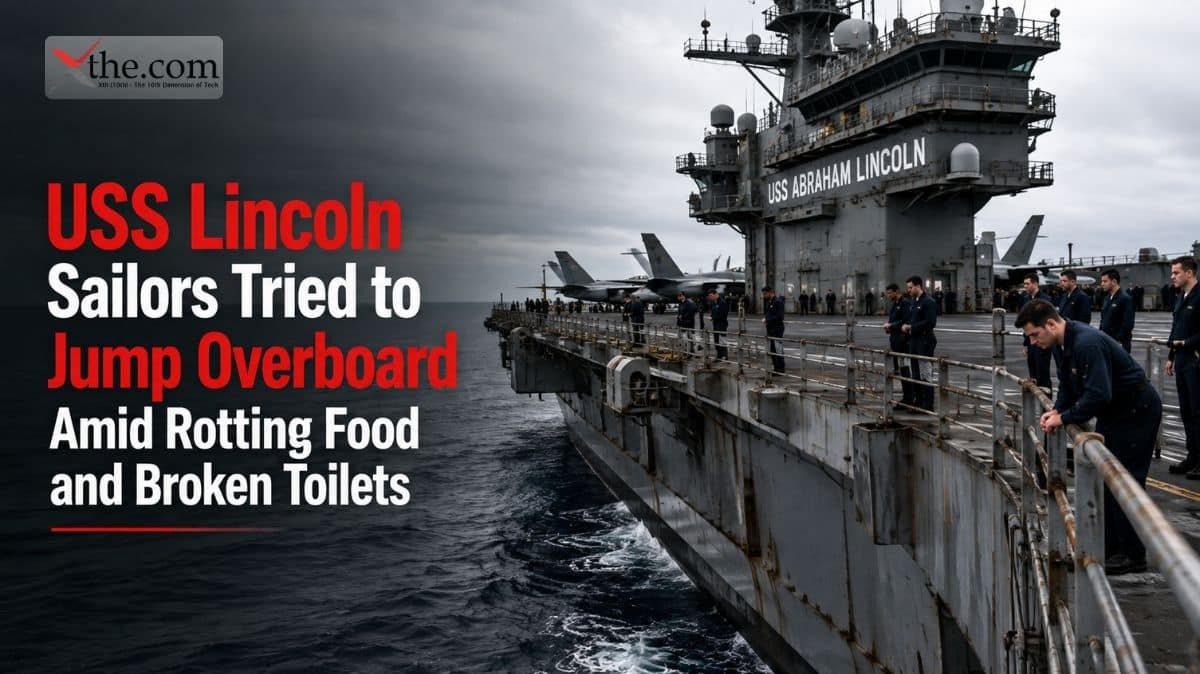
The Navy is scrambling to explain how one of America’s most powerful warships became a floating nightmare.
Sailors stationed aboard the USS Abraham Lincoln attempted to jump overboard as conditions on the aircraft carrier deteriorated into what crew members describe as a full-blown mental health crisis, according to reports from the Navy Times and Stars and Stripes. The ship has now been at sea for more than 260 days — one of the longest carrier deployments in modern U.S. naval history — and the toll is showing.
“We Were Living in Filth”
Multiple sailors told military newspapers that basic necessities had vanished. Food rations were running so low that meals were being skipped. Plumbing backups left toilets unusable across entire sections of the ship. Some crew members said they ran out of toothpaste and soap weeks ago.
“It wasn’t just uncomfortable — it was degrading,” one sailor told the Navy Times, speaking on condition of anonymity because they were not authorized to talk to the press. “You can’t tell us we’re fighting for America when we can’t even wash our hands.”
The reports of sailors trying to jump overboard surfaced late last week, sending shockwaves through military families and sparking urgent questions on Capitol Hill. While the Navy has not confirmed the exact number of attempted jumps, the reports suggest multiple incidents tied directly to the psychological strain of the extended deployment.
“A Deployment That Wouldn’t End”
The Lincoln was rushed to the Middle East as tensions with Iran exploded into open conflict earlier this year. What was supposed to be a standard rotation turned into an open-ended mission as the war dragged on through spring and summer. By August, the carrier had spent over eight months at sea — far beyond the typical six-month deployment cycle the Navy tries to maintain.
Defense Secretary Pete Hegseth publicly pushed back against the reports, calling the sailors’ accounts into question. But the Pentagon’s own actions told a different story: officials announced that the USS George Washington would be dispatched to replace the Lincoln, effectively pulling the Navy’s last remaining aircraft carrier from the Pacific.
“Trump: Not Nearly Long Enough”
When asked by reporters whether the deployment had stretched too far, President Donald Trump dismissed the concerns outright.
“Not nearly long enough,” Trump said Friday at Joint Base Andrews. “That ship is moving right now, or very shortly, and it’s being replaced with another very similar ship.”
The president’s comments came just days after he ordered the Pentagon to slash joint military exercises with South Korea, citing Seoul’s refusal to join the U.S.-led war against Iran. The move raised eyebrows among defense analysts who worry the administration is stretching American military resources paper-thin across multiple theaters.
“Families Sound the Alarm”
On social media and in calls to congressional offices, families of Lincoln crew members have been sounding the alarm for weeks. Facebook groups dedicated to the carrier’s families filled with posts about unanswered emails, dropped video calls, and cryptic messages hinting at worsening morale.
“My husband told me two weeks ago that people were snapping,” said Jennifer M., whose spouse works in the Lincoln’s engineering department. “He didn’t say jumpers — he said ‘people are losing it.’ Now I know what he meant.”
Mental health advocates say the Lincoln crisis highlights a broader problem in the armed forces: the stigma around seeking help is still crushing, especially in deployed environments where a sailor asking for counseling can be seen as abandoning their post.
“What’s Next”
The George Washington is expected to arrive in the region within days, allowing the Lincoln to finally begin its journey home. But for many aboard the beleaguered carrier, the damage is already done.
Navy officials say a formal investigation into the living conditions and mental health support on the Lincoln is underway. Congressional Democrats have already called for hearings, with some lawmakers demanding that Hegseth testify about why warnings were ignored.
For now, the Lincoln sails on — battered, exhausted, and carrying sailors who just want to see land again.








