





Montgomery County, Missouri
The phrase ‘Amazon Data Center Missouri‘ marks one of the company’s biggest infrastructure decisions in recent years. Investing $10 billion in a county with fewer than 12,000 people, about 90 miles west of St. Louis, is far from ordinary. This move shows where the backbone of America’s digital future is headed.
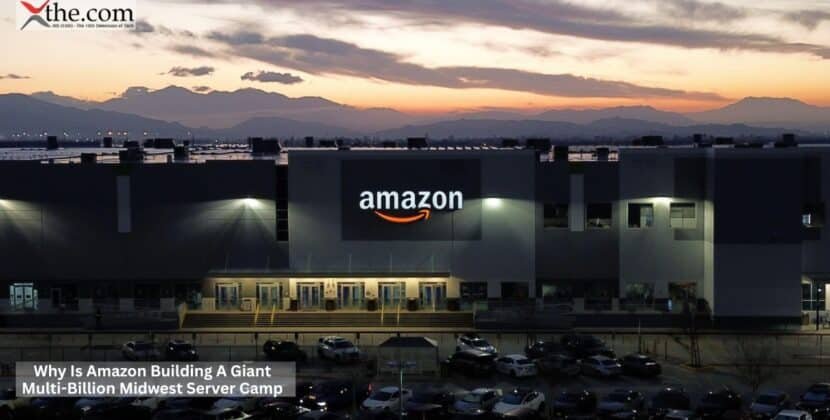
Montgomery City, Missouri, is home to about 2,800 people. The town hosts a county fair and has a Norfolk Southern rail crossing on Ellis Road. Now, it is also the site of what will become one of the country’s most secure enterprise cloud centers. Construction on the 1,000-acre campus near New Florence started in April, and the project’s goals go far beyond just building server rooms and laying fiber optic cables.
The Scale That Changes a County
Amazon plans to spend $10 billion building a data center campus in Montgomery County. State leaders say this project will create 400 full-time jobs and boost the local economy for years to come. To put it in perspective, this investment is bigger than the yearly GDP of many American counties. Amazon expects to build at least four data center buildings, possibly up to 17, with a minimum investment of $8.5 billion.
The new campus will host thousands of servers, handling tasks such as hospital health records, utility billing, financial transactions, and federal cloud contracts. When people in Montgomery County check their bank accounts or when a rural emergency room accesses a patient file, those requests will often go through infrastructure like the one Amazon is building here.
That’s not abstract. It’s the precise reason independent data isolation keeping enterprise server environments logically and physically separated from shared public networks matters as a design principle for a campus of this size.
How the Security Architecture Actually Works
The Amazon Data Center, Missouri, Montgomery County campus safety framework starts with physical perimeter control and extends inward through layered network architecture. Amazon works closely with neighboring communities to make sure any light on the campus does not leak out a detail that sounds minor until you understand that light discipline is standard practice at high-security server facilities where visible signatures can reveal working conditions.
At the infrastructure level, independent data isolation means the campus keeps server environments separate from public networks. Sensitive data, such as government contracts or financial services, runs in storage loops that keep traffic paths separate. If there is a breach in one area, it does not spread to others. This setup is a key reason why big companies and federal agencies pick AWS over regular commercial hosting.
Amazon is spending over $5 million to drill wells that go 600 feet deeper than local residential wells. The water system they use is also twice as efficient as the average data center. By drawing water from a deeper, separate aquifer, the campus avoids competing with local water supplies and reduces the risk of cooling system problems during emergencies.
The Carbon-Free Energy Grid and What It Protects Against
Power is the biggest risk for any data center. Problems like blackouts, unstable grids, or fossil fuel shortages can all cause failures not from hackers, but from the physical infrastructure itself. In Missouri, Amazon’s answer is to use a carbon-free energy grid.
Amazon has invested in a carbon-free energy project in Missouri that generates 138 megawatts of power enough for over 28,000 homes. This extra capacity helps keep energy affordable in the region and acts as a buffer for the campus. During periods of high demand, such as summer heat waves or winter storms, the campus’s dedicated carbon-free energy grid helps keep it running when the regular grid might fail.
Amazon has partnered with Ameren Missouri to ensure the costs of the new campus are not passed on to other customers. This setup means the campus uses and contributes to the regional power supply without raising rates for local residents. It directly addresses concerns that a large facility could disrupt the local electricity market.
The Water System: A Closed Loop in a Dry County
People have worried about water shortages when data centers are built in the American West, and residents in Montgomery County had similar concerns. These data centers will use outside air for cooling about 90% of the time and water for less than 7% of the year. At full capacity, Amazon says the campus will use less than 0.1% of the aquifer’s yearly recharge from rainfall.
The cooling system here mainly uses what’s called free-air cooling. It brings in outside air, passes it through heat exchangers by the servers, and then vents it out, using no water. The site will also have a rainwater harvesting system to collect and reuse rain for the few times each year when extra liquid cooling is needed. This closed-loop system allows the campus to use rainwater instead of constantly drawing on city water supplies.
In addition to building the facility, the project includes upgrades to roads and water systems, such as a new bridge over the Norfolk Southern Railway and a water system that Amazon will transfer to the local utility after construction. Donating a complete water utility network to Montgomery County Public Water Supply District No. 1 for free is more than merely a goodwill gesture. It increases the county’s water distribution capacity in an area where investment has often fallen behind what people need.
Why Rural Missouri, and Why Now
Google and Amazon are both building data centers on either side of I-70 near New Florence, covering a total of 1,900 acres. The reasons are clear: there’s plenty of land, lower real estate costs, access to fiber lines along the highway, and closeness to Ameren Missouri’s power infrastructure. Rural counties also tend to be more predictable politically. In December 2025, Montgomery County commissioners unanimously approved a tax break for the data center.
A Gallup survey from May 2026 found that 71% of Americans do not want AI data centers in their area, primarily due to concerns about water, energy, pollution, and quality of life. Amazon’s approach in Montgomery County funding utilities up front, using carbon-free energy, building a closed-loop rainwater cooling system, and giving $7 million to the community directly meets these concerns. It’s still unclear if this will win over local skeptics. What is clear is that the digital economy’s infrastructure has arrived in Missouri, and the choices made here will influence how similar projects are built in rural America for years to come.
Source: What you need to know about Amazon today: June 19, 2026