





Seattle, Washington
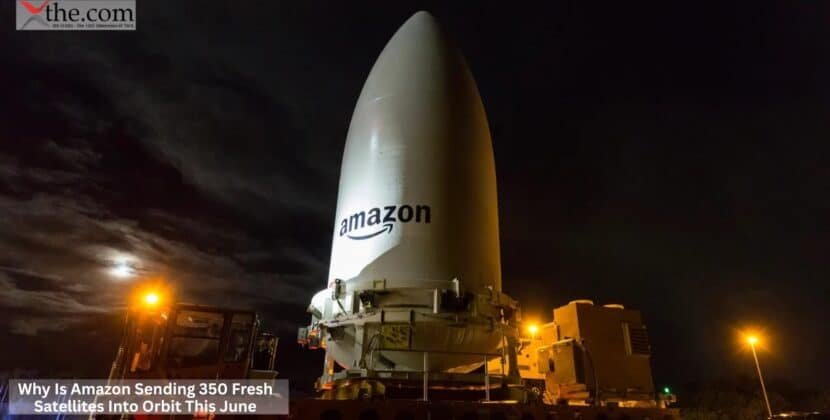
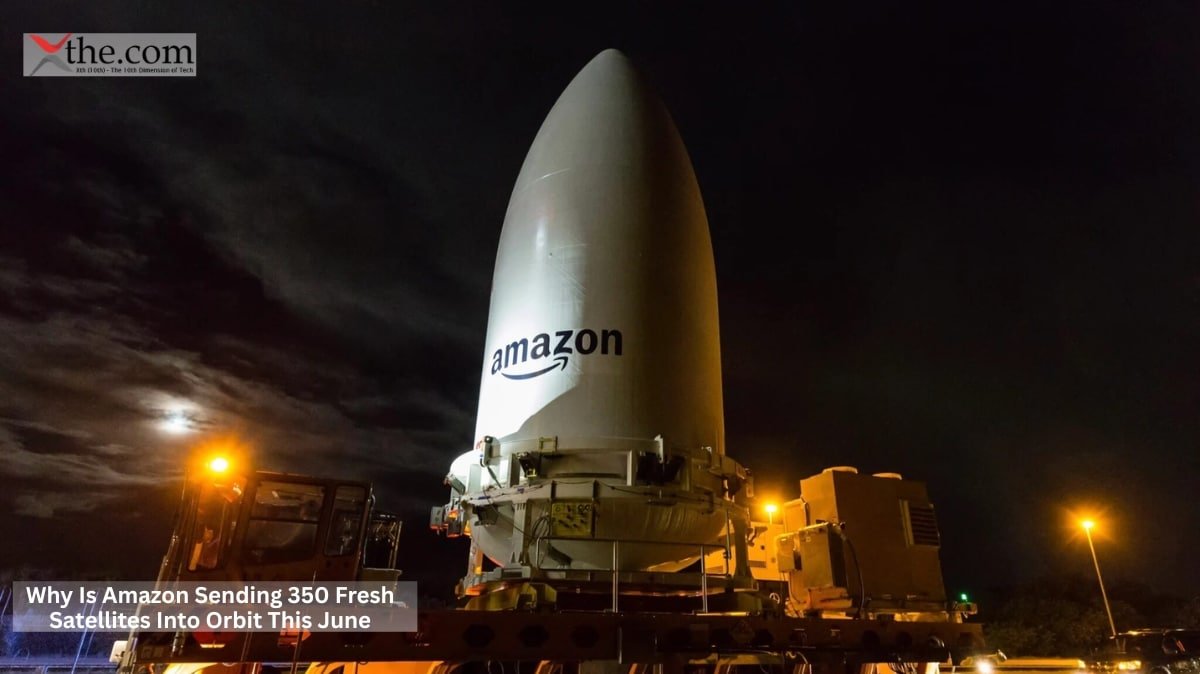
When a rocket launched from French Guiana this June, it was more than simply another commercial space mission. It marked a key moment in Amazon’s effort to build one of the world’s largest broadband satellite networks, bringing its low-Earth orbit system past 350 operational satellites. Some headlines made it sound like hundreds of satellites went up at once, but this mission actually sent 36 satellites into orbit using Europe’s new Ariane 6 rocket. This brought Amazon’s total above 350 satellites. That detail is important because it shows that Amazon is following a careful, step-by-step plan rather than relying on a single big launch.
Recent updates about Amazon Leo missions indicate the company is working on a long-term plan that goes beyond merely providing internet access to regular consumers. Amazon is building a worldwide communications network to provide fast connections to businesses, governments, cloud services, and remote areas—without relying on traditional ground-based infrastructure.
Why the June Launch Matters
The Ariane 6 launch recently launched 36 Amazon Leo satellites into low-Earth orbit, setting a record for the heaviest payload ever carried by Europe’s main launcher. This mission also showcased the enhanced performance of Ariane 6’s new solid rocket boosters, which help Arianespace launch more satellites at once and accelerate Amazon’s rollout. Experts see this as another step toward Amazon’s goal of building a network with over 3,200 satellites in the next few years. Thanks to these recent launches, Amazon now has more than 350 satellites working in orbit.
For Amazon, how often they launch satellites is now as important as the technology itself. The company has booked over 100 launches with multiple providers, so it doesn’t have to rely on a single rocket company. This plan helps avert delays and keeps the project moving forward, even amid the risks inherent in space launches.
Understanding Amazon Leo’s mission updates, satellite network expansion.
When people talk about Amazon Leo mission updates and satellite network expansion, it means more than just adding satellites. Each launch adds new points to a smart network that constantly shares data over long distances.
Traditional telecom systems transmit data via submarine optical fiber cables or via ground stations. In contrast, Amazon’s system sends digital traffic via satellites orbiting Earth at about 17,000 miles per hour. This setup creates many possible routes for information, so if one path is busy or goes down, the data can quickly switch to another.
This satellite network acts like an extension of Amazon Web Services in space. It keeps cloud services connected, even in places where laying fiber-optic cables is too expensive or impossible.
How Orbital Data Routing Changes Worldwide Connectivity
Perhaps the most transformative aspect of Amazon’s strategy is orbital data routing.
Traditional internet infrastructure depends heavily on submarine cables, terrestrial fiber, microwave towers, and regional data centers. Although these systems remain exceptionally reliable, they can become vulnerable during natural disasters, international disputes, or physical infrastructure failures.
A network of satellites adds an additional layer to how we communicate. Satellites pick up, process, and relay digital data to one another before sending it to ground stations at key locations. This means information can travel across continents without relying solely on undersea cables or national networks.
For multinational enterprises, this architecture provides redundancy that strengthens business continuity planning. Manufacturing plants, offshore energy facilities, mining operations, research stations, shipping fleets, and emergency responders can all benefit from continuous connectivity that stays largely independent of local infrastructure disruptions.
The result is more than just internet access. It’s a robust global system that can support critical digital operations worldwide.
The Next Phase of Satellite Internet Expansion
The latest Satellite internet expansion shows an increasingly competitive market led by several global providers seeking to close the digital divide.
Amazon is remarkable for connecting its satellite broadband directly to its large cloud platform. Instead of seeing internet access as a separate service, Amazon wants its satellites to be entry points for AI, business software, logistics, edge computing, and AWS cloud tools.
Businesses operating in remote environments increasingly require uninterrupted access to cloud-hosted applications. Agricultural operations use autonomous equipment guided by satellite connectivity. Energy companies monitor pipelines and offshore assets in real time. Logistics providers depend on continuous tracking of vehicles and cargo across international routes.
As satellite internet expansion, being connected is becoming a basic need for digital business, not just a nice extra.
Why Rural America Stands to Benefit
Many people in rural America still have unreliable broadband, even after years of government spending.
Laying fiber networks in remote areas like mountains, deserts, and forests can cost billions of dollars and often doesn’t make much money for providers.
Low-Earth orbit satellites fundamentally change that equation.
Instead of running cables for hundreds of miles, providers just need to set up customer terminals that communicate directly with overhead satellites. This makes it much easier and cheaper to bring internet to communities that don’t have good service.
With better internet access, farmers can use advanced agricultural tools, rural doctors can offer more telemedicine services, schools can improve online learning, and small businesses can reach global markets that were previously out of reach.
Cloud Agents Need Reliable Infrastructure
Artificial intelligence now relies increasingly on a steady, always-on network.
Cloud-based AI systems that handle logistics, finances, maintenance, monitoring, or cybersecurity can’t afford long network outages.
Amazon’s satellite network helps these AI services by delivering new ways to communicate, so they don’t have to rely only on ground-based networks.
As companies automate more of their work, satellite networks become a key resource, not just another way to get online.
Bringing together cloud computing and satellite networks could become a major trend in business technology over the next decade.
The Economics Behind Amazon’s Massive Investment
Sending thousands of satellites into space is one of the biggest infrastructure projects Amazon has ever taken on.
Every launch involves building rockets and satellites, arranging launch services, setting up ground stations, integrating software, getting regulatory approval, and managing the satellites in orbit.
Still, Amazon seems ready to take on these costs because better connectivity opens up new opportunities for many parts of its business at once.
Reliable broadband helps more people use AWS, improves Amazon’s logistics, backs smart devices, boosts global e-commerce, and creates new business markets.
Seen this way, Amazon’s satellite network is anything but a telecom project—it’s a core platform for the company’s whole digital ecosystem.
Competition Will Accelerate Innovation
Amazon is joining a busy low-Earth orbit market, where being fast, reliable, affordable, and resilient gives companies an edge.
The recent Amazon Leo mission updates demonstrate that Amazon is rapidly accelerating deployment momentum while leveraging partnerships with multiple launch providers to reduce operational risk.
Ongoing advances in reusable rockets, smaller satellites, better onboard processing, laser links between satellites, and more frequent launches should make it cheaper to deploy satellites and improve network performance for everyone.
In the end, more competition means better service, wider coverage, and possibly lower prices for customers.
Gazing Forward
The latest Amazon Leo mission updates illustrate that Amazon’s satellite strategy extends well beyond placing hardware into orbit. Every successful launch strengthens an expanding digital infrastructure capable of supporting cloud computing, enterprise AI, remote operations, and resilient communications worldwide.
While the June mission launched 36 satellites not 350 at once it helped Amazon pass the 350-satellite mark and showed what the new Ariane 6 rocket can do. With ongoing growth in satellite internet and improved methods for routing data in space, Amazon is building a new kind of communications network that could change how businesses, governments, and people get online over the next decade.
As Amazon continues to expand its satellite network through 2026 and beyond, the project is evolving from a major space effort into one of the world’s most important digital networks, bringing continuous connectivity to more places than ever before.