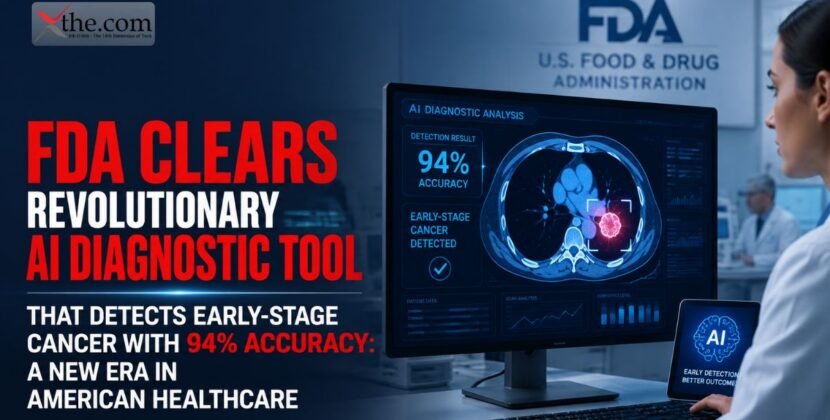






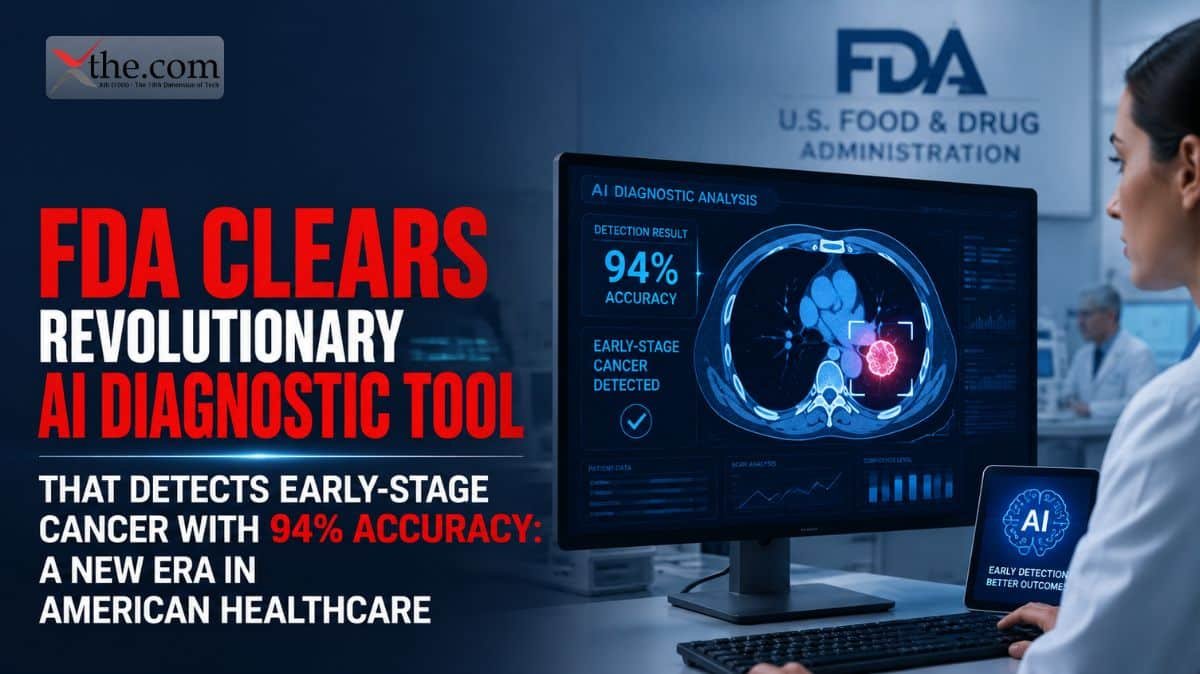
The US Food and Drug Administration granted full approval last week to OncoScan AI, a machine learning-powered diagnostic platform developed by Seattle-based health tech startup MedVision Labs. The system, which analyzes standard CT and MRI scans, can detect early-stage lung, breast, and colorectal cancers with 94% accuracy — outperforming experienced radiologists in head-to-head clinical trials involving 12,000 patients across 14 major US hospitals.
How It Works
OncoScan AI uses a proprietary deep learning architecture trained on over 5 million de-identified medical images. When a radiologist uploads a scan, the algorithm generates a heat map highlighting suspicious regions, assigns a malignancy probability score, and cross-references findings with the patient’s electronic health records to flag genetic risk factors.
“What makes this different from previous AI tools is its ability to detect ‘invisible’ micro-changes in tissue density that human eyes simply cannot perceive,” explained Dr. Sarah Chen, MedVision’s Chief Medical Officer and former radiology chair at Johns Hopkins. “We are finding tumors at Stage 0 and Stage 1 that would typically go unnoticed until Stage 3 or 4.”
Clinical Trial Results
The pivotal FDA approval study, published simultaneously in the New England Journal of Medicine, revealed striking outcomes:
- Lung Cancer: 94.3% sensitivity in detecting nodules smaller than 5mm, compared to 78% for board-certified radiologists working alone.
- Breast Cancer: 91.7% accuracy in dense breast tissue, where traditional mammography struggles significantly.
- False Positive Rate: 3.2% — less than half the 7-8% rate typically seen in standard screening protocols.
Most importantly, the AI did not miss a single case of invasive cancer when operating as a “second reader” alongside human radiologists. The combination of human expertise plus AI assistance achieved 99.1% diagnostic accuracy.
Cost Implications
Early detection translates directly to cost savings. Treating Stage 1 lung cancer averages $72,000 per patient in the US healthcare system. Stage 4 treatment costs exceed $350,000. With approximately 1.9 million Americans diagnosed with cancer annually, widespread adoption of OncoScan AI could reduce national oncology spending by an estimated $18-24 billion over the next decade.
Medicare and Medicaid Services (CMS) announced it will issue a new reimbursement code for AI-assisted cancer screening starting January 2027, clearing the path for insurance coverage. Major private insurers including UnitedHealthcare, Blue Cross Blue Shield, and Aetna have indicated they will follow CMS guidance.
Addressing Healthcare Inequality
One of the most significant impacts may be on rural and underserved communities. The US currently faces a shortage of 10,000 radiologists, with severe maldistribution — rural hospitals often lack specialized radiologists entirely, forcing patients to travel hours or wait weeks for interpretations.
OncoScan AI can operate on standard hospital servers or cloud infrastructure, allowing a rural clinic in Montana to access diagnostic capabilities equivalent to Memorial Sloan Kettering. “This is how we democratize elite healthcare,” said HHS Secretary Xavier Becerra. “AI doesn’t replace doctors, but it extends their reach to places that desperately need it.”
Privacy and Ethical Concerns
Not all reactions have been positive. The Electronic Frontier Foundation raised concerns about the 5 million patient images used to train the algorithm, questioning whether consent protocols were sufficiently robust. MedVision insists all training data was fully de-identified under HIPAA Safe Harbor standards, but critics note that re-identification risks grow as datasets become more comprehensive.
Additionally, medical ethicists worry about “automation bias” — the tendency of overworked clinicians to defer to AI recommendations without independent critical thinking. The FDA approval requires that all OncoScan AI findings be reviewed by a licensed radiologist, maintaining the human-in-the-loop safeguard.
Competitive Landscape
MedVision is not alone in this space. Google Health’s DeepMind division recently published promising results for its breast cancer AI. IBM Watson Health, after early setbacks, has retooled its oncology platform. GE Healthcare and Siemens Healthineers are integrating AI modules directly into their imaging hardware.
Analysts at CB Insights project the AI medical imaging market will reach $18.4 billion by 2028, up from $4.2 billion in 2024. The FDA has now cleared over 850 AI-enabled medical devices, with radiology representing 75% of approvals.
What Patients Should Know
If you are due for cancer screening, ask your healthcare provider whether AI-assisted diagnostics are available. While the technology is powerful, it works best when combined with regular screening schedules — the AI cannot detect cancers in patients who never get scanned. Current guidelines recommend annual mammograms for women 40+, lung CT scans for adults 50-80 with smoking history, and colonoscopies starting at age 45.