






New York, New York | July 20, 2026
Chronic wounds impact about 1% to 2% of people worldwide at any time, and treating them in the United States costs over $20 billion each year. That figure is the background against which Medical Care Technologies’ AI wound care ambitions now play out. On Monday, the Mesa, Arizona-based company, listed as OTC PINK:MDCE, laid out a case for Medical Care Technologies’ diversified strength, pairing active revenue from two consumer subsidiaries with ongoing development of the imaging technology it hopes will eventually reach hospitals, wound clinics, and home-care patients.
A Diversified Balance Sheet Behind the AI Bet
While most small-cap health tech companies focus on one product and ask investors to be patient, MDCE is taking a different approach. Its subsidiary Infinite Auctions hosts live online sales of sports memorabilia, with a major auction of collectibles ending this Saturday, July 25, and the company shows strong interest from bidders. Another subsidiary, Real Game Used, has developed an automated photo-match authentication tool for collectors, and submissions to this service are increasing along with its traditional authentication business.
Neither subsidiary provides patient care or wound analysis, but both generate revenue now and rely on the same core skill: extracting reliable signal from a photograph. That shared engineering thread is the connective tissue behind the AI vision platform wound care strategy MDCE is now emphasizing to shareholders. Its AI vision technology is already used in consumer products like the Snapshot Recipes app, allowing management to test image-recognition correctness before applying it to clinical skin and wound analysis.
What the AI Vision Platform Actually Does in Wound Assessment
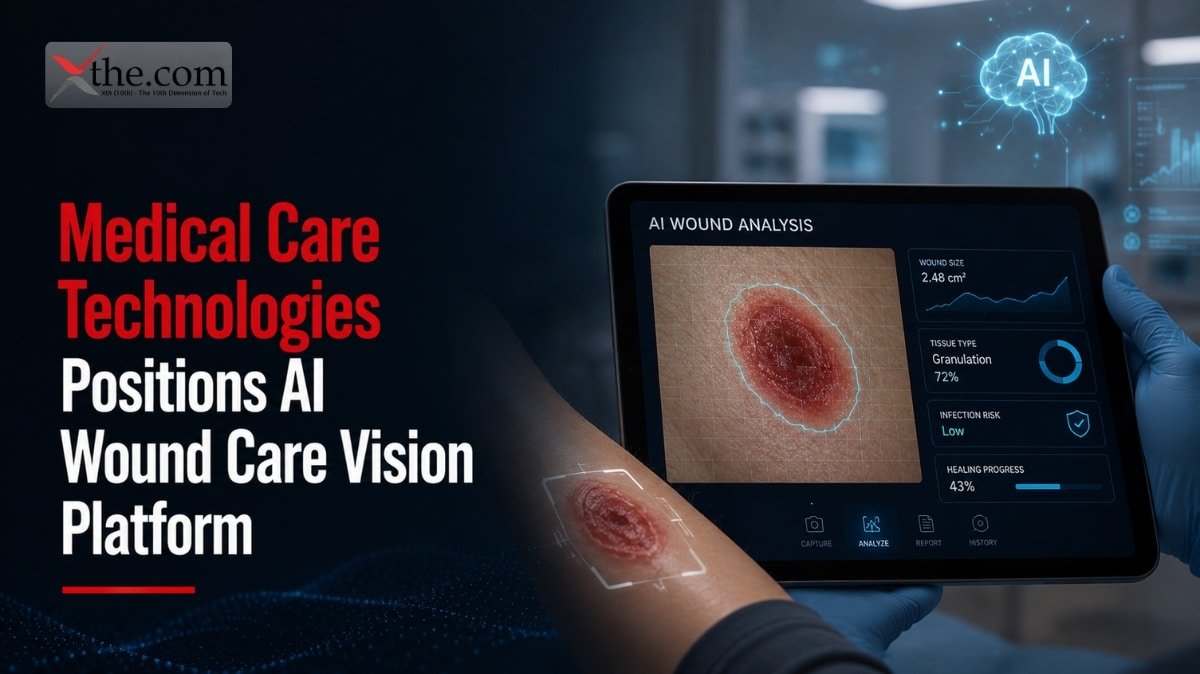
At its core, the technology is simple, though not easy to perfect. A patient or caregiver takes a photo of a wound with a smartphone. Computer-vision software then measures the wound’s length, width, and depth from the image, tracks changes over time, and identifies patterns that may signal infection or delayed healing, such as shifts in color, swelling, or drainage.
MDCE calls this process sequential imaging integrated with automated edge detection and infection-risk modeling. In practice, a nurse who used to visit a patient’s home, or a patient who had to travel to a clinic for a routine check, can now upload a photo and let the software handle the first assessment. For rural patients, homebound seniors, and people with chronic ulcers, moving from face-to-face visits to remote image review is the main benefit.
From Auction House Photography to Melanoma Screening
The company is also expanding its imaging technology into skin cancer screening through a partnership with Derm Foundation, a dermatology imaging model supported by Google. This cooperation adds a melanoma-risk classification feature to MDCE’s platform, so the same camera that tracks wound healing can also flag suspicious moles for follow-up. Using one imaging system for two clinical needs is efficient and shows how a well-trained computer-vision model can be adapted to related skin conditions at a low cost.
Sizing the Opportunity: The Multi-Billion Wound Care Market
Independent market research supports the scale MDCE is targeting, though exact numbers differ by firm and by how “AI in wound care” is defined. One estimate value the global AI-enabled wound analysis market at about $2.28 billion by 2030, growing nearly 14% each year. Another forecast puts the AI segment at $2.21 billion by 2029, with growth above 22% annually. Looking at chronic wound care overall, not just the AI part, US spending already exceeds $20 billion a year and could reach $30 billion by 2030 as more people need long-term wound care due to diabetes, obesity, and an aging population.
No matter which estimate is most accurate, the trend is clear, which is why MDCE often uses the term “multi-billion wound care market” in its investor updates. This is a real market, not something the company created to support its valuation. Established companies like NATROX Wound Care and Net Health are already active in this area, along with remote-monitoring apps like Tissue Analytics. Hospitals are also willing to pay for tools that reduce the need for in-person wound checks, which are costly and difficult to arrange for patients who cannot easily travel.
Where MDCE Fits Into the Wider AI Diagnostics Trend
The wound care market opportunity MDCE is chasing sits inside a larger pattern reshaping US healthcare: artificial intelligence is being directed disproportionately at conditions that are expensive to manage but chronically underserved by specialist capacity. Chronic wound care fits this pattern well. Wound-care specialists are not evenly spread across the country, face-to-face visits are expensive for patients and insurers, and missing signs of worsening wounds, like an infected diabetic foot ulcer, can lead to amputation or hospitalization.
Studies on wound-monitoring apps for patients have shown that AI-assisted image analysis can match or exceed the consistency of manual clinical measurement while cutting the need for face-to-face consultations. That body of evidence is precisely what gives the AI vision platform positioning MDCE has adopted its commercial logic: build a tool that clinicians trust to replace some in-person visits, and reimbursement and adoption are likely to follow.
Risks Investors and Clinicians Should Weigh
There are still risks. MDCE is listed on the OTC Pink marketplace, which has fewer disclosure requirements than Nasdaq or NYSE, and its wound and skin tools are still in beta, not fully launched. The company has also dropped a provisional patent application in July after its engineers moved past the first idea. While this makes sense from an engineering perspective, it shows the platform is still evolving. Getting regulatory approval for any tool marketed as a diagnostic aid, not just a wellness app, adds extra time and cost that press releases often overlook.
The Way Forward
Medical Care Technologies’ AI wound care platform now has two advantages that many smaller health-tech companies lack: immediate cash flow from its auction and authentication businesses, and a significant clinical challenge—chronic wound assessment—that matters if the technology works as promised. Whether MDCE moves from beta testing to real clinical use will depend more on whether hospitals, clinics, and insurers trust the imaging accuracy enough to change their payment practices than on market estimates. The key milestones to watch are regulatory approval, a completed beta rollout, and the first independent clinical data proving the AI vision platform’s value in the multi-billion-dollar wound care market.
Source: Medical Care Technologies (MDCE) Ranks #1 Among Top OTC Volume Leaders








