






The Axios Interview
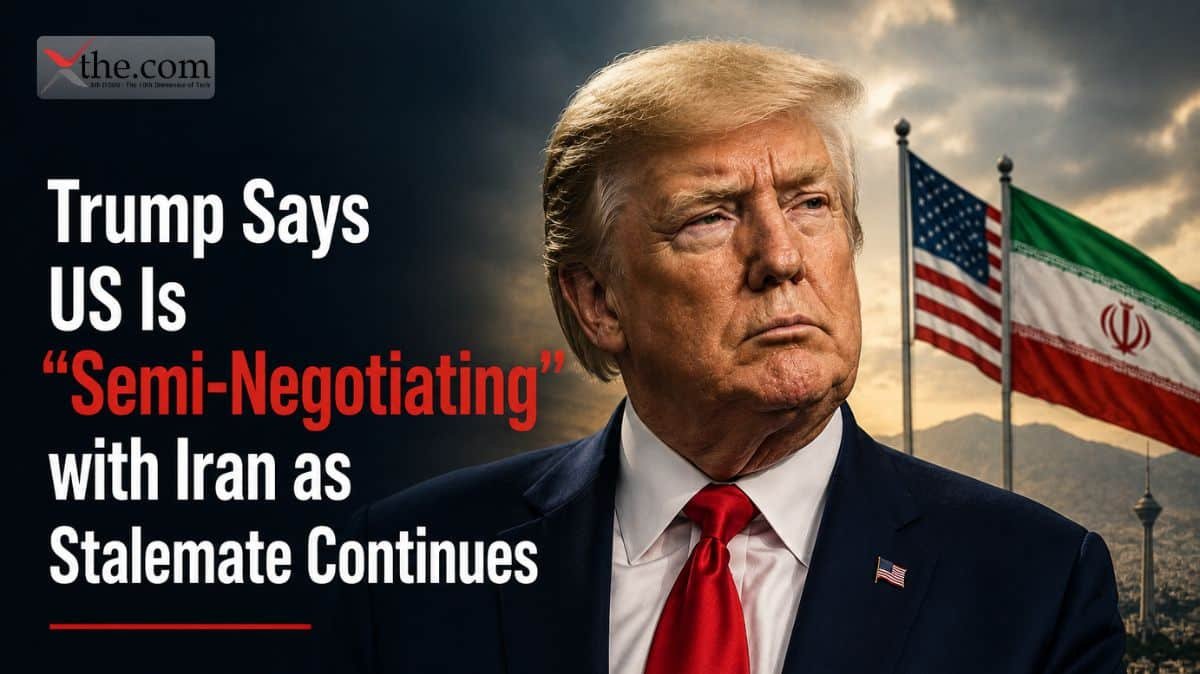
In a revealing interview with Axios published on August 9, 2026, President Donald Trump offered his most detailed public comments on the Iran crisis since the Strait of Hormuz was closed in February. Trump’s assessment was characteristically blunt: the United States is “only semi-negotiating” with Iran, relying primarily on economic pressure rather than active diplomacy to force Tehran’s hand.
The interview came as Iran’s Supreme National Security Council issued seven maximalist demands for reopening Hormuz — demands that US officials privately describe as “non-starters” but that Tehran insists are prerequisites for any meaningful dialogue.
Trump’s framing of the situation as “semi-negotiating” represents a middle path between all-out war and full diplomatic engagement. It allows the administration to maintain military pressure while keeping diplomatic channels open — but it also risks prolonging a conflict that is increasingly damaging to the US economy and Trump’s own political standing.
What Semi-Negotiating Means
“Semi-negotiating” is not a recognized diplomatic term, but Trump’s usage reveals the administration’s strategy:
What It Is:
- Messages exchanged through intermediaries (primarily Oman)
- Backchannel discussions about narrow technical issues (maritime safety, prisoner exchanges)
- Public posturing designed to pressure Iran economically
What It Isn’t:
- Direct US-Iran negotiations
- A formal diplomatic process with defined goals
- A ceasefire or de-escalation agreement
Trump told Axios the strategy is to let “economic pressures take their toll” on Iran. This reflects a belief that Tehran will eventually compromise as its economy collapses — a belief that Iran’s leadership is determined to prove wrong.
Iran’s Position: No Talks Until Demands Met
Iranian Foreign Minister Abbas Araghchi made clear on August 10 that direct negotiations are off the table until Washington meets conditions Tehran laid out through intermediaries.
Iran’s Core Conditions:
- End the war with Iran and its armed allies (Houthis, Hezbollah)
- Lift the naval blockade of Iranian ports
- Withdraw US military forces from the Persian Gulf
- Compensate Iran for war damage
- Lift all economic sanctions
- Release frozen Iranian assets
- Commit to never threatening Iran again
The Supreme National Security Council, now led by hardliner Mohsen Rezaei, reinforced this position on August 10: “The strait will not reopen until the U.S. corrects its behavior.”
The Economic Squeeze on Iran
Trump’s bet is that economic pressure will eventually break Iranian resolve. The data supports his strategy — up to a point.
Iran’s Economic Crisis:
Table
| Indicator | Feb 2026 (Pre-War) | Aug 2026 (Current) |
| Inflation Rate | 35% | 45%+ |
| Currency (USD/IRR) | 580,000 | 920,000 |
| Oil Exports | 1.2M barrels/day | ~200K barrels/day |
| GDP Growth | -2.5% | -8.0% (projected) |
| Foreign Reserves | $25B | <$10B |
Iranian officials have privately admitted that sanctions relief is “desperately needed.” But Supreme Leader Ayatollah Mojtaba Khamenei has publicly rejected any compromise that appears to reward American aggression.
Domestic Political Pressure on Trump
The Iran war is becoming a political liability for Trump. Multiple indicators show eroding public support:
Polling Data:
- Reuters/Ipsos (Aug 2026): 33% support the Iran war
- 69% say Trump has not clearly explained war goals
- 54% believe the war is damaging the US economy
- 61% want direct negotiations to end the conflict
Congressional Pressure:
- House Democrats seeking Pentagon casualty database records
- Bipartisan calls for hearings on missile stockpile depletion
- 25 Democratic-led states sued Trump over tariff policies — partly motivated by economic pain from the Iran conflict
Economic Indicators:
- July jobs report: -23,000 jobs — first contraction since pandemic
- Oil prices: Elevated at $84+/barrel, adding $45-65/month to household costs
- Stock market: Volatile, with defense stocks up and consumer stocks down
Trump’s “semi-negotiating” formulation may be an attempt to signal flexibility to domestic audiences without appearing weak to Iran or his political base.
The Oman Backchannel
Despite the public stalemate, Oman continues to facilitate quiet communication between Washington and Tehran. The sultanate’s proposed temporary maritime arrangement — allowing limited Hormuz transit without fees — represents the most concrete diplomatic progress in months.
The Oman Proposal:
- Ships enter Hormuz near Iranian coast, exit near Oman
- No transit fees during interim period
- Endorsed by Gulf Cooperation Council
- Joint announcement by Iran, Oman, US, and UN International Maritime Organization
The proposal is designed to create a “pause” that could lead to broader negotiations. But both sides remain far apart on fundamental issues, and hardliners in both capitals oppose any compromise.
Scenarios: What Happens Next
Three scenarios appear most likely over the next 60 days:
Scenario 1: Oman Deal Succeeds (30% probability) The temporary maritime arrangement is implemented, Hormuz reopens partially, and both sides claim victory while continuing backchannel talks. Oil prices drop to $75-80.
Scenario 2: Stalemate Continues (50% probability) Neither side budges. Hormuz remains closed through September. Oil prices spike toward $100. Global recession risk increases. Trump faces mounting political pressure.
Scenario 3: Military Escalation (20% probability) The US launches a naval operation to forcibly reopen Hormuz, or Iran attacks shipping in the broader Gulf. Full-scale regional war becomes possible.
Frequently Asked Questions
Q: What did Trump say about Iran negotiations? A: In an Axios interview published August 9, 2026, Trump said the US is “only semi-negotiating” with Iran and is letting economic pressure take its toll.
Q: Is the US in direct talks with Iran? A: No. Iran refuses direct negotiations while the US violates the June 2026 interim deal. Messages are exchanged through intermediaries, primarily Oman.
Q: What are Iran’s demands? A: Iran demands an end to the war, lifting of the naval blockade, US military withdrawal from the Gulf, war reparations, sanctions relief, release of frozen assets, and a US commitment to never threaten Iran again.
Q: Will the Strait of Hormuz reopen soon? A: Unlikely in the immediate term. Iran’s new security chief is a hardliner, and both sides remain far apart on core demands.
Q: How is the Iran war affecting the US economy? A: The war has contributed to elevated oil prices, job losses, stock market volatility, and depleted military stockpiles. A July 2026 poll found 54% of Americans believe the war is damaging the economy.
External Sources:
- Axios: https://www.axios.com/
- CBS News: https://www.cbsnews.com/
- AP News: https://apnews.com/
- Reuters: https://www.reuters.com/








