






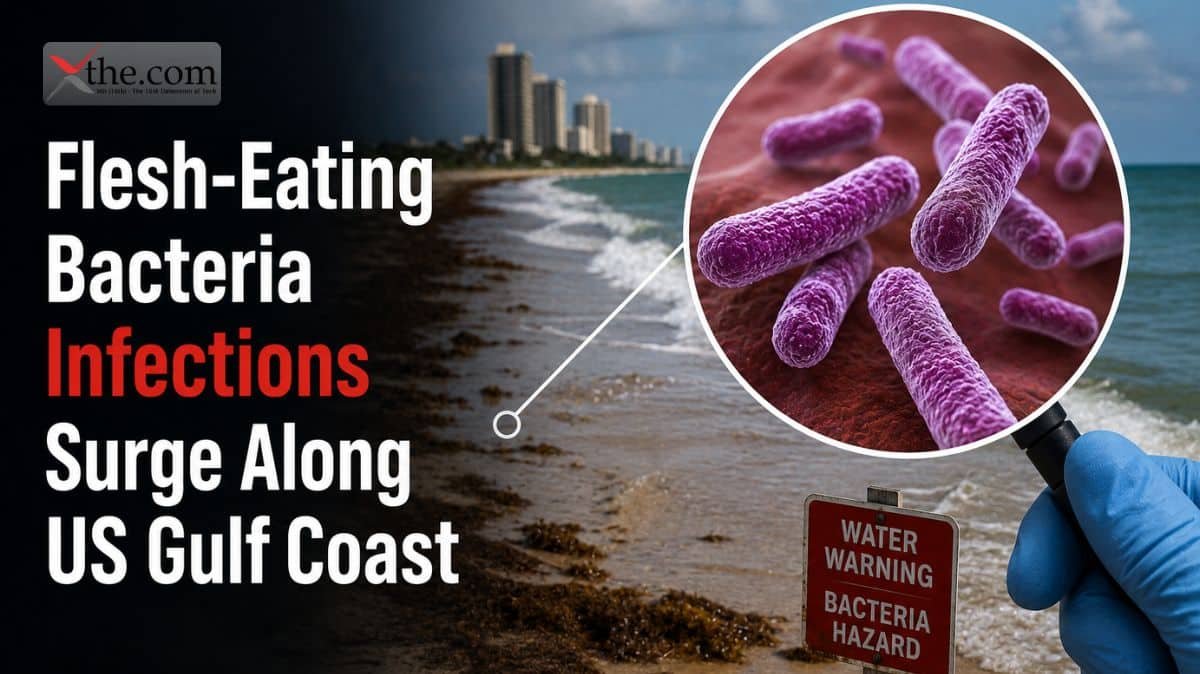
The Surge in Vibrio Infections
A deadly bacterial infection is spreading rapidly along the United States Gulf Coast, and health officials are sounding the alarm. On August 9, 2026, the Associated Press reported that five people have died in Louisiana from Vibrio vulnificus infections — commonly known as flesh-eating bacteria — and cases are being reported across Texas, Mississippi, Alabama, and Florida at rates far above historical averages.
The Louisiana Department of Health confirmed the deaths and issued an urgent advisory warning residents and visitors to avoid swimming in coastal waters with open wounds and to thoroughly cook all seafood harvested from Gulf waters.
2026 Gulf Coast Vibrio Cases (Year-to-Date):
Table
| State | Confirmed Cases | Deaths | vs. 2025 (Same Period) |
| Louisiana | 34 | 5 | +89% |
| Texas | 28 | 2 | +65% |
| Mississippi | 12 | 1 | +140% |
| Alabama | 9 | 0 | +50% |
| Florida | 41 | 3 | +37% |
| Total | 124 | 11 | +58% |
What Is Vibrio vulnificus
Vibrio vulnificus is a naturally occurring bacterium found in warm coastal waters. It is not truly “flesh-eating” in the sense of consuming tissue, but it causes necrotizing fasciitis — a rapidly spreading soft tissue infection that destroys skin, fat, and muscle layers. The misnomer “flesh-eating” persists because of the dramatic visual impact of advanced infections.
Two Routes of Infection:
- Wound Exposure: Bacteria enter through cuts, scrapes, or puncture wounds (including insect bites) when swimming in contaminated water
- Seafood Consumption: Eating raw or undercooked oysters, clams, or other shellfish that harbor the bacteria
The wound route is particularly dangerous because the infection progresses so rapidly. Without immediate antibiotic treatment and often surgical debridement (removal of infected tissue), mortality rates exceed 50%.
Louisiana: Ground Zero
Louisiana has been hit hardest, with five confirmed deaths representing the state’s worst Vibrio outbreak in at least a decade. The state’s warm, brackish coastal waters create ideal conditions for Vibrio proliferation, and the combination of summer heat and recent flooding has exacerbated the problem.
Louisiana Risk Factors:
- Warm water temperatures: Gulf waters have averaged 86°F (30°C) this summer — optimal for Vibrio growth
- Flood contamination: Heavy rainfall and storm surge have introduced additional bacteria into coastal ecosystems
- Oyster harvesting: Louisiana is the nation’s largest oyster producer; raw oyster consumption is culturally embedded
- Limited healthcare access: Rural coastal communities lack immediate access to Level 1 trauma centers
The Louisiana Department of Health has closed several oyster harvesting areas and is working with the FDA to increase seafood safety inspections.
Why Infections Are Rising
The 58% year-over-year increase in Gulf Coast Vibrio cases is driven by multiple factors:
1. Warmer Waters: Climate change has raised average Gulf water temperatures by 1.5-2°F over the past decade. Vibrio bacteria multiply exponentially in warmer water, and the “Vibrio season” (May-October) has effectively lengthened by 3-4 weeks.
2. Extreme Weather: The 2026 Atlantic hurricane season has been unusually active. Storm surge and flooding introduce nutrients and contaminants that fuel bacterial blooms. Post-storm cleanup also increases wound exposure.
3. Population Growth in Coastal Zones: More Americans are living along the Gulf Coast than ever before. Florida’s Gulf Coast population has grown 18% since 2020, putting more people in contact with Vibrio-harboring waters.
4. Underreporting Correction: Health officials believe previous years undercounted cases due to inconsistent reporting. Improved surveillance in 2026 may account for some of the apparent increase.
Symptoms and Warning Signs
Early recognition is critical for survival. Vibrio infections progress from mild to life-threatening within 24-48 hours.
Early Symptoms (0-24 hours):
- Redness, warmth, and swelling around a wound
- Increasing pain disproportionate to the visible injury
- Fever and chills
- Fatigue and malaise
Advanced Symptoms (24-72 hours):
- Skin discoloration (purple, black, or bronze patches)
- Blisters or bullae filled with fluid
- Rapid heart rate and low blood pressure
- Confusion or altered mental state
- Septic shock
When to Seek Emergency Care: Anyone with a wound exposed to Gulf coastal water who develops fever, increasing pain, or spreading redness should go to the emergency room immediately. Do not wait.
Who Is Most at Risk
While anyone can contract Vibrio vulnificus, certain populations face dramatically higher mortality rates:
High-Risk Groups:
- Liver disease patients: Including hepatitis, cirrhosis, and fatty liver disease
- Diabetics: Especially those with poor glycemic control
- Immunocompromised individuals: Cancer patients, transplant recipients, HIV-positive individuals
- Men over 50: Testosterone appears to increase susceptibility
- Iron overload conditions: Hemochromatosis patients
For high-risk individuals, the mortality rate approaches 50% even with treatment. For healthy individuals, it drops to approximately 10-15%.
Prevention: What You Need to Know
For Coastal Residents and Visitors:
Table
| Activity | Risk Level | Precautions |
| Swimming with open wounds | HIGH | Avoid entirely; cover wounds with waterproof bandages |
| Eating raw oysters | HIGH | Avoid if immunocompromised; healthy adults should ensure freshness |
| Handling raw seafood | MODERATE | Wear gloves; wash hands thoroughly |
| Swimming in warm Gulf water | LOW-MODERATE | Avoid if you have any skin breaks |
| Eating cooked seafood | VERY LOW | Ensure internal temperature reaches 145°F |
Critical Rules:
- If you have a cut, scrape, or recent piercing/tattoo, do not enter Gulf coastal water
- If you must enter water, cover wounds with waterproof bandages and wash immediately afterward
- Cook all seafood thoroughly — Vibrio is killed at 145°F internal temperature
- Avoid cross-contamination — use separate cutting boards for raw seafood
Climate Change Connection
The Vibrio surge is not an isolated public health event — it is a climate change impact. As Gulf waters warm, the geographic range of Vibrio bacteria expands northward. Cases are now being reported as far north as Delaware, which would have been unheard of a decade ago.
Climate Projections:
- By 2030, Vibrio-suitable waters could reach the Chesapeake Bay year-round
- The “safe” swimming season in the Gulf may shrink by 4-6 weeks
- Oyster harvesting seasons will require significant adjustment
The CDC has designated Vibrio as an “emerging infectious disease” requiring enhanced surveillance and research funding.
Frequently Asked Questions
Q: What is flesh-eating bacteria? A: The term refers to Vibrio vulnificus, a bacterium found in warm coastal waters that causes necrotizing fasciitis — a rapidly spreading soft tissue infection.
Q: How many people have died in Louisiana? A: Five deaths have been confirmed in Louisiana from Vibrio vulnificus infections as of August 9, 2026.
Q: Can you get infected from swimming? A: Yes. The bacteria enter through open wounds, cuts, or scrapes. Do not swim in Gulf coastal water if you have any skin breaks.
Q: Is it safe to eat oysters? A: Only if thoroughly cooked. Raw oysters are the second most common source of infection. High-risk individuals should avoid raw seafood entirely.
Q: What are the symptoms? A: Early symptoms include redness, warmth, swelling, and increasing pain around a wound, plus fever. Advanced symptoms include skin discoloration, blisters, and septic shock.
Q: Is this related to climate change? A: Yes. Warmer Gulf waters create ideal conditions for Vibrio bacteria. Climate models project the problem will worsen as temperatures rise.
External Sources:
- Associated Press: https://apnews.com/
- CDC Vibrio Information: https://www.cdc.gov/vibrio/
- Louisiana Department of Health: https://ldh.la.gov/
- FDA Seafood Safety: https://www.fda.gov/food/seafood-guidance-documents-regulatory-information








