





The Biggest Drone Delivery Expansion in US History
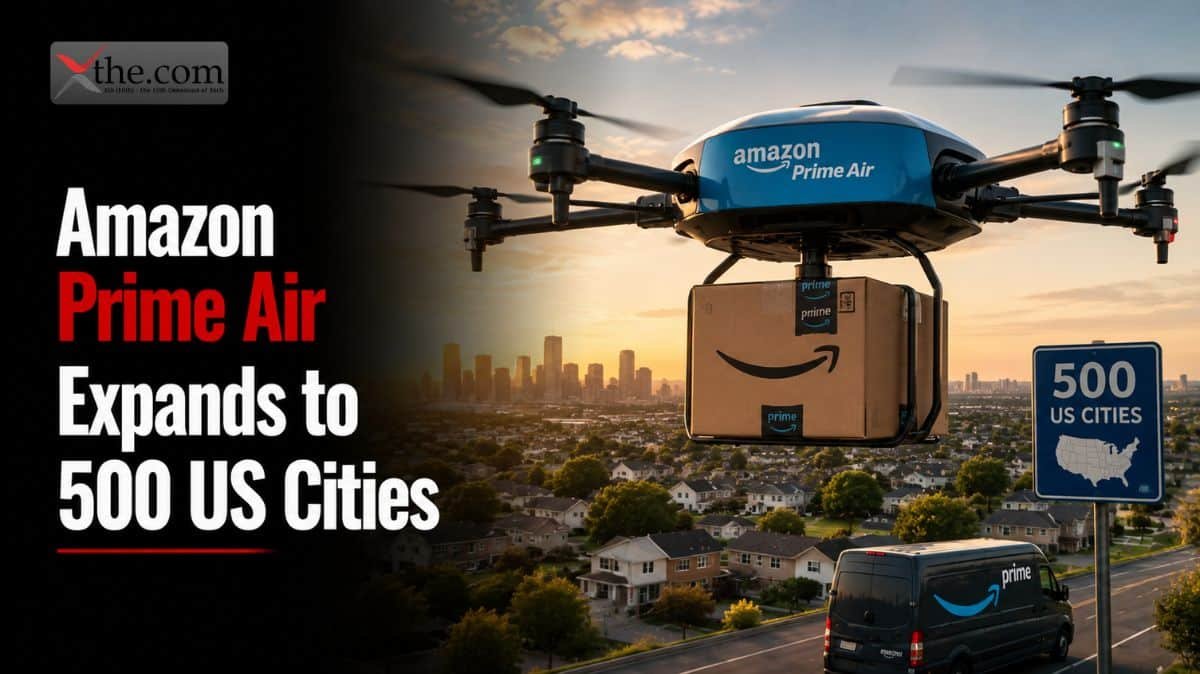
Amazon has announced the most ambitious expansion of drone delivery in US history, revealing plans to extend its Prime Air service to nearly 500 cities and towns across the United States by the end of 2026. The massive rollout, a sixfold increase from the current 11 locations, marks a pivotal moment in the race to make autonomous aerial delivery a mainstream reality.
The announcement, made on August 19, 2026, comes as Amazon seeks to differentiate its delivery capabilities in an increasingly competitive e-commerce landscape. With drone delivery promises of 30-minute arrival times for eligible packages, Amazon is betting that speed and convenience will drive customer loyalty.
How the Expansion Works
Amazon Prime Air service currently operates in 11 cities across Texas, Michigan, Arizona, Florida, and Kansas. Since its limited launch, the service has completed approximately 16,000 deliveries, a modest number that reflects both the early stage of the technology and the logistical challenges of operating autonomous drones.
The expansion to 500 cities will be phased over the remainder of 2026, with the first wave of new locations expected to go live in September. Amazon has identified eligible communities based on population density, proximity to fulfillment centers, local air traffic patterns, and regulatory approval status.
For Prime members, each drone delivery costs .99, while non-Prime customers pay .99 per delivery. Packages eligible for drone delivery must weigh under five pounds and fit within specific size requirements.
The Technology Behind Prime Air
Amazon delivery drones represent a significant leap in autonomous aviation technology. The latest generation of Prime Air drones can fly up to 75 miles per hour, carry payloads up to five pounds, and navigate autonomously using a combination of GPS, computer vision, and sensor fusion technology.
The drones operate within a controlled airspace corridor between Amazon fulfillment centers and customer delivery addresses. They can detect and avoid obstacles including trees, power lines, buildings, and other aircraft. When a drone reaches its destination, it hovers at approximately 40 feet and lowers the package using a retractable tether.
Amazon has invested heavily in drone safety systems. Each drone is equipped with multiple redundant systems including backup batteries, emergency parachutes, and anti-collision lights. The company says its safety record has been exemplary, with zero injuries since the service launched.
Where Is the Service Coming Next?
While Amazon has not released a complete list of the 500 new cities, the company has confirmed that expansion will prioritize regions with existing Amazon fulfillment infrastructure. Major metropolitan areas including parts of Los Angeles, Chicago, Dallas-Fort Worth, Atlanta, and Phoenix are expected to be among the first.
The expansion also includes smaller cities and suburban communities where traditional same-day delivery is less cost-effective. For these areas, drone delivery could replace two-day shipping with 30-minute delivery.
The Competition
Amazon is not alone in the drone delivery race. Google parent company Alphabet operates Wing, a drone delivery service that has completed over 400,000 deliveries in the US and Australia. Walmart has partnered with DroneUp and Zipline. And UPS Flight Forward has received FAA approval for commercial drone deliveries.
However, Amazon plan to cover 500 cities represents a level of investment that no other drone delivery provider has matched. With over 1,000 fulfillment centers across the US, Amazon has the infrastructure to support drone operations at national scale.
What It Means for American Consumers
For consumers in the 500 cities where Prime Air will be available, the practical impact is straightforward: faster access to everyday items. Need a phone charger before an important meeting? Order by drone and have it in 30 minutes. Ran out of medication? A drone can deliver it from your nearest pharmacy partner.
The service could be particularly transformative for rural and underserved communities where traditional delivery times are often two to five days.
Challenges Ahead
Despite the ambitious plans, significant challenges remain. Air traffic management is perhaps the biggest hurdle. As drone deliveries scale to hundreds of cities, coordinating thousands of simultaneous flights will require sophisticated systems that do not yet exist at scale.
Noise pollution is another concern. Weather also presents challenges, as heavy rain, high winds, and extreme temperatures can ground drone fleets.
Nevertheless, Amazon 500-city drone delivery expansion represents one of the most significant logistics announcements of 2026. If successful, it could fundamentally change how Americans shop and receive goods.
Amazon has also invested in dedicated drone landing pads at many of its fulfillment centers. These pads, which resemble small helipads, allow drones to take off and land safely without interfering with other airport operations. The company has built over 200 landing pads across its existing Prime Air service areas, with plans to construct thousands more as the expansion proceeds.
The regulatory environment has also become more favorable for drone delivery. The FAA has issued increasingly permissive rules for commercial drone operations, including Beyond Visual Line of Sight (BVLOS) waivers that allow drones to fly longer distances without a human observer. Amazon has received these waivers in several states and expects to obtain them in all 50 states by the end of 2026.
Local communities have had mixed reactions to the prospect of regular drone deliveries. Supporters praise the convenience and environmental benefits, noting that electric drones produce zero direct emissions compared to delivery trucks. Critics worry about noise, privacy, and the visual impact of drones flying over residential neighborhoods on a regular basis.
The economic impact of the expansion could be significant. Amazon estimates that each Prime Air facility creates approximately 50 new jobs, including drone pilots, maintenance technicians, and logistics coordinators. Across 500 cities, the expansion could create as many as 25,000 new jobs, providing a welcome boost to local economies.
The environmental implications of drone delivery are also worth noting. Amazon claims that its delivery drones produce significantly fewer carbon emissions per delivery than traditional delivery trucks. The company has committed to powering all Prime Air operations with renewable energy by 2028, further reducing the environmental impact of its drone delivery program.
Looking at the competitive landscape more broadly, the drone delivery market in the US is expected to reach 0 billion by 2030, according to a recent report from McKinsey. Amazon 500-city expansion positions it to capture a significant share of this growing market, though sustained profitability will depend on achieving the delivery volumes necessary to offset the high infrastructure costs.
External Sources:
- Amazon News: https://www.aboutamazon.com/news/transportation/amazon-prime-air-drone-delivery-expansion