





A Historic Shift in Tech Geography
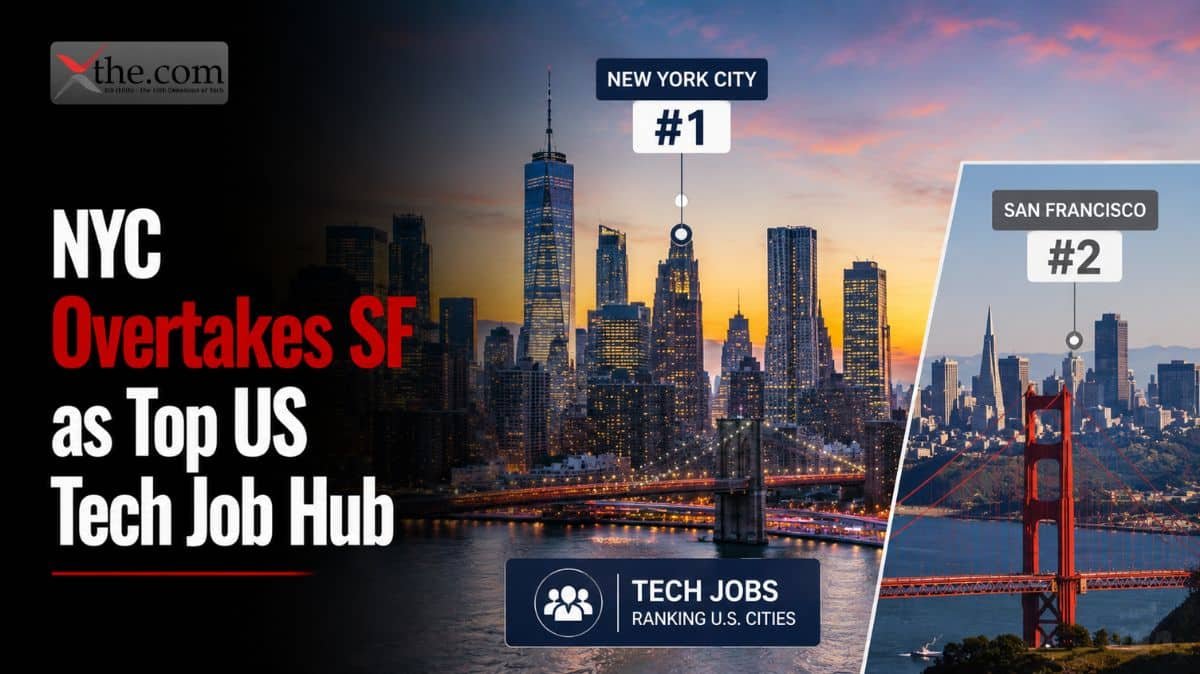
In a historic shift that many industry observers have been predicting for years, New York City has officially overtaken San Francisco as the largest tech job hub in the United States. According to data compiled by CBRE and analyzed by CNBC, the New York metropolitan area now employs approximately 23,000 more tech workers than the San Francisco Bay Area.
The data, published on August 20, 2026, reflects a dramatic reshaping of Americas technology landscape. While San Francisco and the broader Bay Area remain home to many of the worlds largest tech companies, a combination of high housing costs, remote work policies, and aggressive recruiting has steadily eroded the regions dominance.
The Numbers Behind the Shift
CBRE Tech Employment Report shows that the New York metropolitan area now has approximately 402,000 tech workers, compared to 379,000 in the San Francisco-Oakland-Berkeley metropolitan area. The gap has been widening steadily since 2023.
Several factors have contributed to New York rise. The city has become a major hub for artificial intelligence startups, with companies including OpenAI, Cohere, and dozens of smaller AI firms establishing significant operations in Manhattan. The financial sectors massive investment in AI and fintech has also driven tech job growth.
Meanwhile, San Francisco has struggled with the aftereffects of the tech industrys post-pandemic restructuring. Major layoffs at companies including Meta, Google, and Salesforce reduced the Bay Area tech workforce significantly in 2023 and 2024.
Why New York Is Winning
New York tech boom is being driven by several converging advantages. First, the city existing strength in finance, media, and advertising has created natural demand for technology talent. Companies in these industries have invested heavily in digital transformation.
Second, New York has become the epicenter of the AI startup ecosystem. The city is home to more AI companies than any other metro area, according to PitchBook data. OpenAI, which relocated its headquarters from San Francisco to New York in 2025, has been a catalyst.
Third, the city quality of life advantages, cultural amenities, public transit, walkable neighborhoods, have made it increasingly attractive to young tech workers. The return-to-office movement has also favored New York, where public transit infrastructure makes commuting feasible.
The AI Factor
Perhaps the single biggest driver of New York tech job growth has been the artificial intelligence boom. AI companies have been disproportionately drawn to New York. The city universities, Columbia, NYU, Cornell Tech, produce a steady stream of AI research talent.
OpenAI decision to move its headquarters to New York in 2025 sent a powerful signal to the industry. The company, valued at over 00 billion, brought thousands of high-paying jobs and attracted a constellation of AI startups, service providers, and investors.
The AI hiring boom has pushed average tech salaries in New York above 85,000, compared to 75,000 in San Francisco. While cost of living remains high in both cities, New York offers better value when transportation costs and housing options are considered.
San Francisco Response
San Francisco is not going down without a fight. The city has launched several initiatives to retain and attract tech talent, including tax incentives for tech startups, streamlined permitting, and partnerships with Bay Area universities.
The Bay Area still holds significant advantages. It remains home to Apple, Google, Meta, and thousands of established tech companies. The venture capital ecosystem still concentrates a disproportionate share of funding in the region.
However, other tech hubs including Austin, Miami, Seattle, and Denver are also growing rapidly, creating a more distributed technology landscape than the Bay Area-centric model that dominated for decades.
What This Means for Tech Workers
For tech workers, the diversification of tech hubs represents a positive development. More options mean more leverage in salary negotiations, less pressure to live in one of the most expensive housing markets, and greater flexibility.
Remote and hybrid work policies have also expanded the geography of tech employment. Many companies now hire tech talent regardless of location, allowing workers to live in lower-cost areas while earning Bay Area or New York salaries.
For job seekers, New York should be at the top of the list when considering tech career opportunities. The city offers a unique combination of tech industry growth, diverse employment opportunities, and a quality of life that few other cities can match.
The Bigger Picture
The shift from San Francisco to New York reflects a broader trend toward the geographic diversification of the technology industry. For decades, Silicon Valley was synonymous with tech innovation. Today, innovation is happening everywhere.
This diversification is healthy for the industry and the country. Concentrating all tech talent in a single region creates vulnerability. A distributed technology ecosystem is more resilient, more competitive, and more accessible to a broader range of people.
As 2026 unfolds, one thing is clear: the tech industry center of gravity has shifted east. Whether San Francisco can reclaim its crown, or whether New York lead will continue to grow, remains to be seen.
The real estate market reflects the shifting tech landscape. Office vacancy rates in San Francisco remain above 25 percent, among the highest of any major US city. In contrast, Manhattan commercial real estate has tightened considerably, with tech companies accounting for a growing share of new lease signings. Several major tech firms have opened or expanded New York offices in the past year.
The startup ecosystem tells a similar story. In 2025, New York-based startups raised 8 billion in venture capital, compared to 5 billion for San Francisco-based startups. The gap has continued to widen in 2026, with New York capturing an increasingly large share of AI-related investment.
Cultural factors also play a role. San Francisco reputation has been tarnished by concerns about homelessness, crime, and quality of life issues that have become more prominent in recent years. While the city has taken steps to address these challenges, the perception problems have contributed to an exodus of tech workers and companies to other locations, with New York being a primary beneficiary.
The implications for the broader technology industry are profound. For decades, the concentration of tech talent in Silicon Valley created a powerful network effect that reinforced the regions dominance. Now that network effect is weakening, and the benefits of geographic diversification are becoming apparent. Companies can tap into talent pools in multiple cities, reducing their dependence on any single location.
External Sources:
- CNBC/CBRE Report: https://www.cnbc.com/2026/08/tech-jobs-nyc-surpasses-sf/
- Crunchbase News: https://news.crunchbase.com/venture/nyc-tech-jobs-2026/