





Nvidia, the semiconductor giant that has become synonymous with the artificial intelligence revolution, is set to report its second quarter fiscal 2027 earnings on August 26, 2026. Wall Street analysts are expecting the company to deliver another blockbuster quarter, with consensus estimates calling for revenue of approximately 92 billion dollars and earnings per share of 2.09 dollars.
The expected revenue figure represents a staggering 96 percent increase compared to the same quarter last year, underscoring Nvidia continued dominance in the AI chip market. If the company meets or exceeds these expectations, it would mark another quarter of extraordinary growth.
The Numbers Wall Street Is Watching
The key metrics that investors will focus on during the earnings report include total revenue, data center revenue, gaming revenue, and forward guidance. Data center revenue, which encompasses sales of AI accelerators to cloud providers and enterprises, is expected to account for the vast majority of total revenue.
Gaming revenue, which once dominated Nvidia business, has become a smaller portion of the overall revenue mix. However, it remains important as an indicator of consumer demand for graphics technology and as a hedge against potential slowdowns in the AI chip market.
Forward guidance is perhaps the most critical element of the earnings report. Nvidia stock price is heavily influenced by expectations for future growth, and any deviation from expected guidance could trigger significant stock price movement.
Nvidias Incredible Growth Trajectory
To appreciate the significance of Nvidia upcoming earnings report, it is helpful to put the numbers in context. Just five years ago, Nvidia quarterly revenue was approximately 5 billion dollars. The company is now expected to report revenue nearly 20 times that level.
The AI revolution has been the primary driver of this growth. As companies across every industry race to deploy artificial intelligence capabilities, they need massive amounts of computing power to train and run AI models. Nvidia graphics processing units turned out to be ideally suited for the parallel computing tasks required by AI.
The company CUDA software platform has created a powerful ecosystem lock-in effect. Even as competitors offer potentially superior hardware, the vast majority of AI developers have built their tools and workflows around Nvidia platform.
The Competitive Landscape
Despite its dominant position, Nvidia faces increasing competition from multiple directions. AMD has made significant strides in the AI chip market with its MI300X accelerators, winning contracts with major cloud providers and capturing an estimated 10 to 15 percent market share.
Custom silicon developed by hyperscale cloud providers represents perhaps the most significant competitive threat. Google tensor processing units, Amazon Trainium chips, and Microsoft Maia accelerators are all being deployed at scale within their respective cloud platforms.
Intel has also re-entered the AI chip race with its Gaudi accelerators, though it has struggled to gain significant market share. Newer entrants including Cerebras, Groq, and SambaNova are developing innovative approaches to AI computing.
What Nvidia Needs to Deliver
For the earnings report to be considered successful, Nvidia will need to meet or exceed the consensus estimates for revenue and earnings. However, the market reaction will likely depend more on forward guidance and management commentary than on the backward-looking results.
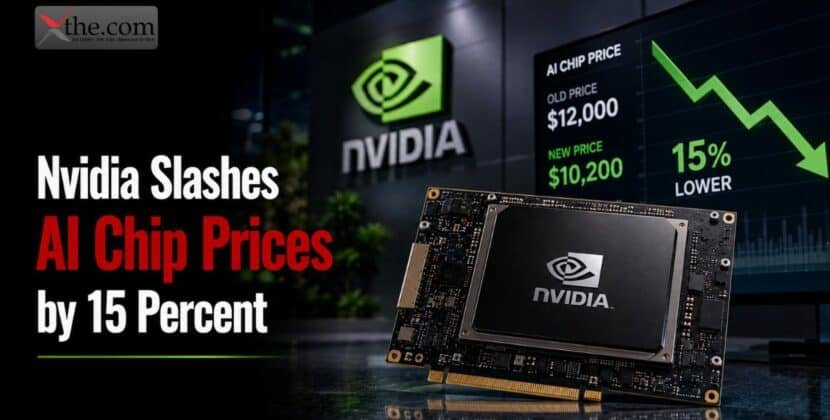
Management will also need to address questions about the company pricing strategy. Recent reports indicate that Nvidia has offered price discounts to some of its largest customers, a move that could pressure margins in future quarters.
The transition to next-generation chip architectures is another critical topic. Nvidia Vera Rubin chips represent the next step in the company technology roadmap, and investors will want assurance that the transition is proceeding smoothly.
Market Implications
Nvidia earnings report will have implications far beyond the company itself. As one of the largest companies in the world by market capitalization, Nvidia stock price movement affects major market indices and investor sentiment broadly.
A strong report could boost confidence in the AI investment thesis and lift the entire technology sector. Conversely, a disappointing report could trigger a broader reassessment of AI-related investments.
The semiconductor industry more broadly will be watching closely. Nvidia earnings provide insight into the health of the AI chip market, which has been the primary growth engine for the semiconductor industry.
Looking Ahead
Nvidia Q2 earnings report represents a pivotal moment for the company and the AI industry. The expected 92 billion dollar revenue figure would confirm that the AI boom is continuing at a breathtaking pace.
The company long-term prospects remain strong, supported by the continued growth of AI applications across every industry. However, the competitive landscape is evolving rapidly, and Nvidia will need to continue innovating to maintain its leadership position.
For investors and industry observers, the Nvidia earnings report has become one of the most important regular events in the technology calendar. It provides a window into the health of the AI revolution and the companies that are powering it.
The broader implications of Nvidia earnings extend to the entire technology ecosystem. Software companies depend on Nvidias hardware.
The options market is pricing in significant volatility with implied moves of plus or minus 8 to 10 percent for the stock price.
Nvidia Jensen Huang has compared the current moment to the early days of the internet.
Nvidia data center revenue has grown from less than 30 percent to more than 80 percent of total revenue in five years.
The analyst community is broadly bullish on Nvidia with the majority of firms maintaining buy ratings.
For long-term investors, the key question is whether the AI chip market will continue to grow fast enough to justify the current valuation.
The historical context for Nvidias earnings trajectory is remarkable. Founded in 1993 as a graphics chip maker, its transformation into the dominant AI computing provider is one of the most successful pivots in technology history.
Nvidias customer base has expanded far beyond PC gamers. Automotive manufacturers, healthcare companies, and financial services firms are all significant customers.
The company R and D budget now exceeds 10 billion dollars annually.
The supply chain for AI chips involves some of the most advanced manufacturing processes in the world. Nvidias chips are fabricated by TSMC using cutting-edge process nodes, creating a complex geopolitical dynamic.
For the broader market, Nvidias earnings have become a proxy for the health of the entire AI ecosystem. A strong report would reinforce the narrative that AI investment is delivering real financial returns, while a miss could trigger a broader tech selloff.
SOURCES:
- Yahoo Finance: https://finance.yahoo.com/news/nvidias-q2-earnings-to-test-resurgent-ai-trade-112502189.html