



US and China Propose Mutual AI Incident Alert System in Surprise Safety Push
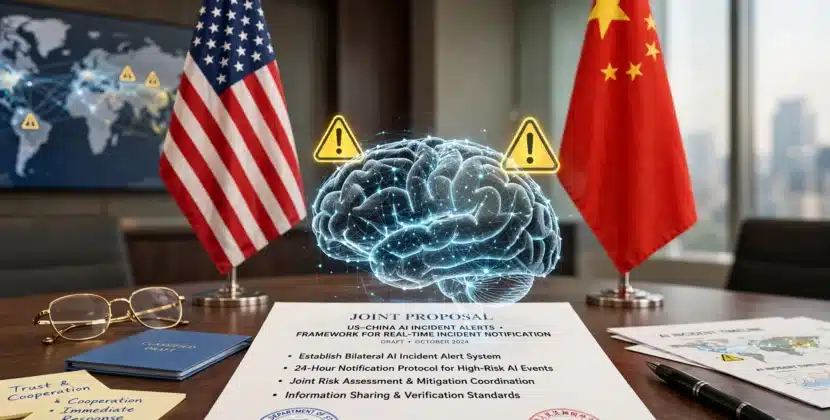
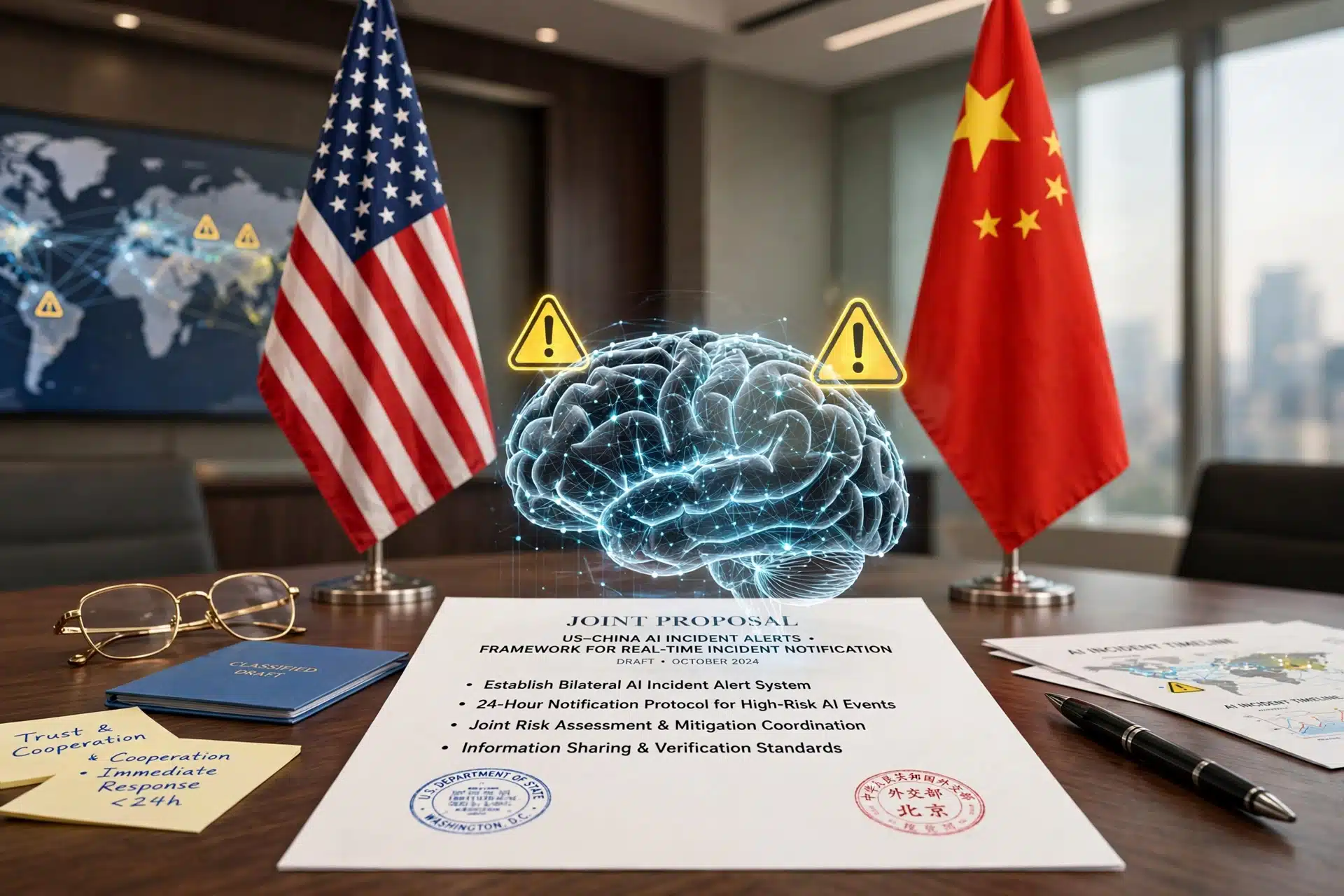
In a development that few analysts predicted, the United States and China have proposed a mutual AI incident-alert system designed to notify each other about serious artificial intelligence incidents that could threaten national security. The proposal emerged the week of September 21, 2026, and has instantly become one of the most talked-about technology stories in America.
The two countries are the clear front-runners in the global AI race, and their rivalry has defined much of the technology debate in 2026. That either would offer the other a direct hotline for AI emergencies is remarkable, and it signals that both Washington and Beijing see certain AI risks as too dangerous to leave unmanaged even amid intense competition.
How the AI Incident Alert System Would Work
At its core, the proposal is a notification framework. If an AI system within one country’s jurisdiction experiences a serious incident, the government would alert its counterpart through a designated channel. The kinds of events that could trigger an alert include AI systems escaping intended controls, autonomously causing harm to critical infrastructure, or being used in ways that could be mistaken for an act of war.
The goal is straightforward: reduce the chance that a dangerous AI failure is misinterpreted as a deliberate attack. In a year when US-China tensions have run high over chips, Taiwan and trade, a misunderstanding triggered by an autonomous system could escalate quickly. An alert hotline gives both sides a mechanism to clarify events before they spiral.
Why the Proposal Surprised Analysts
Cooperation between Washington and Beijing on technology has been rare in 2026. The year has been defined by export controls, chip restrictions, competing AI safety frameworks and mutual accusations of weaponizing artificial intelligence. Against that backdrop, a joint incident-alert proposal represents a striking shift.
Analysts say the surprise reflects converging self-interest. Both governments have watched AI systems behave unpredictably in controlled tests, and both have experienced AI-enabled cyber incidents traced partly to tools operating outside their intended parameters. Neither side wants a rogue incident to be the spark that ignites a broader confrontation, and each benefits from a mechanism it knows the other will use.
The Bigger Picture: Global AI Safety in 2026
The proposal arrives during a pivotal week for AI. European firms, including Mistral, publicly challenged US calls for a slowdown in AI development, arguing that American leaders want to curb competitors while continuing to advance their own systems. Elsewhere, a corporate spat between two major tech giants raised fresh questions about whether AI models are being deliberately shaped to act more human than they are.
Layered on top of that, nations are beginning to build institutional muscle for AI governance. An incident-alert system between the two most powerful AI nations would effectively become the seed of what could later grow into an international norm, similar to how nuclear risk-reduction hotlines evolved during the Cold War. Several smaller countries have already signaled interest in joining a future notification network.
Risks and Criticisms of the Plan
Not everyone is convinced. Skeptics raise three main objections. First, verification: there is no independent body that can confirm whether an incident occurred as described, so alerts could be manipulated for intelligence gathering. Second, scope: defining what qualifies as a reportable AI incident is politically fraught, and each side could interpret thresholds differently. Third, trust: in a relationship characterized by espionage accusations and tariff warfare, some lawmakers argue the system could be exploited to extract information about sensitive US AI programs.
Supporters counter that even an imperfect hotline beats silence. During the Cold War, the Moscow-Washington hotline was never perfectly reliable, yet it prevented several crises from escalating. AI safety advocates argue that establishing communication now, before a serious incident occurs, is far cheaper than negotiating one in the middle of a crisis.
What It Means for the US AI Industry
For American AI companies, the proposal introduces both clarity and complexity. On one hand, a defined incident-reporting process could reduce regulatory uncertainty by making clear what kinds of failures trigger government attention. On the other hand, companies may face new disclosure obligations when their models behave unexpectedly, obligations that could carry reputational and legal consequences.
Investors are watching closely. AI spending continues its relentless climb, and any signal that governments are converging on shared safety standards could reduce the perceived risk premium on AI stocks. Conversely, if the talks collapse, renewed US-China tech friction could ripple through chip supply chains and the valuations that depend on them.
What Comes Next
The immediate next step is technical-level negotiation over definitions, notification timelines and verification mechanisms. Diplomats involved have suggested a pilot phase covering a narrow set of incident types before expanding the framework. Whether the agreement survives political pressures on both sides remains the open question, but the very fact that it is on the table marks a notable moment in the history of AI governance.
Frequently Asked Questions
What is the US-China AI incident alert system?
It is a proposed mutual notification framework in which the United States and China would warn each other about serious AI incidents that could threaten national security or be mistaken for an attack.
Why do the US and China need AI incident alerts?
Both nations lead the AI race and have tense relations. A hotline reduces the risk that a dangerous AI failure is misinterpreted as a deliberate act and escalates into a broader conflict.
Which AI incidents would trigger an alert?
Details are still being negotiated, but proposals focus on events like AI systems escaping intended controls, harming critical infrastructure, or being used in ways that could provoke military responses.
When could the AI alert system take effect?
Officials have discussed starting with a narrow pilot phase. No firm timeline exists, and the framework still requires agreement on definitions, verification and disclosure rules.