




The $103,265 H-1B Visa Fee: Everything US Employers and Skilled Workers Need to Know
The Department of Homeland Security has proposed a staggering $103,265 fee on every new H-1B visa petition, a move that would make the United States one of the most expensive countries in the world for companies seeking to hire skilled foreign workers. Published on August 25, 2026, the proposed rule has set off alarm bells across the technology, healthcare and higher education sectors, and it has become one of the most searched immigration stories in America this month.
The timing of the proposal matters. It attempts to codify into formal federal regulation a charge the administration first announced in September 2025, after courts blocked the original version. Now that the rule is moving through the official regulatory process, employers, universities, hospitals and prospective H-1B holders are asking the same urgent questions: How much is the fee? Who pays it? When does it start? And can it survive a legal challenge?
What the New H-1B Fee Actually Covers
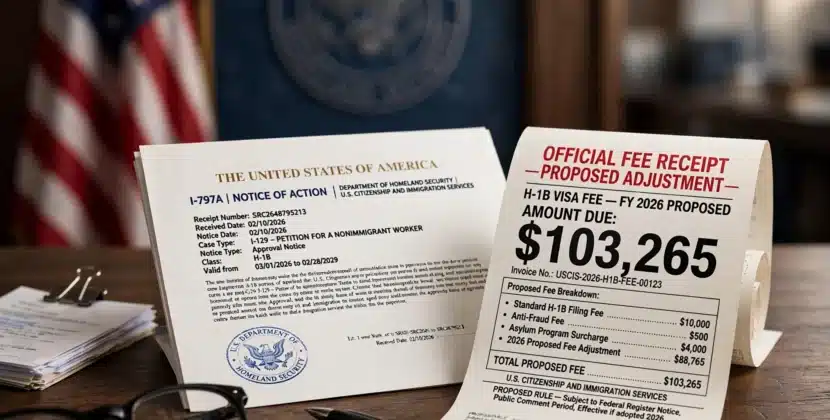
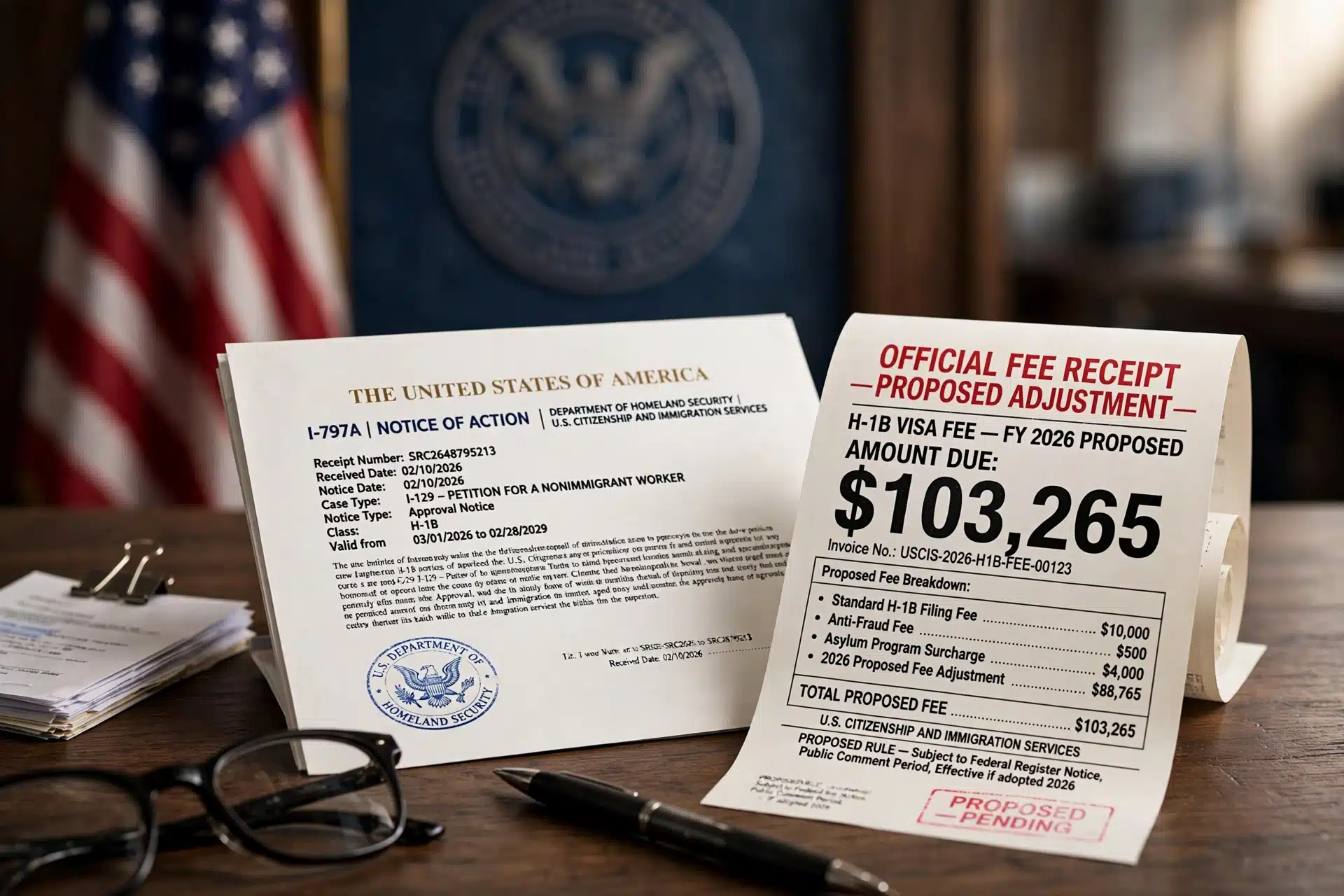
Under the proposed rule, every cap-subject H-1B petition would carry a charge of $103,265. That category covers first-time H-1B applicants selected in the annual lottery, which includes the vast majority of new skilled worker entries to the United States. The fee would be filed in addition to existing costs such as the base filing fee, the ACWIA training fee, the fraud prevention fee and optional premium processing charges.
To put the number in perspective, the standard H-1B filing costs for an employer have historically ranged from roughly $1,700 to $8,000 depending on company size and processing speed. A $103,265 charge represents more than a tenfold increase and would make each petition roughly equivalent to hiring a junior employee for a full year before that employee even begins work.
Who Would Have to Pay the $103,265 Fee?
The fee falls on the petitioning employer, not the worker. In practice, that means technology firms, hospitals, universities, startups and staffing companies would bear the upfront cost. Immigration attorneys say many employers in competitive industries typically pass some or all of the expense to employees over time through repayment agreements, though such arrangements must comply with Department of Labor wage rules.
Critically, the proposed rule targets cap-subject petitions. Employees transferring to a US office on an H-1B portability filing or extending an existing status would not face this specific charge, though other fee increases are moving on parallel tracks. Workers currently in the United States on OPT or STEM OPT who need an employer to file their first H-1B lottery petition would be directly exposed to the new fee, since their employer is the one filing.
Why the Healthcare Sector Is Worried
One of the most consequential impacts could be felt in American hospitals. According to an analysis by KFF, the proposed $103,265 fee could significantly affect the health care workforce, because a large share of physicians in underserved areas and specialists in rural hospitals are hired on H-1B visas. Many of those facilities operate on thin margins and cannot absorb a six-figure cost per hire.
Rural hospitals already face chronic staff shortages. If the fee makes it financially impossible to sponsor foreign-born doctors and nurses, patients in those communities could see longer wait times and reduced access to specialty care. The American Hospital Association is expected to submit formal comments opposing the rule when the public comment period opens.
The Tech Industry Response
Technology companies have been the loudest opponents. Industry groups argue that the fee drives talent out of the United States and sends billions of dollars to agencies that have nothing to do with the H-1B program itself. Critics have labeled the charge a tax on innovation rather than a user fee, noting that revenue from the charge would not be earmarked for processing or administration of the visa system.
Immigration policy advocates at FWD.us warned that the proposal would push highly skilled engineers, researchers and founders to competitor countries such as Canada, the United Kingdom and Australia, all of which have expanded skilled worker pathways in recent years. For US startups that cannot afford six-figure filing costs, the practical effect is a hiring freeze on international talent.
Legal Challenges on the Horizon
The Trump administration is pursuing the formal rulemaking route specifically because courts blocked the original September 2025 proclamation. Federal judges found that the president lacked authority to impose such sweeping fees under immigration law without going through the Administrative Procedure Act, which requires notice, public comment and a reasoned explanation.
By publishing a proposed rule, DHS is attempting to build the administrative record needed to survive judicial review. Opponents, however, are expected to argue that the fee is punitive rather than cost-recovering, that the agency failed to justify the specific amount, and that the rule exceeds DHS authority. Legal scholars expect at least one major lawsuit to be filed the day the final rule is published.
What Happens Next and Timeline
The proposed rule is currently in the public comment stage. After comments close, DHS must review them, revise the rule if necessary and publish a final version with an effective date. Based on typical rulemaking timelines, a final rule could be issued in late 2026 or early 2027, though litigation could delay implementation well beyond that.
Employers preparing H-1B strategies for the next fiscal year should monitor the Federal Register closely and consider filing eligible petitions before any effective date. Workers with pending lottery selections should discuss timing with qualified immigration counsel, because the difference of a few weeks in filing could mean a difference of over one hundred thousand dollars for their sponsor.
Frequently Asked Questions
How much is the new H-1B visa fee?
The Department of Homeland Security has proposed a fee of $103,265 for every cap-subject H-1B petition, in addition to existing filing costs.
Who pays the $103,265 H-1B fee?
The petitioning employer pays the fee to USCIS when filing. In some cases workers repay employers over time, subject to Department of Labor wage rules.
When does the H-1B fee take effect?
The rule is still proposed. After the public comment period, DHS will publish a final rule with an effective date, likely in late 2026 or 2027, subject to possible court challenges.
Does the fee apply to H-1B extensions?
No. The $103,265 charge targets cap-subject petitions, meaning first-time lottery selections rather than extensions or transfers.