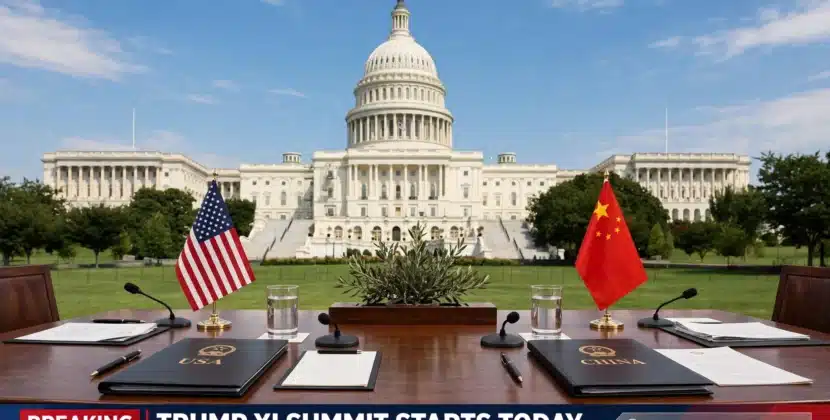





Trump-Xi Summit Begins Today in Washington: Tariffs, Taiwan, AI and Rare Earths on the Table
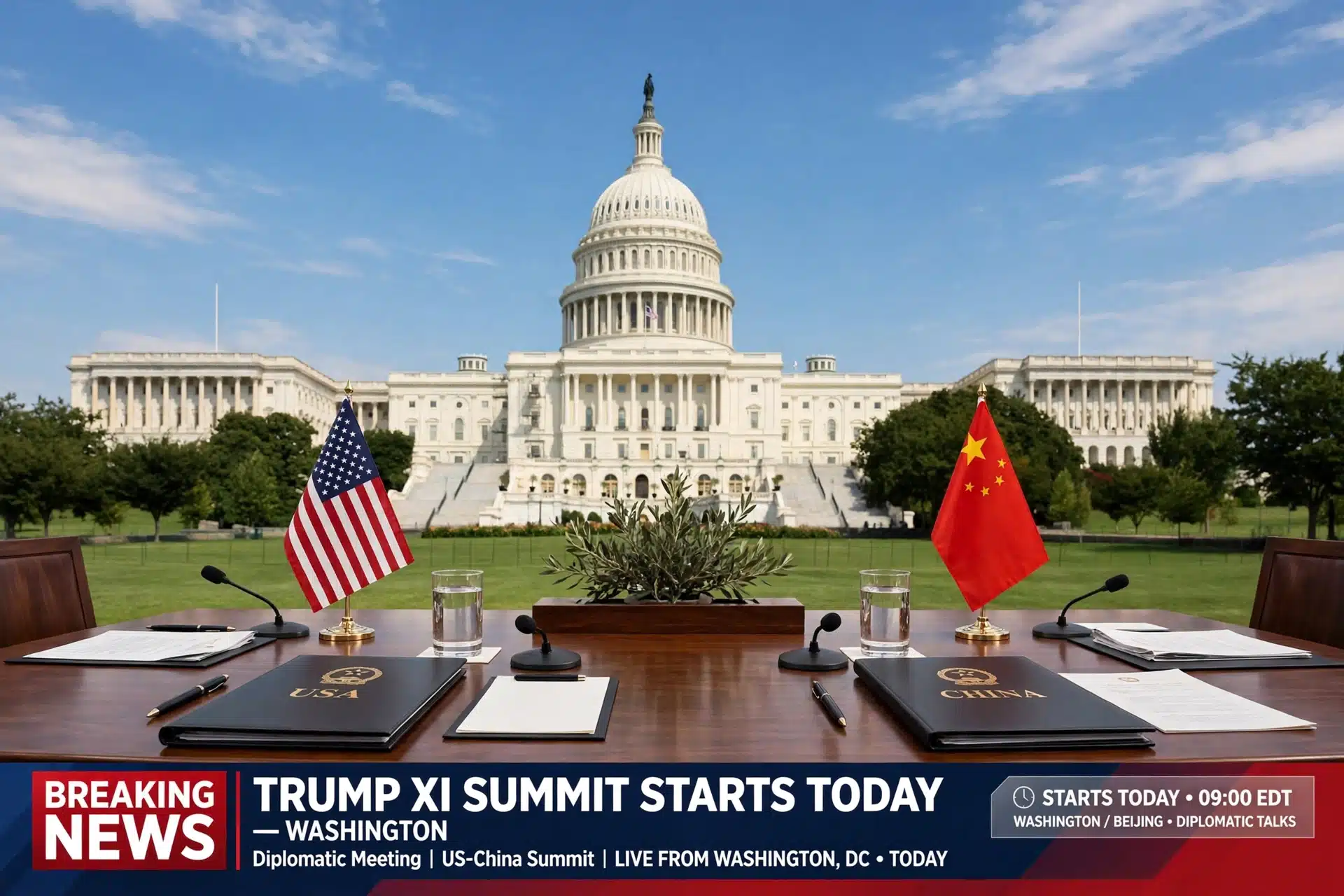
Chinese President Xi Jinping landed in Washington on Wednesday and was greeted by President Trump at Joint Base Andrews, setting the stage for the highest-stakes US-China meeting in years as the two leaders sit down together today at the White House. The summit arrives with tensions elevated on multiple fronts simultaneously: tariffs are punishing businesses on both sides, Taiwan remains the most dangerous flashpoint in US-China relations, the war with Iran has complicated energy markets, and artificial intelligence has become a strategic battleground of its own.
Analysts describe this as the most consequential diplomatic event of 2026, and the agenda reflects it. Unlike previous meetings dominated almost entirely by trade, this summit covers an unusually broad and interconnected set of issues. Here is a complete look at what is on the table, what each side wants and what results Americans can realistically expect.
The Core Agenda: Five Issues That Matter Most
First, trade and tariffs. US tariffs on Chinese goods remain at elevated levels from the ongoing trade war, and Beijing wants relief. The White House says China committed during the May summit to purchasing at least $17 billion per year in American agricultural products, and Washington wants that commitment expanded and verified. American farmers and manufacturers are watching for any deal that eases retaliatory duties on US exports.
Second, Taiwan. Arms sales to Taipei have been a recurring point of conflict, with Xi pressing Trump to halt or limit weapons transfers to the island. The Trump administration has signaled that Taiwan leverage cuts both ways, and analysts expect no breakthrough, only careful management of a dispute that has driven US-China military tensions to their highest point in decades.
Third, artificial intelligence. The urgency has grown after a series of incidents including AI security breaches and the global debate over whether development should slow. Both governments have proposed mechanisms for communicating about AI risks, and the summit could produce an initial framework for incident alerts between Washington and Beijing.
Fourth, rare earth minerals and critical energy inputs. China dominates global processing of the minerals that underpin semiconductors, weapons systems and clean energy tech, and both sides view supply chain dependence as a national security vulnerability. Expect discussions on export controls and stockpiling.
Fifth, the war with Iran. With oil prices elevated and US naval forces engaged in the Gulf, China’s role as Iran’s largest economic partner makes Beijing a consequential player. Washington is seeking Chinese cooperation, or at least neutrality, in constraining Iranian capabilities and stabilizing energy flows through the Strait of Hormuz.
What Each Side Wants
Trump enters the summit wanting visible, deliverable wins: expanded Chinese purchases of US goods, movement on fentanyl precursor enforcement and a break from escalating technology restrictions. Domestically, a successful summit reinforces the administration’s negotiating narrative ahead of midterm campaigning.
Xi wants three things above all: reduced tariffs that are slowing China’s economy, limits on US arms sales to Taiwan, and relief from sweeping American semiconductor export controls. Beijing also arrives with leverage of its own, particularly in rare earth processing and its continued purchase of Russian and Iranian energy.
Why Expectations Should Be Modest
History counsels restraint. Previous Trump-Xi meetings have producedframeworks, truces and announcement documents that faded within months as structural disagreements reasserted themselves. Analysts across think tanks consistently argue that this summit should be judged by implementation of existing commitments rather than the volume of new agreements announced.
The three Ts, trade, Taiwan and tech, remain fundamentally unresolved. Tariffs address symptoms of a deeper competition over industrial policy and technology leadership. Taiwan involves sovereignty claims neither side will concede. And AI development is racing forward faster than diplomacy can track. What the summit can realistically deliver is stabilization: clearer red lines, fewer surprises and channels that prevent incidents from spiraling.
What It Means for Americans
Ordinary Americans feel US-China relations in concrete ways: the price of electronics, grocery costs tied to agricultural exports, gasoline prices linked to Middle East instability amplified by Chinese diplomacy, and job security in manufacturing sectors exposed to Chinese competition. A productive summit could ease some of those pressures through tariff relief and purchase commitments. A failed summit could produce new restrictions that raise costs for consumers and complexity for businesses.
Markets will parse every joint statement and camera handshake for tone. The most honest reading may simply be that both leaders chose to meet rather than let tensions escalate further, which in the current environment counts as an achievement in itself. The details announced in the coming hours will determine whether this Washington visit becomes a genuine turning point or another well-photographed pause.
Frequently Asked Questions
When is the Trump-Xi summit?
Xi Jinping arrived in Washington on September 23 and the leaders meet September 24, 2026, at the White House for a summit covering trade, Taiwan, AI, rare earths and Iran.
What is on the Trump-Xi summit agenda?
Tariffs and trade commitments, US arms sales to Taiwan, AI safety frameworks, critical mineral supply chains and coordination on the war with Iran top the agenda.
Will the summit produce a trade deal?
Analysts expect limited movement on trade, with more potential on practical commitments like agricultural purchases than on structural issues like industrial subsidies.
Why do rare earth minerals matter at the summit?
China processes most of the world’s rare earth elements, giving it leverage over semiconductors and weapons manufacturing that both governments want to reduce.