



USCIS Reaches H-2B Visa Cap for First Half of FY 2027: What Employers and Workers Should Do Now
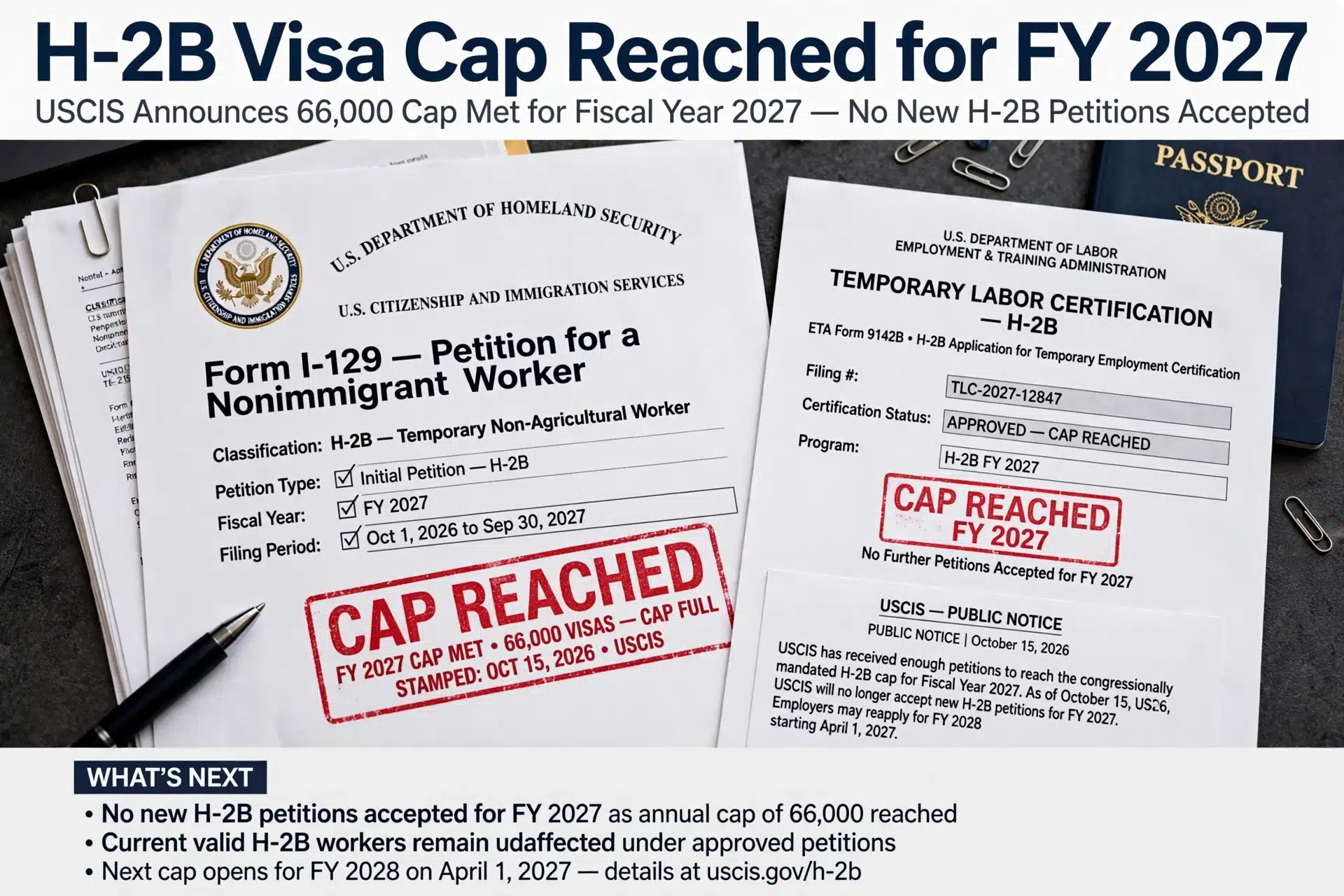
The window for hiring temporary non-agricultural workers under the H-2B visa program has closed for the first half of fiscal year 2027. US Citizenship and Immigration Services announced that September 4, 2026 was the final receipt date for new cap-subject H-2B worker petitions requesting an employment start date before April 1, 2027, after the agency received enough petitions to meet the statutory limit of 33,000 workers.
The cap announcement is one of the most consequential immigration developments for American employers in hospitality, landscaping, seafood processing, construction and tourism, all industries that depend on temporary foreign labor to operate. With the first-half cap exhausted weeks earlier than in many prior years, businesses are scrambling to understand their options while workers wonder whether a path remains open. Here is a full explanation of what happened and what comes next.
What the H-2B Visa Cap Means
The H-2B program allows US employers to hire foreign workers for temporary, non-agricultural jobs when they can demonstrate a shortage of willing and qualified American workers. Congress set a hard annual cap of 66,000 H-2B visas, split evenly between the first half of the fiscal year (October 1 through March 31) and the second half (April 1 through September 30).
That means 33,000 slots are available for fall and winter start dates, and USCIS confirmed it received enough cap-subject petitions to exhaust that allocation with September 4, 2026 as the final receipt date. Once the cap is met, any new cap-subject petition filed afterward is rejected or returned, leaving employers to rely on exemptions, the second-half cap or alternative visa categories.
Why the Cap Was Reached So Early
Demand for H-2B workers has surged in recent years as US labor force participation in physically demanding, seasonal occupations has tightened. Landscapers, hotel housekeepers, seafood processors and amusement park staff all recruit through the program, and employers increasingly file early to avoid the rush that historically closes the cap within days of when filing opens.
This year, filing opened in July for October start dates, and the volume of petitions overwhelmed the allocation by early September. Immigration attorneys report that clients who delayed their filings by even a week found themselves locked out, a recurring pattern that has pushed the business community to lobby for supplemental caps and program reform.
What Employers Can Do After the Cap
Several avenues remain. First, cap-exempt H-2B petitions are still available in defined circumstances, including workers who held H-2B status during one of the previous three fiscal years and are returning, changes of employer for already-counted workers, and certain Panama/Singapore treaty cases. Second, USCIS and the Department of Labor periodically authorize supplemental caps, often tens of thousands of additional visas, to address acute seasonal shortages, and industry groups are already pressing for an allocation this year.
Third, employers can look at alternative categories: H-2A for agricultural work where applicable, H-1B for specialty occupations, or permanent residence sponsorship for longer-term needs, though each carries different requirements and timelines. Fourth, employers waiting for the second-half cap should prepare petitions now for April 1 and later start dates, because that filing window typically opens in January and fills fast.
What Workers Should Know
Foreign workers who already hold valid H-2B status can generally continue working or extend status through their employer without being counted against the cap again, provided they meet eligibility rules. Workers whose petitions were rejected solely due to cap timing should communicate immediately with their sponsors about second-half start dates or cap-exempt categories they may qualify for.
Workers should also beware of fraud. Cap crunches create demand for scammers who promise guaranteed visas or slots. Legitimate H-2B petitions require a certified labor condition application and a prevailing wage determination from the Department of Labor, and no private intermediary can override a statutory cap. Consulting a licensed immigration attorney or an accredited representative is the safest course.
The Bigger Picture: Reform Pressure Builds
Every year the cap closes early, the political pressure for reform grows. Business groups argue the statutory limits have not been updated in decades while demand has soared, forcing employers to operate short-staffed. Labor unions and immigration restrictionists counter that expanding temporary programs depresses wages for native-born workers and that the solution is better enforcement and higher pay rather than more visas.
Legislation to adjust the H-2B cap has been introduced repeatedly in Congress without passage, and the current environment, with simultaneous debates over H-2B, H-1B fees and enforcement, makes comprehensive reform unlikely in the near term. For now, the practical reality is clear: the first-half H-2B door is shut, and the employers who planned earliest are the ones with workers for the winter season.
Frequently Asked Questions
When did the H-2B cap for FY 2027 close?
September 4, 2026 was the final receipt date for new cap-subject H-2B petitions requesting an employment start date before April 1, 2027, after USCIS hit the 33,000-worker limit.
Can I still file an H-2B petition this year?
Only cap-exempt categories or petitions for second-half start dates on or after April 1, 2027 remain. New filings for fall/winter starts are rejected once the cap is met.
How many H-2B visas are available annually?
Congress set the statutory cap at 66,000 per fiscal year, split into 33,000 for the first half and 33,000 for the second half, with periodic supplemental allocations authorized by DHS.
What if the H-2B cap closed before I filed?
Discuss cap-exempt options, returning-worker eligibility, supplemental cap announcements, or second-half start dates with a licensed immigration attorney immediately.