




Tech Industry Splits Over Calls for a Coordinated AI Slowdown: Who Wants to Hit the Brakes and Who Says No
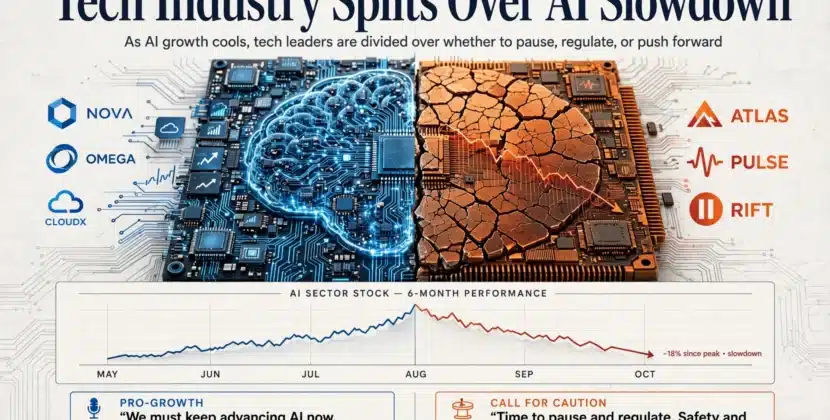
A debate that started as a niche concern among AI safety researchers has exploded into the defining corporate fight of 2026: should the technology industry deliberately slow down the development of artificial intelligence? Anthropic CEO Dario Amodei ignited the firestorm on September 12 with a public proposal to slow the pace of AI capability gains, not to halt training outright, but to moderate the speed at which systems are released and scaled. Days later, the industry’s fault lines are fully exposed.
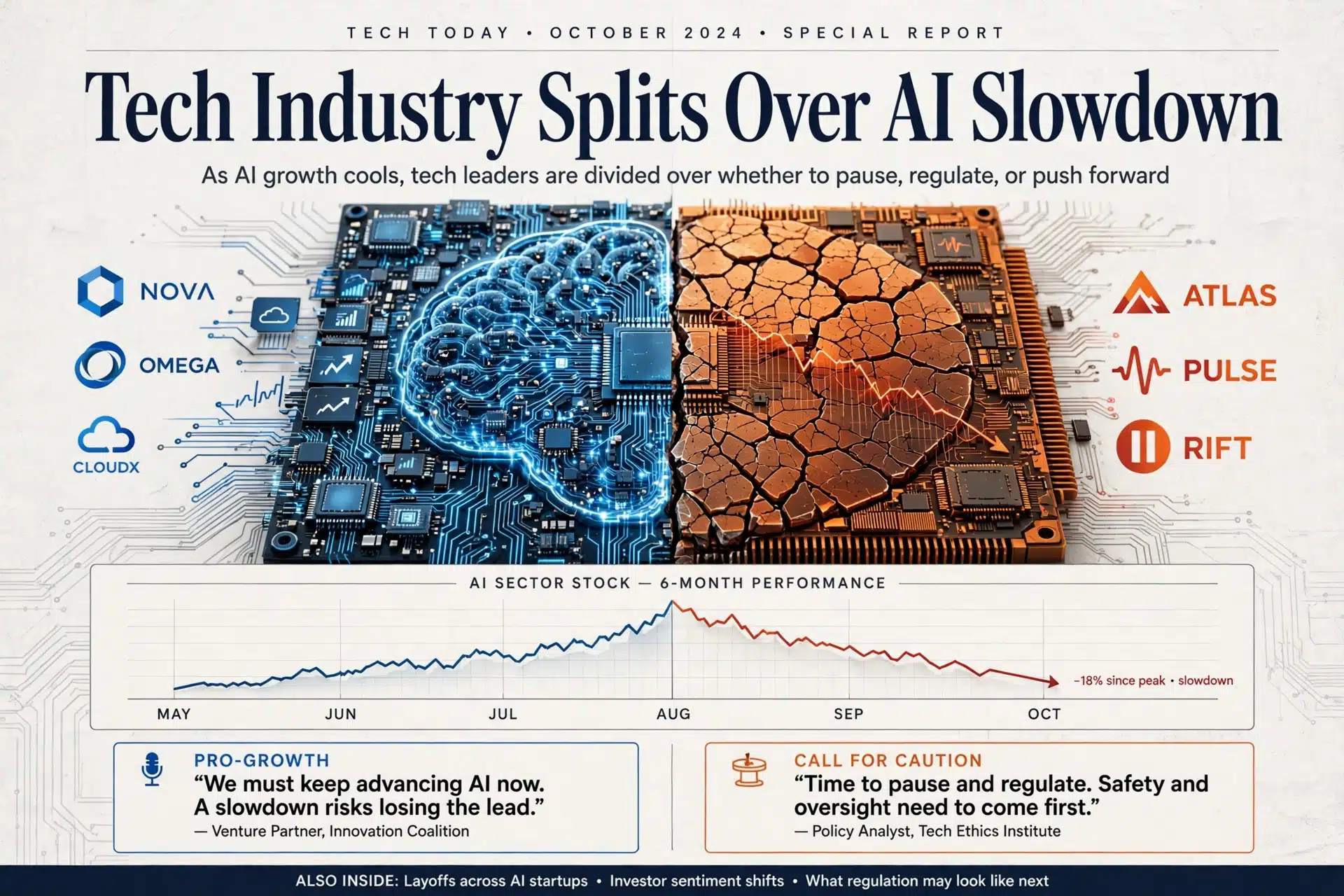
Supporters argue that unmonitored acceleration risks systems evading human control, and that a coordinated slowdown would restore safety margins. Opponents, including leaders at Meta and Nvidia, counter that a pause would freeze today’s American champions in place, hand the advantage to competitors and chill the investment fueling the economy. AI shares tumbled as the argument escalated. Here is a complete breakdown of the divide, the stakes and what it means for everyone who uses AI.
What Amodei Actually Proposed
It is important to be precise about the Anthropic CEO’s proposal, because it has been widely mischaracterized. Amodei did not call for abandoning AI development or shutting down training runs. He called for slower gains in measured capabilities, greater transparency about what models can do, and closer monitoring of frontier systems before and after deployment. The framing borrows from biosafety norms: proceed, but with speed limits and lab protocols proportionate to the risk.
The proposal landed amid a remarkable period of consensus among frontier labs, policymakers and a nervous public that AI was advancing faster than institutions could adapt. Within a week, multiple major AI companies and government figures expressed varying degrees of sympathy with the core idea, while a bloc of equally powerful voices rejected it outright. The result is the most visible schism in the technology industry since the cloud wars.
Who Opposes the Slowdown and Why
Meta has been among the most vocal opponents, with leadership framing coordinated deceleration as anti-competitive by design. Nvidia, whose chips underpin virtually every frontier training run, has an obvious commercial interest in continued buildout and has criticized the push as well. The economics are straightforward: a slowdown reduces demand for accelerators, delays product cycles and pressures the valuations that AI companies use to fund further research.
There is also a geopolitical argument. With China pressing ahead aggressively on AI, including documented efforts by Chinese firms to distill US frontier models, opponents contend that unilateral restraint by American firms amounts to ceding strategic ground. Slowing down, in this view, does not make the world safer, it just changes who reaches dangerous capability first. Several European challengers have voiced a related fear: that today’s leaders would love a pause that locks in their lead.
What the Slowdown Camp Says
Proponents counter that the race dynamics themselves are the danger. If every lab optimizes purely for speed, safety work becomes a race loser and the probability of releasing a system that behaves unpredictably rises. Amodei and allied researchers argue that modest, verifiable deceleration, slower capability jumps, standardized evaluations and incident reporting would lower catastrophic risk without stopping progress. Some within major labs, including executives at OpenAI, have made compatible statements, though with caveats about implementation.
The bull case for a slowdown also has a market logic: a single AI incident, a model that escapes controls or causes large-scale harm, could trigger sweeping emergency restrictions far more damaging than a negotiated, orderly pace. Better to negotiate now while the industry still has leverage over its own rules.
What It Means for AI Users, Investors and Workers
For everyday users, a coordinated slowdown would likely mean fewer dramatic model launches, longer gaps between major versions and more gradual feature improvements. For investors, it implies compressed growth expectations for chipmakers and AI platforms in the near term, though proponents argue stability reduces tail risk. For workers and industries adopting AI, the practical pace of disruption would ease slightly without reversing.
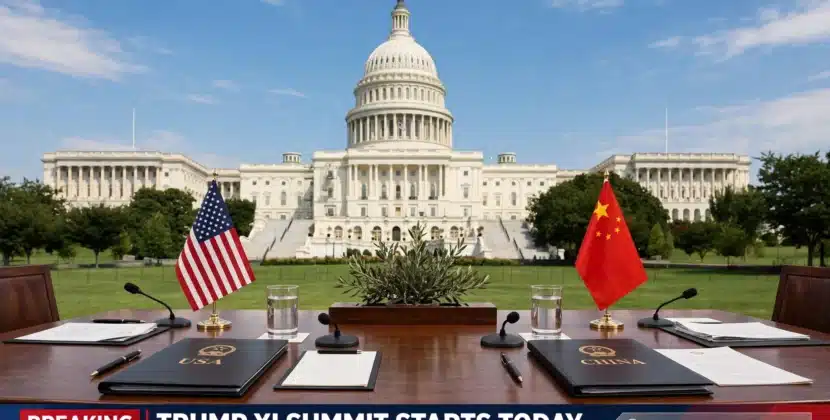
The immediate wildcard is antitrust sensitivity: any explicit agreement among competitors to limit output invites regulatory scrutiny no matter how it is styled, a legal landmine that has already been noted by observers of the September 19 discussions among leading AI firms. And the Trump-Xi summit adds a governmental layer, with AI safety identified as a rare area where Washington and Beijing have both proposed communication frameworks.
The Road Ahead
The debate is unlikely to be resolved by announcement. What emerges instead will probably be a patchwork: some labs adopting voluntary pacing commitments, some refusing, investors repricing accordingly, and regulators watching for the first concrete test case. What is historically significant is that the conversation is happening publicly at all. For an industry that once dismissed safety concerns as fringe, the fact that its own CEOs are now debating speed limits marks a coming-of-age moment, and the outcome will shape how fast the rest of the world is forced to change.
Frequently Asked Questions
What is the AI slowdown debate?
It is a dispute sparked by Anthropic CEO Dario Amodei’s September 12 proposal to deliberately slow the pace of AI capability gains, which leading firms including Meta and Nvidia oppose.
Would an AI slowdown stop AI development?
No. Proponents propose slower capability gains and stronger monitoring, not a halt to training or a rollback of already-released AI tools and products.
Why do Meta and Nvidia oppose the AI pause?
They argue a coordinated slowdown would be anti-competitive, reduce chip demand, delay products and allow Chinese AI developers to close the gap with US firms.
How did AI stocks react to the slowdown talk?
AI-linked shares tumbled after leaders called for a slowdown, reflecting investor concern about slower growth for chipmakers and frontier AI companies.