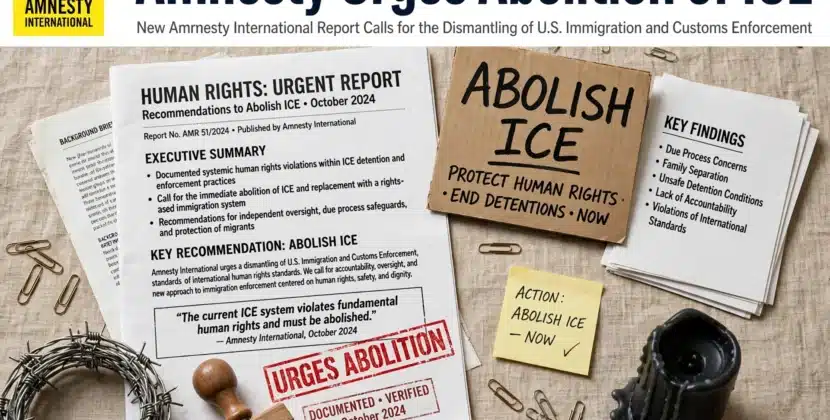






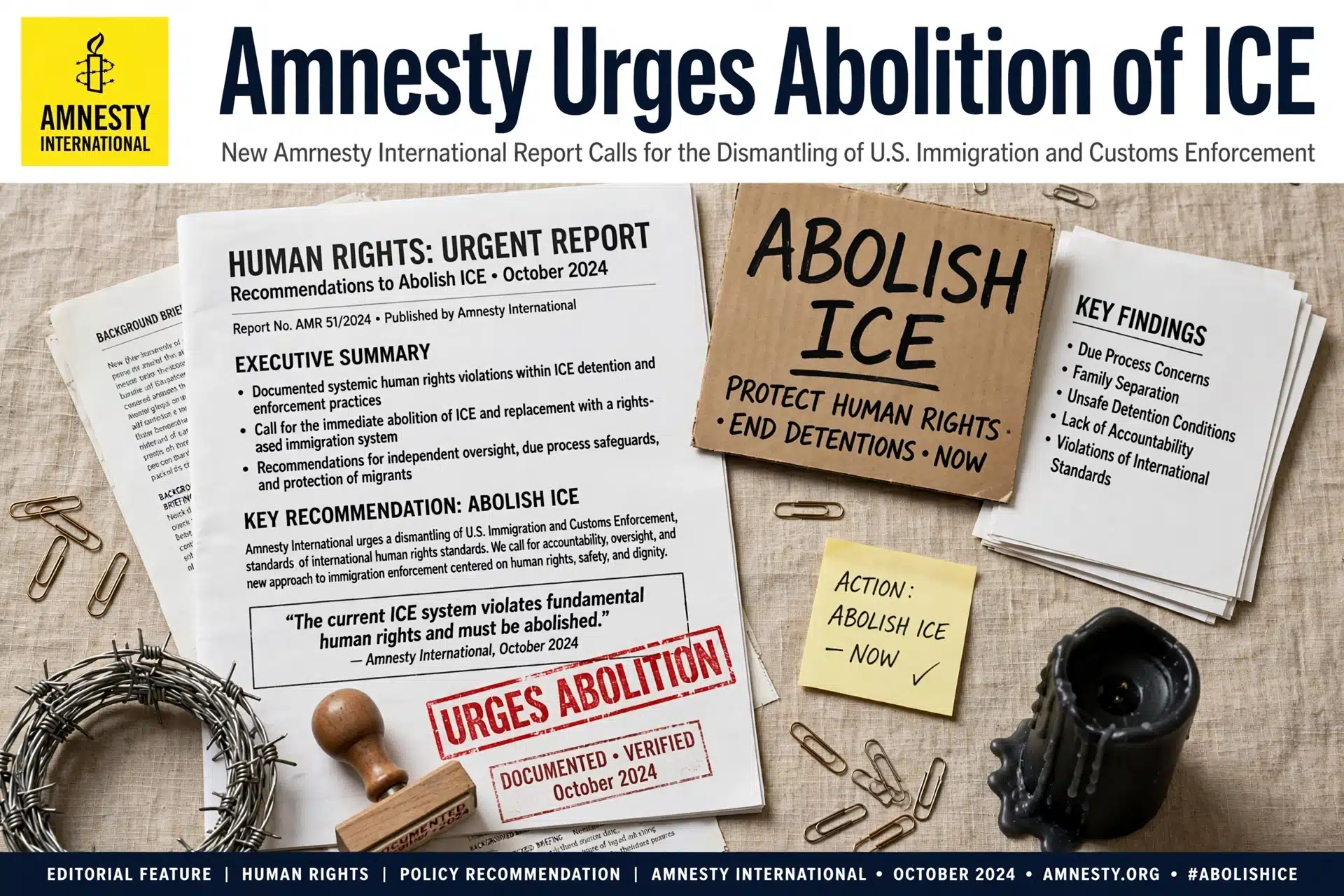
Amnesty International Calls for Abolition of ICE After Documenting Human Rights Violations in Operation Metro Surge
Amnesty International is formally calling for the abolition of Immigration and Customs Enforcement, the first time the global human rights organization has taken that position, after what it says was a documented pattern of violations during Operation Metro Surge, the massive federal immigration enforcement campaign that swept through Minnesota and the Twin Cities. The report released this week also examines ICE operations in Chicago, New Orleans and Washington, DC.
The findings land as immigration enforcement remains one of the most contested issues in American politics, with congressional oversight fights, state-level resistance and local elections all shaped by the question of how federal agents operate in American cities. Amnesty argues the problems are structural rather than a matter of individual misconduct. Here is what the report says, how the government has responded and what the call could mean for the debate over ICE.
What the Report Found
Amnesty researchers documented what the organization describes as a pattern of human rights violations, including arbitrary detention, excessive force, racial profiling and due-process failures, during Operation Metro Surge and related operations. The report concludes that these incidents were neither isolated nor exceptional, which is the core basis for the group’s conclusion that no set of internal reforms would fix the agency. Officials quoted in coverage of the report characterized some of the conduct as torture.
The organization reviewed cases from the Twin Cities first, then widened the lens to Chicago, New Orleans and the capital. That geographic spread is deliberate: Amnesty is arguing that the same operational model, large-scale sweeps conducted by federal agents with limited identification and rapid transfers of detainees, produces the same outcomes in different states. The report compiles witness testimony, legal filings and public records to build what it presents as a systemic case rather than a list of anecdotes.
Operation Metro Surge Explained
Operation Metro Surge was the largest federal immigration enforcement operation in Minnesota’s history, deploying roughly 4,000 federal agents across the state. It began amid a national escalation of removal operations and quickly became a flashpoint: residents described stops at workplaces and apartment buildings, local officials complained about limited notice, and protest movements organized strikes and shutdowns in response. A related federal review examined at least one death connected to the operation.
The scale is what makes the operation central to Amnesty’s argument. Enforcement sweeps of that size, the report suggests, inevitably sweep in US citizens, legal residents and people with no criminal records alongside targeted subjects, and the processing system that receives them is not designed to sort those categories quickly. Detainees transferred out of state face hearings far from family and counsel, which compounds errors rather than correcting them.
Why Amnesty Now Wants ICE Abolished
Amnesty’s shift from seeking reform to seeking abolition is the report’s most consequential step. The organization says that after reviewing years of conduct, from detention conditions to the use of masked agents and militarized equipment, it no longer believes the agency can be corrected from within. Its recommendation is to dismantle ICE and redistribute any legitimate functions, such as trafficking and smuggling investigations, to other bodies with genuine accountability mechanisms.
This places Amnesty alongside a coalition of advocacy groups that has made abolition a mainstream demand rather than a fringe one. Critics of the position counter that abolishing the agency would remove the primary mechanism for enforcing immigration law and that problems should be addressed through oversight, training and legislative standards. The report’s rebuttal is that decades of such measures have produced persistent, documented violations, which in its view shifts the burden of proof to defenders of the current structure.
How DHS and Republicans Responded
The Department of Homeland Security has defended its operations, saying enforcement actions prioritize public safety and that agents act within their legal authority. Administration officials and Republican lawmakers have consistently argued that the underlying issue is a broken immigration system that only Congress can fix, and that restricting enforcement would encourage illegal crossings. They have also criticized reports like Amnesty’s as one-sided, noting that they focus on allegations rather than convictions.
Immigration attorneys and Democratic lawmakers have pushed the other way, citing the same incidents as evidence for bills that would impose identification requirements, ban masked arrests and create independent oversight of immigration agents. The practical outcome of the report, legal analysts say, is less likely to be abolition itself than a new round of hearings and state-level legislation, particularly in cities where enforcement operations have been most visible.
What Happens Next
Expect the report to be cited in congressional oversight hearings, in state and local debates over cooperation with federal agents, and in court cases brought by detained immigrants. Amnesty has launched an accompanying public action campaign, and the organization’s US branch is pressing lawmakers to support oversight measures and alternatives to detention. Internationally, the findings feed scrutiny of US compliance with human rights treaties that already feature in diplomatic exchanges.
The abolition debate itself will not be resolved soon, but the terrain has shifted. A decade ago the question was whether ICE should be reformed; today one of the world’s best-known human rights organizations is arguing on the record that it cannot be. Whether Congress ever acts on that demand, the report ensures that the evidence behind it will be part of every argument that follows.
Frequently Asked Questions
What is Amnesty International accusing ICE of?
The report documents alleged arbitrary detention, excessive force, racial profiling and due-process failures during Operation Metro Surge and related ICE operations in several US cities.
What was Operation Metro Surge?
It was the largest federal immigration enforcement operation in Minnesota history, deploying about 4,000 agents across the state and drawing protests, strikes and local political resistance in the Twin Cities.
Does Amnesty want to close every ICE function?
No. It recommends transferring legitimate investigative work, such as trafficking and smuggling cases, to other agencies while dismantling the mass-enforcement structure it says produces systemic abuses.
What happens to ICE now?
ICE continues to operate. The report’s immediate effect is likely to be congressional hearings, new state and local oversight proposals and evidence in lawsuits challenging enforcement practices.