





Trump and Xi Extend US-China Trade Truce to January 2027 and Suspend Rare-Earth Export Controls
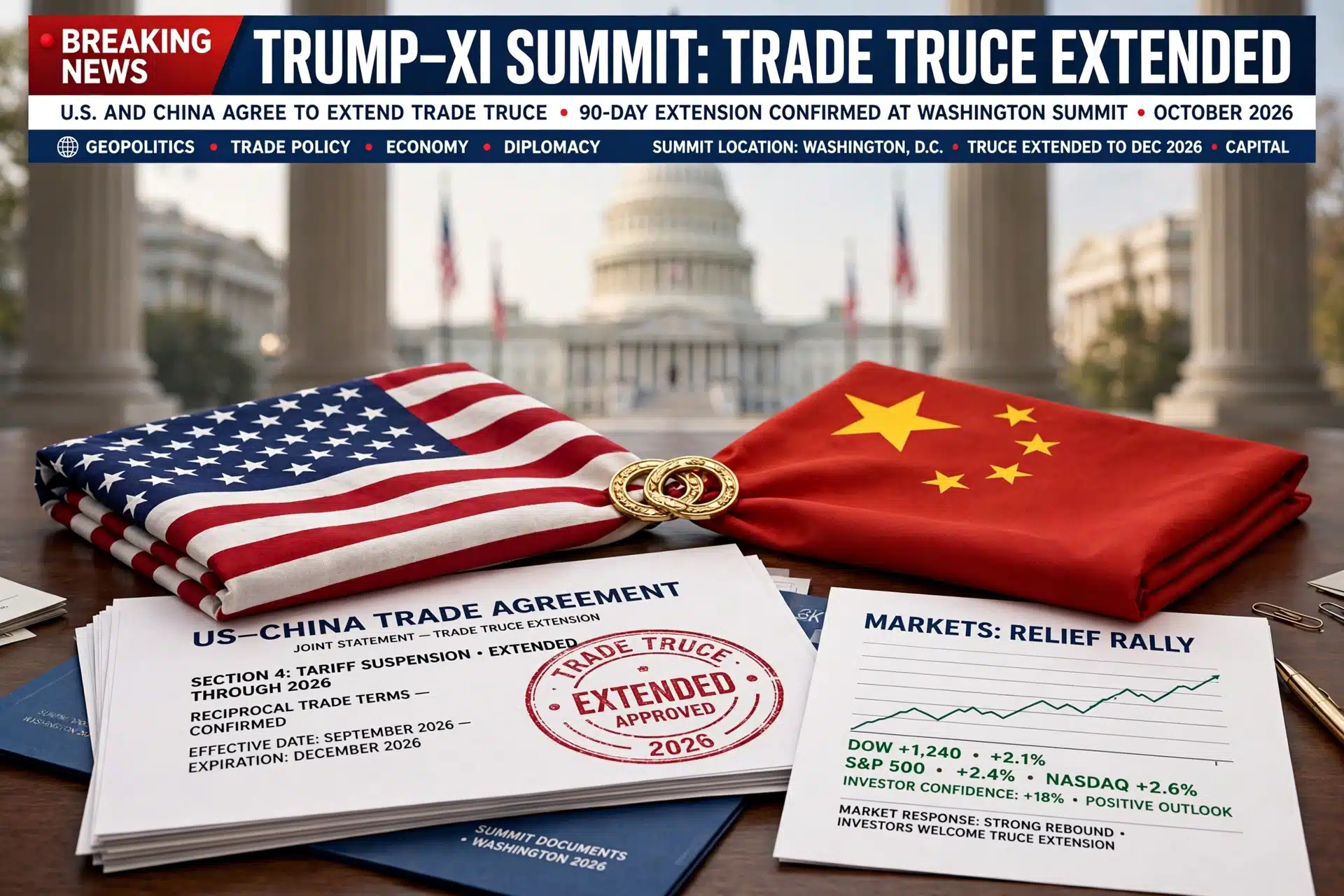
President Donald Trump and Chinese President Xi Jinping agreed Thursday to extend the fragile US-China trade truce by two months, moving the expiration date from November 10 to January 10, 2027, and won a Chinese commitment to suspend newly planned rare-earth export controls that had rattled American factories for weeks. The deal also restated Chinese pledges to buy substantially more American agricultural products, including soybeans and aircraft.
The outcome caps months of escalating tariff threats and supply-chain brinkmanship. Rare earth minerals, which power everything from electric vehicle motors to guided missiles and smartphone components, were the central leverage Beijing held going into the talks. With the truce now extended through early 2027, companies on both sides get a longer window of predictability, but the hardest questions, tariffs, technology restrictions and enforcement, were simply pushed to a new deadline. Here is what was agreed, why it matters and what to watch next.
What the Two Leaders Agreed On
The headline result is the two-month extension of the trade truce first reached last year. Treasury Secretary Scott Bessent confirmed the new January 10 expiration after the meeting, describing the extra time as necessary to finish structural issues that could not be resolved in a single session. The extension keeps current tariff levels frozen on both sides, preventing the automatic escalation that both governments had warned would raise prices for consumers and manufacturers.
Second, China agreed to suspend export controls on rare-earth products that had been scheduled to take effect this fall. Beijing had already demonstrated how disruptive such controls can be during last year’s tariff war, when shipments of critical minerals tightened and US industrial buyers scrambled for alternative suppliers. A suspension is not a permanent repeal, and analysts caution that the commitment rests on the same political relationship that produced the truce in the first place.
The Truce Now Runs Through January 10, 2027
The new deadline matters for a simple reason: it pushes the next potential trade cliff past the US midterm election season and into the first month of 2027. Administration officials had previously said November 10 was too soon to complete negotiations on subsidies, agricultural purchase commitments and Chinese industrial policy. Extending by two months gives negotiators another round of talks without immediate tariff pressure.
Business groups cautiously welcomed the extension. Importers and exporters plan orders months in advance, and even a short-lived truce provides enough certainty to schedule shipments, lock in freight capacity and price contracts. The downside, according to trade lawyers, is that the core dispute remains unresolved: US tariffs on Chinese goods stay in place, Chinese restrictions on American tech sales stay in place, and both sides retain the ability to escalate after January if talks stall.
Why Rare-Earth Controls Were the Flashpoint
Rare earths are a group of 17 elements used in permanent magnets, batteries, optics and defense systems. China dominates global processing of nearly all of them, which gives Beijing outsized influence over supply chains that American companies treat as critical. When China announced tighter controls on rare-earth exports this year, US manufacturers of cars, semiconductors, aircraft, power tools and electronics warned of production delays within weeks if shipments slowed.
The suspension announced at the summit directly answers that concern. Analysts note that buyers will likely front-load orders anyway, stocking up while exports flow freely, which could actually tighten availability in the short term before easing. The longer-term lesson for US policy, specialists say, is that diversification of processing capacity outside China remains the only durable fix, and that work continues through mining partnerships and domestic refining investments that are measured in years, not months.
Soybeans, Planes and Bigger Farm Purchases
Agriculture was the other major pillar of the agreement. China committed to increase purchases of American farm commodities, with soybeans once again the signature crop, and to honor existing agreements for aircraft deliveries. Farm purchases had become a political symbol of the trade relationship: US soybean growers were hit hard by retaliatory tariffs, and the administration has treated Chinese buying as the clearest visible win for rural states.
Skeptics point out that purchase commitments have been unevenly delivered in the past. Previous rounds produced headline numbers that China met only partially, depending on market prices and political weather. Still, the combination of soybeans, planes and minerals in this package shows how the two economies remain intertwined even amid strategic competition: American farmers need Chinese demand, and Chinese manufacturers need American grain, aircraft and the rare-earth-free supply chains that depend on stable trade rules.
What It Means for US Businesses and Consumers
For now, the practical effect is stability. Companies that import Chinese electronics, components and retail goods will not see new tariffs before January, and manufacturers that depend on rare-earth magnets can plan through the holiday quarter without panic buying. Economists say the extension lowers the near-term risk of price increases on consumer goods heading into the holiday shopping season and the winter months.
The risk is complacency. Because the underlying dispute was postponed rather than settled, businesses should still model a scenario in which talks break down in early 2027 and tariffs rise again. Trade advisers are recommending that importers keep alternative sourcing options warm, monitor the January deadline closely and avoid assuming that today’s truce becomes tomorrow’s permanent framework. A deal extended is not a deal resolved.
What Comes Next
Negotiators now have roughly fourteen weeks to convert the extension into a broader arrangement. Watch three checkpoints: implementation of the rare-earth suspension at China’s customs agencies, the pace of Chinese agricultural purchases against announced targets, and whether either side adds new export controls or entity listings before January. A follow-up leaders’ call is expected before the end of the year.
For American businesses, farmers and consumers, the summit bought time, not certainty. The truce holds through January 10, 2027, prices are unlikely to jump this fall and supply chains get a breather. But the issues that produced the conflict, industrial subsidies, technology competition and control of critical minerals, remain fully in dispute, which means the next round of headlines may arrive sooner than the deadline suggests.
Frequently Asked Questions
How long does the US-China trade truce last now?
The extended truce runs through January 10, 2027, two months longer than the previous November 10 expiration date confirmed by Treasury Secretary Bessent after the Trump-Xi summit.
What did China agree to on rare earths?
China agreed to suspend planned export controls on rare-earth products. The suspension keeps shipments flowing to US manufacturers of cars, electronics, aircraft and defense equipment, but it is not a permanent repeal of the policy.
What does the deal mean for American shoppers?
No new tariffs take effect before January, which helps hold down prices on imported electronics and goods through the holidays. Prices could still rise if negotiations collapse after the January deadline.
What are the biggest unresolved issues?
Tariffs, technology export restrictions, Chinese industrial subsidies and enforcement of purchase commitments all remain unsettled. The summit postponed those fights rather than resolving them.