



1 in 4 Women Are Trading Off Health Care Against Food and Rent, KFF 2026 Survey Finds
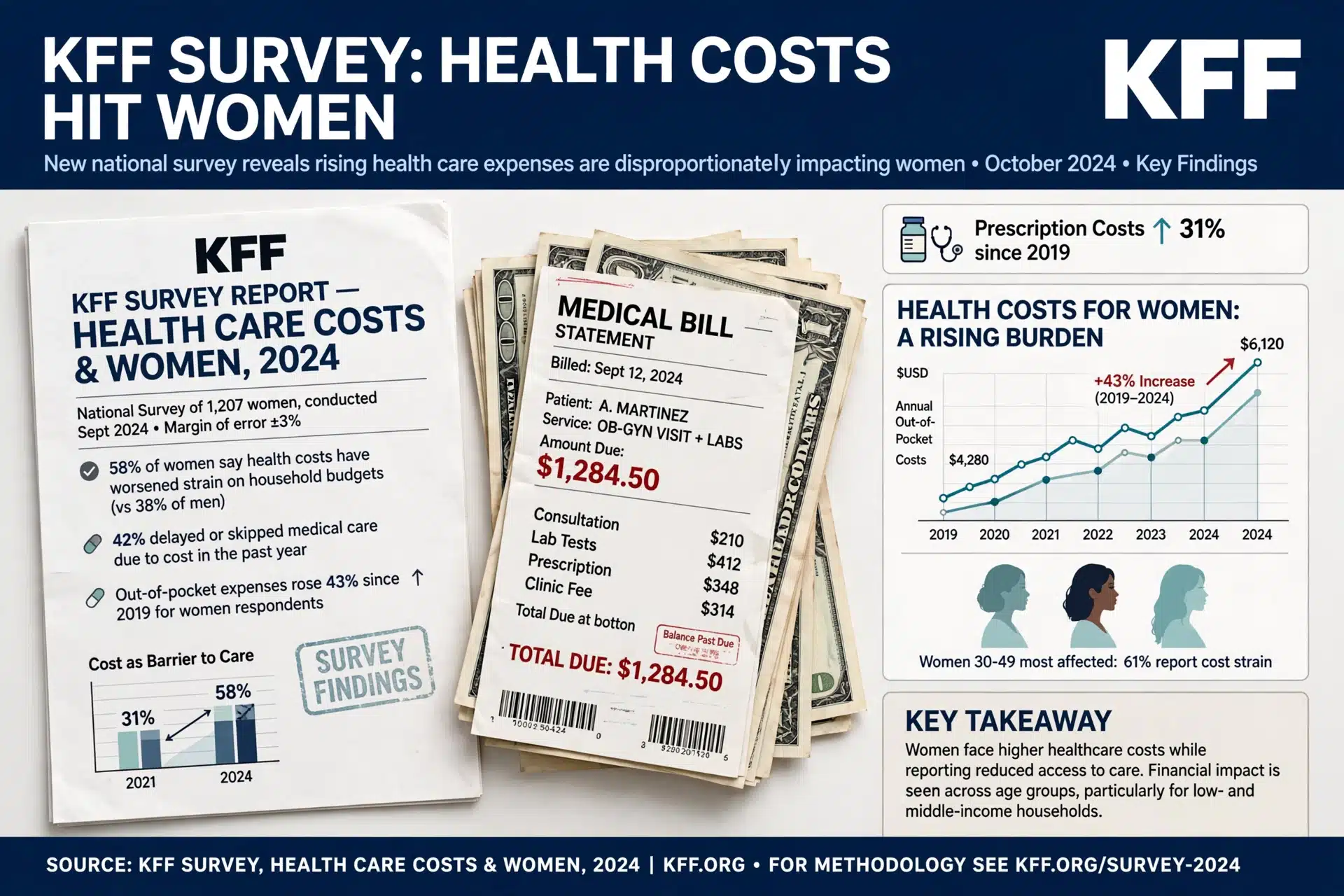
A striking new analysis from KFF’s 2026 Women’s Health Survey finds that one in four women ages 18 to 64 report that the cost of health care forces them to make tradeoffs against other basic needs, a finding that quantifies what patients describe in exam rooms across the country: care is being weighed against groceries, rent and utility bills. The research, one of the most detailed annual snapshots of women’s health experiences in America, lands as health care costs dominate the national political conversation ahead of the midterms.
The survey’s findings extend well beyond the headline affordability number, documenting how cost shapes whether women seek care at all, how they manage chronic conditions and how medical expenses ripple through household finances. Here are the key findings, what they mean and what experts say could change the picture.
The Headline Finding: Tradeoffs Are Now Routine
The affordability data forms the survey’s starkest section. Among women under 65, roughly one in four report delaying or forgoing care, skipping prescriptions or taking on debt because of cost. Common tradeoffs include cutting back on food, delaying rent or mortgage payments, borrowing from relatives and draining savings to cover medical bills. When health care competes with housing and groceries at this scale, economists describe it as a structural affordability crisis rather than isolated hardship.
This finding aligns with broader KFF tracking showing health care costs top the public’s list of affordability worries, ahead of gas prices and groceries in recent polling. The consistency across surveys strengthens the conclusion: despite coverage expansions and policy changes, out-of-pocket costs, premiums and deductibles continue to outpace wage growth for many working-age women.
Access, Prevention and the Gender Cost Gap
The survey also documents how cost influences care-seeking behavior. Significant shares of women report skipping preventive visits, delaying screenings or going without recommended follow-up because of expense, patterns with downstream consequences since early detection drives outcomes for cancers and chronic diseases. Women, who make the majority of medical decisions for households and use more health services on average than men, absorb these tradeoffs disproportionately.
Research consistently shows women face higher out-of-pocket burdens than men for comparable care, a gap driven by conditions concentrated among women, gender-specific services and, in some cases, coverage design. The KFF data adds that these costs do not exist in isolation: they interact with insurance status, income and geography to determine who actually gets care and who merely has coverage on paper.
Reproductive Health in the Coverage Landscape
Recent survey waves have also tracked reproductive health, finding that almost one in ten women of reproductive age started or changed a birth control method in the past year, amid shifting coverage rules and state-level policy divergence. Combined with affordability findings, the picture is one of women navigating a patchwork where both cost and policy access vary dramatically by state and employer plan.
Analysts note that insurance changes, including Medicaid redeterminations and ACA enrollment reductions announced this year, risk worsening every metric the survey tracks, because uninsured women exhibit the highest rates of delayed care and medical debt. The policy environment, in other words, is moving in a direction that amplifies the tradeoffs documented in the data.
What Experts Recommend
Health policy researchers emphasize several levers: stronger cost-sharing protections for essential medicines, expanded subsidies for marketplace coverage, better price transparency so patients can shop for imaging and procedures, and investment in preventive care that reduces downstream emergency costs. Some advocates push broader structural options, including public option coverage or rate regulation, while others focus on targeted relief like out-of-pocket caps for chronic conditions.
For individuals, experts advise checking entitlements: many women qualify for subsidies, Medicaid, program-d negotiated drug prices or charity care without realizing it. Asking providers for payment plans, verifying bills for errors and using community health centers are all evidence-backed steps that reduce the burden while systemic fixes remain stalled.
Why This Survey Matters Politically
With health care costs central to the midterm debate, KFF’s numbers give both parties data to cite: affordability as a failure of the current system, or coverage design as the culprit requiring different fixes. What is not in dispute is the human reality behind the statistics. When one in four working-age women is deciding between a copay and groceries, the affordability question has moved from policy papers into kitchen tables, and voters will carry that into the booth.
Frequently Asked Questions
What did the 2026 KFF Women’s Health Survey find?
Among women ages 18 to 64, one in four report that health care costs force tradeoffs against basic needs such as food, rent and utilities, alongside delayed and skipped care.
How many women skip care because of cost?
Substantial shares report delaying or forgoing doctor visits, prescriptions and follow-up care due to cost, patterns that jeopardize preventive care and chronic disease management.
Why do women pay more for health care than men?
Women use more health services on average, face higher costs for gender-specific care and encounter out-of-pocket burdens that compound for conditions concentrated among women.
What can be done about health care affordability?
Experts recommend stronger cost-sharing protections, subsidy expansions, price transparency, preventive care investment and checking eligibility for existing assistance programs.