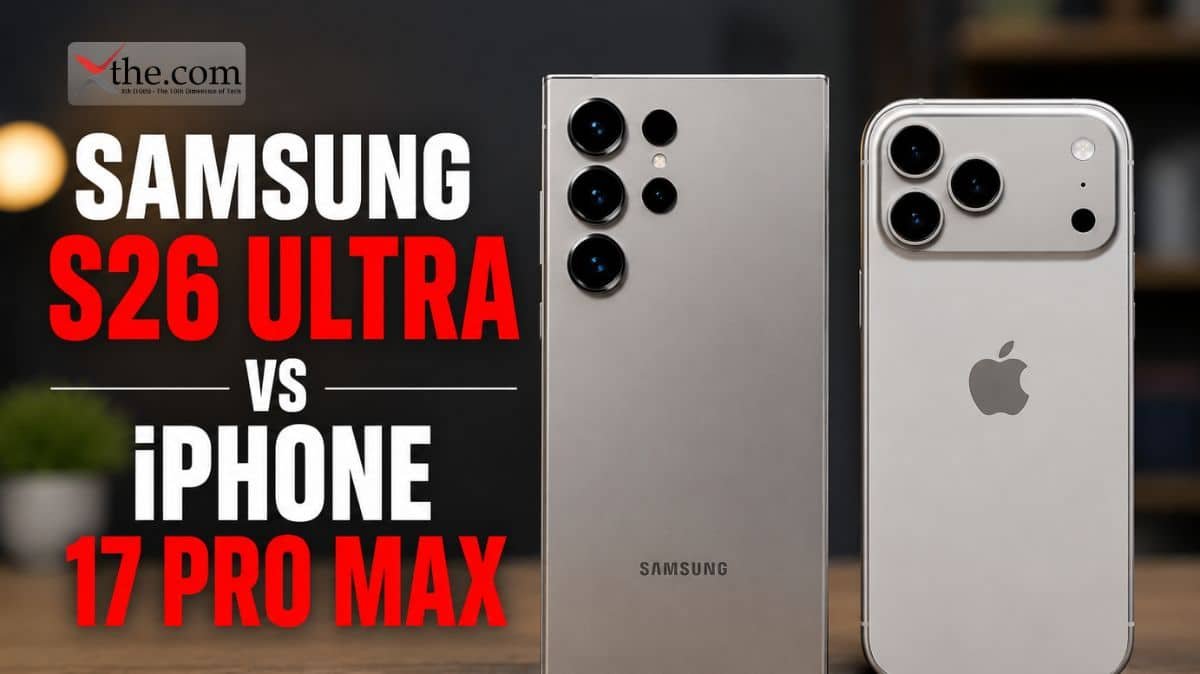
The Samsung Galaxy S26 Ultra and Apple iPhone 17 Pro Max represent the absolute pinnacle of smartphone technology in 2026. Both devices command premium prices exceeding 1,200 dollars, and both deliver flagship-level performance, cameras, and features that push the boundaries of what a smartphone can do. But which one is actually better for you? In this comprehensive comparison, we break down every aspect of these two powerhouse phones to help you make the right buying decision.
Design and Build Quality
Samsung has refined the Galaxy S26 Ultra design language with a sleeker, more ergonomic form factor. The device features a titanium frame with a slightly curved back panel that sits more comfortably in the hand compared to its predecessor. At 218 grams, it is slightly heavier than the iPhone 17 Pro Max but feels more substantial and premium. The integrated S Pen silo remains a unique advantage, offering a built-in stylus that no iPhone can match.
The iPhone 17 Pro Max continues Apple tradition of industrial design excellence. The device features a titanium frame with a ceramic shield front and back, providing excellent durability against drops and scratches. At 227 grams, it is the heavier of the two phones, though Apple has managed to distribute the weight more evenly. The signature Dynamic Island at the top of the display remains a distinctive design element.
Both phones are IP68 rated for water and dust resistance. Samsung offers the S26 Ultra in titanium black, silver, blue, and gray. Apple provides the iPhone 17 Pro Max in natural titanium, white titanium, black titanium, and desert titanium.
Display
The Samsung Galaxy S26 Ultra features a 6.9-inch Dynamic AMOLED 2X display with a resolution of 3120 by 1440 pixels, delivering 505 pixels per inch. The display supports adaptive refresh rates from 1 to 120 Hz. Samsung display technology remains among the best in the industry, with peak brightness exceeding 3,000 nits.
The iPhone 17 Pro Max sports a 6.9-inch Super Retina XDR OLED display with 2868 by 1320 pixels at 460 pixels per inch. Apple display supports ProMotion technology with adaptive 1 to 120 Hz refresh rates. The Always-On Display provides useful glanceable information without fully waking the device.
Samsung display wins on raw specifications with higher resolution and brightness. However, Apple display benefits from superior color calibration. For most users, both displays are excellent.
Camera System
The Samsung Galaxy S26 Ultra features a quad-camera system headlined by a 200-megapixel main sensor with optical image stabilization. This is paired with a 50-megapixel periscope telephoto lens offering 5x optical zoom, a 12-megapixel ultrawide lens, and a 10-megapixel telephoto lens with 3x optical zoom.
The iPhone 17 Pro Max features a triple-camera system with a 48-megapixel main sensor, 48-megapixel ultrawide lens, and 12-megapixel telephoto lens with 5x optical zoom. Apple computational photography algorithms produce natural-looking, well-balanced photos with accurate colors and excellent dynamic range.
For video recording, both phones support 4K at 60fps and 8K recording. Samsung 8K capability gives it an edge for content creators. Apple video benefits from superior stabilization and more consistent color grading.
In low-light photography, Samsung Night Mode produces brighter images with more detail in shadows, while Apple Night Mode produces more natural-looking results with better noise control.
Performance and Software
The Samsung Galaxy S26 Ultra is powered by the Qualcomm Snapdragon 8 Elite processor on a 3-nanometer process. The device comes with 12 gigabytes of RAM and storage from 256GB to 1 terabyte.
The iPhone 17 Pro Max runs on Apple A19 Pro chip, also built on 3-nanometer process. The device comes with 8 gigabytes of RAM and storage from 256GB to 1 terabyte.
Samsung One UI 8, based on Android 16, offers extensive customization options including split-screen multitasking and Samsung DeX. Apple iOS 20 provides a streamlined experience with tight ecosystem integration across iPhone, iPad, Mac, and Apple Watch.
Battery Life and Charging
The Samsung Galaxy S26 Ultra packs a 5,000 milliamp-hour battery delivering 8 to 10 hours of screen-on time. It supports 45-watt wired fast charging, 15-watt wireless charging, and reverse wireless charging.
The iPhone 17 Pro Max features a 4,685 milliamp-hour battery with comparable battery life thanks to Apple optimization. It supports 30-watt MagSafe wireless charging and 15-watt Qi2 wireless charging.
Both phones easily last a full day. Samsung faster wired charging gives it an edge for quick top-ups.
Price and Value
The Samsung Galaxy S26 Ultra starts at 1,299 dollars for 256GB. The iPhone 17 Pro Max starts at 1,199 dollars for 256GB, making it 100 dollars cheaper at entry level.
Which Phone Should You Buy?
Choose Samsung if you want the best display, most versatile camera system with incredible zoom, the built-in S Pen, and Android flexibility with extensive customization options.
Choose iPhone if you value seamless Apple ecosystem integration, streamlined software experience, best computational photography, and long-term software support with 6 or more years of updates.
Final Verdict
For most American consumers, the choice comes down to ecosystem loyalty. If you are invested in Apple ecosystem, the iPhone 17 Pro Max is the natural choice. If you prefer Android flexibility and the best hardware specifications, the Samsung Galaxy S26 Ultra is the phone to beat.
The camera zoom capabilities deserve special attention. Samsung 200-megapixel sensor allows for significant cropping without losing detail, effectively giving you multiple focal lengths from a single camera. The 100x Space Zoom feature, while not always producing usable results at maximum magnification, is impressive for wildlife and sports photography. Apple 5x optical zoom is cleaner and more consistent but does not reach the extreme distances that Samsung can achieve.
Samsung S Pen integration adds another dimension to the camera experience. You can use the stylus as a remote shutter button for group photos and selfies, annotate screenshots and images directly, and create detailed drawings or notes on your photos. This level of pen-based interaction is simply not available on any iPhone.
The software update commitment from both manufacturers is a key factor for long-term value. Samsung has committed to 7 years of OS updates and security patches for the Galaxy S26 Ultra, matching Apple typical support window of 6 to 7 years. This means both phones will remain current and secure well into the early 2030s.
For American consumers, carrier compatibility is worth noting. Both phones support all major US carriers including AT&T, T-Mobile, and Verizon, with full 5G support including mmWave and sub-6GHz bands. Samsung Galaxy S26 Ultra also supports eSIM and physical nano-SIM, while iPhone 17 Pro Max is eSIM only in the US market.
The ecosystem factor cannot be overstated. If your household uses Macs, iPads, and Apple TV, the iPhone 17 Pro Max integrates seamlessly with AirDrop, Handoff, Universal Clipboard, and Continuity Camera. Samsung ecosystem, while not as tightly integrated, offers excellent cross-device features with Galaxy phones, tablets, watches, and buds through Samsung SmartThings and Multi Control.