





Pecos, Texas?
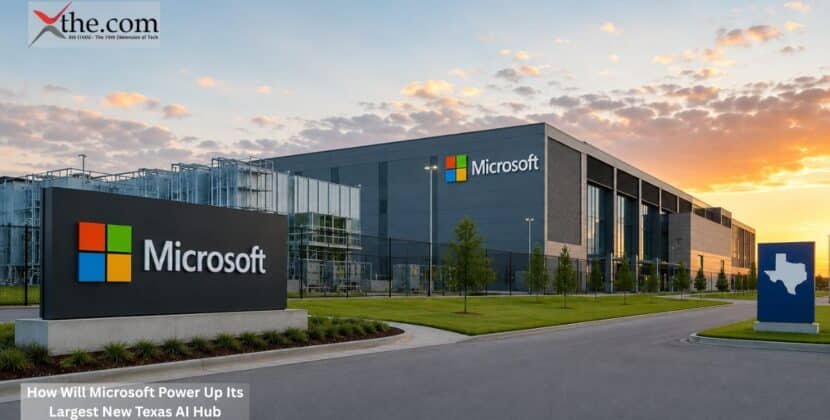
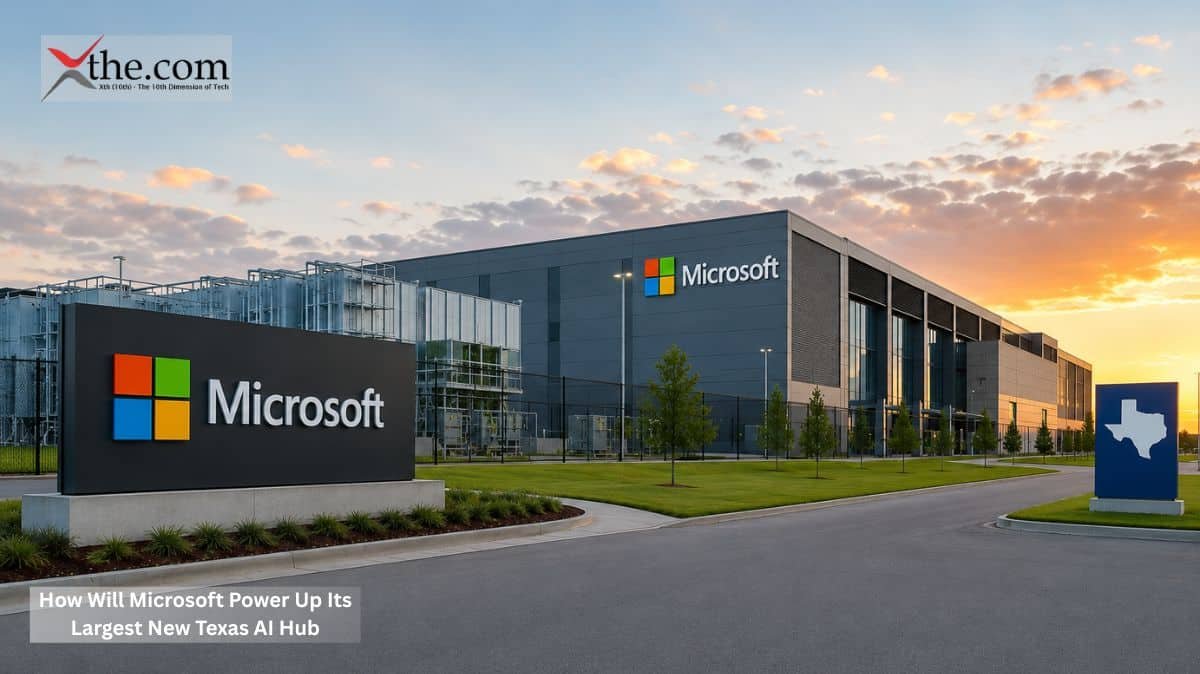
In 2026, dozens of U.S. data center projects were canceled, not for lack of land or money, but for one key issue: electricity. In this context, Microsoft made its boldest move of the year by announcing a Microsoft AI datacenter in Pecos, Texas, which will add about 2 gigawatts of compute capacity at once. This is not simply a small step forward. It is a major statement about the future direction of cloud computing.
The Scale of the Microsoft AI Datacenter Commitment in Pecos
Microsoft describes the Pecos, Texas, campus as one of the largest single-capacity additions in its history, increasing its global data center footprint by approximately 2 gigawatts to meet strong and sustained customer demand for AI and cloud services across industries and regions.
To give some perspective, one gigawatt can power about 750,000 average American homes. Microsoft is setting aside twice that amount for just one campus. This multibillion-dollar project in Reeves County will be built over five to seven years and should create more than 6,000 construction jobs at its peak, plus hundreds of permanent jobs once the campus is operating.
The site covers more than 2,000 acres near Verhalen, southeast of Pecos, and about an hour from Odessa. It is located near the Waha Hub, the main center for natural gas pricing and routing in the Permian Basin. This location was chosen for a reason.
Why Behind-the-Meter Power Changes Everything
The most important part of this announcement is not just the 2 gigawatt infrastructure. It is how Microsoft plans to supply power to it.
Microsoft said the Pecos, Texas, campus will be paired with a dedicated on-site energy supply, initially through a co-located natural gas power plant operating behind the meter, meaning the facility will serve the data center directly rather than drawing from the public grid at launch.
Behind-the-meter generation avoids the biggest bottleneck in American infrastructure today: grid interconnection queues. By the end of 2025, ERCOT, the Texas grid operator, had about 226 GW of large projects waiting in its queue, almost four times as much as the year before, and about three-quarters of that was from data centers. It can take years to reach the front of the line, so more developers are choosing to bypass it.
Microsoft is choosing to bypass the queue and is being open about it. The company said it is funding the energy infrastructure needed for the datacenter itself: “We are paying for the new generation and supporting infrastructure needed to serve our own operations.”
This statement is more important strategically than the headline capacity number. By paying for its own power generation, Microsoft avoids the most controversial aspect of large data center projects: the risk that regular customers end up paying for private infrastructure. In 2026, dozens of U.S. data center projects were canceled, often facing pushback from both political parties, mainly due to concerns about electricity costs and water use. For now, Microsoft has avoided that controversy.
Project Kilby: Chevron, Engine No. 1, and GE Vernova
Chevron has signed a 20-year agreement to supply power to Microsoft’s Pecos, Texas, campus through a co-located natural gas-fired facility known as Project Kilby. The project, being developed with Engine No. 1 and GE Vernova, is expected to provide first power by 2028 and eventually scale to 2.67 GW.
Chevron values the plant’s economics at more than $10 billion in state and local tax revenue and about 2,000 jobs figures for the plant itself, separate from the datacenter’s jobs. People familiar with the deal estimate Chevron’s total investment at nearly $7 billion, with the company targeting mid-teen returns and describing its cash flow as independent of oil and gas price cycles.
The facility will have at least seven GE Vernova turbines, with the first power possibly coming online as soon as late 2027 or early 2028. These turbines will use selective catalytic reduction systems to lower nitrogen oxide emissions, addressing air quality concerns that have led to lawsuits at similar facilities in other states.
This partnership denotes a major change in how large tech companies approach energy sourcing. Instead of distributing risk across different renewable contracts and grid capacity, Microsoft is now managing its power supply through a single partnership with a company with the financial strength and engineering expertise to build at this scale.
West Texas AI Infrastructure Energy Funding 2026: A New Industrial Model
The West Texas AI infrastructure energy funding 2026 picture extends well beyond the Pecos announcement. A near-identical on-site gas deal of about 2 GW was signed by Cummins with Circe Energy in West Texas just six days before the Microsoft news, and Pacific Energy announced a 5 GW off-grid project in neighboring Pecos County back in August 2025.
The Permian Basin is quickly becoming an unexpected center for AI infrastructure, for reasons that were not obvious three years ago. Its abundant natural gas reserves, low population density, large flat areas, and flexible interconnection rules make West Texas one of the best places in the country for off-grid AI projects.
In just the first quarter of 2026, GE Vernova received more data center orders than in all of 2025. This shows how quickly the industry is growing. Now, the main challenge is the equipment supply chain, not money or land.
Water, Emissions, and the Community Compact
Microsoft has made two operational commitments that matter particularly for Reeves County, a semi-arid region where water security is a genuine concern.
The Pecos, Texas, campus will use closed-loop cooling systems to greatly lower water use. Microsoft says the cooling system will only need water at startup and should not require any additional water during normal operation. According to the company, the data center’s total water use over its lifetime will be just a fraction of what a typical fast-food restaurant uses in a year.
For workforce development, Microsoft is using the same approach it used near San Antonio. There, the company’s Datacenter Academy has worked with local colleges for almost ten years to train students for datacenter jobs, including a $545,000 investment that has already helped over 450 students. Across Texas, programs like TechSpark have created more than 1,100 jobs and helped 20,000 Texans gain digital skills.
What Enterprise Infrastructure Teams Should Watch
For executives managing cloud spend and supply-chain exposure, the Pecos announcement carries three signals worth tracking.
First, energy self-sufficiency is now a must for large-scale datacenter projects. Any Microsoft AI datacenter of this size that depends only on grid connections will face years of delays in today’s ERCOT environment. The behind-the-meter approach Microsoft is using here is likely to become the standard, not the exception.
Second, the Chevron partnership model, in which a major oil company teams up with a tech giant through a 20-year power purchase agreement, will likely inspire others to follow suit. Enterprise cloud customers who rely on specific Microsoft Azure regions should monitor how this new energy setup affects regional capacity timelines and potential pricing for AI services that require substantial computing power.
Third, the Permian Basin’s emergence as a West Texas AI infrastructure energy funding 2026 creates a new geography of compute concentration. Organizations with data sovereignty requirements, contingency recovery strategies, or latency-sensitive workloads that currently route through Texas should revisit their assumptions about where infrastructure risk is clustering.
The Long Horizon
Microsoft’s 2-gigawatt infrastructure commitment in Pecos is not only about meeting today’s AI demand. It is a bet that demand for AI will still be strong ten years from now. The five-to-seven-year construction timeline, the 20-year energy contract, and the deep community investment only make sense if Microsoft believes the need for computing power will last, not just come and go.
West Texas has seen oil booms in the past, and it has also seen them slow down and disappear. Whether this boom is different depends less on the new power plant near Pecos and more on whether the enterprise AI workloads that use that power actually deliver the productivity gains that justify the investment. It will take years to know for sure. But the infrastructure is already being built.
Source: Powering the next wave of AI: Expanding capacity with our new datacenter in Pecos