




Santa Clara, California
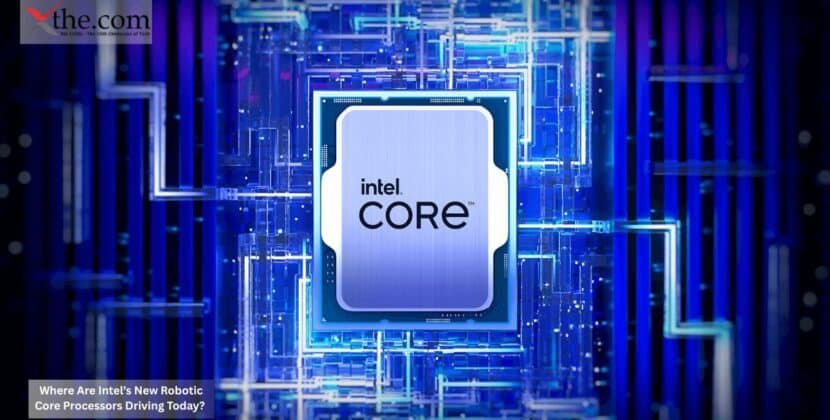
The last thing a warehouse supervisor wants to hear at 2 a.m. is that a robotic picking arm hit a conveyor belt because a remote server took 200 milliseconds too long to respond. Even a split second like that, which people can’t see, can jam a $4 million automated line, scatter products across the floor, and cause missed deliveries in several time zones. Now, industrial operations teams across the country aren’t asking whether to automate, but whether their hardware can keep up. Intel Xeon 6 processors were designed to solve exactly this problem.
How Intel Xeon 6 Processors Rewired the Edge Computing Conversation
Launched from Intel’s headquarters in Santa Clara, California, the Intel Xeon 6 series denotes a clear move away from cloud-dependent processing. In the past, warehouse automation systems sent sensor data to the cloud, waited for a response, and then received commands back. This process could add 80 to 300 milliseconds of delay, depending on the network. For conveyor belts moving at 2.5 meters per second, that delay isn’t just inconvenient; it’s a design flaw.
Intel Xeon 6 processors solve this by bringing powerful processing directly to the facility. Each chip has up to 144 cores in its E-core setup, so local computers can handle heavy jobs without sending data to outside data centers. In smart warehouses with thousands of sensors operating simultaneously, having this local power makes a real difference.
Industrial Edge Orchestration at the Facility Level
The most important use of this architecture is in industrial edge orchestration. This means coordinating sensor data, robotic commands, and machine status in real time, all within the facility, without sending information over a wide-area network. It works like the nervous system for a huge, complex machine.
At a typical large fulfillment center using Intel Xeon 6 processors and edge orchestration systems, it might process upwards of 4 million individual sensor reads per minute. Those data points come from weight sensors at conveyor joints, LiDAR on ceiling tracks, thermal monitors on motors, and proximity sensors around picking stations. All this data goes into a system that quickly decides how to adjust belt speeds, reroute robots, or flag mechanical issues before the next cycle starts.
The key design decision is to keep processing local. When edge orchestration runs on Intel Xeon 6 nodes inside the facility, response times drop from hundreds of milliseconds to just a few. This means a robotic arm can stop exactly when it needs to.
Spatial Sensor Tracking and the Intelligence Behind the Movement
All of this depends on reliable spatial sensor tracking, which means continuously mapping objects’ locations in three-dimensional space. Today’s warehouse robots don’t just follow fixed tracks. Autonomous mobile robots (AMRs) work alongside people and need to know their exact position within milliseconds to avoid collisions, move around obstacles, and keep processes running smoothly.
Spatial sensor tracking systems with Intel Xeon 6 processors use LiDAR, stereo cameras, and motion sensors to create a single position map, updating it hundreds of times per second. By processing all this information locally rather than sending it to the cloud, they eliminate delays that would otherwise make large-scale real-time AMR navigation impossible.
For example, a 500,000-square-foot distribution center in the Ohio River Valley uses 86 autonomous mobile robots. Its location-tracking system tracks all 86 robots and keeps up with 200 workers across three shifts. Intel Xeon 6 edge nodes handle all this processing on-site, keeping positioning accurate to within 2 centimeters without needing the cloud.
Automation Arrays and the Multi-Axis Precision Problem
Accurate orchestration and spatial tracking benefit what engineers call automation arrays. These are groups of robots working together in sync to move, sort, package, or inspect goods on a large scale.
Automation arrays come with a unique challenge: synchronization drift. When six robotic arms share one workstation, each moving differently but using the same sensor data, even small timing errors can cause problems. For example, a 15-millisecond difference between two arms handling the same carton can bend hardware and cause shutdowns.
Intel Xeon 6 processors solve synchronization issues in automation arrays with built-in time-sensitive networking (TSN). TSN lets the chip prioritize important data so that commands reach multi-axis machines in the right order, accurate to the microsecond. Manufacturing engineers who use Intel Xeon 6 processors edge orchestration systems have seen fewer synchronization faults than in older edge setups.
Standard Architecture, Non-Standard Results
The Intel Xeon 6 deployment shows that you don’t always need custom industrial chips. For a long time, automation engineers thought that directing complex robotics required special silicon made just for factories often expensive, hard to get, and needing expert teams to set up.
The Intel Xeon 6 processors’ edge orchestration systems model challenges the old idea. Standard server-class chips, when used at the edge with the right software, can handle automation arrays, keep up with spatial sensor tracking, and run industrial edge orchestration at the level big warehouses need. This changes the economics: facilities can use a single chip type across all their edge computing, making purchasing and maintenance easier and less specialized.
For supply chain managers looking at automation in 2025 and beyond, the main question about edge computing isn’t whether it’s capable Intel Xeon 6 processors have already proven that. Now, the focus is on how quickly a company can add its edge orchestration, sensor tracking, and automation systems to a platform that was once just for data centers. The difference between server rooms and warehouse floors has never been smaller.
Source: Intel Newsroom