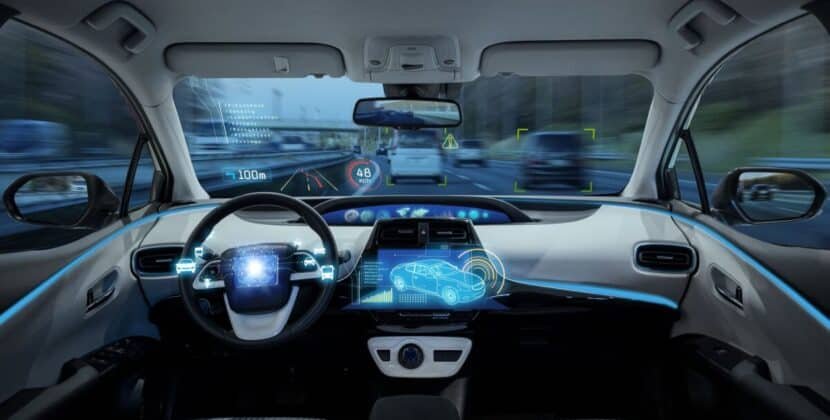





Amazon and NVIDIA are collaborating to create intelligent, responsive, and customised AI-powered vehicle assistant technologies that will continuously improve the in-car experience. Their joint effort will focus on leveraging cloud computing, generative AI, and high-performance computing architecture to revolutionise how drivers communicate with their vehicles; they will shift from traditional voice-based communication to more natural, contextual, and human-like forms of interaction with their vehicles’ main processing unit. Additionally, this project demonstrates the evolution of vehicles moving toward software-defined attributes, which should lead to increased safety, functionality, and overall satisfaction with vehicle use.
Transforming In-Car Experiences with AI
With all the progress in generative AI, Amazon and NVIDIA now have virtual assistants that allow drivers and car owners to ask complex questions, stay up to date in real time, and handle many different tasks. Unlike the original voice recognition systems, these advanced digital assistants will provide many more features, including having the ability to communicate with humans using more than just a one-word command, handling multiple questions, remembering past conversations or questions to maintain a context throughout an entire conversation, and remembering how individual users prefer to do things differently from each other. Because of this new technology, drivers can manage the way they navigate, how they interact/work with the entertainment system in their vehicle, and how they adjust the settings on their vehicles and, overall, make their driving experience more personalised.
Combining Cloud and Edge Computing
The joint venture delivers state-of-the-art AI performance and reliability through cloud-based AI services for edge computing devices. The cloud services provided by Amazon include advanced capabilities for data processing, facilities for continuous training of AI models, and access to an immense variety of datasets. The computing power provided by NVIDIA’s platforms will support real-time AI applications in the vehicle. By integrating edge and cloud computing, it will be possible to perform critical functions (e.g., navigation updates or safety-related responses) locally and in real time, with little to no delay, while other complex or data-intensive applications may leverage the compute resources of the cloud. Together, these two technologies will provide a fully integrated solution that enables fast, intelligent, and dependable data operations, regardless of network availability.
Generative AI and Natural Language Interaction
Generative AI is a crucial component in creating complex automotive assistants; they will evolve from traditional command-driven interfaces to much more natural, conversational interfaces. The assistant uses large datasets and can understand complex, nuanced requests and produce contextually relevant answers and suggestions. For instance, if a driver were to ask for the best route to avoid current and anticipated traffic delays based on their previous driving behaviour, the assistant would provide real-time updates on anticipated weather and road conditions, as well as recommendations based on that behaviour. Generative Artificial Intelligence will also create a much more human-like point of interaction between a driver and their automobile, as well as greater ease of use.
Enhancing Safety and Driver Focus
In addition to convenience, AI assistants are being developed to enhance safety, reduce driver distraction, and increase drivers’ awareness of their surroundings. They will enable drivers to use the same features (e.g., navigation, communication) while keeping both hands on the steering wheel and focusing on driving. AI systems will also anticipate needs based on context. For example, if a driver is in heavy traffic, the AI will suggest an alternate route; if a driver is driving on a snowy road, the AI will adjust the in-car settings to assist with their driving conditions. These proactive features will contribute to a smoother, safer driving experience. These features are part of a much larger effort by vehicle manufacturers to create smarter systems that will help both drivers and enhance road safety.
Supporting Automakers in Software-Defined Vehicles
To aid automakers transitioning to software-defined vehicles, Amazon and NVIDIA have teamed to create the next phase of automotive technology through software and AI. Combined with their scalable AI platforms, they have simplified how manufacturers integrate full-featured, advanced assistant capabilities into their vehicles, enabling faster time-to-market while reducing development costs by eliminating the need to create a unique, complex solution from the ground up. Automakers can then concentrate on vehicle design, engineering, and brands’ unique innovations. As vehicles become increasingly connected through software, partnerships like this will play an important role in defining the next generation of automotive technology.
Competitive Landscape in Automotive AI
Tech firms and automakers are rapidly developing AI-based automotive assistant products in a highly competitive market, where participants are devoting resources to innovation. Amazon’s cloud computing and NVIDIA’s AI development strengths, together with the hardware acceleration capabilities of both companies, give them a competitive advantage in this rapidly evolving industry. As competitors develop similar offerings, distinguishing themselves will require superior performance, reliability, and user experience. Rapidly increasing competition is going to lead to long-term success through the ability to integrate across multiple vehicle types and deliver consistent performance across each type.
Challenges in Implementation
Integrating advanced artificial intelligence (AI) assistants into cars presents numerous issues that should be addressed as much as possible. Regardless of the promise offered by new AI technologies, issues remain: AI systems must perform reliably across varied driving conditions, have robust cybersecurity protections, and protect user data privacy, all while vehicles become increasingly connected and data-driven. It will require significant testing and optimisation to ensure consistent performance across different hardware configurations and geographic locations. Automakers also need to comply with a variety of regulations and meet industry safety requirements for automated AI systems to function properly in real-world situations.
Future Developments and Innovation
Due to ongoing improvements in AI model capabilities, computing platforms, and integration methods, it is anticipated that the partnership of Amazon and NVIDIA will transform accordingly. Future iterations will likely include more tailored individual experiences, as well as provide ways for individuals to use multiple types of input (e.g., speech, gestures, and visuals) to communicate with devices. There will be increased collaboration between in-car assistants and vehicle controls. As AI technology continues to mature, in-car assistants will offer features beyond entertainment and navigation, such as predictive maintenance, driver monitoring, and enhanced safety. Ongoing innovation will be required to realise the full value of AI in automotive use cases.
Source: https://www.aboutamazon.com/