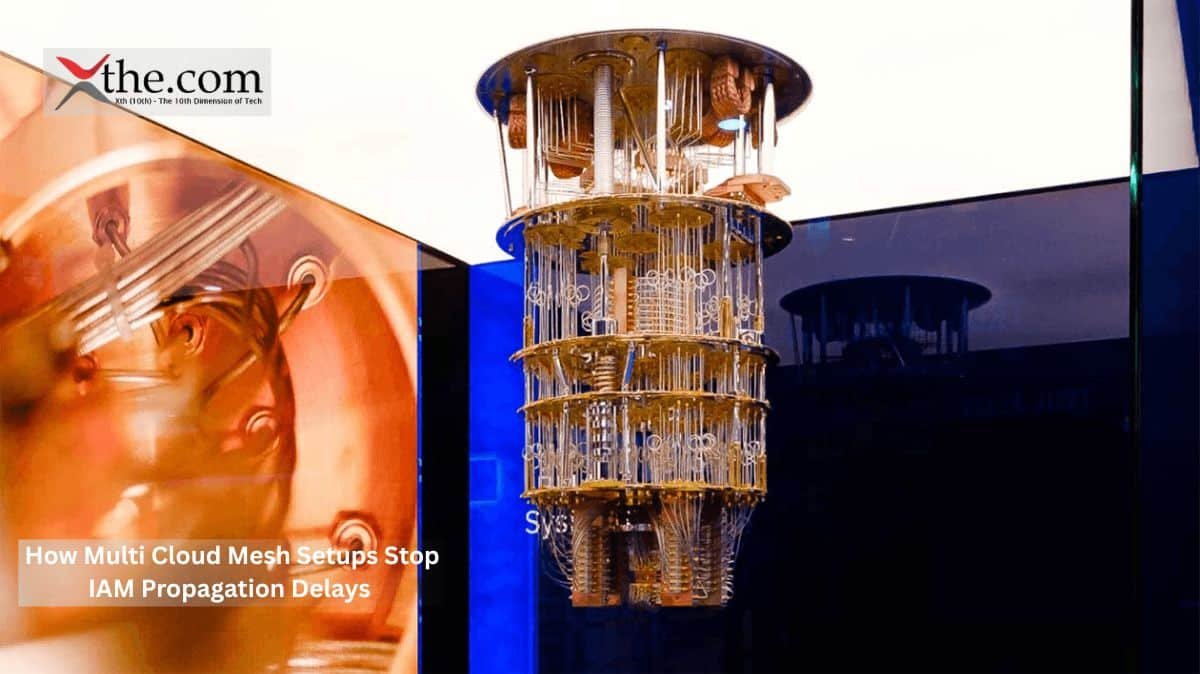
Yorktown Heights, NY
Atomic answer- IBM Research (IBM) successfully deployed physical photonic interconnect systems designed to link modular quantum processing units (QPUs) while preserving coherence stability. This engineering advancement enables multi-chassis cluster scaling by routing cryogenic transport lines between separate quantum hardware bays. The design bypasses the physical limits of single-chassis layouts, moving quantum infrastructure toward scalable data center environments.
The development of next-generation computing platforms is advancing rapidly to meet demand for technologies that can handle highly complex simulation scenarios, scientific modeling, and analytical activities.
At the forefront of this revolution lies IBM, with its latest innovation in scalable quantum computing platforms using interconnect technologies.
IBM’s latest architectural innovation enables different quantum processing modules to communicate via photonic interconnects without compromising quantum coherence.
This innovation could have a significant impact on how the future AI infrastructure and computing systems will develop.
Emergence of Modular Quantum Computing Architecture
Amongst the key emerging trends in contemporary quantum computing studies is the shift towards modular architecture designs.
Conventional quantum computing systems have inherent physical scaling constraints because all qubits must be located within a single physical box.
As organizations strive to scale their computational power, the inherent physical limits become increasingly constraining.
The emergence of modular quantum processing units mitigates these physical limits by enabling multiple quantum computing systems to work in unison to form a distributed processing cluster.
Modular architectures offer various benefits:
- Better scalability capabilities
- Distributed computation
- Greater flexibility
- Easier expansion capabilities
- Increased computing power
This trend is thus becoming pivotal to the evolution of quantum enterprise computing infrastructure.
These optical communication systems facilitate the exchange of information between quantum processors housed in different hardware bays without affecting the delicate quantum states.
The incorporation of photonic interconnects can benefit corporations by helping them:
- Connect multiple quantum processors
- Enhance communication across multiple systems
- Increase the number of nodes in quantum clusters
- Avoid single-system limitations
- Facilitate scalable quantum systems
Conventionally, establishing communication channels between independent quantum processors without compromising coherence has posed one of the biggest challenges in the industry.
This transition toward modular quantum processing units is becoming a foundational element in the evolution of enterprise quantum infrastructure.
Quantum Coherence Stability Is Essential
Maintaining quantum coherence stability forms one of the most critical issues in quantum computing environments.
Quantum processors are vulnerable to environmental disturbances, temperature changes, and unstable signals.
In the absence of stable quantum coherence conditions, corporations might face the following issues:
- High quantum errors
- Unstable computations
- Incomplete simulation outcomes
- Reliability issues during processing
- Deterioration in performance
IBM’s modular framework aims at maintaining quantum coherence stability along with facilitating communication between multiple quantum processors.
Cryogenic Transport Systems Add to Infrastructure Complexity
An additional element of IBM’s architecture that deserves attention is the company’s advanced cryogenic transport system.
The use of quantum processors requires an environment at extremely low temperatures.
The use of interconnected quantum clusters requires cryogenic transport infrastructure that maintains stable temperatures across different hardware ecosystems.
These elements lead to a number of challenges, namely:
- Specialized cooling systems
- Greater complexity in terms of thermal management
- Scaling of cryogenic transport infrastructure
- Higher energy costs in facilities
- Infrastructure Capital Expenditures
The greater use of genic transport systems leads organizations to pay more attention to their infrastructure plans for future quantum facilities.
Challenges with Procurement Grow for Organizations
Moreover, as the use of modular quantum systems increases, procurement challenges grow for organizations that invest in cutting-edge computing technology.
Specialized devices, such as:
- Dilution cooling systems
- Photonic communication equipment
- Cryogenic transport infrastructure
- Quantum synchronization systems
- Optical connectors
Are associated with lengthy manufacturing periods and limited global availability.
Thus, organizations have begun making long-term capital expenditure forecasts before investing in scalable quantum environments.
This situation leads to an increased emphasis on strategic procurement plans.
Effects from the Modular Quantum Computing Approach by IBM on HPC Markets
IBM’s modular quantum computing approach will trigger ripple effects across other high-performance computing markets as well.
According to industry experts, scalable quantum cluster computing solutions could one day challenge supercomputers and simulators from leading IT infrastructure providers.
Modern enterprises are now assessing high-end computing architectures through various criteria including:
- Scalability of the architecture
- Stability of quantum coherence
- Interconnection performance
- Efficiency of the thermal infrastructure
- Operational feasibility
These criteria will define the future of AI infrastructures.
The emergence of infrastructure consequence forecasting for cryogenic quantum computing interconnects is therefore reshaping enterprise investments in next-generation computational system.
Conclusion
The most recent breakthrough by IBM is a significant step towards realizing a scalable quantum computing architecture. With the help of photonic interconnects, modular processor designs, and sophisticated cryogenic transport, IBM is helping bring quantum computing environments into reality.
As organizations continue their journey into advanced computing, the significance of scalable quantum computing clusters, thermal infrastructure management, and coherence stabilization will only grow.
For the future, enterprise-level AI infrastructure planning might rely heavily on quantum computing technologies and architectures.
Enterprise Procurement Checklist
- Procurement Risk: Extended production timelines for specialized dilution refrigeration parts and advanced photonic connectors require long-term capital forecasting from technology buyers.
- Real-World Operational Consequence: Engineering teams can execute complex calculations across multiple linked QPUs without encountering high quantum error rates.
- Thermal & Energy Analysis: Maintaining quantum coherence across modular arrays demands strict dilution refrigeration constraints, inflating upfront data center facility thermal CapEx.
- Cross-Manufacturer Ripple Effect: IBM’s scalable modular computing fabric creates long-term technological competition for traditional high-performance computing clusters managed by specialized mainframe vendors.
- Operational Action Step: Track performance metrics of modular QPU deployments to determine when quantum computing blocks should enter your corporate advanced simulation roadmaps.
Source- IBM Blogs