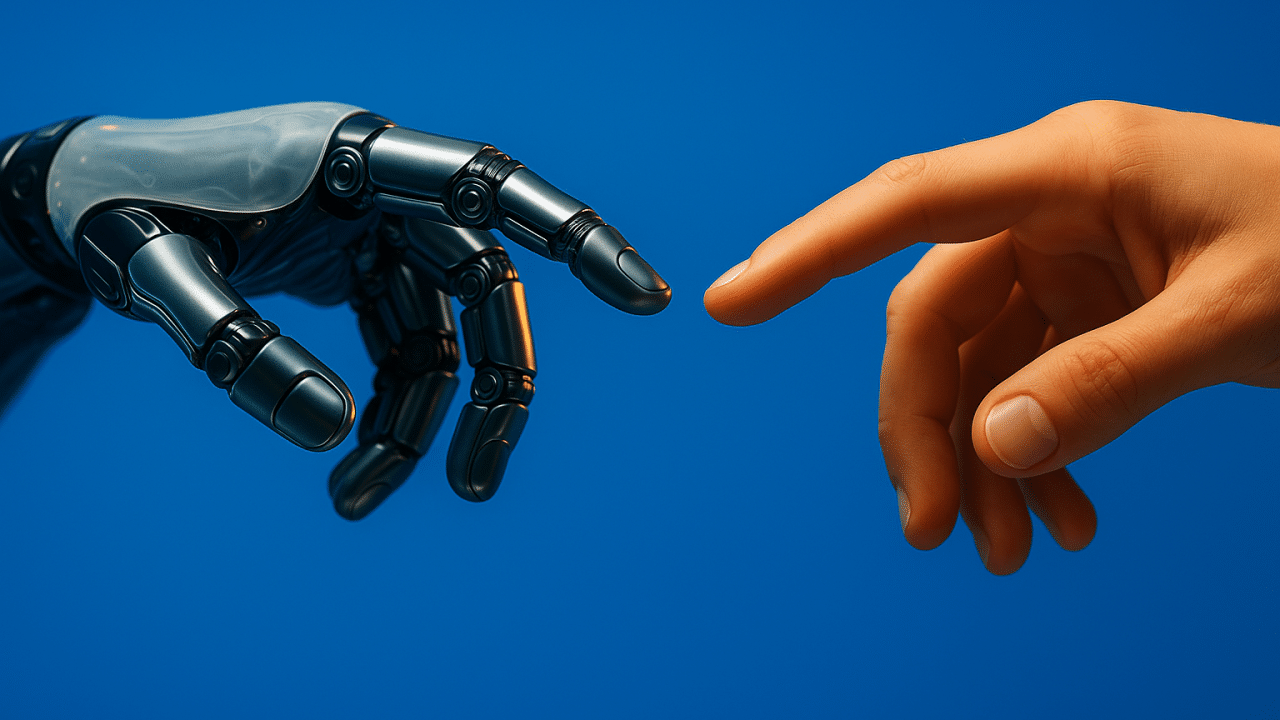
SANTA CLARA, Calif. — Intel has confirmed a major internal restructuring through its announcement that Alex Katouzian will head the newly established Client Computing and Physical AI Group, which combines traditional laptop silicon development with robotics-based AI hardware into a single strategic division.
The move establishes a new alignment between Client Computing and the Physical AI Group’s objectives, representing a fundamental transformation in how U.S. chipmakers design silicon platforms for both personal devices and autonomous machines.
Why the Physical AI Group Matters
The Intel Physical AI Group was established to fulfill the industry’s need for advanced computing systems that operate beyond conventional screen-based and endpoint-based systems.
Intel now groups laptops, PCs, and robotics platforms together because all three products share the same silicon architecture development process.
The future design of processors will focus on creating systems that support both human-computer interaction and machine-based tasks.
Physical AI Group strategy development demonstrates how artificial intelligence now connects with physical systems in the world rather than existing only in virtual digital spaces.
Robotics Silicon Becomes a Core Competitive Frontier
The semiconductor industry is entering a new stage because Robotics Silicon technology enables chip manufacturers to create products that achieve better performance by connecting to the real world.
The system needs to succeed in four main areas: sensor fusion, motion planning, environmental mapping, and adaptive decision-making.
The growing number of autonomous robotic systems creates an increasing need for custom-designed silicon solutions that meet their operational requirements.
Intel’s organizational changes indicate that Robotics Silicon has become an essential competitive area for the semiconductor market.
The Physical AI Group strategy shows that artificial intelligence now operates within real-world physical systems rather than virtual digital spaces.
Client Computing and Physical AI Converge
The organization considers Client Computing and Physical AI development as the most important part of its organizational transformation.
Client computing evolved over time to support desktop and laptop computing, while robotics system development developed specialized industrial applications.
Intel signals its intent to unite the two divisions by demonstrating that both will use shared AI processing systems in their operations.
The combined systems of this convergence will create new design methods and deployment strategies for upcoming computing platforms.
Intel 18A Becomes Strategic Infrastructure.
The Intel 18A manufacturing node serves as the essential foundation for executing this new approach.
The 18A process technology represents Intel’s most sophisticated semiconductor manufacturing method, enabling high-performance AI operations across both personal computers and robotic systems.
The system offers three major enhancements: higher transistor density, improved energy efficiency, and advanced AI processing capabilities.
Intel 18A technology development shows dedicated support for Physical AI research through its unified silicon design platforms.
Autonomous Machines Drive Silicon Demand
Autonomous Machines require real-time processing capabilities with their need for low-latency inference and continuous sensor integration.
Autonomous platforms need to operate without human assistance because they operate in unpredictable environments that differ from those of standard computing systems.
The semiconductor design process faces major challenges because it must enable distributed intelligence alongside edge-based decision-making capabilities.
Intel built its new organizational structure to meet the specific needs of Autonomous Machines.
Edge Robotics Expands Computing Scope
The advancement of Edge Robotics brings artificial intelligence capabilities to physical systems that operate outside traditional cloud computing environments.
The systems depend on localized intelligence for their three primary functions: navigation, manipulation, and environmental awareness.
Edge robotics applications find use in warehouse automation and manufacturing systems, delivery robots, and industrial inspection platforms.
The growth of Edge Robotics requires specialized silicon chips that provide instant feedback for physical user contact.
Physical AI Merges Digital and Mechanical Systems
The larger definition of Physical AI describes artificial intelligence systems that operate through direct control of physical objects and environmental elements.
The field of study includes three main areas: robotics, autonomous vehicle systems, and industrial automation networks, combined with smart infrastructure systems.
Intel uses Physical AI as its fundamental computing method to create a company that operates at the crossroads between digital intelligence and physical execution systems.
The document establishes new boundaries for semiconductor design that go beyond traditional methods.
Robotics Silicon Arms Race Intensifies
The development of a unified Physical AI strategy will drive rapid progress in a Robotics Silicon Arms Race among semiconductor companies.
Competitors will likely increase investment in AI-optimized chips capable of supporting robotics workloads, edge intelligence, and autonomous system control.
The competition now includes specialized architectural designs that exist beyond basic processing power.
The result is a new category of silicon innovation focused on embodied intelligence systems.
Manufacturing and Computing Convergence
The Client Computing and Physical AI Group merges to establish a permanent connection between consumer computing and industrial robotics manufacturing.
Future devices might use identical core silicon designs that will operate in both personal electronics and autonomous machines.
This convergence will make the development process more efficient, while increasing the need for versatile AI processing units capable of handling multiple tasks.
Industry Impact Across the AI Hardware Ecosystem
The restructuring will impact all industry AI hardware development strategies.
The demand for unified AI architectures will increase as companies develop systems that function in both digital and physical environments.
The development will create standardized silicon platforms to optimize AI workloads that operate across different domains.
The transition establishes integrated hardware-software co-design as a vital aspect of semiconductor development processes.
Conclusion: Intel Redefines Silicon for Physical Intelligence
Intel established the Intel Physical AI Group, which is creating a fundamental shift in the procedures used to design and construct computing platforms.
Intel unified its Client Computing and Robotics Silicon and Physical AI Group development functions into a single organizational structure to develop dual-purpose silicon architectures that support human devices and autonomous machines.
The semiconductor industry enters a new phase as demand for Autonomous Machines and Edge Robotics drives Intel’s 18A manufacturing progress and Autonomous Machines development.
The Robotics Silicon Arms Race indicates that the upcoming major computing frontier will depend on two factors: software development and the ability of chips to deliver intelligence for real-world applications.
Source: Intel Newsroom