




SEATTLE, Washington,
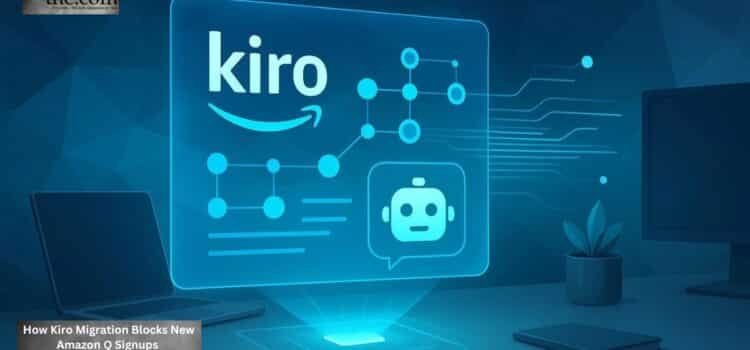
Atomic answer: AWS has made it impossible to register with Amazon Q Developer as of today, May 15, 2026. The move indicates the end of the technical life of Amazon Q Developer. This is because the advanced Opus 4.7 agents will only be available through Kiro.
Amazon Web Services has announced that all new subscriptions for Amazon Q Developer will be halted. This move indicates that businesses will have to shift their focus towards the expanding Amazon Kiro Migration program. This represents a significant restructuring of AWS’s software development ecosystem through AI-assisted coding tools.
AWS claims that current Amazon Q users will continue receiving subscriptions for some time. However, it is clear that the future of enterprise-level AI coding systems will be shaped by the Kiro platform. Analysts estimate that this move will affect businesses across their development workflows, CI/CD pipelines, IDE plugins, and enterprise software acquisition strategies over the next year.
This trend highlights the competitive nature of the AI development ecosystem. Cloud service providers aim to establish AI coding infrastructure to support autonomous software engineering systems.
Importance of Amazon Kiro Migration
It is important for a business to migrate to Amazon Kiro Migration because AI-assisted software development has become critical to enterprise infrastructure. Today’s organizations rely extensively on artificial intelligence tools to generate code, debug codes, automate coding workflows, document code, and optimize code deployment.
Since AWS seems ready to end onboarding for Amazon Q Developer, it indicates that the company intends to invest its efforts into an advanced coding environment in preparation for autonomous coding systems in the future.
Some enterprise impacts associated with Amazon Kiro Migration include:
- Developer environment migration
- Deployment workflows change
- Enterprise authentication system changes
- AI coding infrastructure migration
- Software governance changes
Amazon Kiro Migration illustrates just how fast enterprise AI tooling ecosystems can change. For businesses that had built internal processes based on earlier-generation coding tools, the process may entail a complete overhaul of their development processes.
For enterprise engineering teams, migration comes with risks and benefits.
Evolution of AI Coding Ecosystems
The advent of AI coding assistants is revolutionizing the software development process within the enterprise tech landscape. Beyond being simple autocomplete engines, advanced coding applications today help developers design code structure, debug code, write documentation, test code, and deploy infrastructure.
The trend is impacting future perceptions of developer productivity in enterprises.
Contemporary AI coding platforms often provide:
- Automated code generation
- Development support with workflow awareness
- Automated infrastructure deployment
- Debugging aid in real-time
- Syncing multiple environments
The trend also reflects AWS’s push to consolidate its advanced coding features into newer architecture models, such as Opus 4.7, which allegedly operate only on Kiro coding platforms.
As reliance on AI for software development rises, enterprises may have to revise their internal frameworks for automated coding and AI-supported engineering processes.
Enterprise Development Team Operational Challenges
The sudden shift from the newly established Amazon Q Developer may pose some operational issues for enterprise developers. The majority of businesses have adopted Amazon Q technologies into their current developer processes and software deployment platforms.
The switch to Kiro will necessitate many operational changes.
The following are some transition issues:
- IDE plugin updates across departments
- CI/CD platform reconfiguration
- Developer training for new processes
- Migration of authentication processes
- Governance policy adjustment
According to AWS, legacy subscription services will continue to work for a while, but enterprises must prepare for the transition long before any future support termination dates.
This transition further illustrates the need for enterprise AI systems to integrate more closely with cloud-native systems and centralized authentication networks.
Implications for Enterprise Software Purchasing
The rapid advancements in AI coding frameworks have also influenced how enterprise software is purchased. Companies analyzing AI-supported programming tools now operate in an environment characterized by constant changes in product offerings, licensing agreements, and deployment ecosystems.
This adds another layer of complexity to enterprise software purchasing decisions.
These issues that can arise during purchasing include:
- Platform longevity
- Migration promises
- Compatibility with enterprise resources
- Governance and security compliance
- Access restrictions for AI models
The shift towards Kiro could also lead to a greater reliance on AWS services, as Bedrock authentication is required for deploying sophisticated AI models.
Thus, businesses might need to consider the feasibility of integrating with AWS’s AI development stack.
Future Trends in AI-Assisted Software Engineering
Amazon Kiro Migration is one example of a broader trend in enterprise software development. In particular, the use of AI-based software engineering tools is becoming increasingly centralized, consolidated, and cloud-based.
As self-governed systems develop, the realm of software engineering could move towards increasingly orchestrated environments, in which AI systems govern much of the code writing, deployment, and infrastructure management.
Some of the future demands may include:
- AI-powered software engineering platforms
- Secure cloud identity verification processes
- Multi-platform process orchestration services
- Innovative software engineering frameworks
- Continuous real-time monitoring of AI infrastructure
Such developments emphasize the need for dedicated enterprise-level AI-based software engineering platforms that can seamlessly integrate coding support with the overall system infrastructure.
Conclusion
With AWS announcing that it would stop accepting new Amazon Q Developer registrations and accelerate the Amazon Kiro Migration, there is an indication of a major move forward in the infrastructure for AI software development in enterprises. With the increasing dependency on AI coding, deployment, and cloud-native workflows, enterprise development environments are moving towards centralization and automation.
There will be many operational issues, such as integrating IDE plugins, authentication, and process redesign, but this is where the future lies in developing a software engineering strategy. In light of the upcoming Kiro and models like Opus 4.7, 2026 might just witness one of the biggest changes in enterprise software development infrastructure.
Enterprise Procurement Checklist
- Procurement Risk: New developer hires cannot be added to legacy Q subscriptions; they must be onboarded to Kiro.
- Deployment Impact: Existing subscriptions remain active for 12 months but will lose access to “Opus 4.6” by May 29.
- Operational realism: Kiro migration requires updating all IDE plugins and internal CI/CD pipelines.
- Infrastructure Constraint: Advanced coding models now require Bedrock-authenticated Kiro environments.
- Action Step: Initiate the 12-month transition plan to Kiro to avoid the April 2027 end-of-support hard cutoff.
Source- AWS News Blog