





San Francisco, California.
A customer orders a $220 pair of running shoes, but the package never arrives. Seeking help, they enter a support chat and spend 10 minutes in a repetitive automated loop before requesting a human agent.
This experience costs retailers twice: First, through customer dissatisfaction, and second, through the high labor costs of resolving issues that software could address immediately.
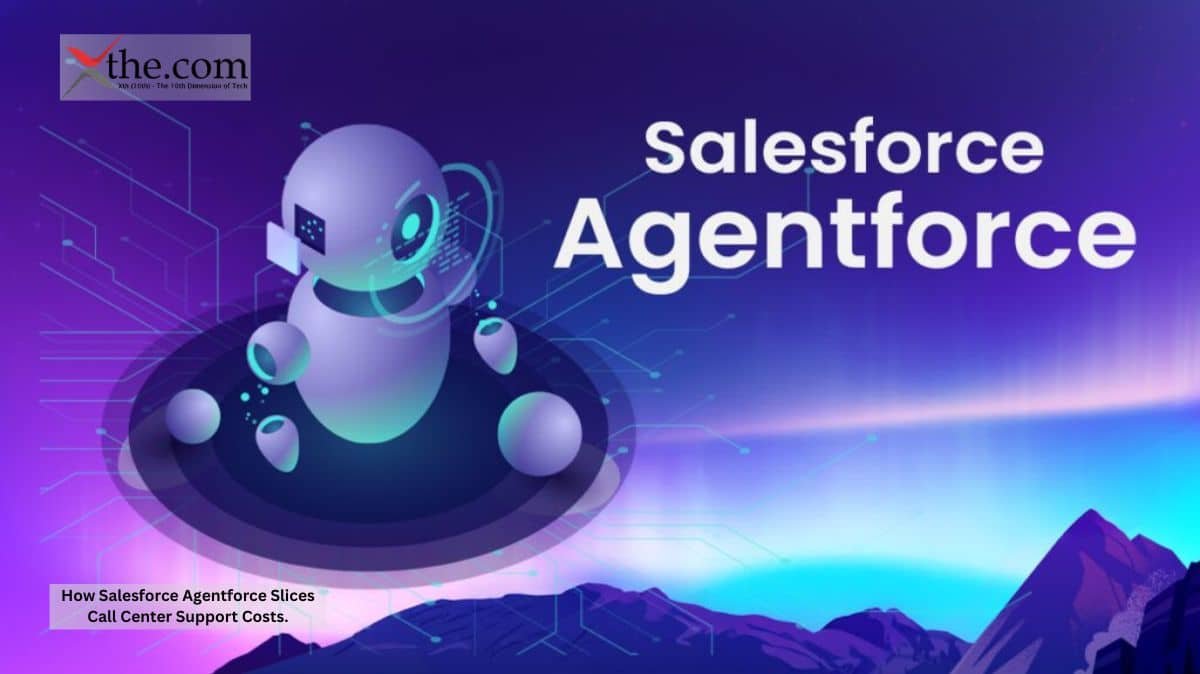
The latest generation of Salesforce AgentForce is designed to change that equation.
Unlike classic chatbots that use scripted responses and keyword matching, this platform functions as an autonomous digital employee. It accesses business systems, fetches information, makes policy-based decisions, and completes tasks independently. For retailers, these capabilities immediately impact support costs via addressing rising labor expenses and increasing customer expectations.
Why Salesforce Agentforce Is Different From Traditional Chatbots
Most consumers have experienced the limitations of first-generation automation.
A customer asks about a package, receives a menu from the chatbot, selects options, and answers repeated questions only to be transferred to a human representative.
This process frustrates customers and provides minimal operational value.
Salesforce Agentforce takes a different approach, acting as an autonomous digital employee that can take action rather than serving solely as a conversation tool.
For example, if a customer contacts an online retailer about a lost parcel, the system can review shipment records, verify carrier status, determine delivery expectations, assess refund eligibility, and initiate corrective actions, rather than simply display tracking information.
The customer receives a solution instead of another menu.
This distinction is important because retailers now require software that resolves problems, not just responding to inquiries.
The Hidden Cost Problem Facing Retail Service Teams.
Customer service remains one of the most expensive operational functions in retail.
Labor expenses are rising. Seasonal demand complicates staffing, and employee turnover increases training costs. At the same time, customers expect immediate answers at any hour.
This environment creates a strong opportunity for the Salesforce Agent Force.
With modern service cloud infrastructure, autonomous agents work continuously without shift schedules, overtime, or workforce shortages. They handle routine requests, allowing human employees to focus on exceptions that require judgment, empathy, or specialized expertise.
Consider a retailer processing 50,000 customer questions monthly.
Historically, many of these communications involve shipment tracking, refund requests, and exchange processing or return status updates. These repetitive tasks consume thousands of employee hours each year.
When an autonomous digital employee manages these communications, organizations decrease operational strain and improve customer response times.
This leads to lower support costs and more consistent service.
How Problem Solving Happens Without Human Escalation
Shipping Issues
A delayed shipment represents one of the most common customer complaints in retail.
Traditional automation might provide tracking information and stop there.
Salesforce Agent Force goes beyond information delivery into active problem-solving.
The system can investigate carrier records, compare estimated delivery dates, identify shipping expectations, and determine whether replacement orders or refunds qualify under company policies.
The customer receives a clear resolution instead of just a support ticket.
Refund Management
Refund processing often requires multiple system checks.
An agent must verify purchase history, confirm payment records, review of return eligibility, and process reimbursement.
With Service Cloud infrastructure, Salesforce AgentForce can automatically complete these tasks when pre-defined business conditions are met.
For retailers processing thousands of refund requests each week, the operational savings are considerable.
Package Returns
Returns represent another major source of customer support volume.
Traditional workflows frequently require manual review before generating labels or authorizing returns.
An autonomous digital employee can verify purchase details, generate return documentation, schedule carrier pickup options, and automatically update customer records.
This independent execution transforms the economics of support operations.
Salesforce Agentforce System Installation Pricing Guide: What Buyers Should Evaluate
Executives researching the Salesforce Agentforce system installation pricing guide often focus first on licensing costs.
However, this approach overlooks the wider financial impact.
The most important consideration is cost displacement.
How many customer engagements can the platform resolve without human involvement? How much employee time can be redirected toward higher-value work? How much faster can customer issues be resolved?
Organizations evaluating Salesforce Agent Force installation should assess implementation requirements, integration complexity, workflow automation capabilities, and expect reductions in support staffing needs.
The highest return on investment typically comes from high-volume service environments with frequent repetitive inquiries.
Retailers, subscription businesses, e-commerce platforms, and direct-to-consumer brands often fall into this category.
The Retail Guide for Enterprise Buyers
An effective retail guide starts with understanding customer expectations.
Customers now compare support experiences to the best digital interactions they have had, not just to competitors within the same industry.
If a customer receives an instant refund from one retailer but waits three days for a response from another, their expectations change permanently.
This shift is accelerating the embracing of autonomous service technology.
Organizations deploying Salesforce Agent Force can deliver immediate responses at scale while controlling support costs.
Those counting solely on traditional service teams may struggle to fulfill modern service expectations cost-effectively.
Customer support is moving beyond scripted automation toward programs capable of genuine problem-solving. As service cloud infrastructure becomes more intelligent, autonomous digital employees will move from handling simple requests to directing complex business processes. For enterprise leaders, Salesforce AgentForce is becoming a strategic requirement for competitive retail operations, not just a technology upgrade.
Source: Salesforce News