





Shanghai
If a pallet of consumer electronics is dropped, a fulfillment center can incur costs of more than $15,000 due to damaged goods, shipping delays, and worker incident reports. When you consider this risk over a 10-hour shift on a busy, cluttered warehouse floor, the potential losses add quickly. The Unitree H1 Robot was designed to solve this problem, and recent commercial deployment papers from Unitree Technology show that this machine is ready for actual use, not just research.
How the Unitree H1 Robot Actually Moves on a Warehouse Floor
Imagine a runner adjusting their step for a crack in the pavement before they even think about it. Their bodies shift, their arms swing out, and they keep moving fluidly. The H1 robot copies this process with its balance control plane, which quickly checks its position and adjusts the force in its legs within milliseconds if it senses instability.
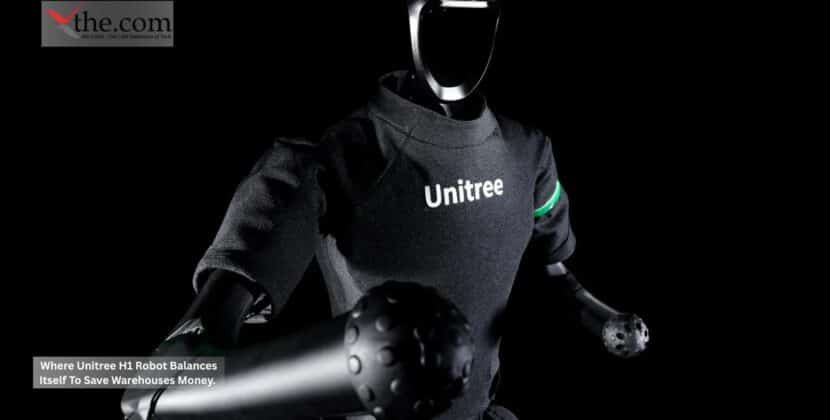
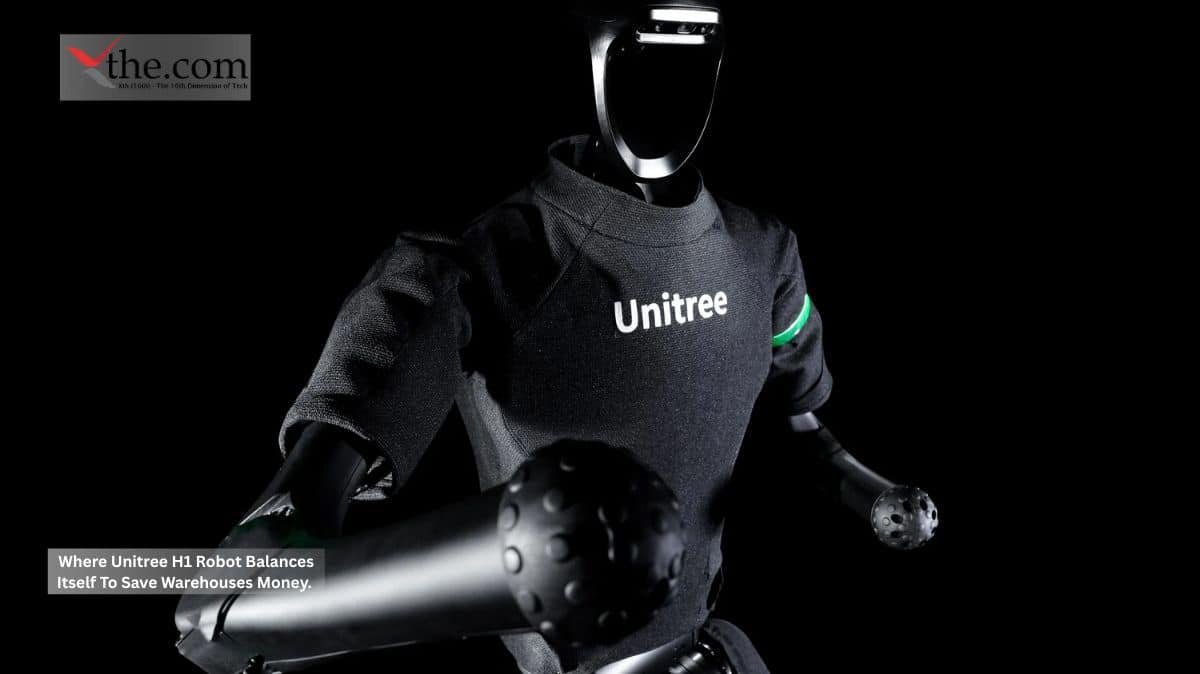
The H1 is not simply a wheeled cart with guardrails. It stands 1.8 meters tall, weighs about 47 kilograms, and walks on two limbs over the same uneven surfaces that warehouse workers face every day. If the robot’s foot hits the edge of a cardboard box left in an aisle — a scenario that plays out dozens of times per shift in any active distribution center — the balance control plane fires a corrective sequence before the carried load has time to shift its center of gravity past the recovery threshold. Package drop prevention happens not through slower movement, but through faster recovery.
The Evolution Machinery Behind the Stability
Unitree’s commercial filing describes the H1 as the main product in its Evolution Machinery line, which includes humanoid robots designed for unstable environments. Earlier Unitree models, such as the Go series quadrupeds, demonstrated the company’s balance on rough ground. The H1 uses those same control systems in a two-legged design made for industrial work, where having hands and human-like reach is important.
The Unitree Technology H1 evolution balance specifications document describes a joint torque output of 360 Nm across the lower limbs, paired with a proprietary whole-body control system that treats the robot’s arms, torso, and legs as a single integrated kinematic chain instead of isolated subsystems. That architectural decision is what separates the H1 from earlier industrial robots that moved rigidly from preprogrammed point to preprogrammed point. When the H1 carries a tote bin and steps over a raised threshold, both arms and the hip assembly participate in preserving balance — the same distributed mechanics a human longshoreman uses when stepping off a loading dock with a heavy load.
Industrial Labor Economics: The Real Case for Deployment
The commercial papers frame the H1’s value proposition in terms that logistics executives immediately understand. Warehouse operators in the United States currently pay an average of $19 to $22 per hour for general fulfillment labor, a figure that rises steeply during peak shipping seasons. Injury rates in warehouse environments run roughly twice the national average for all private industries, according to Bureau of Labor Statistics data, with overexertion and object-handling incidents leading to the category.
The Unitree H1 Robot does not fatigue after six hours. It does not file a workers’ compensation claim after catching a heavy tote at an awkward angle. The deployment papers cite operational testing across surfaces, including concrete, rubberized anti-fatigue matting, and corrugated cardboard accumulation zones — all standard features of real fulfillment floors, not sanitized lab conditions. That last detail is enormously important to procurement teams who have watched previous generations of warehouse robots succeed in controlled pilots and fail on live floors.
Package Drop Prevention at Scale Changes the Risk Calculation
This is where the save warehouses money argument becomes concrete. A mid-sized e-commerce fulfillment center that handles 40,000 units a day runs a continuous risk of product damage, inventory shrinkage, and liability from robotic malfunction. If the H1’s balance control plane reduces drop incidents by even 60 percent compared to older automated systems, the return on investment could go from years to just months.
The Unitree Technology H1 balance specifications show that the robot is built to meet this goal. Its whole-body controller reacts quickly, and the Evolution Machinery torque system gives the H1 a safety margin that earlier two-legged robots did not have.
The time has come for humanoid robots to do real work on warehouse floors. Now, the main question is whether American logistics companies will move fast enough to use them before their competitors do.
Source: SSE Disclosure