






Palo Alto, CA.
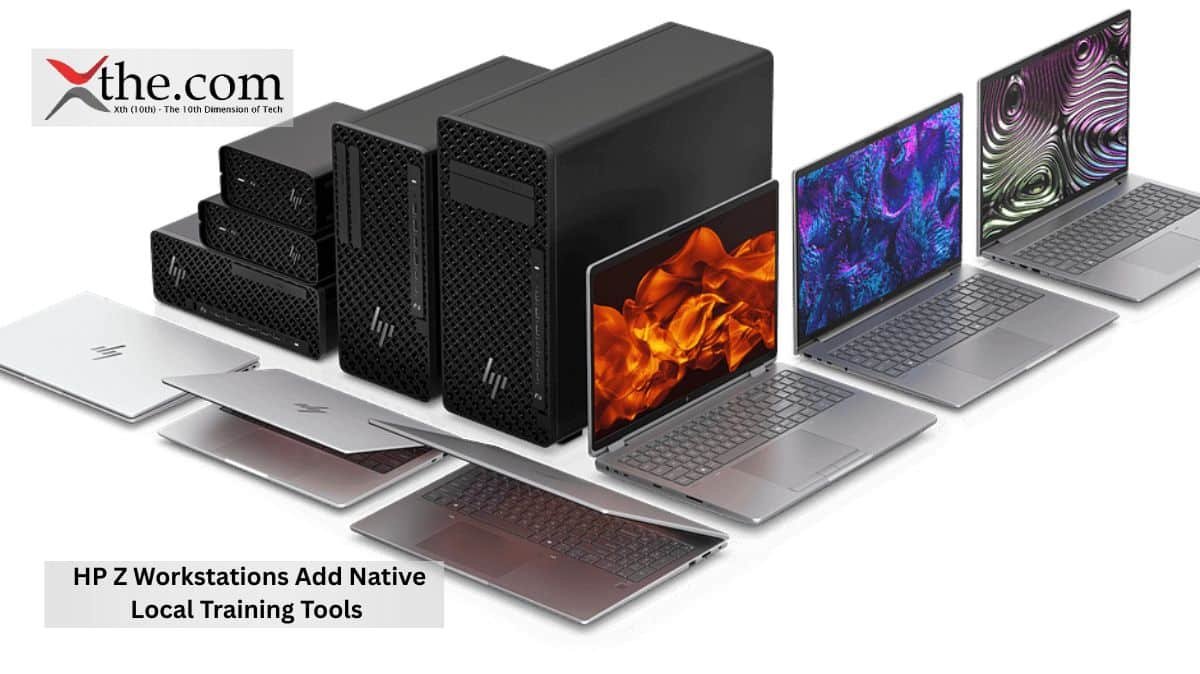
Atomic Answer: HP Inc. (HPQ) updated its premium Z workstation desktop line on May 20, introducing specialized hardware profiles tailored for local training and edge-optimized tasks. The professional computer chassis integrates reinforced subsystem thermal ventilation layouts and fast internal memory routing to sustain full processing loads without component throttling during long training cycles. This design offers local engineering teams a secure, localized alternative to expensive cloud compute options, keeping sensitive dataset files fully contained within local company hardware boundaries.
If a workstation hits or memory slows down, training a 40‑billion‑parameter model can delay an engineering team for days. Many companies faced these problems during early on‑device AI tests. Now, workstation makers are building systems for more reliable local training, not just inference.
HP’s new Z‑Series workstations are built to solve this problem. The company now markets these systems as edge‑training workstations that can handle enterprise‑level model tuning without sending jobs to large cloud clusters. This change is important because GPU rental costs are rising and data regulations are becoming stricter across industries such as healthcare, finance, and defense.
Why Local AI Training Is Moving Back to the Desktop.
For years, most machine learning work happened in the cloud, but many organizations found hidden costs, such as slow uploads, ongoing GPU rental fees, and lengthy compliance checks. These issues slowed down projects. Now, teams building their own models want more control, especially during local dataset validation and prototype testing.
HP’s new approach focuses on better desktop hardware scaling and built-in tools that make local model development smoother. Developers no longer need to piece together different frameworks. The updated Z workstation handles resource management, cooling, and checkpoint tasks right on the machine.
This design choice could change how midsize companies buy AI systems.
Edge Graining Workstations Depend on Thermal Stability
Training large models puts different stress on hardware than rendering or simulation. Long training sessions cause uneven heat across GPUs, memory, and storage. If temperatures get too high, performance drops quickly.
HP tackled this by redesigning airflow and improving subsystem thermal ventilation with multiple GPUs. The company says these changes improve GPU performance during long training sessions.
For example, a legal analytics team training a confidential document model locally could lose a whole business day if overheating causes an eight‑hour checkpoint to fail. Improved subsystem thermal ventilation helps prevent these delays.
The benefits go beyond just keeping systems running. Stable temperatures also keep processing speeds steady during model checkpoint compilation, which makes training results more reliable and easier to debug.
The Push For Better Desktop Hardware Scaling.
Enterprise AI projects often grow quickly. A team might start with a 7-billion-parameter model and move to 30 billion or more in a few months. Standard desktops can’t keep up due to limitations in PCIe slots, power, and memory design.
HP’s revised ZC architecture focuses heavily on desktop hardware scaling using modular GPU expansion and improved interconnect design. Engineers can add accelerators incrementally rather than replacing whole systems.
This is especially important in setups where teams perform both local inference and local training simultaneously. AI teams need machines that can run simulations and test new models together. Fast data-computing bus lines are key, since memory slowdowns can hurt performance.
HP also improved memory fabric routing between processors, GPUs, and shared memory. This is most helpful when developers run smaller, compressed models alongside larger datasets.
Native AI Toolchains Can Change Workflow Economics.
Hardware is no longer the only thing that sets enterprise workstations apart. Now, software management decides how well teams can run AI at scale.
HP’s new management tools now support local data set validation, automated resource balancing, and easier model checkpoint compilation workflows. Instead of exporting checkpoints by hand between systems, local pipelines run with fewer errors.
A pharmaceutical research group is an excellent example. Scientists training molecular prediction models regularly use sensitive data that must remain on internal networks. Built-in tools in edge workstations help them avoid extra sync steps and keep records clear.
The main change is a focus on reliability. Companies no longer want experimental AI hardware. They want systems that work the same way every time and fit with their buying and compliance processes.
The Rise of the HP Z8 Workstation: Local Model Execution Hardware Configurations 2026
The most aggressive enterprise interest currently surrounds the HP Z8 workstation local model execution hardware configurations 2026 roadmap. Analysts expect these systems to prioritize multi-accelerator efficiency, larger unified memory pools, and denser AI-specific bandwidth allocation.
This focus matches what’s happening in the market. Companies now look beyond just GPU numbers. They care about how well workstations handle real workloads, including memory fabric routing, data input, and checkpoint management.
The HP Z8 workstations’ 2026 plan seems built for these needs. Early specs show better computing bus lines, more memory, and improved cooling for long training jobs.
For IT leaders, the choice is clear. Renting cloud GPUs for ongoing experiments can cost more than buying a workstation in just a year. Owning local hardware changes the financial picture.
AI Infrastructure Is Becoming Departmental Again.
The first wave of enterprise AI placed everything in the cloud. Now things are shifting to more distributed setups. Teams want to experiment locally, keep control, and have reliable hardware without ongoing outside costs.
That’s why vendors are investing more in edge training workstations and in better desktop hardware scaling. AI development isn’t just for big data centers anymore. It’s now happening in engineering offices, research labs, and secure company spaces where speed, privacy, and control are more important than just scaling up.
HP’s new Z-Series approach shows a bigger industry shift. Workstations are turning from powerful desktops into local AI infrastructure. Companies that first improve cooling, memory design, and built-in management tools will likely shape enterprise AI for years to come.
Technical Stack Checklist
- Configure fan speed management parameters to handle extended local machine learning training workloads.
- Verify memory fabric routing structures to optimize data transfer speeds across installed graphics cards.
- Adjust local storage indexing rules to accommodate large machine learning dataset files efficiently.
- Test automated model checkpoint compilation routines to avoid workflow interruptions during system updates.
- Optimize power distribution settings within the workspace infrastructure to ensure stable power delivery under maximum system load.
Source: HP Newsroom








