






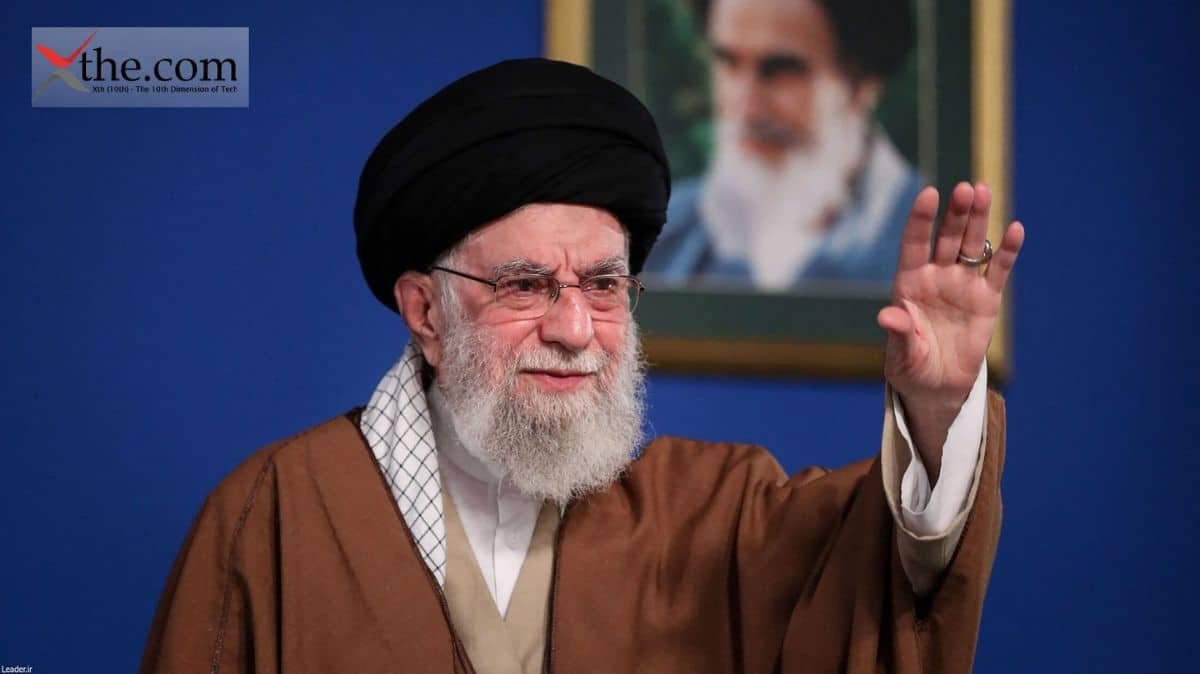
Washington, D.C. | July 6, 2026
Fifteen million people is not a crowd. It is a message. That is roughly how many mourners Iranian officials expect to pass through Tehran’s streets before the week is out, and by Sunday the Iran Khamenei funeral 2026 had already produced the kind of images Tehran’s theocracy wanted the world to see: red banners, chests beaten in time, and a chant that required no translation. The Iran supreme leader killed US airstrike that opened the war on February 28 has become the occasion for the largest state funeral in the Islamic Republic’s history, and the Iran funeral chants of revenge rising from the Grand Mosalla complex are landing at the most inopportune moment for a ceasefire that was already showing cracks.
For investors, policymakers, and executives watching Middle East risks, the funeral is not simply a backdrop to diplomacy. It is the main event, unfolding publicly before millions of people and thousands of foreign dignitaries.
A Second Day of Mourning, and a Warning to Washington
Ayatollah Khamenei’s death in February 2026 ended thirty-six years of his control over Iran’s clerical, military, and nuclear systems. But it did not settle the debate about what happens next. On Sunday, crowds assembled again at the Grand Mosalla prayer complex for a second day of ceremonies, chanting “Death to America” and “revenge, revenge” as the coffins of Khamenei and four family members killed with him stayed on display under glass.
A eulogist told the crowd directly that people were there not just to mourn, but to demand payback. An 18-year-old student told reporters that Iranians should rise up and avenge their leader’s death. A 29-year-old grocery store clerk said he came to call for revenge and named President Trump as a target. These are not isolated opinions. Iranian officials designed the funeral to highlight this feeling, starting the six-day event on July 4, the 250th anniversary of the United States’ independence. Analysts see this as an intentional act of political theater, not a coincidence.
Who Was Khamenei, and Why His Death Reshapes the Region
To understand what is at stake, it helps to know who Khamenei was. He became supreme leader in 1989 after the death of revolutionary founder Ruhollah Khomeini, having already served as Iran’s president. Over thirty-six years, he shaped the Islamic Republic’s ideology and institutions: an anti-Western foreign policy supported by proxy militias in Lebanon, Iraq, Syria, and Yemen; a nuclear program that moved between talks and opposition; and a security state centered on the Islamic Revolutionary Guard Corps.
He was killed in a coordinated strike that intelligence officials say used CIA location data shared with Israeli forces, hitting a Tehran compound where Khamenei was meeting his top military commanders. The US-Israeli strikes Iran carried out that Saturday morning killed not only Khamenei but Iran’s defense minister, the top IRGC commander, and the armed forces chief of staff in one blow, removing Iran’s senior military leadership in a single morning. More than 200 people died in the wider wave of strikes that day, according to Iran’s Red Crescent. Iranian state media also reported that dozens of children were killed when a strike hit a school in southern Iran, a claim U.S. Central Command said it was reviewing.
The Succession Question Nobody Can Fully Answer
Mojtaba Khamenei, the late leader’s son, was named his successor in March. He has not appeared in public since then. Many believe this is because he fears he could be Israel’s next target, not because of questions about his authority. His absence from his father’s funeral, while three of his brothers appeared to pray over the coffins, has provoked speculation about his health, his whereabouts, and how much control he really has.
This uncertainty is important for Iran’s leadership succession in 2026 and for Tehran’s future dealings with Washington. A supreme leader who cannot appear in public cannot easily show strength at home. This may be why hardliners in Iran’s security establishment have used the funeral, instead of the new leader, to show resolve. Whether Mojtaba leads cautiously or tries to prove himself through confrontation will affect everything from nuclear talks to the risks around the Strait of Hormuz for years ahead.
Ceasefire Diplomacy, Paused for a Funeral
The timing is especially difficult for negotiators. For weeks, American and Iranian delegations have held indirect, technical talks in Doha, with Qatari and Pakistani officials mediating. They are working from a 14-point memorandum of understanding signed by Washington and Tehran on June 17. This agreement extended the fragile Iran-US war ceasefireby 60 days and covers reopening the Strait of Hormuz, releasing billions in frozen Iranian assets, and outlining a permanent deal on Iran’s nuclear program.
Qatari and Pakistani mediators said this week that there has been “positive progress” on issues related to the memorandum. However, they also made it clear that the next round of talks will not happen until the funeral processions are over. Vice President JD Vance said the discussions in Doha were “going well,” but he did not rule out a return to full military action if the truce fails. This mix of reserved optimism and open threats has defined the ceasefire since its shaky start in April, when both sides first agreed to a two-week pause after months of missile attacks, a naval blockade, and several near-breakdowns.
Domestic political pressure in Iran is the variable factor that mediators in Doha cannot control. After six days of organizing millions of people to chant for revenge, the regime will struggle to present any compromise on sanctions, uranium enrichment, or the Strait—as anything but surrender. Analysts observing the funeral say the government is using the mourning period to project a tough stance, even as its negotiators quietly continue talks with Washington.
What the Oil Market Is Telling Us
Markets have responded clearly to this risk. Brent crude, which went above $120 a barrel during the worst of the spring naval blockade, has since dropped sharply as hopes grew that the Strait of Hormuz, which carries about a fifth of the world’s oil and LNG, would reopen. In the days before the funeral, Brent traded in the low to mid-$70s, with WTI futures also falling from their wartime highs above $100.
That decline shows the market betting the ceasefire will hold. It does not reflect certainty. Analysts covering the Iran supreme leader’s death, US war ceasefire negotiations on oil market stocks in the July 2026 period, have flagged that current prices may be overshooting to the downside, assuming a smoother and faster normalization of Gulf shipping than the security situation on the ground actually supports. Citi and Goldman Sachs both trimmed their third- and fourth-quarter Brent forecasts in recent weeks, but both banks also noted that any disruption tied to succession instability, funeral-driven unrest, or a breakdown in Doha talks could quickly reverse those gains. A single provocative incident near the Strait an Iranian gunboat harassment, a stray missile, a hardliner faction acting without central authorization could send crude spiking again within a trading session.
The Week Ahead
Khamenei’s body will travel from Tehran to Qom, then to Najaf and Karbala in Iraq, before returning to Iran for burial in Mashhad on July 9. Each halt is another opportunity for mass mobilization, another set of images broadcast globally, and another test of whether grief curdles into pressure that Iran’s negotiators cannot resist. The Iran Ayatollah Khamenei funeral second day chants revenge killed US Israeli airstrike February 2026 story is, at its core, a story about whether a nation can mourn its way into war or negotiate its way past it and right now, both paths remain open.
For executives with exposure to the Middle East and investors in energy markets, what happens on the streets of Tehran, Qom, and Mashhad in the coming days matters more than what is said in Doha. Diplomacy can survive a funeral, but it is much harder to survive when fifteen million people are calling for blood.








