






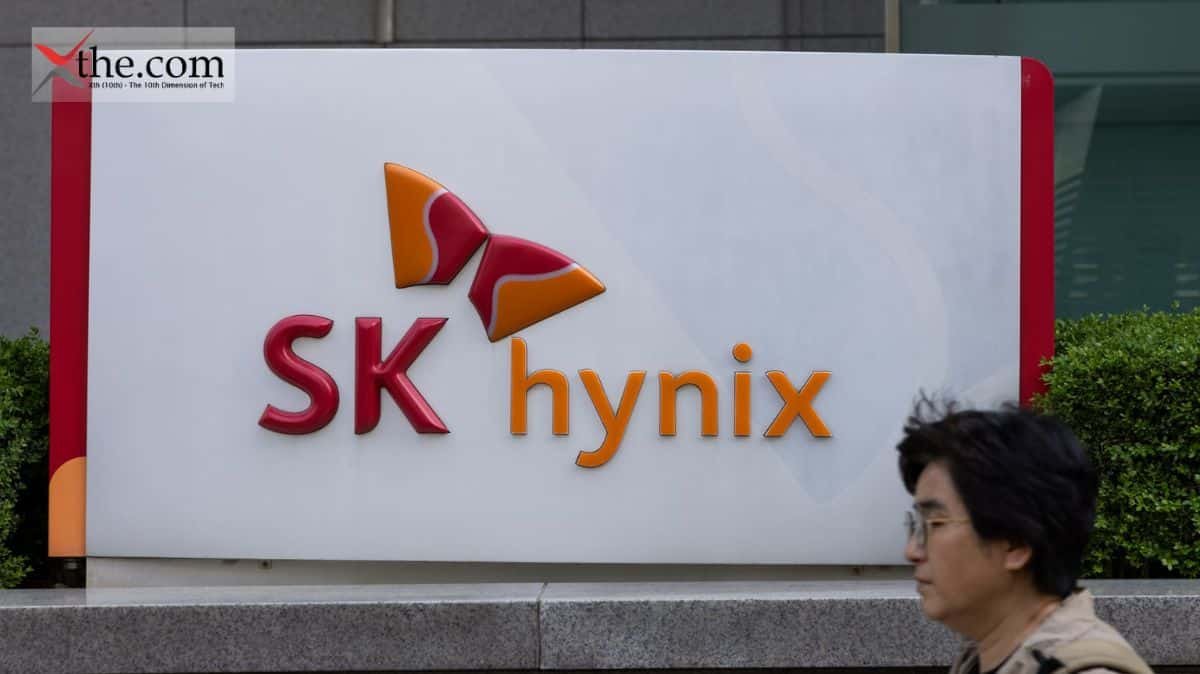
Seoul, South Korea | Dateline: July 7, 2026
A shortage of memory chips has done what no marketing campaign could: it has made a Korean semiconductor supplier into a name Wall Street now says in the same breath as Nvidia. This week, the SK Hynix Nasdaq listing $29 billion offering moves from filing to reality, with the SK Hynix ADR debut on July 10 set to be the largest first-time U.S. share sale ever by a foreign company. This isn’t just a typical capital raise. Backed by 17.79 million new shares and 45.45 trillion won in expected proceeds, the listing is a bet that demand for artificial intelligence memory is just getting started.
Why This HBM Memory AI Chip IPO Matters to Wall Street
Calling this an HBM memory AI chip IPO doesn’t capture the full story. SK Hynix isn’t a startup looking for attention. It’s the established supplier behind the high-bandwidth memory used in Nvidia’s GPUs and Google’s data centers. Its shares have jumped over 280% this year, raising its market value above $1 trillion. Until now, global fund managers could only buy its Seoul-listed shares in won, but the Nasdaq listing changes that immediately.
According to its updated filing with the U.S. Securities and Exchange Commission, each common share will convert into 10 American Depositary Receipts, which will trade under the ticker SKHY. The indicative price is about 242,500 won per underlying share, compared to Tuesday’s close of 2.555 million won. This gives American investors their first direct access to a company that supplies both chipmakers and the large tech firms building AI infrastructure. Analysts at several major banks say the order books are unusually full for a deal this big, indicating that demand for AI memory stocks exceeds the available supply.
SK Hynix Largest Foreign US IPO in History
Financial journalism often uses big words, but in this case, the SK Hynix title for the largest foreign US IPO is accurate. At its top range, the $29.65 billion raise beats Alibaba’s $21.8 billion New York debut in 2014 and Saudi Aramco’s $25.6 billion offering in 2019. Only SpaceX’s private valuation events and its reported $85.7 billion raise have been larger in recent years. Unlike those, SK Hynix’s shares are publicly listed, so regular investors can buy shares directly rather than wait for a secondary market.
The size of this listing is important for more than just bragging rights. A deal this big usually prompts index providers to consider adding the stock within a few quarters, and passive funds tied to Nasdaq-100 membership could drive further buying even after the initial sale. For a stock that’s already tripled this year, that’s a big deal.
SK Hynix vs Micron Valuation: A Gap Investors Want Closed
Right now, no topic is bigger on trading desks than the SK Hynix vs. Micron valuation debate. SK Hynix trades at a forward price-to-earnings ratio of about 6.2, while Micron is at roughly 7, even though SK Hynix has a bigger share of the high-margin HBM market. The company’s leaders say this discount is why they’re listing in the U.S., hoping that a wider investor base will help the market value the company more fairly, instead of applying the usual discount to Korean stocks.
The company’s own 2026 net income guidance stresses the stakes. SK Hynix is projected to generate 221 trillion won in net income this year, up 415% from 2025, while revenue is forecast to climb toward 355 trillion won. Micron, for context, is expected to see its own net profit jump sharply in its current fiscal year, meaning the two companies are now racing on nearly parallel tracks. For investors weighing “SK Hynix ADR vs Micron MU which AI memory stock is better investment July 2026,” the honest answer is that neither company wins outright; SK Hynix offers dominant HBM share and a valuation discount, while Micron offers longer U.S. trading history and diversified DRAM and NAND exposure.
SK Hynix HBM 60 Percent Market Share Anchors the Bull Case
Strip away the listing mechanics, and the underlying business case rests on one figure: SK Hynix’s HBM 60 percent market share, a position confirmed by Counterpoint Research and repeatedly reinforced by industry analysts tracking the AI memory supply chain. High-bandwidth memory has become the bottleneck component in AI server production, with 2026 capacity effectively sold out across the industry and shortages already forecast to extend into 2027. Samsung Electronics and SK Hynix together account for more than 40% of South Korea’s semiconductor exports, but it is SK Hynix’s early and aggressive specialization in HBM that has allowed it to command both the largest share and the best manufacturing margins in the category.
SK Hynix’s dominance didn’t happen by chance. The company started working with Nvidia’s engineers to develop HBM specifications before its competitors did. This move seemed risky in 2023 when memory prices were low, but now it looks smart as demand has outpaced supply across the industry.
SK Hynix Yongin Cluster Plant Anchors the Capital Plan
The proceeds from this offering are allocated to specific projects, which makes this raise different from a typical equity sale. The SK Hynix Yongin Cluster plant will get about 31 trillion won, or $20.2 billion, to build its first fabrication line, with the larger campus expected to open in 2027. Another 19 trillion won will go to the P&T7 advanced packaging facility in Cheongju, and 12 trillion won is reserved for extreme ultraviolet lithography equipment needed for next-gen chips. The company is also building its first U.S. manufacturing site, a $4 billion packaging facility in Indiana, giving it a local presence as U.S. leaders push for more domestic chip production.
For readers searching for the full picture, this is effectively the “SK Hynix launches $29 billion Nasdaq ADR listing July 2026 largest foreign US IPO explained” story in one sentence: a dominant HBM supplier is converting a historic valuation run into concrete, already-budgeted factory capacity, betting that AI memory demand will still be climbing when the Yongin fab opens its doors.
What Comes Next for Investors
The final price, share count, and trading date still depend on SEC review and the bookbuilding process, and SK Hynix has warned that the July 10 date could change. What remains the same is the bigger picture: the memory market, which used to swing between boom and bust, is now seen as part of a long-term AI buildout. Whether this view holds up during the next chip downturn is the question every SKHY buyer answers when they invest. For now, most of Wall Street seems ready to take that risk.
Source: SK Hynix seeks access to AI investors in $29 billion U.S. listing








