






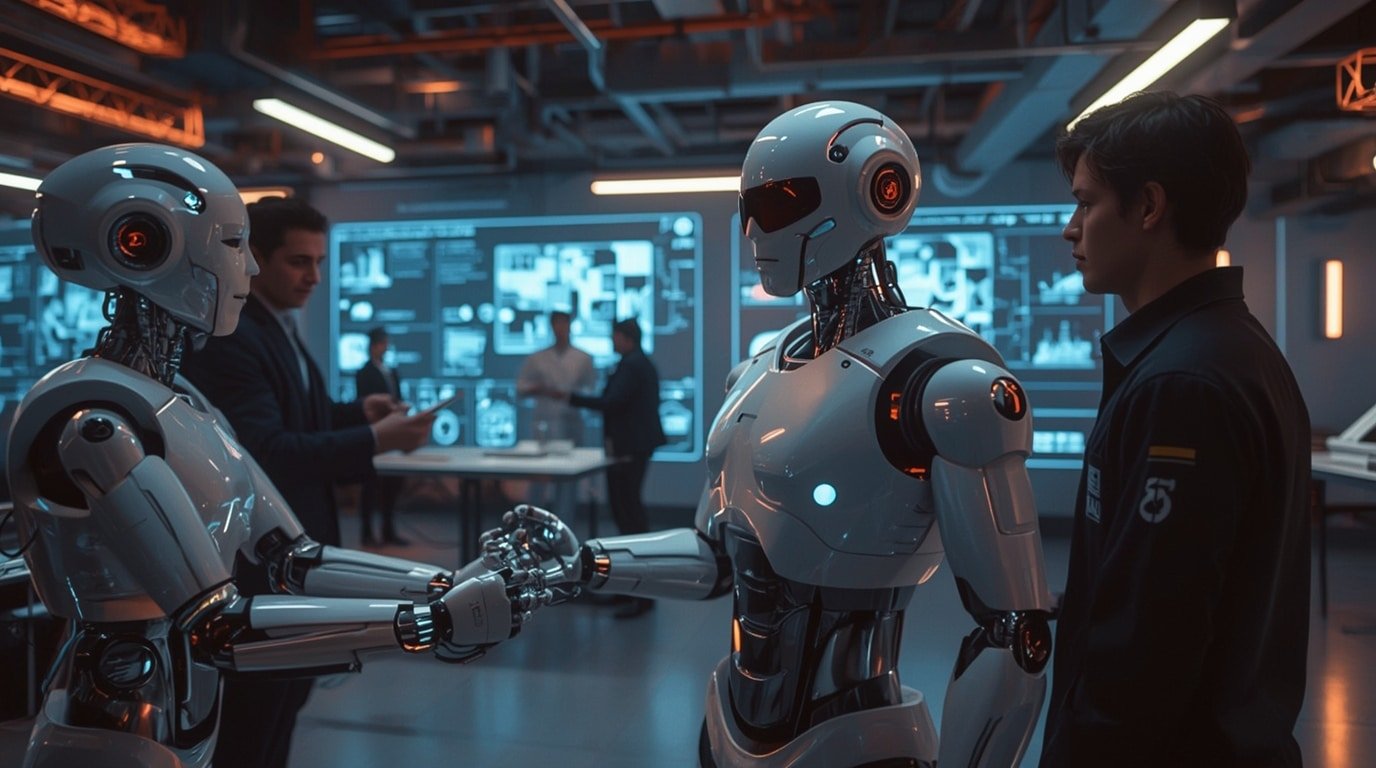
Tesla is advancing its Optimus humanoid robot, targeting deployment in factory settings. The objective is to revolutionize manufacturing and logistics by autonomously handling repetitive, physically intensive tasks. Tesla is transitioning from displaying prototypes to integrating robots in its own production lines.
Current Development & Industrial Deployment 2025-2026
- Tesla started using its Gen 2 Optimus robots for pilot tests inside its factories. These robots help with tasks such as moving parts and simple assembly, working alongside human workers.
- Tesla plans to start production of the Optimus Gen3 V3 in summer 2026. The company expects to make several thousand robots in 2025, increase production in 2026, and reach 10 million units per year by 2027.
- At the We-robot event in October 2024, Tesla showcased more agile Optimus robots. These models could walk autonomously and handle objects such as battery cells.
- Tesla intends to begin commercial sales of Optimus robots to external companies for industrial use in late 2026. The company has set an initial target price of approximately $30,000, which it markets as less than the cost of a car.
Technical Focus And Focus Areas
- The Optimus robot uses AI based on Tesla’s full automated driving technology. The next Gen 3 model will offer better fine-motor control, with hands that have 22 degrees of freedom to perform more complex tasks.
- Tesla is teaching Optimus through learning by demonstration. The robot learns tasks by watching people perform them, with help from data-collection operators.
- Even with fast progress, there are continuing technical challenges. These include improving the robot’s dexterity, reliability, and ensuring it can work quickly and consistently in factories.
Long-term Vision
Elon Musk has said that Optimus could become an even bigger product for Tesla than its electric cars. Tesla aims for Optimus to change global labor markets, reduce the need for people to do dangerous jobs, and eventually transition from business applications to direct consumer sales. The company envisions a future where Optimus robots work alongside people in homes and businesses.
Optimus Gen 3, also known as V3, is expected to look extremely life-like, according to Musk. Because of this, Wall Street is revising forecasts to predict major revenues from humanoid robots. Meanwhile, roboticists emphasize that dexterity, safety, and cost remain significant challenges.
To provide context for the upcoming launch, this article presents a review of the project’s timeline, production plans, market landscape, and technical challenges. It also addresses investor expectations and discusses prospective employment opportunities arising from Tesla’s AI initiative.
Confirmed Optimus Timeline Milestone
Tesla’s October 22 statement provided the most specific schedule to date. Musk said, “We look forward to unveiling Optimus V3 probably in Q1, hinting at a February event. Analysts now expect a key public test of Tesla’s humanoid robots in early spring 2026.
First-generation production lines are already being set up at Fremont and Giga, Texas, according to Tesla’s investor materials. As a result, Tesla will test several thousand robots at its own facilities during 2025. These tests will help prepare for the goal of producing 1 million units later.
While the timeline now appears solid, risks remain in carrying out the plan. To better understand Tesla’s approach, we next consider the company’s large-scale goals.
Tesla-Scale Ambitions Stated
Musk reiterated targeting 1 million units soon and a $30,000 price per robot for outside customers, aiming to reshape factory automation.
To reach the $30,000 price target, Tesla needs to reduce costs and improve its supply-chain management for robot parts and materials. The company plans to leverage its experience in drivetrain design the mechanical systems that transfer power from a vehicle’s engine to its wheels to standardize robot components and lower electronics costs. Executives say these steps could bring production costs down to about $20,000 per robot, keeping profits strong.
Suppliers warn that producing 10,000 parts per robot may challenge the 1 million-unit goal. Tesla says making more parts in-house will help and highlight its unique combination of AI, hardware, and manufacturing.
These ambitious goals do not resolve technical or safety challenges. Reliable humanoid robot development requires careful management and logistics.
Critical Manufacturing Hurdles Ahead
Constructing a single walking robot is far easier than mass-producing millions. Rodney Brooks recently described the current hype as a humanoid robot bubble, identifying dexterity as a major unresolved issue. Advanced active sensors and reliable joint designs remain under development and are not yet standard.
Each Optimus contains about 10,000 parts, most of which are custom-made for Tesla. Delays from any supplier can halt production. Musk told analysts that ramping up output will be limited by the slowest part of the process.
Other important factors, such as battery life, heat control, and durability in the event of falls, also require thorough testing before widespread adoption. The upcoming prototype will indicate which challenges remain directly impacting the revenue forecasts discussed below.
Global Market Forecast Variances
Market researchers disagree about future demand. Grand View Research estimates humanoid robot sales will reach $4.04 billion by 2030, which is a prudent forecast. On the other hand, ABI Research predicts multi-billion dollar revenues sooner, assuming factories adopt robots quickly.
Tesla’s goal of producing 1 million robots is well above either forecast. Management also projects a long-term price of $30,000 per robot, which could translate into $30 billion in annual hardware revenue. Because of this, some investors believe Optimus could eventually surpass Tesla’s car business.
Skeptics highlight concerns regarding price, production scale, and regulatory compliance, which may slow adoption. Despite these viewpoints, market estimates indicate potential double-digit growth for manufacturers of humanoid robots. The following section presents expert perspectives on project feasibility.
Independent Expert Skepticism Mounts
Rodney Brooks says robot hands remain the biggest weakness. He points out that, after decades of research, there is still no affordable, reliable way to handle systems with 10,000 parts. Brooks also questions whether Musk’s $30,000 price target includes warranty and liability costs.
Other experts note that there are no clear approval procedures for robots used in surgery or in public spaces. At the same time, safety officials will need to check how robots handle faults, emergency stops, and cybersecurity. Because of this, using robots outside Tesla’s own factories could take several more years.
Expert warnings make people more cautious about humanoid robots, yet the potential remains. Next, we examine how success in this area could transform other industries.
Wider Strategic Industry Impact
If Tesla keeps on track, Optimus should change how work is divided in car logistics and electronics factories. This might lead factories to redesign their lines to accommodate teams of people and robots, as in early collaborative robots. Consultants already estimate that adding 1 million robots could boost productivity by 20 to 40 percent.
A steady $30,000 price could make Optimus cheaper than many older automation systems. Start-ups such as Figure AI and Apptronik are trying to form partnerships before Tesla grows larger. Meanwhile, established robotics companies focus on specialized markets instead of high-volume sales.
In light of the anticipated industrial impact, regulatory agencies are expected to develop new standards for humanoid robots operating in shared environments. Economic incentives could expedite regulatory processes. The evolving demand for scalable robotics solutions is discussed in the following segment.
Essential Upskilling for Engineers
Robotics engineers, operators, and operations managers need to upgrade their skills before humanoid robots become common. Understanding AI safety and mechanics will help people advance in their careers. Professionals can boost their knowledge by earning the AI Robotics certification supported by industry groups.
Maintenance technicians will also be needed to understand how to diagnose problems with 10,000 parts and use predictive analytics, which involves using computer models to forecast potential failures before they occur. Training programs are now available at partner colleges and at Tesla’s own schools. Those who learn these skills early may get leadership roles in future factory automation projects.
As technology advances, training programs must keep pace. To conclude, here is a summary of the current situation and what to expect going forward.
Tesla’s Optimus Gen 3 skill marks any potential for humanoid robots. The company intends to produce 1 million units at $30,000 each with smooth integration into factories. Still, the complexity of 10,000 parts, safety approvals, and unclear demand could cause delays.
If Tesla achieves its objectives, the global factory landscape could undergo a significant transformation. Industry professionals are advised to monitor prototype demonstrations and pursue ongoing education. Obtaining relevant certifications may benefit those preparing for the next generation of automated factories.
Source: Tesla Optimus Gen 3 Spurs Humanoid Robotics Development Leap








