




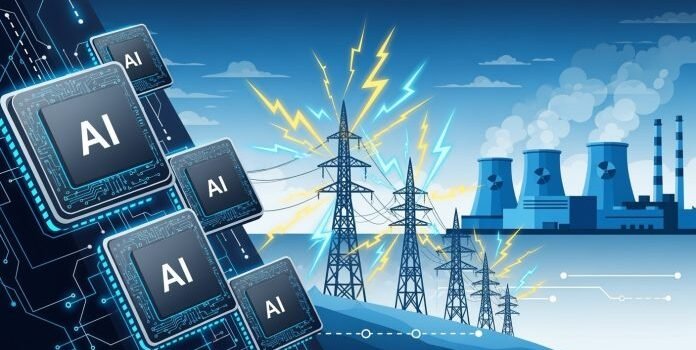
The American electrical grid is at a turning point. More renewable energy sources make manual supervision less effective. To manage this complexity, the U.S. Energy Department is now using an AI system to automate grid operations. This marks a shift away from reactive methods. The move is part of the Grid Modernization Initiative, aiming for a self-healing, active grid that makes decisions in milliseconds.
For power systems, engineers, and policy stakeholders, this is more than a software update. It is a major change in grid stability. By 2026, the rapid growth of distributed energy resources such as home solar, EV charging, and battery storage creates multidirectional electricity flows, making traditional centralized control less effective.
The Architecture Of Self-Driving Load Balancing
At the center of the new Department of Energy (DOE) system is a detailed digital model of the North American power grid. The AI uses a decentralized network of edge-computing core nodes, small local computers that process information close to its source, to process data from millions of phasor measurement units (PMUs), devices that monitor electrical flow, and smart meters in real time. Unlike older supervisory control and data acquisition (SCADA) systems, which can have 5-minute delays, the new framework uses neural state prediction to anticipate electrical changes and predict voltage changes before they cause problems.
The automation system uses a constrained reinforcement learning model. This lets the AI balance frequency regulation and generator ramping while staying within the transmission limits. For example, if clouds reduce solar power in the south-west or a cold front increases heating demand in the north-east, the AI acts autonomously. It shifts flexible nodes and activates virtual power plants to keep the frequency steady at 60Hz.
Enhancing Protection From Cyber and Physical Threats
One main reason for this deployment is the growing number of threats. The American power grid is a major target for both cyberattacks and severe weather driven by climate change. The DOE’s AI system uses a specialized anomaly-detection engine (software) that identifies unusual patterns to distinguish between real equipment failures and digital attacks.
The AI monitors electromagnetic signals from substation equipment. It looks for signs of compromised circuit breakers or unauthorized relay commands. If an attack is confirmed, the system isolates the affected grid section. Power remains for critical facilities like hospitals and water plants, ensuring the grid stays protected.
The Role Of Sovereign AI And Domestic Silicon
To support energy independence, the Energy Department requires that both hardware and AI model weights be produced in the US. The AI runs on high-performance computing with specialized accelerators for extreme temperatures. This sovereign AI approach avoids supply chain risks and keeps grid control in domestic hands.
The system also uses explainable AI protocols, which are methods that show how AI makes decisions for every automated action, such as shutting down a transformer to prevent a wildfire or redirecting power during a heatwave. The system creates a logic trace, a record of the AI’s reasoning. This lets engineers review the AI’s decisions later to ensure its actions align with public safety and long-term goals.
Integrating the Hydrogen and EV Ecosystems
As the US works toward its 2050 net-zero goals, the power grid must coordinate with the growing hydrogen sector and the rise of electric vehicles. The AI system acts as an active market operator, managing the two-way flow of energy between the grid and EV batteries, including vehicle-to-grid (V2G).
When there is surplus wind power at night, AI can automatically lower electricity prices for hydrogen plants and EV charging stations, absorbing excess energy. In the evening, the system draws small amounts from many car batteries to help meet demand until solar returns. This coordination makes the grid a flexible battery, maximizing every green electron.
Addressing the Human Factor in the Control Room
This deployment does not mean human grid operators are no longer needed. Instead, their roles are changing as routine tasks are automated, such as frequency and voltage control. The AI enables experts to focus on strategic planning and long-term maintenance. The DOE has started a training program to help current operators become grid architects who can work with the AI to design the next generation of resilient power systems.
The Life Of A Thinking Continent
As these digital systems connect across the country, the grid is becoming more intelligent and responsive. It is no longer just wires and transformers. The system now adapts to daily needs. The grid can respond to demand swings like a city turning off its lights or an industrial center starting up at night. In the future, power lines may become the nervous system of smart infrastructure, keeping homes powered and safe.
Source: Gridmind powering the control room of the future with ai agents