






San Jose, CA
Atomic Answer: Cisco (CSCO) has announced a “sovereign-first” architecture update for its Nexus switching line, enabling physical hardware-level isolation for classified AI training. This technical shift shows “top secret” workloads to reside on the same physical fabric as standard data while maintaining cryptographic air gapping.
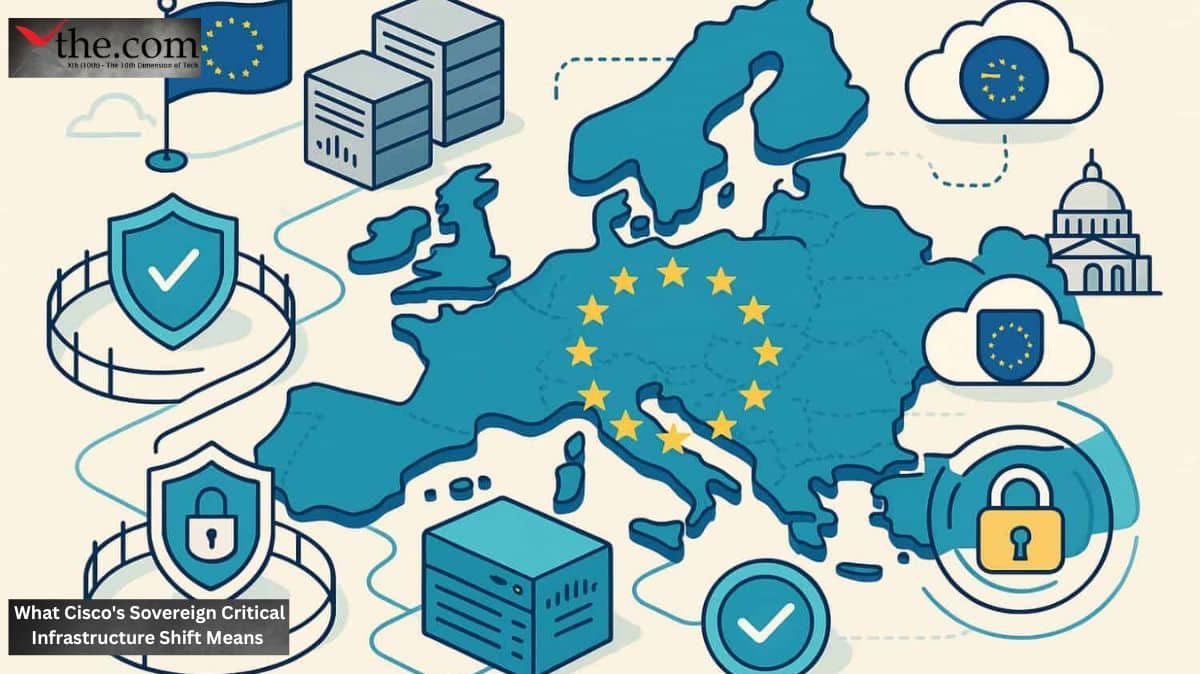
A single ransomware attack can freeze a port, shut down a hospital network, or disrupt an electrical grid for days. Governments and defense contractors are well aware of these risks. Now, major infrastructure vendors are adjusting to this reality, too. Cisco’s recent move toward Cisco Sovereign Infrastructure shows its effort to meet the rising need for critical infrastructure isolation in sectors where data exposure carries national security consequences.
This shift is more than just a new product strategy. It signals a real change in how governments and regulated industries will buy, use, and manage digital systems critical to national operations.
Why Cisco Sovereign Infrastructure Matters Now
For years, companies built networks for efficiency and global compatibility. This approach made sense when cloud growth and centralized management brought clear cost benefits. Now, though, defense agencies, public utilities, and contractors connected to intelligence have new concerns.
They are seeking greater control over their operations.
This need has led to increased investment in air-gapped systems, sovereign cloud setups, and local computing to keep sensitive work within national borders. The risk is real. If an AI model used in defense or energy is compromised, it could reveal operational details, secret records, or automated systems.
This is where Cisco Sovereign Infrastructure comes in. Cisco wants to be seen as a provider that can support isolated, policy-driven environments while still offering modern networking features like automation, telemetry, and AI networking.
The strategy also aligns with changing procurement behavior inside Washington and allied governments. Agencies increasingly prioritize domestic control, verifiable supply chains, and security-certified architectures during federal procurement reviews. Vendors that cannot demonstrate sovereign operational controls may lose eligibility for high-value contracts.
The Push Toward Critical Infrastructure Isolation
The phrase critical infrastructure isolation sounds extreme until viewed through the lens of operational risk.
Take a regional power company that manages substations using connected cloud systems. If an attacker exploits a weakness in a vendor’s setup, the risk escalates quickly. Isolation policies help reduce external connections and limit how systems communicate.
In the past, air-gapped systems were the top choice for keeping things separate. Military and intelligence groups used physical isolation to lower the risk of attacks. But these air gaps also made things harder. Software updates took longer, analytics were less effective, and remote management was not possible.
Today’s sovereign infrastructure strategies try to fix these problems. Cisco’s approach seems to combine separated environments with programmable controls, encrypted traffic management, and zero-trust authentication.
This is important because zero trust is now a real requirement, not just a topic at cybersecurity conferences. Defense and infrastructure groups expect breaches, so they focus on limiting how far attackers can move within their systems.
How AI Networking Changes the Equation
Cisco’s move toward sovereign infrastructure comes as AI-powered systems are becoming more common.
Autonomous systems now handle traffic flow, spot problems, and predict maintenance needs in utilities, telecom, and transport networks. These tools make operations more efficient, but they also create new points where sensitive data is stored.
When an AI system monitors classified defense traffic, it brings a whole new kind of risk.
This is where a long-term challenge arises: ensuring Cisco’s sovereign solutions comply with the requirements for classified AI systems.
Governments want AI work to stay in secure, verified environments where data location, access, and audits are tightly managed. A sovereign AI setup must show that sensitive training data will not leak into foreign or uncontrolled cloud systems.
This need creates big business opportunities for vendors who offer integrated networking, security, and computing. Cisco may have an edge because it already covers routing, switching, monitoring, and security.
However, how well Cisco delivers on these promises is more important than its branding.
Major infrastructure buyers will verify whether Cisco’s sovereign solutions for classified AI meet the strict certification standards for defense and intelligence. If Cisco succeeds, it could become even more influential in regulated sectors with long buying cycles.
What This Means for CSCO Investors and Enterprise Buyers
Wall Street usually looks at CSCO based on hardware sales and business spending patterns, but the move to sovereign infrastructure shifts the focus to long-term government and infrastructure contracts.
This difference has a real financial impact.
Government modernization projects usually bring steady revenue and make it harder to switch vendors. Once a sovereign network is built into defense, energy, or transport systems, replacing it is tough and can be politically sensitive.
For business buyers, the effects are different. Groups in healthcare, utilities, or public supply chains may face mounting pressure to demonstrate operational sovereignty. Vendors who cannot support critical infrastructure isolation requirements could become liabilities during compliance checks.
At the same time, companies should avoid using sovereignty as just a buzzword. Creating secure, separated environments takes strong governance, staff training, hardware checks, and ongoing policy enforcement. Technology by itself cannot fix deep operational problems.
The Next Phase of Infrastructure Competition
The global networking market is entering a period when political alignment may be as important as performance. Rules about sovereignty, national cybersecurity, and AI will play a bigger role in how buyers choose vendors.
This change puts Cisco’s sovereign infrastructure at the heart of a bigger industry shift. Providers are now competing not just on speed or cloud features, but on trust, control, and their ability to support secure air-gapped systems with modern AI networking.
The companies that adjust quickly to this new buying environment will likely shape the next generation of public infrastructure. Cisco seems set on being one of those leaders.
Enterprise Procurement Checklist
- Procurement Logic: Prioritize “Nexus Sovereign” switches for any project involving state-level data compliance.
- Deployment Impact: Eliminates the need for dual-fabric networking, reducing hardware CapEx by 30% for secure facilities.
- Infrastructure Risk: Misconfiguration of “Virtual Air-Gap” (VAG) protocols can lead to security audit failures.
- Operational Consequence: Enables real-time AI inference on air-gapped data sets without manual “sneakernet” transfers.
- Action Step: Verify “Cisco Sovereign” firmware signatures through the new federal verification portal.
Source: Announcing Foundry Security Spec: an open specification for agentic security evaluation








