Seattle, WA
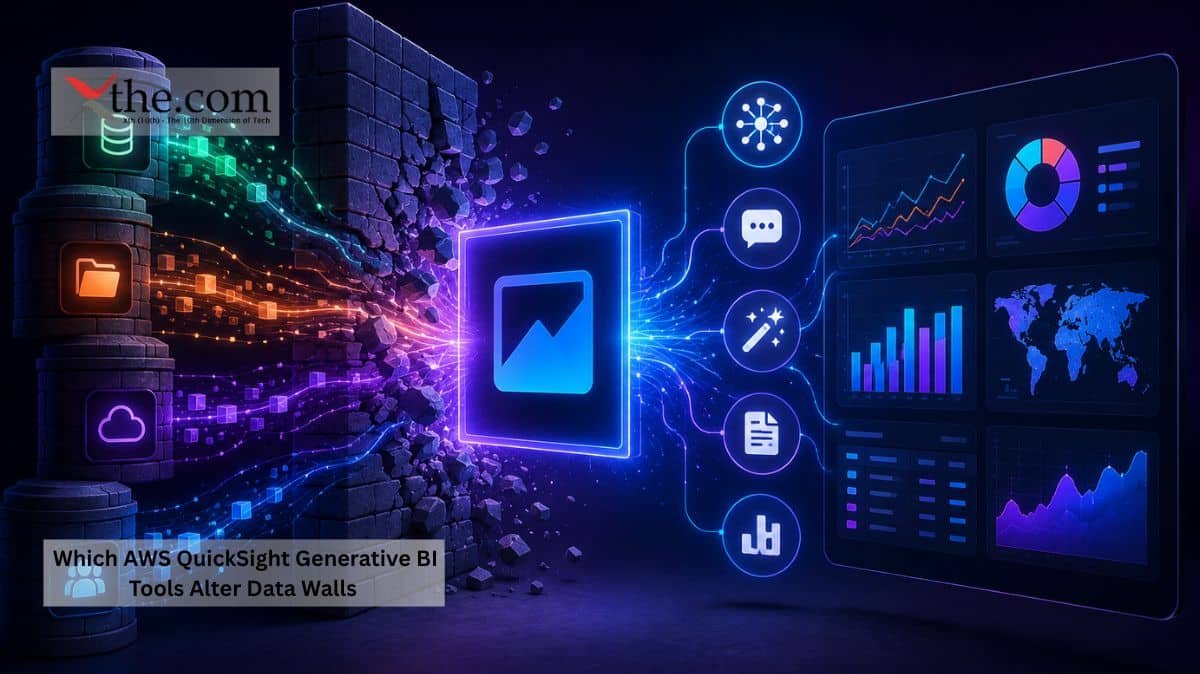
Atomic answer- Amazon Web Services (AMZN) have rolled out an engineering release during the early morning hours for Amazon QuickSight prior to its scheduled release on May 19. This is in relation to advanced Generative BI which has the capability of connecting automated insight bots directly to multi-tenant business databases via real time data federation routes. The cyber security monitoring team will have to erect Row-Level Security Data Walls.
In anticipation of the upcoming launch on May 19, Amazon Web Services has unveiled an early engineering release of Amazon QuickSight featuring a brand-new set of AI analytics capabilities intended specifically for enterprise reporting environments. The key innovation is to embed automation-based insight-generation technology within large corporate databases via state-of-the-art real-time connections.
This engineering release is indicative of Amazon’s increasing emphasis on developing robust AI analytics ecosystems that can revolutionize how enterprises approach analytics, governance, and reporting. According to the press release, the new version of QuickSight software will feature enhanced Generative BI capabilities, enabling automated solutions to process enterprise-level datasets and generate insights almost autonomously.
It comes at a time when enterprises worldwide are increasingly using AI-driven analytics capabilities to streamline their operations and reporting workflows. While the rapid rise of AI-powered automation tools raises a number of issues around enterprise governance and compliance management, AWS seems to be taking steps to address these challenges.
AWS has introduced new governance features directly into the latest iteration of QuickSight environment.
New Agentic AI Systems Facilitate Analytics Workflow Innovations
Among the most significant structural innovations in the update is the growth in enterprise agentic data clouds capable of linking the insight systems created by AI directly with dispersed enterprise databases.
This system is geared toward automating:
- Analysis workflow process
- Generation of enterprise reporting
- Creation of operational insights
- Management of dashboards via AI
- Analytics summary
Thanks to innovation, QuickSight can draw data from multiple enterprise data storage facilities simultaneously and provide business insights.
Data Federation Brings About New Compliance Risks
The QuickSight launch also offers improved data federation capabilities for enterprise AI solutions, enabling them to access information from multiple interconnected databases simultaneously.
Though this feature makes their operations more flexible, it also raises the need for stringent governance policies to help prevent unauthorized data transfers within corporate IT systems.
Among the new compliance risks mentioned by infrastructure professionals are:
- Cross-database data visibility errors
- Risks of unauthorized AI-based access extensions
- Disclosure of sensitive enterprise datasets
- Unauthorized automated reporting procedures
- Regulatory compliance issues in connected analytic platforms
To mitigate these threats, AWS stressed the importance of establishing reliable schema-isolation practices to enable the division of enterprise workloads and prevent AI-related cross-access between business environments.
Additional governance verification was also recommended prior to using AI-powered reporting tools in regulated industries.
Data Walls Need Improvement in Security Teams
One of the main areas of discussion in the engineering update is regarding the need to establish robust Row-Level Security Data Walls within analytics enterprise applications.
According to AWS, companies using the analytics bot feature should guarantee that the systems cannot circumvent compliance restrictions through automation.
Security professionals suggest some security precautions to be taken when implementing the new QuickSight version:
- Change database access permission quickly
- Watch out for any data extraction without authorization
- Stop automating queries from escalating privileges
- Isolate analytics environment for departments
- Implement more secure authentication practices
This is becoming increasingly imperative now, as AI-powered reporting software can access larger enterprise data ecosystems.
The new QuickSight software has been built for enterprises with large, distributed analytics infrastructure.
Governance Implications for Vector Embedding
Another key aspect of the release is the enhanced use of vector embedding solutions to improve AI performance and semantic search capabilities.
Vector embeddings will enable AI-based solutions to better understand the relationships within enterprise datasets and provide more context-aware business intelligence insights. Nevertheless, the ability is likely to raise governance issues regarding potential data exposure vectors.
The infrastructure team has warned that poorly managed vector embedding solutions can lead to unintentional exposure of relationships within the enterprise through AI responses.
For this reason, AWS suggests:
- Validating permissions for vector databases
- Observing embedding synchronization processes
- Limiting access by AI systems to confidential datasets
- Configuring semantic search solutions
- Enhancing compliance monitoring practices
The above-mentioned governance practices are set to become increasingly relevant as AI-based reporting solutions gain popularity among enterprises in 2026.
Growth Continues on Enterprise Demand for AI Business Intelligence Systems
Businesses’ need for AI-powered business intelligence systems keeps rising as companies seek to gain insights more quickly, automate reporting, and scale their analytics solutions.
With the growth in enterprise AI adoption, generative AI is already being tightly integrated into enterprise governance flows, cloud analytics platforms, and enterprise report generators.
As more enterprises adopt the technology, the need becomes increasingly pronounced for:
- Real-time enterprise governance visibility
- Automated governance flow control
- Multi-tenancy of enterprise analytics protection
- Reporting safety with AI support
- Distributed enterprise security measures
The broader significance of the rollout is also tied to the Amazon QuickSight May 2026 feature launch generative business intelligence governance initiative currently shaping enterprise AI analytics strategies.
Conclusion
The engineering update from AWS, in the form of QuickSight, reflects the growing complexity of enterprise AI analytics infrastructure. By expanding Generative BI capacity while strengthening governance and security measures, Amazon aims to position QuickSight as a future reporting system within enterprises.
Agentic data clouds, enterprise governance automation, and enterprise AI-driven analytics oversight are a growing trend in business intelligence within the cloud computing sector. As enterprises embrace AI technologies, the significance of governance and automated compliance measures cannot be overstated.
Technical Stack Checklist
- Deploy updated data access rules to prevent generative reporting bots from accessing sensitive background database tables.
- Audit multi-tenant configuration schema setups to guarantee data isolation between active enterprise analytics workspaces.
- Configure active alert scripts to flag unexpected bulk data extractions triggered by connected analytics entities.
- Validate vector embedding security rules to prevent internal database paths from leaking via user prompt generations.
- Establish automated compliance mapping controls to verify access authorizations for connected enterprise software tools.
Source- AWS Business Intelligence Blog