Santa Clara, CA
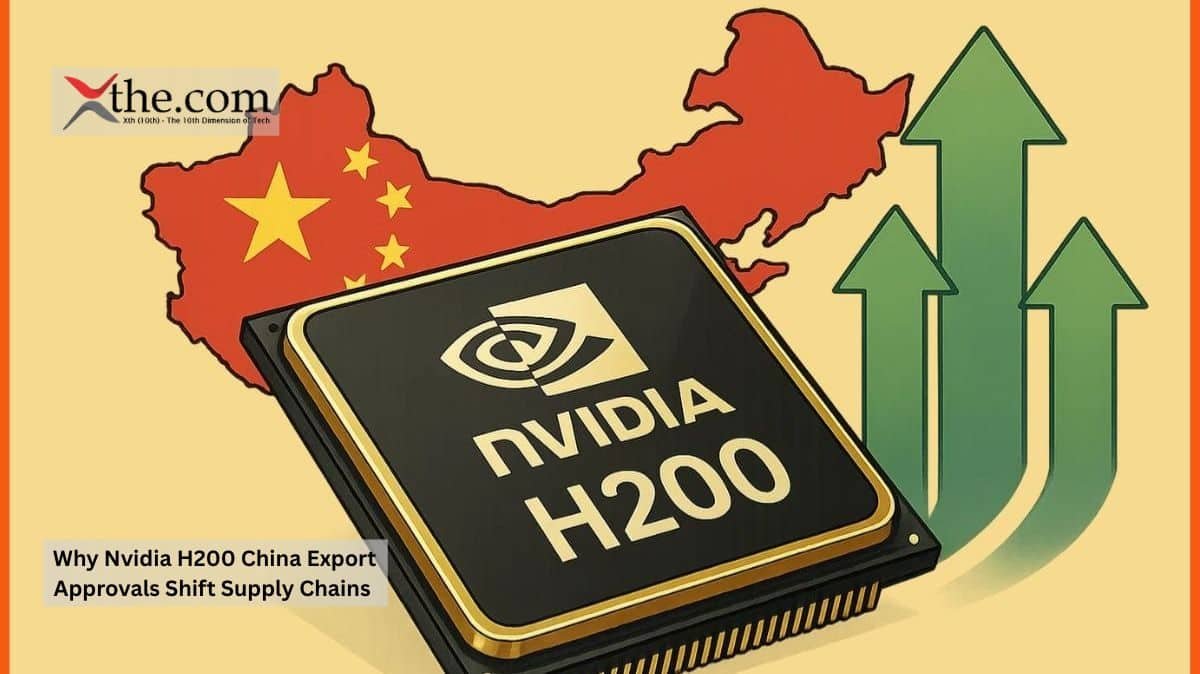
Atomic answer- Chief Executive Officer of Nvidia (NVDA), Jensen Huang, announced on Tuesday, May 19, through the morning wire services that the Chinese government is currently examining its market approvals for imports of the company’s H200 artificial intelligence processors. With this technical disclosure, the traditional model of allocating chips internationally has been dramatically altered. Data centers from regions around the world can now bid for access to high-end architecture levels. It has created a new demand engine that will affect chip procurement costs.
Nvidia has sparked debate in the enterprise infrastructure market once again, following the confirmation by the company’s CEO, Jensen Huang, that China is currently considering the import pathway for the company’s H200 artificial intelligence accelerators. The revelation came via early-morning technology to finance wires on Tuesday and immediately raised eyebrows about global infrastructure allocation and the cost of future cloud infrastructure procurement.
The revelation comes at a time when there is intense competition among cloud computing enterprises and enterprise AI operators for access to premium infrastructure hardware. NVIDIA’s H200 is still one of the most sought-after AI infrastructure hardware products in the world because of its memory bandwidth, scaling capabilities, and enterprise AI efficiency.
The opening of China’s market to the purchase of H200 may have a profound impact on global enterprise infrastructure budgeting as well, since many enterprises are currently facing hardware shortages and unpredictable procurement periods.
H200 Market Importance for Enterprise AI
It is now widely recognized that the H200 architecture plays an important role in supporting enterprise-scale deployment of artificial intelligence. Businesses running sophisticated reasoning, multimodal, and cloud AI architectures require accelerators to scale to operational objectives.
Among the key strengths provided by the new H200 architecture from Nvidia are:
- Enhanced memory performance for enterprise inference workloads
- Greater efficiencies for AI training in hyperscale infrastructures
- Support for large language model deployments
- Workload synchronization efficiencies in enterprise AI clusters
- Fewer operational inefficiencies for cloud providers
In response to the growing need for enterprise AI deployment, it is imperative that businesses rely on predictable hardware procurement cycles to prevent infrastructure instability. A transition to include Chinese market availability will quickly change the dynamics of hardware availability in North American, European, and APAC enterprises.
China Export Approval Discussion Creates Procurement Issues
There are issues with the potential process for obtaining approval to export to China that are now causing problems within global procurement intelligence efforts. Infrastructure management teams are always monitoring geopolitical events since international hardware allocations affect server deployments, budget planning, and infrastructure upgrades.
According to industry analysts, China could become home to much of the world’s H200 generation if approval goes ahead. This could put more pressure on hyperscale firms working to secure infrastructure agreements.
A number of enterprise considerations have been raised since the discussion:
- Greater competition for the availability of accelerators
- Higher procurement costs within cloud infrastructure markets
- Delays in enterprise deployment timetables
- More pressure on hyperscale infrastructure allocations
- Added volatility within the AI hardware supply chain
This will be an important issue for firms looking to expand their infrastructures later in 2026.
Dynamics of International Trade Might Influence Allocation Models
The announcement has brought to light the dynamics of international trade policies regarding the export of AI hardware. The semiconductor supply chain has undergone significant changes in recent years due to export control policies, diplomatic negotiations, and the growing demand for AI.
In case of China gets wider access to Nvidia’s H200 hardware, both cloud providers and enterprises should think of reassessing their allocation model in terms of procurement planning.
Among the measures that might be taken, there can be:
- Diversification of the procurement of hardware
- Expansion of a cloud strategy across multiple regions
- Purchase of increased levels of stock purchases
- Modification of projections of AI infrastructure scalability
- Licensing of hardware from accelerator manufacturers for the longer term
The change in procurement dynamics might further increase competition among hyperscalers for securing hardware allocations.
Hyperscalers Economies Can Change Dramatically SoonHyperscaler Economies Can Change Dramatically Soon
Another implication is the changing hyperscaler economies associated with infrastructure investments and scaling operations. Large clouds tend to invest heavily in accelerators to power their AI services, enterprise cloud computing solutions, and internal R&D infrastructure.
The increasing demand could quickly change the following:
- Enterprise cloud economy models
- Leasing costs for AI infrastructure
- Availability of GPU clusters
- Margins of hyperscale’s’ operations
- Capital expenditure predictions
Those companies that are highly dependent on the expansion of their AI infrastructure will have to reassess their procurement models, given the further reduction in the supply of H200 chips from China.
On the other hand, enterprise infrastructure departments are expected to accelerate the transition to multi-vendor hybrid AI models.
Recommendations for Supply Chain Planning for Enterprises
Following Nvidia’s decision, some infrastructure experts have made several urgent adjustments for enterprises’ procurement managers to consider.
The suggested actions include:
- Re-examining forecasts of accelerator procurements in Q3-Q4
- Diversification of enterprise hosting regions
- Review of backup supplier agreements
- Monitoring firmware update schedules for existing H200s
- Revision of enterprise infrastructure risk management policy
In addition, it is recommended that enterprises using large-scale AI systems enhance their procurement intelligence analysis tools to better predict future supply chain fluctuations during their next hardware procurement period.
Finally, Nvidia’s changing H200 International Sourcing Timetable can prove crucial for enterprise cloud infrastructure expansion plans during the rest of 2026.
AI Infrastructure Demand in Enterprises to Keep Growing Exponentially
The demand for AI infrastructure from enterprises around the world is continuing to grow at an unprecedented rate as companies continue rolling out more sophisticated reasoning systems, automation solutions, and real-time inference capabilities.
Any potential increase in Nvidia’s presence in the Chinese market will further heighten competitive pressures around the availability of premium accelerators, leading to prolonged procurement processes as well as increased price volatility within the industry.
There are already concerns being raised about the ramifications of the Nvidia Jensen Huang H200 China market import availability timeline for global enterprise infrastructure planning.
Conclusion
NVIDIA’s recent statement regarding the approval of H200 in China is not only about regional commerce but also about the potential for a new global AI infrastructure resource-allocation process, enterprise purchasing plans, and the economics of hyperscale clouds.
The growing significance of budgeting for infrastructure spending, coordination across global procurement processes, and enterprise hardware purchasing underscores the integration of AI infrastructure into the broader international technology market. In a world where enterprise scale AI deployments will continue to grow globally, NVIDIA’s H200 platform will be a key element in this process.
Technical Stack Checklist
- Re-evaluate Q3 server allocation strategies to protect component delivery schedules from incoming global supply pressures.
- Diversify cloud hosting instances across multi-tenant regions to mitigate potential localized hardware assignment changes.
- Track firmware update schedules on existing H200 nodes to preserve performance parameters during global supply updates.
- Audit international hardware supply lines to establish backup pricing structures with domestic part suppliers.
- Review procurement cost calculations to absorb premium data center infrastructure component changes.
Source- Nvidia Newsroom