






Santa Clara, California
Imagine a student in Phoenix opening a photo editing app while on a video call. Suddenly, the laptop fan gets loud, tabs freeze, and battery life drops from 5 hours to less than 2. After 10 minutes, the system recommends uploading files to the cloud just to remove background objects from a class presentation.
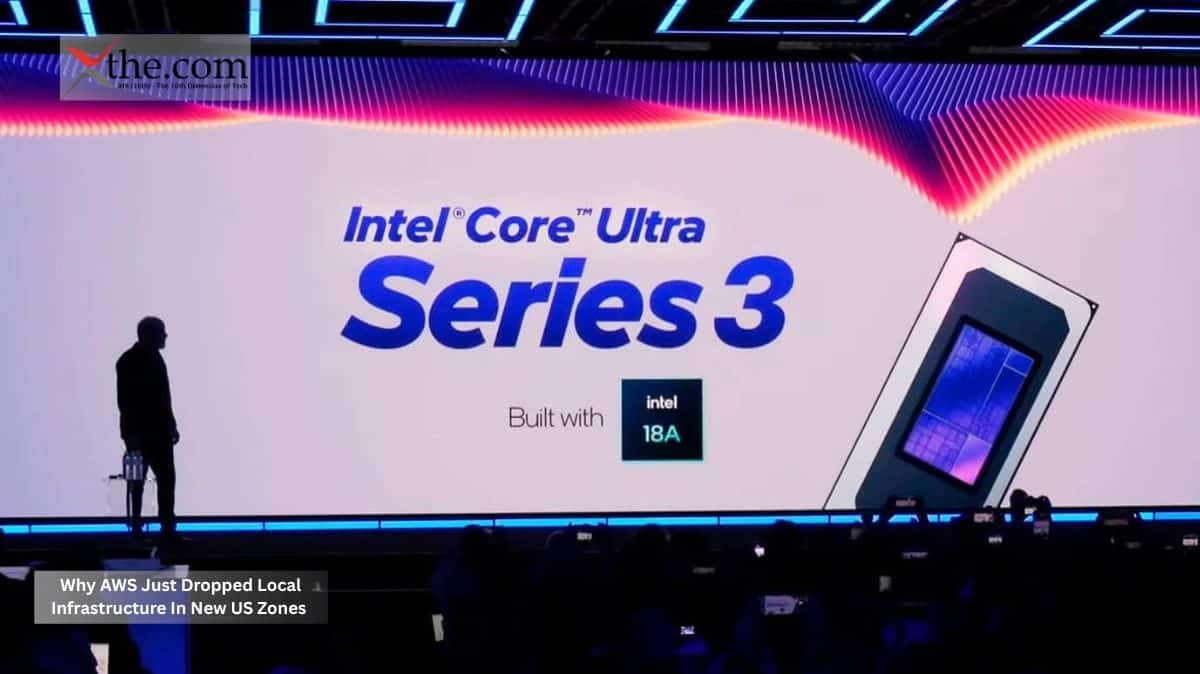
This kind of frustration is why the new Intel Core Ultra systems are attracting more than just gamers. Intel’s latest benchmark data for the Core Ultra Series 3 shows a shift in the laptop market. Now, every day, computers can handle advanced tasks directly on the device rather than always relying on remote servers. The rise of hybrid AI PCs could change what students, remote workers, and budget-conscious buyers look for in their next laptop.
Why the Intel Core Ultra Shift Matters
For years, most lightweight laptops depended on cloud computing for advanced features such as image cleanup, live translation, document sorting, or AI-assisted search. This led to two main problems.
First, users needed stable internet access. Second, those tasks drained battery life because systems constantly moved information between local hardware and remote data centers.
Intel’s updated silicon architecture changes that equation. The company has added dedicated neural processing units (NPUs) directly into the processor. Simply put, the laptop now has its own AI engine built into the chip.
This means someone editing vacation photos on a flight can blur backgrounds, organize image folders, or summarize documents without relying on internet servers.
The biggest surprise is not just speed, but consistency.
A Laptop That Quietly Fixes Its Own Slowdowns
Intel’s benchmarks highlight how the system balances work across the CPU, GPU, and NPU. In real use, this means the laptop can move lighter AI tasks away from the main processor before it overheats or drains the battery too quickly.
A remote worker handling spreadsheets, browser tabs, and video calls may notice fewer slowdowns because the laptop distributes the workload more effectively. Instead of having a single overloaded core handle everything, different parts of the chip handle specific tasks simultaneously.
This improved processor efficiency might be more important to everyday users than top benchmark scores.
Most students do not care if a laptop renders a 3D animation 14 seconds faster. What matters is whether the battery lasts through a full day of classes.
The New Hub AI PC Price Equation
The most important development may involve cost.
High-end AI-enabled laptops were aimed at buyers willing to spend over $1,500. Now, with Intel’s Core Ultra Series 3, AI-focused hardware is moving into the mid-price range.
That changes the economics for buyers.
A remote marketing employee who used to need costly cloud subscriptions for transcription or document sorting can now do many of those tasks right on their laptop. A small-business owner managing invoices might not need as many paid services, since the laptop can handle more automation on its own.
This creates a stronger value proposition for the modern buyer choice conversations. Consumers no longer decide only between battery life and screen quality. They are evaluating whether a device can reduce the dependency on recurring software costs over time.
Understanding the Real Client Computing Specs
Many shoppers still focus mostly on RAM and storage. While those are important, Intel’s newest systems put more emphasis on AI-oriented client computing specs.
The dedicated NPU is now a key selling point along with clock speeds and graphics. Buyers should now look at how well a laptop handles AI tasks on its own.
For example, a journalism student using voice transcription software during interviews might get faster offline results with an AI-enabled chip than with a regular ultra-portable laptop. A freelance designer sorting thousands of photos could tag and search more smoothly without having to send every task to the cloud.
These are not just ideas for the future. They are real changes happening in everyday work right now.
Which Laptop Category Looks The Strongest
According to Intel’s data, thin-and-light productivity laptops seem to benefit most from the Ultra Core Series 3 launch.
Gaming laptops already have powerful GPUs, and workstations already use expensive hardware. But lightweight mainstream laptops have often struggled with heat, battery drain, and multitasking.
This makes the latest generation especially appealing for anyone looking for the best hybrid AI laptops with integrated NPU chips.
Brands like Dell, HP, Lenovo, and Asus are expected to compete strongly in this area, as AI-focused computing is quickly becoming a standard feature rather than a luxury.
The real winner might not be the fastest laptop, but the one that works so smoothly you barely notice it during everyday tasks.
Intel Betting On Quiet Computing Power
It is hard to ignore the industry’s larger trend. People want devices that work smartly without constant attention. They expect laptops to conserve battery power on their own, manage tasks efficiently, and process sensitive work locally wherever possible.
This is the bigger idea behind Intel’s new Core Ultra strategy. The company is not just selling faster chips. It wants the next generation of hybrid AI PCs to act less like passive tools and more like helpful assistants built right into the hardware. For students and remote workers with tight budgets, this change in chip design could make a big difference, far beyond a small increase in processing speed.
Source: Intel at Computex 2026: Advancing the Next Era of AI-Driven Computing








