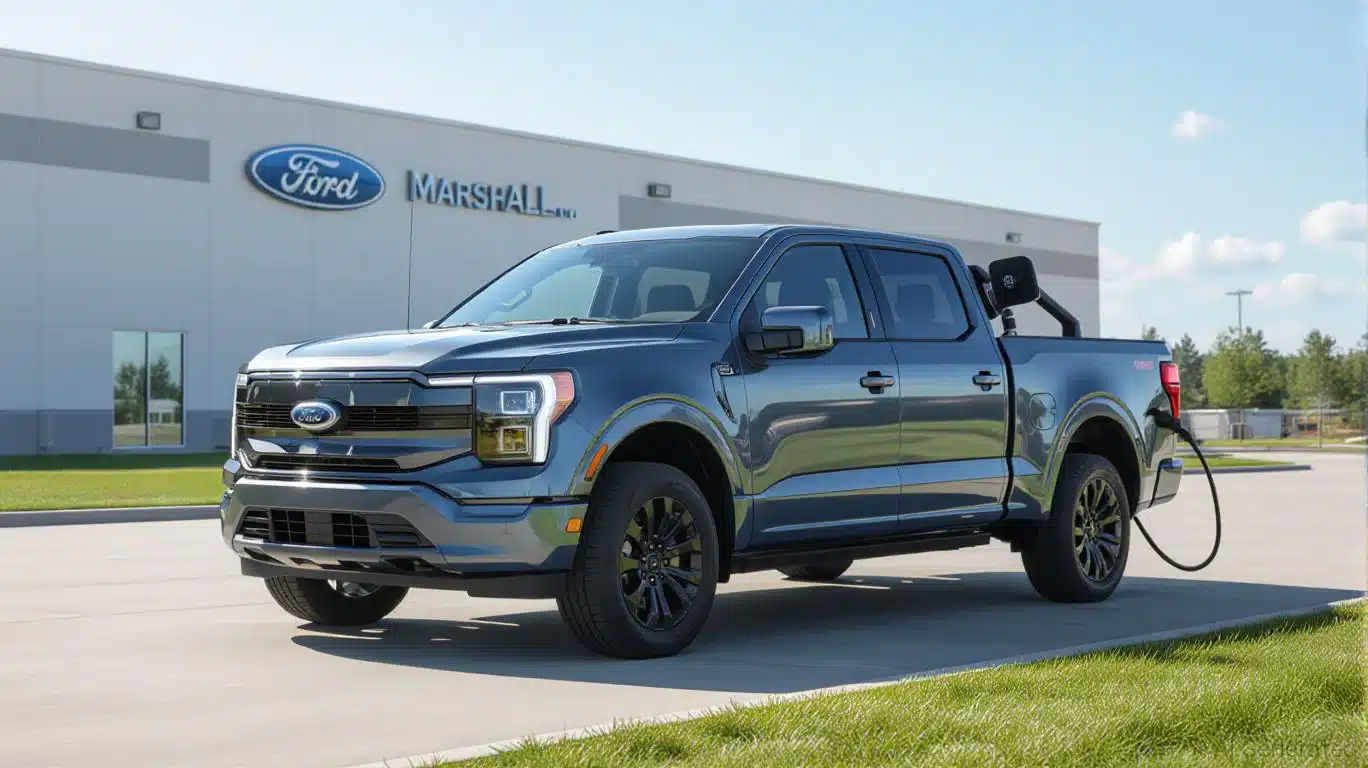
DEARBORN, Mich. — Ford Motor Company has announced a major shift in its manufacturing and product strategy within the last several hours. The company confirmed that it would cancel its electric SUV programs to develop a Universal EV Platform while increasing its funding for battery energy storage systems.
The move signals a broader transformation from traditional vehicle manufacturing toward a hybrid model, in which automotive companies operate as Energy Orchestrator businesses that connect vehicle production with grid-scale energy infrastructure.
The change will significantly impact Ford Universal EV Platform development while establishing new requirements for Battery Energy Storage procurement and supply chain management.
Why the Universal EV Platform Matters
The Ford Universal EV Platform serves as a framework that enables multiple electric vehicle models to share common design elements, thereby simplifying production processes and boosting capacity.
Ford has chosen to develop its electric vehicle systems using a modular framework, enabling it to create different vehicle types without dedicated platforms.
This approach aims to achieve three objectives: reducing production expenses, improving engineering efficiency, and achieving sustained operational efficiency in manufacturing.
The industry is shifting towards unified platforms that electric vehicle manufacturers use to develop their vehicles.
Battery Energy Storage Becomes a Core Business
Ford focuses on Battery Energy Storage systems because they represent a key element of its strategic transformation efforts.
The systems serve multiple purposes by helping with renewable energy integration, grid demand stabilization, and the operation of industrial facilities, including data centers.
Ford establishes itself as a player in the energy infrastructure market through its expansion into energy storage, extending beyond its vehicle manufacturing activities.
The company expansion, which involves Battery Energy Storage systems, shows that these systems now hold greater strategic value for Ford’s future business operations.
LFP Prismatic Cells Drive Supply Chain Change
Ford has developed its new battery purchasing approach by implementing LFP Prismatic Cells, which use lithium iron phosphate battery technology.
LFP chemistry offers better economic advantages, thermal safety, and extended lifespan than traditional battery chemistries.
The system provides an optimal solution for both extensive energy storage requirements and the power needs of electric vehicles, with a focus on minimizing operational expenses.
Battery supply chains will experience reduced risks from fluctuating raw material costs through the implementation of LFP Prismatic Cells.
EV Pivot Reshapes Manufacturing Strategy
Ford canceled its larger electric SUV programs because the company needs to develop standard vehicle designs that can be produced across multiple manufacturing facilities.
The company has decided to move away from developing high-margin complex vehicle segments while establishing production methods that enable efficient manufacturing across multiple platforms.
Electric vehicle manufacturing industry organizations need to reduce production costs while developing unified manufacturing systems aligned with industry trends, as the EV Pivot does.
The production strategy has become more flexible, allowing it to adjust to fluctuations in market demand.
Data Center Energy Demand Becomes a Key Driver
The most important outcome of Ford’s business transformation is a new requirement for Data Center Energy infrastructure.
Data centers need extensive energy storage systems that can be quickly developed to handle growing artificial intelligence workloads.
Digital infrastructure ecosystems now use battery systems developed for grid stabilization and backup power.
The process of manufacturing automotive batteries establishes a link between production and Data Center Energy markets.
Infrastructure Shift Redefines Automotive Business Models
Ford’s transition demonstrates how automotive companies now operate as complete energy providers through their current Infrastructure Shift.
Manufacturers now operate energy-generation, storage, and distribution ecosystems rather than focusing solely on vehicle sales.
The two fields of transportation electrification and power grid modernization have begun to merge, which leads to their current convergence.
The Infrastructure Shift indicates that future automotive companies will operate as energy infrastructure providers rather than as traditional manufacturers.
Battery Procurement Risks Are Being Rebalanced
The Ford Universal EV Platform strategy establishes direct effects on Battery Procurement Risks throughout the entire supply chain.
Ford reduces single-source supplier and unstable raw material market dependencies through its battery system standardization and expansion of its LFP storage solution.
The company uses diversification to achieve two advantages: stable production scheduling and protection against worldwide supply chain interruptions.
The company uses this shift as both its manufacturing approach and its risk management approach.
Ford Model e Strategy Evolves.
The restructuring affects the entire Ford Model e division, which handles the company’s electric vehicle operations.
The Universal EV Platform consolidation of product lines will lead Model e to develop system integration, energy services, and platform scalability capabilities.
The development approach for electric vehicles is now moving toward a unified architectural system design rather than developing separate electric vehicle systems.
Energy Orchestration Becomes a Competitive Advantage
The Energy Orchestrator model transforms Ford into a business that competes in both automotive markets and energy infrastructure deployment.
The company achieves better integration of transportation systems and grid energy solutions by controlling both vehicle platforms and battery energy systems.
The three components of EV charging networks, energy storage deployment, and industrial power systems create potential operational synergies through their interconnection.
Strategic Link to Industrial and AI Infrastructure
The expansion of Battery Energy Storage systems also aligns with growing demand from industrial AI and computing infrastructure.
High-density computing environments require reliable power systems that maintain stability to support ongoing AI processing.
The digital infrastructure of contemporary times requires large-scale battery storage systems, as they have become essential to its functioning.
Conclusion: Ford Redefines Its Industrial Identity
The Ford Universal EV Platform development, together with enhanced Battery Energy Storage facilities, marks a major change in the company’s strategic plans.
The Ford Motor Company transforms from its original role as a vehicle maker into an Energy Orchestrator, creating new possibilities for energy distribution and vehicle manufacturing.
The automotive industry establishes stronger connections to infrastructure systems through the increasing use of LFP Prismatic Cells, the developing EV Pivot strategy, and the growing connection to Data Center Energy demand.
The current Infrastructure Shift indicates that upcoming battery procurement methods will depend on both vehicle requirements and the worldwide growth of digital systems that demand high energy consumption.