




Boise, ID.
Atomic Answer: Micron Technology Inc. expanded manufacturing operations across its domestic fabrication sites on May 21, aiming to clear ongoing hardware supply shortages for its HBM3E memory stacks. This production push changes supply chain management for enterprise data centers, allowing hardware buyers to secure reliable component pipelines right inside the United States. By integrating advanced 24GB and 36GB high-bandwidth memory directly into AI server designs, engineering teams can build larger compute clusters without facing international shipping delays.
Over the coming fiscal cycle, data center architects must adjust their facility designs to match the unique power and cooling needs of high-density memory stacks. Infrastructure plans must account for tighter circuit layouts and increased thermal loads from stacked-chip setups running heavy AI workloads. Hardware teams must move past older memory configuration styles and embrace direct-attached memory designs to ensure maximum data throughput across massive GPU computing networks.
A single AI server rack can use more electricity than a small apartment building. The main reason is memory bottlenecks deep in the hardware. Graphics processors handle huge AI workloads, but without faster memory, these powerful chips sit idle. This challenge has led manufacturers to redesign memory chip packaging and update their facilities to improve process control, increase heat tolerance, and accelerate output. For Micron, the impact goes beyond market share; it affects national supply chains, defense contracts, and the economics of generative AI systems.
Micron’s HBM3E production strategy attracted attention because advanced memory now relies on more than just silicon design. Success depends on precise stacking, dense interconnects, and hardware bandwidth expansion to support large‑scale AI tasks.
Micron’s HBM3E Production Footprint
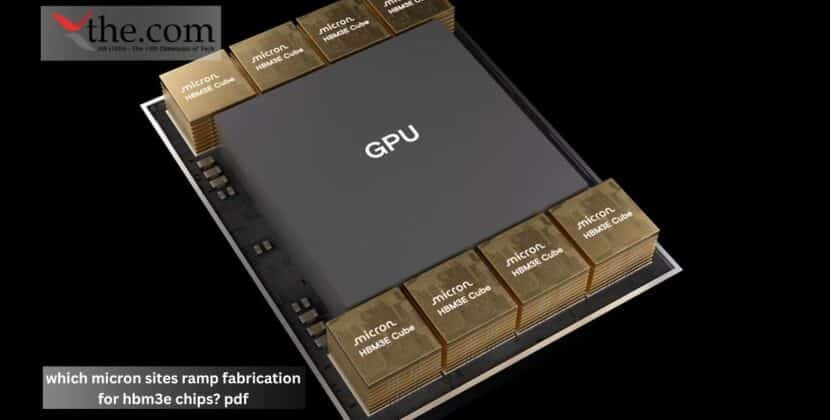
Micron Technology focuses most of its HBM3E manufacturing and packaging in Boise, Idaho; Manassas, Virginia; and its sites in Taiwan and Japan. Boise stands out because Micron is investing in local research and advanced packaging for AI memory there.
The discussion around Micron’s domestic manufacturing clean‑room volume expansion on May 21 reflects broader concerns about whether American semiconductor factories can grow fast enough to meet the huge demand for AI. Analysts think HBM demand could more than triple by 2027 as cloud companies build bigger AI clusters with tens of thousands of GPUs.
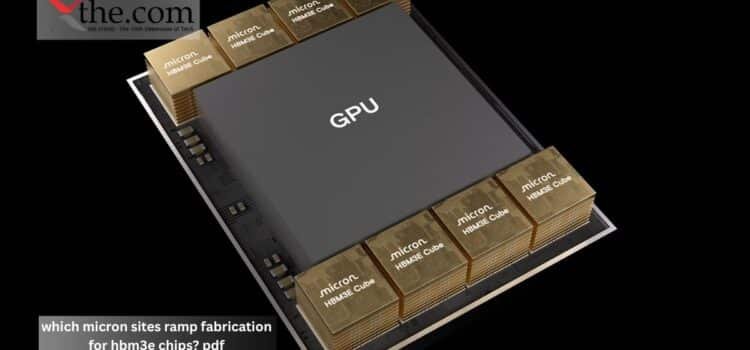
HBM3e production is very different from making regular DRAM. Engineers stack several DRAM chips on top of each other using through‑silicon vias. Even a tiny alignment mistake can hurt performance or cause hot spots that make the chips less reliable over time.
Because of this, wafer layer validation has become a key part of production, not merely a routine step. Teams must inspect alignment down to the micron while keeping good yields across many wafers. A single small error in a stacked layer can affect the entire batch.
Why Memory Chip Packaging Determines AI Performance
AI accelerators now use memory bandwidth at very high rates. For example, NVIDIA’s newest AI platforms rely on HBM memory because standard DDR memory cannot keep up with the required speed.
This change has turned memory chip packaging into a key way for companies to stand out, not just a final manufacturing step. Advanced packaging puts memory closer to the processors, reducing latency and saving power. The design becomes even more challenging as companies aim to extend packet bandwidth.
Thermal Lights Are Becoming the Real Constraint
Heat buildup is still one of the biggest engineering challenges in HBM production. Stacking several memory chips on top of each other creates hotspots that can hurt performance during long AI tasks.
Manufacturers progressively rely on thermal load tracking during fabrication and post-production tests. Engineers watch how stacked memory handles nonstop computing, especially in AI training, where chips might run at full power for days.
This challenge extends to physical architecture. Connection spacing layouts must balance density and thermal dissipation. If engineers compress interconnect paths too aggressively, local heating increases. If they excessively widen spacing, performance effectiveness drops, and packaging costs rise.
Micron’s reported approach uses stricter production checks and advanced substrate design to keep its chips stable during heavy enterprise AI use.
The Role of Signal Integrity and Yield Economics
As memory bandwidth increases, electrical noise is harder to manage. This makes system signal tuning very important when adding HBM3E. Even small signal problems can disrupt how GPUs and memory stacks work together, especially in big AI clusters.
This problem gets worse when manufacturers quickly ramp up production. Making lots of chips at once can introduce batch-to-batch variation, especially when changing packaging methods or recalibrating equipment.
That’s why production volume auditing and audit are now more important in advanced memory manufacturing. Companies must check not only how many chips they make, but also that yield rates, heat performance, and durability over time remain consistent.
Imagine a cloud provider rolling out 40,000 AI accelerators in several data centers. If just 2% of memory stacks fail early due to packaging issues, replacement costs and downtime can rise quickly. This could cost millions in a single buying cycle.
Domestic Expansion Carries Strategic Weight
The focus on Micron’s US clean room expansion on May twenty-one also shows the impact of global politics. Governments and big companies now want chip production closer to home to lower supply chain risks.
For Micron, growing US manufacturing and packaging could help build stronger ties with large cloud providers and government customers who want secure supply chains. It also puts pressure on competitors chasing the same AI contracts.
The wider semiconductor market also faces a tough reality: Raw computing power is no longer enough to lead AI. Advanced memory design, precise packaging, and stable thermal performance now determine whether AI systems run at peak performance or slow down due to bandwidth limits. Micron’s HBM3E manufacturing strategy is key to this change.
Technical Stack Checklist
- Update future server procurement roadmaps to prioritize high-density HBM3E memory stack components.
- Adjust data center cooling and power allocation maps to handle the thermal needs of stacked-chip hardware.
- Run high-workload hardware tests to measure component stability under intensive, continuous data routing scenarios.
- Verify that incoming circuit designs match the precise physical connections of advanced memory packaging.
- Align component delivery schedules with domestic manufacturing timelines to avoid assembly line downtime.
Source: Q2 2026 Earnings Presentation