




Santa Clara, California.
Imagine a graduate student at UNCA’s School of Engineering named Maya. She carries a charger everywhere because her laptop battery never lasts past noon. She plans her day around finding wall outlets just like drivers looking for parking spots. For years, this was the hidden cost every mobile professional and student paid for using a thin laptop. But then Intel, working from its Santa Clara headquarters, quietly changed the equation.
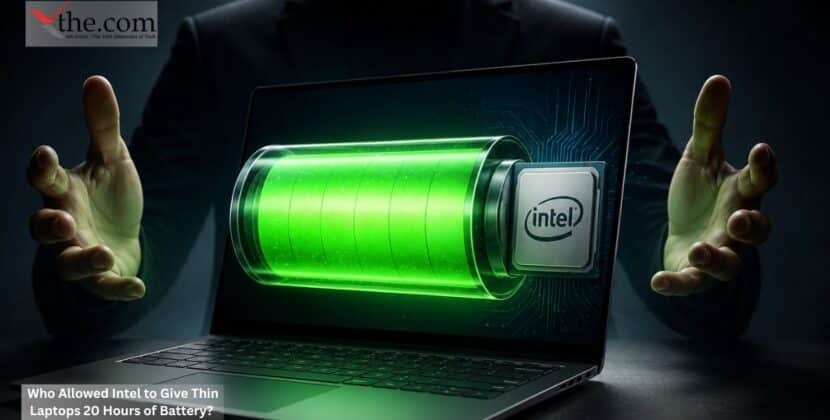
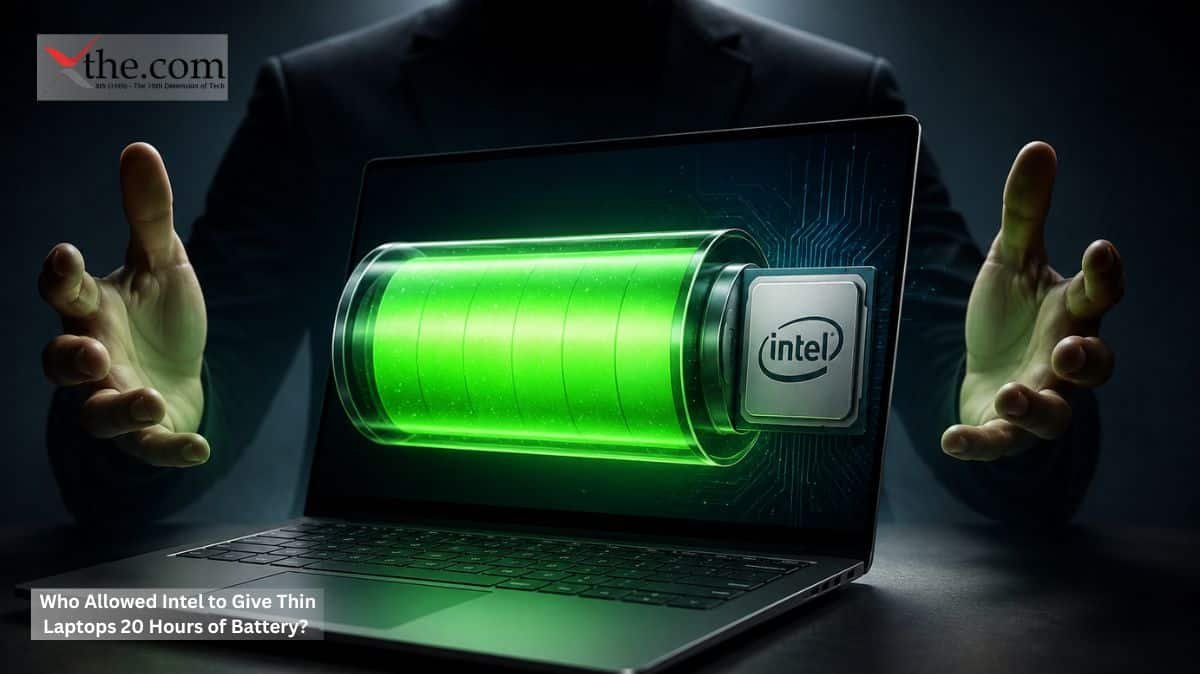
The Intel Core Series 3 processor family, introduced at Computex 2026 in Taipei, is now available in more than 70 device designs from Acer, Asus, Dell, HP, Lenovo, and MSI. It promises up to 20 hours of battery life compared to the previous generation. This is not just a marketing claim. It comes from a major redesign of how power flows through a mobile chip at the microarchitectural level.
How Intel Core Series 3 Quietly Rewrote Mobile Efficiency
The headline number draws attention, but the real story is what’s behind it. Intel Core Series 3 uses the same core architecture as the Intel Core Ultra Series 3, known internally as Panther Lake. This platform debuted at CES 2026 as the first AI PC platform built on Intel’s 18A process node. Intel 18A is the most advanced semiconductor process ever created in the United States.
Making transistors this small lets the chip do the same work while using much less energy. Intel’s data shows that power use drops by up to 64 percent compared to older designs when running the same tasks. This is what drives the battery life improvements, not a bigger battery or slower performance, but a more efficient instruction pipeline that uses less energy with every clock cycle.
For Maya or any mobile developer who runs code locally, this is important because the efficiency boost does not reduce performance. On Series 3 hardware, productivity and content creation tasks run up to 2.1 times faster than on systems from five years ago, and single-thread performance is up to 47 percent better. Demanding tasks finish more quickly, so the chip spends less time working at full power.
What the Computex 2026 Laptops Actually Revealed
The Computex 2026 laptops with Series 3 chips showed how well efficiency and performance can work together in real products. At the Taipei event, Intel introduced six new thin-and-light models. Acer’s Gary Chuang said the Acer Swift Air 14, which uses an ultra-slim all-aluminum body, can last up to 19 hours on a single charge for everyday tasks. The Acer Aspire Go series also makes these features more affordable.
A key highlight at Computex was that Series 3 laptops could stream 4K YouTube videos for up to 17 hours, beating the previous Intel Core i7 150U models. Video playback is demanding because it uses the display, wireless connection, and GPU simultaneously. Being able to do this for most of a day on one charge is a real achievement in design, not just a minor detail.
At the event, Joseph Broderick, a technical marketing engineer at Intel, pointed out that Series 3 laptops also come with Thunderbolt 4, Wi-Fi 7, and Bluetooth 6, plus a built-in NPU for local AI tasks. These laptops are not limited to saving battery they come with a full set of features.
The Intel Core Series 3 Laptop Battery Life Benchmark in Context
Anyone considering a purchase should look closely at what the Intel Core Series 3 laptop battery-life benchmarks actually measure before taking them at face value. Intel’s 20-hour estimate is based on a ‘typical consumer PC usage scenario’ that covers office multitasking, video playback, web browsing, and standby time. These are all tasks that help the battery last longer. If you’re doing more demanding work, like editing 4K video for long periods or running local builds nonstop, you’ll see lower battery life, just like on any other platform.
Even with that in mind, the efficiency baseline has improved. In the UL Procyon Office Productivity benchmark, Series 3 hardware beats the Core 7 150U by clear margins in both single-threaded and multi-threaded tasks. PugetBench results for Lightroom Classic and Photoshop show real improvements for creative work. For AI tasks such as real-time image processing and generative tools, GPU performance is up to 2.8 times better, and the platform can deliver up to 40 TOPS of total AI computing power.
If you’re a digital artist editing 24-megapixel raw files in Lightroom on a train, or a mobile developer running containerized builds in a coffee shop, this new architecture brings portable laptops much closer to the power of traditional workstations than any earlier Intel release.
Everyday Creation Without the Power Cord
Intel often uses the phrase “everyday creation” to describe Series 3, and that choice is intentional. The company is shifting from seeing portable chips as weaker versions of desktop processors to regarding them as the main creative tools. The Series 3 NPU can handle AI tasks like background removal, noise reduction, and generative fill right on the device, so there’s no need for the cloud or the delays that come with it. This means a student or freelancer in a rural area with spotty internet can use the same AI features as someone in a city with fast fiber connections.
The efficient design also changes how laptops are built. Lower heat and power needs mean smaller cooling systems, thinner cases, and lighter devices. At Computex 2026, the new laptops on display had aluminum shells lighter than a hardcover book and could run full productivity software without slowing down due to overheating.
What This Means for the Next Laptop You Buy
For years, people have believed that good battery life in laptops always comes with trade-offs. You either slow down the chip, make the screen smaller, remove ports, or use a bulky battery. Intel Core Series 3 changes this by improving the design itself, not by taking away features.
More than 70 new devices are coming in 2026, including thin-and-light laptops, business notebooks, and all-in-one desktops. This means the efficient design will be available at many price points, not just in expensive models. For example, a community college student buying a budget Acer Aspire will get the same core technology as a freelance video editor choosing a high-end Lenovo or Dell.
In the long run, this puts pressure on competitors. If Intel can offer 20 hours of battery life in a thin laptop without sacrificing performance, other brands will have to keep up. For students, mobile developers, and digital artists who have always had to plan around power outlets, this change is overdue.
Source: Intel Newsroom