




Monaco, California.
The Monaco paddock has always set apart machines that simply perform from those designed to dominate. On June 4, 2026, HP brought that mindset inside. The company introduced the HP Scuderia Ferrari AI PC, a laptop that goes beyond competing with mainstream hardware, making the comparison seem pointless. With a price tag of $5,599 and only 4,999 units available worldwide, this machine challenges serious hardware buyers to consider this question: when top-tier computing power and supercar-level engineering come together in one device, how high can the bar go?
The HP Scuderia Ferrari AI PC Is Not a Marketing Exercise
Ferrari’s Design Studio and HP’s engineering teams spent two years developing this cooperation. This wasn’t merely a co-branding deal with a logo on an existing product. Instead, it was a ground-up project that started when HP became the title sponsor of the Scuderia Ferrari Formula 1 team in 2024.
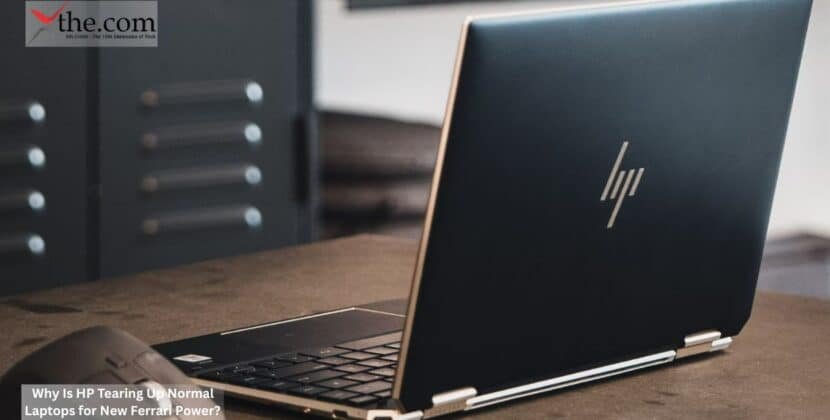
The chassis is made from CNC precision-milled aluminum and finished in Ferrari’s signature Rosso Magma red. This color is more than just decoration. A zirconium bead-blasted finish creates a shifting depth as light hits the surface, thanks to metallic particles in the paint. The result appears less like a typical electronic device and more like something worthy of a display case.
The underside is also unique. Through the base, you can see the cooling hardware and the laser-engraved serial number on a heat pipe, similar to how Ferrari uses translucent engine covers on their cars. HP swapped the usual ventilation panel for a mix of carbon fiber and Corning Gorilla Glass, so the thermal design is visible. This is both an engineering and a design statement.
What the Intel Core Ultra X7 Actually Changes
Design alone does not justify $5,599. The internal specification has to carry its weight.
The PC is equipped with an Intel Core Ultra X7-358H processor with Intel Arc B390 graphics, delivering up to 180 TOPS of performance for advanced AI applications and high-intensity workloads. That figure 180 TOPS performances represent tera-operations per second executed entirely on-device, with no dependency on a remote server or cloud inference pipeline.
Consider what that means practically. A motion graphics professional running a 3D compositing session with real-time AI upscaling no longer needs to queue a render farm job or maintain a cloud subscription to stay productive on location. The configuration includes 64GB of RAM and a 1TB SSD, more than capable of managing demanding creative applications. That memory ceiling matters enormously for large-model inference running a localized language model, or an AI-assisted video editing suite requires the kind of headroom that budget-tier AI laptops simply cannot provide.
The significance of 180 TOPS performance goes beyond benchmark sheets. It signals that HP and Intel are positioning this machine against workstation-class external compute rather than other thin-and-light laptops. The target user is not checking their email. They are running inference tasks that, eighteen months ago, required dedicated GPU servers.
A Display Worth the Argument
The HP Limited Edition Scuderia Ferrari AI PC features a 14-inch Tandem OLED+ touch display with a 3K resolution, a 120Hz refresh rate, and up to 700 nits of brightness. For anyone evaluating color-critical work photography, film color grading, architectural visualization those specifications eliminate the need to carry a separate reference monitor. The Intel Core Ultra X7, when fed directly into a panel of that caliber, closes a long-standing gap between mobile and studio-grade output.
Who Should Actually Consider the Buy HP Limited Edition Scuderia Ferrari AI PC Specs
The phrase “buy HP limited-edition Scuderia Ferrari AI PC specs” signals a specific type of buyer: someone who researches hardware in depth before spending five figures and who expects both performance and provenance to withstand scrutiny.
This is not a machine for the executive who wants a conversation piece in a boardroom. It is built for the creator or engineer who travels between client sites, keeps their AI workflows entirely local for security or latency reasons, and refuses to sacrifice aesthetics for compute density. The serialized numbering on each unit laser-etched directly onto the internal heat pipe reinforces the collector dimension, but the hardware beneath earns the machine its place in a professional toolkit.
The laptop ships in custom packaging designed to physically lift the device as the box opens and includes a leather sleeve made by Poltrona Frau the same supplier that manufactures Ferrari’s interior leather. That detail is either an unnecessary theater or a coherent extension of the product philosophy, depending on whether you believe the ownership experience ought to match the hardware inside it.
The Wider Signal for Premium Computing
While many manufacturers are competing on processing power alone, HP and Ferrari are attempting to combine AI performance, premium industrial design, and brand heritage into a single product. The more consequential point is what this launch argues about, where on-device AI is heading.
For years, the assumption in enterprise and creative computing was that serious AI workloads belonged in the cloud. The HP Scuderia Ferrari AI PC, with its Intel Core Ultra X7 pushing 180 TOPS performance through a locally sealed architecture, makes a direct counter-argument. Complex model inference, real-time generative design, and heavy multimodal tasks can now execute at the edge on a machine sitting on a desk in Maranello or a studio in Los Angeles without a single packet leaving the device.
This limited production run makes it an elusive product rather than a mass-market device, matching Ferrari’s brand philosophy of scarcity and prestige. Whether 4,999 units is enough to shift industry expectations is beside the point. The specification that HP has published — and the engineering investment behind it will inform what the next generation of premium AI hardware looks like, regardless of which badge it carries.
The racetrack has always been where engineering advances fastest. HP just moved that track indoors.