




San Diego, California
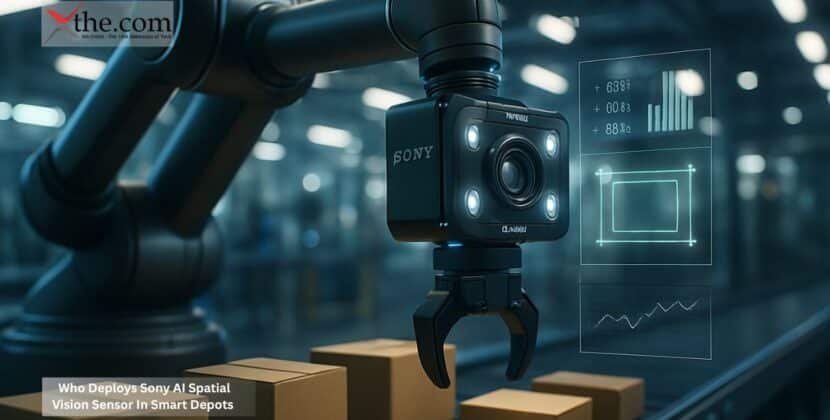
A late shipment can cost retailers much more than just shipping fees. If distribution centers miss delivery targets, inventory builds up, labor costs rise, and customer satisfaction declines. Warehouse operators across the US are looking for ways to speed up sorting without spending millions on servers. This challenge has sparked interest in the Sony AI spatial sensor, which embeds smart technology directly into the camera.
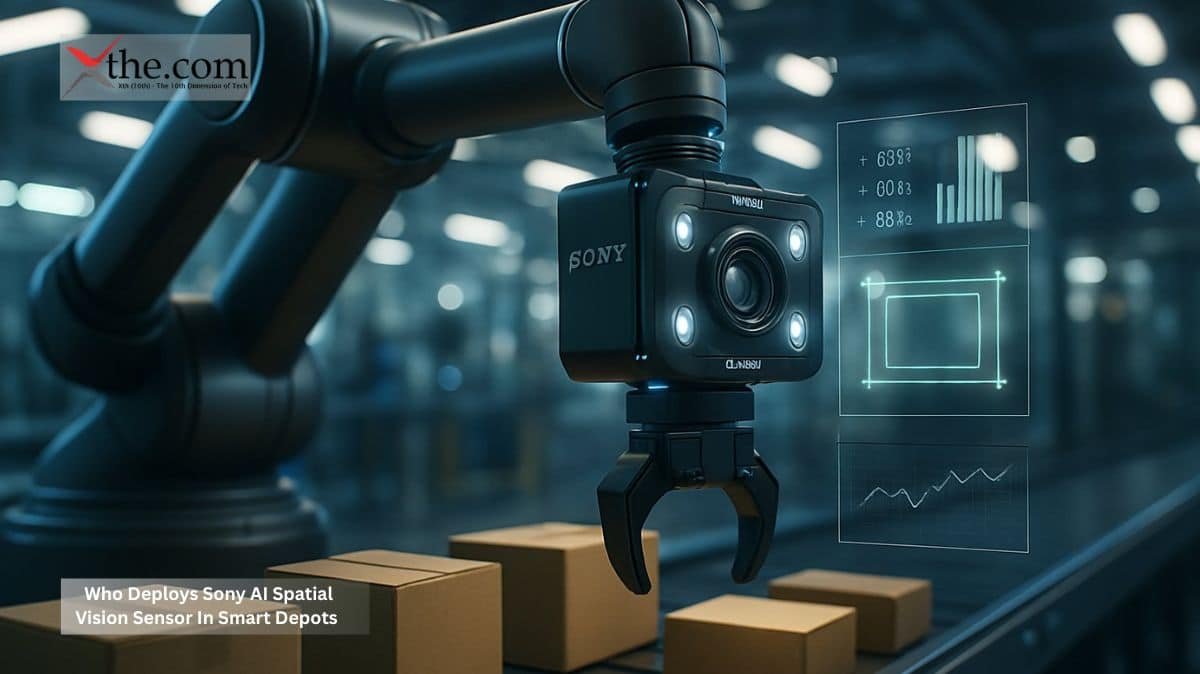
The latest sensor architecture from Sony delivers a different approach to machine vision. Instead of sending large streams of image data to external computers for analysis, the sensor performs critical processing on-chip, enabling operators to manage smart depots. That distinction might significantly decrease latency while improving throughput on busy conveyor belts.
Why the Sony AI Spatial Sensor Matters for Smart Depots
Traditional machine vision systems need several parts to work together. Cameras take pictures, servers handle data, and controllers execute commands. Even small delays between these steps can slow things down when thousands of packages move through a facility each hour.
The Sony AI spatial sensor changes this process by building AI processing right into the camera hardware. This lets the system identify, track, and sort moving objects as soon as they are captured.
In a fulfillment center with many product types, this means conveyor belts can distinguish between packages, boxes, and odd-shaped items without waiting for a central server. This technology helps make faster decisions and reduces network use.
Inside the IMX Sensor Array Architecture
Sony’s advanced IMX sensor array is at the heart of the platform. It combines image capture with spatial intelligence.
Unlike regular industrial cameras that just record images, the IMX sensor array also processes depth, object position, and movement right on the sensor. This design makes the camera an active computing device instead of just a tool for collecting images.
The hardware captures 3D spatial relationships, so automated systems can see how objects move in a workspace. A sorting belt moving hundreds of packages per minute can track item positions without sending large image files over the network.
By moving less data, facilities need less infrastructure while still working quickly.
Real-Time Edge Tracking Without Network Bottlenecks
One prominent feature is real-time edge tracking.
Traditional machine vision setups often use edge servers near production equipment. These systems work, but they can still cause delays and need extra hardware.
With real-time edge tracking, the sensor checks object movement right where the image is made. A package moving on a conveyor can be tracked frame by frame without leaving the camera chip.
Think of a big e-commerce fulfillment center during the busy holiday season. Thousands of products go through sorting lanes every hour. Even a tiny delay can cause backups. By handling movement data right at the sensor, the system keeps processes running smoothly and reduces the need for costly computer clusters.
Optical Telemetry Creates Smarter Industrial Decisions
Another important capability is optical telemetry.
Industrial facilities now need precise movement data, not just basic image recognition. Operators must know an object’s speed, direction, orientation, and location in real time.
The sensor’s optical telemetry feature creates useful movement data straight from what it sees. Instead of sending full video streams, the system gives structured details about how objects behave.
This method uses less bandwidth whilst still providing automation systems with the exact data they need for sorting. Manufacturers can maintain performance through basic local networks.
Improving Sorting Flow Across Automated Facilities
An effective sorting flow remains one of the most important measures in today’s distribution centers.
Every interaction has effects later on. If just one package is misplaced, someone may need to fix it by hand, which slows things down and raises labor costs.
Sony’s platform combines spatial recognition with AI processing on the sensor, helping to more accurately manage sorting flow. Conveyor systems can keep adjusting routes based on where items are and how they move, rather than relying on predefined object dimensions. The sensor can interpret varying shapes and orientations as products move through the system.
Such flexibility allows automation equipment to operate closer to full capacity without sacrificing accuracy.
Who Stands to Benefit Most?
The groups most likely to use the Sony AI spatial sensor are big logistics companies, e-commerce fulfillment centers, third-party warehouses, and manufacturers with fast packaging lines.
For these operators, the benefits go beyond faster sorting. Using fewer servers cuts hardware costs. Less network traffic makes systems simpler. Quicker object recognition boosts efficiency.
These benefits become even more important as companies expand to more locations.
The new Sony IMX Tracking Spatial Vision Sensor Warehouse Automation illustrates a wider shift within industrial tech. Intelligence is moving closer to where data is made. Instead of building larger computer systems, manufacturers can now embed decision-making directly into camera hardware.
As shipping volumes grow in the US, operators feel more pressure to move products quickly and keep costs down. The mix of AI processing, spatial cognition, and built-in sensing in Sony’s IMX Tracking Spatial Vision Sensor Warehouse Automation may represent one of the most practical paths toward achieving that balance. Facilities that reduce delays at the sensor level can achieve significant efficiency gains across millions of sorting decisions each year.
Source: Sony Newsroom