CORNING, NY —
Atomic Answer: Hyperscale engineering teams scaling high-density AI clusters are experiencing unexpected waveguide signal loss across advanced 800G optical networking fabrics. As fiber ribbon density increases to accommodate massive cluster interconnect models, minor geometric variations within the optical backplane trigger modal dispersion. Resolving this performance obstacle requires physical infrastructure teams to upgrade to precision-engineered fiber assemblies featuring specialized cladding protections.
The AI infrastructure scaling race has surfaced a physical constraint that software optimization and silicon advancement cannot resolve waveguide signal loss in 800G optical networking fabrics, necessitated by density requirements that the optical backplane geometry cannot cleanly accommodate. As thermal CapEx consequences of signal degradation compound across high-density cluster interconnects, the precision-engineering gap between standard fiber ribbon assemblies and the cladding-protection requirements of 800G deployments is becoming a procurement-critical infrastructure variable.
Why Density Creates the Dispersion Problem
800G optical networking fabrics achieve their throughput by packing fiber ribbon density to levels that create geometric variation risk within the optical backplane, which lower-density configurations have never encountered at scale. When fiber ribbon assemblies are routed through high-density backplane environments, minor deviations in waveguide geometry manufacturing tolerances that were acceptable at 400G ribbon densities become significant at 800G because the higher symbol rate amplifies the phase coherence sensitivity of the optical signal.
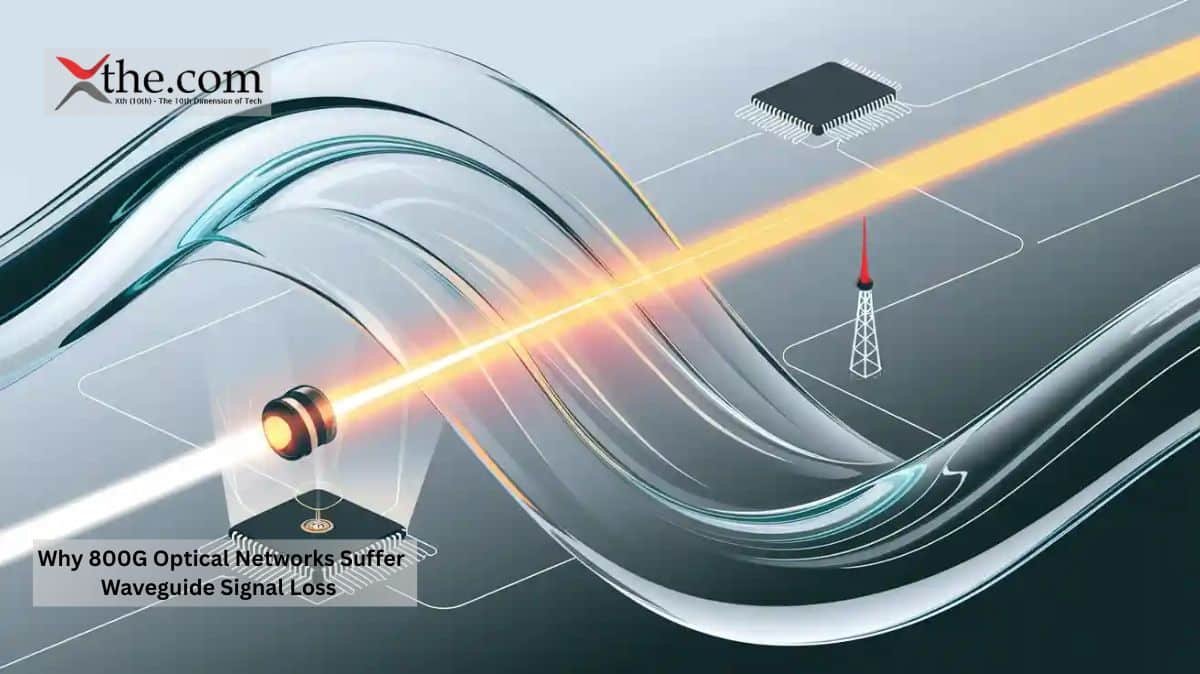
Modal dispersion occurs when geometric variation within the waveguide causes different propagation modes of the optical signal to travel at slightly different velocities — arriving at the receiver with phase relationships that the transceiver cannot cleanly reconstruct into the original signal. At 400G, this dispersion was within receiver equalization tolerance. At 800G, the tighter symbol timing requirements reduce the dispersion budget to levels where geometric variations that previously had no measurable impact now degrade signal integrity below the forward error correction threshold.
High-density data center fabric optimization for mitigating 800G waveguide signal loss requires addressing this dispersion mechanism at the physical layer not through transceiver signal processing that consumes power compensating for preventable geometric variation, but through precision fiber assembly engineering that eliminates the variation before it enters the optical path.
Cladding Protection and Precision Assembly Requirements
To achieve waveguide signal loss reduction at 800G density, it is necessary to have fiber assemblies designed to much tighter geometric tolerances than the regular ribbon format allows, as well as to ensure correct cladding protection and a design that preserves waveguide geometry under the mechanical stress of very tightly installed high-density backplane routing. Regular fiber cladding protects against physical damage but cannot maintain the geometric accuracy required for 800G modal dispersion tolerance due to continuous mechanical loading from a densely packed configuration.
Hyperscale cluster interconnect fiber ribbon density must also account for bend-radius risk, which is underestimated in standard assembly routing guidelines, for AI cluster rack enclosure configurations. When routing fiber ribbons within server enclosures at the required density for 800G cluster interconnect applications, many of the available routing paths come very close to their bend radii. Standard cladding cannot accommodate this level of tight radius routing and will cause the same geometric distortion that precision engineering seeks to avoid, and will also add to the modal dispersion issue.
There should be requirements for verifying geometric tolerances and testing bend radius compliance for the optical backplane as part of supply chain management, rather than leaving it to purchasers to perform quality assurance.
Thermal CapEx Consequences of Uncorrected Signal Loss
The capital expenditures associated with thermal energy generation caused by uncorrected waveguide signal loss represent an economic dimension connecting physical-layer signal integrity with data center maintenance costs. Transceivers will receive compromised optical signals and use receiver equalization and forward error correction to restore them to usable signals at the transceiver. This will consume energy over the nominal specification of the transceiver.
AI infrastructure racks running 800G interconnects with signal integrity issues across multiple links accumulate transceiver power consumption premiums that translate directly into rack-level thermal output increases. The cooling infrastructure must absorb this additional thermal load either through existing cooling capacity that was not provisioned for the overage, or through cooling infrastructure expansion, which incurs thermal CapEx costs not in the original deployment budget.
800G optical networking deployments that specify precision fiber assemblies upfront avoid this thermal penalty entirely the incremental cost of precision-engineered assemblies over standard ribbon construction is consistently lower than the combined cost of elevated transceiver power consumption and cooling infrastructure expansion driven by signal degradation over the deployment lifecycle.
Supply Chain Diversification and Lead Time Risk
Fiber ribbon density at 800G precision specification requires manufacturing processes that not all optical fiber component vendors currently support at hyperscale volume. The global backlog for precision-engineered, high-density optical fiber structures driven by simultaneous hyperscale AI infrastructure buildouts across multiple major operators creates lead-time risk that single-vendor procurement strategies cannot manage.
In terms of scalability, organizations should require distribution facility suppliers to have multiple qualified vendors providing precision fiber assemblies, to avoid potential delivery delays of cluster interconnects on the critical path associated with AI factory activation timelines. With a list of approved vendors, the potential for extended lead times from a single vendor can be mitigated, allowing companies to have more suppliers available to deliver precise assemblies within the estimated time.
High-density data center fabric optimization to mitigate 800G waveguide signal loss should include lead-time modeling for precision fiber assemblies alongside GPU and switching hardware the optical interconnect layer is increasingly a parallel constraint on cluster activation timelines, not a commodity component that can be sourced on short notice.
Conclusion
The physical-layer limitation that can be scaled to 800G optical networks is a requirement for both procurement and infrastructure teams to deal with intentionally or unintentionally rather than learning about ex post, such as thermal penalties associated with transceivers and signal integrity events due to modal dispersion, where loss of signal through the use of the ribbon-fiber density,a predictable outcome of the geometric tolerances in standard (non-precision-engineered) fiber assemblies, will occur regardless of when cladding protection to the fibre is produced (i.e. prior to or after entering the optical path).
Thermal CapEx consequences of uncorrected signal degradation compound over the deployment lifecycle, resulting in cooling infrastructure costs that exceed the precision assembly premium by significant margins. 800G optical networking certification requirements for geometric tolerance and bend-radius compliance should appear in procurement specifications before supply chain commitments are made not as post-deployment audit criteria. Optical backplane scaling vendor diversification protects deployment timelines against the supply chain lead-time risk that precision fiber assembly demand at hyperscale volumes creates. As high-density data center fabric optimization for mitigating 800G waveguide signal loss becomes a standard infrastructure engineering discipline, the signal integrity gap between standard and precision fiber assemblies will determine which 800G deployments perform to specification and which incur avoidable thermal CapEx and throughput penalties across their operational lifetimes.
Enterprise Procurement Checklist
- Real-World Operational Consequence: Data center network deployment teams face severe processing stalls if infrastructure cables fail to maintain signal stability across long runs.
- Deployment Bottleneck: Packing dense optical lines tightly inside existing server enclosures risks localized layout friction if bend-radius limits are exceeded.
- Thermal & Energy Analysis: Uncorrected optical signal degradation forces transceivers to operate at elevated power levels, driving up network interface thermal generation.
- Cross-Manufacturer Ripple Effect: Global backlogs for high-density optical fiber structures force technology hardware procurers to diversify component vendors to secure predictable lead times.
- Operational Action Step: Review upcoming physical network infrastructure bills of materials to ensure all 800G interconnect links feature strict waveguide testing certifications.
Primary Source Link: Nvidia News Archive