





Costa Mesa, CA
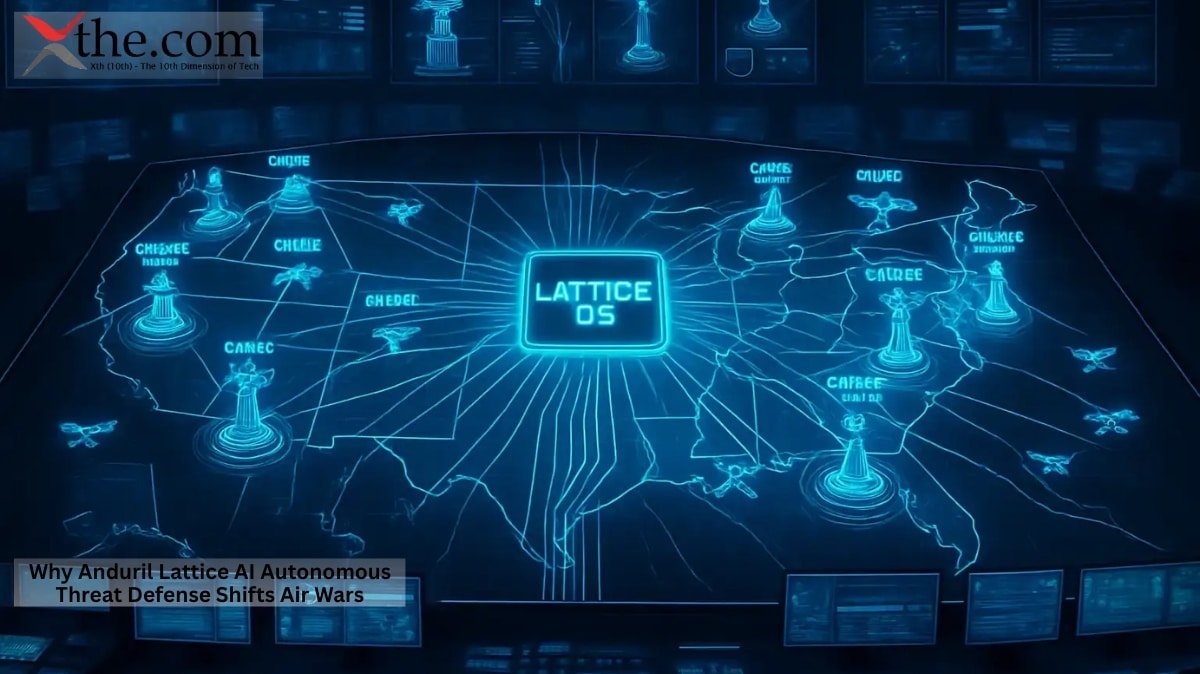
Atomic answer: Anduril Industries has upgraded its Lattice AI software engine, allowing teams of autonomous defense drones to coordinate search and security tasks without relying on a central command link. This platform uses edge computing to process tracking data locally, allowing individual units to adapt to changing field threats even during heavy radio jamming. By handling processing choices entirely on the vehicle hardware, the security grid can protect remote bases without experiencing system communication delays.
A swarm of drones crossing a contested border can overwhelm a terrestrial command center in under 90 seconds. Human analysts cannot keep up with tagging, classifying, and responding to dozens of moving targets as quickly as machines can. This gap is why Anduril Lattice AI has become a key focus in modern defense procurement. Militaries are no longer asking if software will guide air defense decisions, but which software can handle electronic warfare, disrupted communications, and complex battlefield conditions.
The growth of autonomous defense systems shows a tough military truth. Centralized command structures often fail under pressure. Modern air battles now rely on distributed intelligence working at the front lines.
Why Anduril Lattice AI Changes the Decision Cycle?
Traditional air defense systems rely on layers of communication between sensors, operators, and command centers. This approach worked when aircraft flew on predictable routes, and missile threats were limited. It does not work well as an autonomous drone, a cheap loitering munition, or an AI‑powered targeting system.
Anduril Lattice AI turns the observe-orient-decide-act cycle into a software-driven process. Rather than sending every signal to a far‑off command center, the platform processes data locally using edge robotics processing, radar, infrared, electronic surveillance, and drone data, all combined to create a real‑time operational picture.
This is important because delays can ruin defense effectiveness.
A hypersonic projectile at Mach 5 travels about one mile each second. Even brief communication delays can cause interception failures. Systems that use edge-robotics processing rely less on cloud infrastructure and continue to operate even if satellites or long‑range networks fail.
The Military Shift Toward Distributed AI
Teams now typically prefer distributed systems over centralized ones because attackers often target communication points first. During electronic jamming, isolated units can lose contact with command headquarters. Systems built with infrastructure isolation principles continue to function despite these disruptions.
This design philosophy sits at the center of Anduril Industries’ latest software for autonomous drone air defense integration in 2026, which defense analysts expect to shape procurement choices across NATO programs. The platform supports independent decision-making layers that continue to track and sort threats even when cut off from higher command.
This kind of operational independence changes how tactics are planned.
A forward-positioned ground defense unit with autonomous systems can spot hostile aircraft, sort targets, and plan interception routes without waiting for approval from higher up. In today’s air battles, every second counts more than following the chain of command.
The Strategic Importance of Classified AI Infrastructure
Military AI is very different from commercial AI. Consumer AI focuses on convenience and scaling up. Defense AI is built for survival and keeping operations secret.
This difference is why there is more investment in classified AI systems.
Civilian machine learning platforms use open cloud environments, but military AI requires compartmentalized computing environments that comply with strict security boundaries. Data leakage in combat scenarios creates catastrophic risks. A compromised targeting model could reveal surveillance habits, response plans, or weak spots.
Anduril Lattice AI tackles these issues with a segmented design and secure physical transport layers that limit network exposure. Instead of using internet‑connected systems, defense teams often move important data between secure areas using isolated transport methods.
The focus on physical transport security comes from lessons learned in cyber warfare over the last 10 years. In many contested areas, it is still easier to break in digitally than physically. Because of this, militaries are keeping operational AI separate from public communication systems.
Why Security Boundary Compliance Matters?
Defense contractors are under increasing scrutiny from regulators and military buyers regarding compliance with security boundary standards. AI systems that handle classified surveillance data must work with strict authorization rules.
A failure in security boundary compliance does not merely create technical problems. It creates geopolitical consequences.
Picture a group of countries working together with shared air defense systems. Each country has its own rules for classifying information, sharing intelligence, and making decisions. AI platforms must adhere to these boundaries while still working together to spot and respond to threats.
Managing this balance is what will shape the next phase of military AI competition.
Autonomous Defense Systems and the Future of Air Dominance
Autonomous defense systems are important for more than just drones or missile defense. They can also change the economics of military force.
A standard surface-to-air missile can cost millions of dollars, while an autonomous attack drone might cost less than $50,000. Defenders cannot keep up with these uneven costs forever. AI‑guided interception systems aim to address this imbalance by leveraging automation and reducing operating costs.
This cost pressure is why governments continue to accelerate investment in classified AI systems, resilient infrastructure, and decentralized battlefield computing.
In the future, air superiority will not just go to the country with the most planes. It will go to the force capable of processing information fastest under degraded conditions. This is the strategic logic behind Anduril Industries’ Lattice software for autonomous air defense in 2026 and the wider move toward AI‑driven military teamwork.
Air superiority now relies as much on strong software as on firepower. The next big advantage might not come from a new jet or missile, but from an autonomous network that keeps working even if all regular communication channels go down.
Enterprise Procurement Checklist
- Align your defense facility modernization plans with Anduril hardware availability and delivery timelines.
- Ensure your field facilities have secure, isolated spaces to store and maintain autonomous equipment.
- Configure local communication networks to handle data sharing between autonomous units safely.
- Check all automated hardware plans against federal military electronics and air space safety standards.
- Factor the long-term facility protection benefits against the upfront cost of deploying autonomous security systems.
Source: NGC2 at Scale: How Team Anduril and the Army Took Lattice Across the 4th Infantry Division