






CUPERTINO, California,
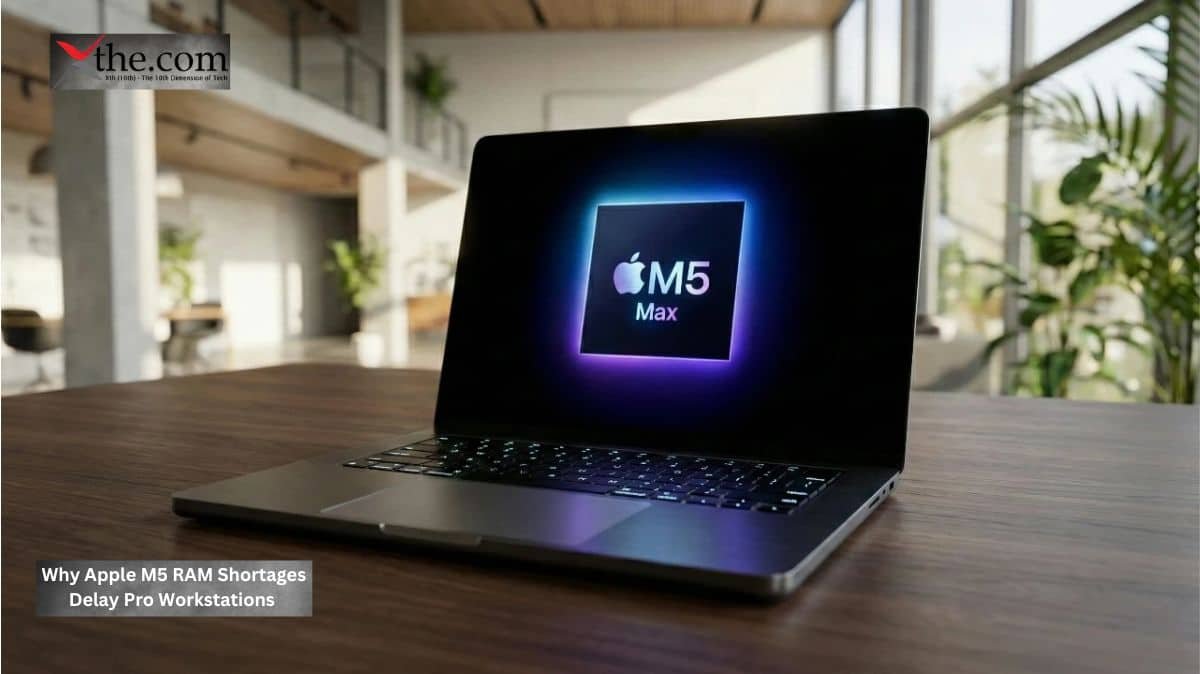
Atomic answer: Signals from internal sources suggest that, even though M5-series chips have been readied, global RAM shortages will force the Mac Studio and Mac mini to launch in late 2026. This delay underscores an important infrastructure bottleneck: the memory required for on-device AI processing exceeds the supply available in existing supply chains.
According to internal supply chain documents, Apple has been experiencing mounting manufacturing pressure due to the Global RAM Shortage, despite being equipped with its next-generation Apple M5 chip. As a result, there will be delays in upgrading their line of workstations with models such as the Mac Studio and Mac Mini, with the update set for late 2026.
This delay has become progressively significant for business users, artists, and infrastructure managers who use Apple devices to perform artificial intelligence computations locally. Experts have stated that the problem illustrates an emerging bottleneck in the technological infrastructure, where AI systems integrated into consumer devices require far more memory than the semiconductor supply chain can efficiently provide.
This delay also showcases how memory infrastructure has become as essential as processor speed in the age of AI computing.
Why Apple M5 is Significant to AI in Enterprises
The forthcoming Apple M5 series is anticipated to mark a significant shift in the company’s strategy towards developing AI-based computing solutions. Unlike previous generations, which emphasized improving CPUs and GPUs, the M5 series is purported to be optimized for AI computations that have become increasingly complex over time.
Current AI applications in enterprises need considerable amounts of memory for:
- Local language model inference
- On-the-fly media creation
- AI-based creative processes
- Autonomous systems for productivity
- Visual reasoning capabilities
It is thought that Apple’s future outlook revolves around enhancing its Apple Intelligence framework, which is becoming increasingly reliant on local computations rather than solely on cloud-based services.
However, the ongoing RAM Shortage is impeding Apple from scaling workstations with adequate memory capacity for AI implementations.
Impact of the Delay on the Mac Studio Ecosystem
The delay becomes critical as the Mac Studio ecosystem’s popularity grows among developers, enterprises, AI engineers, and production studios that need high-performance computing environments.
As opposed to lighter consumer products, a heavyweight AI environment would need the following features:
- Memory pools
- Constant AI inference processing
- Model orchestration capabilities
- High memory bandwidth
- Rendering acceleration
Recent industry reports indicate that, due to RAM shortages, it is becoming increasingly challenging for Apple suppliers to scale high-capacity RAM.
Therefore, companies that need to update their infrastructure will experience delays when getting the new AI-equipped Apple hardware.
In the long run, the impact of the Apple M5 Mac Studio release date delay RAM supply chain problem could be significant for businesses adopting local AI computing environments.
Apple Intelligence Impact on Memory Usage
The increasing use of Apple Intelligence within enterprise processes will create greater demand for hardware memory. Apple’s AI framework continues to leverage local processing for enhanced security, privacy, and performance.
However, AI-enabled enterprise applications require much more memory than standard productivity applications.
Important AI workloads include:
- Local chatbot inference
- Visual content creation
- AI coding tools
- Productivity assistants
- Multimodal analysis
Experts have noted that the current 8GB and 16GB memory setups may be insufficient for advanced AI frameworks.
This has led to apprehension among enterprise planners planning future hardware purchases based on local AI adoption.
Semiconductor Logistics and Supply Challenges
This problem is not limited to just Apple. The global semiconductor logistics network is still under strain due to increased demand for artificial intelligence (AI) servers, graphics processing units (GPUs), self-driving technology, and edge computing solutions.
There are several elements within the industry that have created this shortage situation:
- An increase in AI server manufacturing
- A rise in enterprise memory needs
- Low availability of high-end DRAM production capabilities
- Potential supply chain risks
- Growth in demand for AI workstations
With the rapid adoption of AI across industries, memory infrastructure has become the most contested resource in the global semiconductor market.
This shortage also demonstrates that memory infrastructure is now considered an essential component in planning any AI infrastructure solution, alongside semiconductor chips.
Enterprise Procurement Issues
The ongoing RAM Shortage is impacting enterprise procurement processes. Enterprises that have planned workstation upgrades need to consider whether to delay purchases, stock up on current inventory, or rethink their deployment approaches altogether.
Current issues within the enterprise include:
- Delayed refresh cycles for hardware
- Lack of workstations
- Increased costs for memory components
- Decreased scalability in AI deployments
- Lengthened lifecycle management
Procurement departments are said to be favoring their M4 Ultra inventory while considering future hardware availability dates.
On-device AI infrastructure requirements are also compelling enterprises to reevaluate their baseline hardware requirements.
Industry experts are now recommending:
- Minimum 32GB AI workstation requirements
- AI workload budgeting
- Inventory reservation contracts
- Hybrid local-cloud AI deployments
- Memory-based procurement strategy
Transition to Infrastructure with Local AI
The Apple M5 delay case study exemplifies a shift underway in enterprise computing. Firms are now prioritizing local AI processing to ensure data security and reduce latency.
Unlike traditional cloud computing architectures, local AI processing needs:
- High-memory devices
- Efficient neural processing units
- Workload optimization on a constant basis
- Latency-free storage interface
- Efficient heat dissipation capabilities
The shift in infrastructure is bound to revolutionize enterprise assessment of their workstations.
The emergence of local AI processing environments might also fuel rivalry among competing manufacturers of AI memory hardware.
Conclusion
The current RAM Shortage that is currently hampering the release of Apple M5 workstations represents just one example of a very serious infrastructure problem that continues to emerge in the age of artificial intelligence. Although Apple’s new processor might already be ready for launch, the global RAM shortage is preventing companies from switching to AI-native computing architectures.
As businesses continually invest in Apple Intelligence, localized inference systems, and AI-driven workflows to increase productivity, memory infrastructure will become a key factor in purchasing decisions. Ultimately, it might become clear that while processor competition in the age of AI is certainly important, companies will compete on access to the necessary memory infrastructure.
Enterprise Procurement Checklist
- Deployment Bottleneck: High-performance “Apple Intelligence” features are being throttled by 8GB/16GB memory caps.
- Procurement Effect: Enterprises should prioritize current M4 Ultra stock if local LLM reasoning is urgent.
- Operational Consequence: Delayed workstation refreshes may extend 2023-era hardware lifecycles by 6–12 months.
- Infrastructure Redesign: Future Mac deployment must budget for 32GB minimum to support “Visual Intelligence” tasks.
- Action Step: Negotiate “Inventory Hold” agreements for current M4 Pro units to avoid Q3 shortages.
Source- Apple Newsroom