






Seattle, WA.
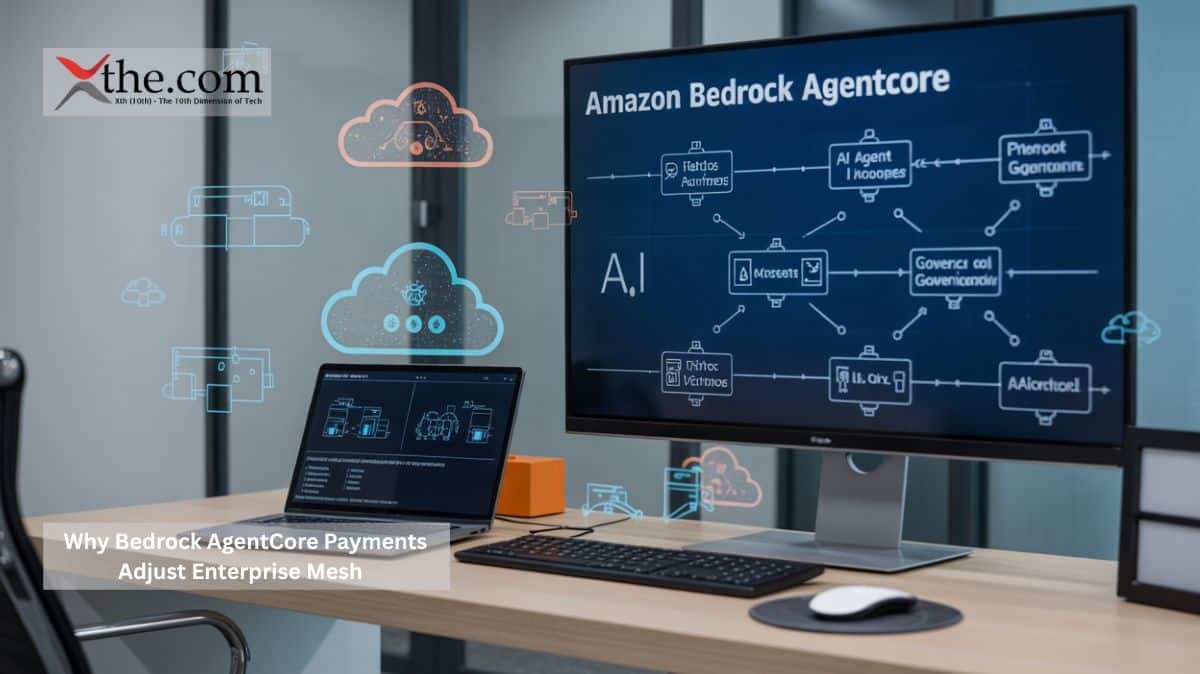
Atomic answer: Amazon Web Services (AMZN) has deployed an engineering release for its Bedrock Agent Core platform focused on managed autonomous payment orchestration. The framework introduces support for the model context protocol [MCP] to standardize data handshakes between independent financial agents inside a secure service niche. This platform change requires cloud architects to implement strict transaction validation logic to block unauthorized API adjustments during multi-step automated payment routines.
When a payment fails, it can cause problems. For example, a single APA term and a proper system can halt payments for multiple reasons, triggering compliance alerts and forcing finance teams to spend days fixing reconciliation errors. According to government enterprises, they do not manage hundreds of connected APIs within their finance systems; the money platforms are still on an outdated manager built for fixed work loss instead of flexible autonomous operations.
This challenge explains why companies are now investing in managed autonomous payment systems and secure AI agents. The main question is no longer whether AI should be used in finance, but rather how current systems can handle the speed and complexity of AI-driven transactions without running into governance delays or audit issues.
Why Enterprise Payment Systems No Longer Fit Static Infrastructure
Old payment systems were designed for predictable transaction batches. A payment could follow a set workflow, pass a few checks, and then reach settlement through a central process. Today’s enterprise systems operate differently.
For example, a global retailer may route transactions through regional tax systems, fraud checks, treasury platforms, and external banking APIs in just milliseconds. Each step introduces a new dependency, and each dependency represents a potential point of failure.
Because of this change, service mesh architecture is now essential for financial services, not just for networking. Companies need systems that can reroute traffic on the fly, isolate failures, and keep everything visible without disrupting transactions.
This is why managed autonomous payment orchestration is now practical, not just experimental. Autonomous agents can check transaction status in real time, use backup providers, adjust routing as needed, and automatically retry failed payments, all without human intervention.
This makes a big difference during busy settlement periods. If a payment gateway in Southeast Asia slows down, autonomous agents can quickly reroute transactions to other channels while still complying with regional rules.
How Secure AI Agents Reshape Payment Governance
Finance leaders generally support automation, but they worry about governance. Autonomous systems can be worrying because payment operations entail legal risks, anti‑money laundering rules, and close government oversight.
The answer is not to limit autonomy, but to organize it properly.
Modern secure AI agents work within strict boundaries; they do not make random decisions about payment. Instead, they follow policies set by layers of checks, cryptographic controls, and workflows with specific permissions.
This approach changes what API gateways do. In the past, gateways managed traffic and authentication. Now, in autonomous payment systems, gateways act more like policy enforcers. They check agent permissions, transaction details, rate limits, and risk levels before letting anything proceed.
For example, a global insurance company handling emergency claims after a disaster can use autonomous agents to speed up payments. However, the company still needs controls to prevent duplicate payments, cross-border issues, and unauthorized routing. Built‑in validation logic maintains these safeguards even when transaction volumes suddenly increase.
The Infrastructure Shift Behind MCP and Vector-Based Payment Decisions.
The rise of MCP frameworks has encouraged companies to adopt agent-based systems, as they no longer want AI tools that operate independently of their main financial systems.
Instead, companies want agents that can work together and coordinate decisions across procurement, treasury, fraud detection, and compliance systems simultaneously.
This coordination relies on vector-indexed contextual retrieval systems. Payment agents now often use vector-based setups to quickly understand transaction histories, supplier behavior, contract issues, and past settlement patterns.
For example, a procurement agent reviewing a $4.8 million supplier payment might compare the current transaction to years of past vendor activity stored in vector-indexing systems. If the pattern looks unusual, the agent can flag the payment for manual review before it goes through.
This method gives companies something older automation systems did not have: awareness of context.
Why the Bedrock AgentCore Multi-Agent Payment Processing Architecture Matters.
The rise of the Bedrock Agent core multi‑agent payment‑processing architecture reflects a broader enterprise realization that single agent models struggle with financial operational complexity.
Big organizations almost never process payments through just one central system. Instead, they use multiple specialized systems simultaneously for approvals, sanctions, checks, treasury management, liquidity planning, reconciliation, and fraud analysis.
A multi-agent setup distributes these tasks across different AI services rather than putting all the logic in a single place.
This difference makes the system more resilient.
And the Bedrock Agent Core multi‑agent payment processing architecture includes one agent that monitors fraud indicators, another that handles settlement optimization, and a third that manages compliance verification. If one subsystem degrades, the broader payment operation continues to function without a complete workflow interruption.
The design suggests that this architecture also fits well with other enterprise service mesh principles. Independent agents communicate through clear, policy‑controlled channels while remaining separate. This gives companies better fault tolerance, clearer monitoring, and more precise control.
The benefits are evident during busy periods such as Black Friday for retailers or quarter end payments for manufacturers. Companies can scale agent tasks independently, avoiding excessive strain on a single, monolithic system.
Enterprise Finance is Moving Toward Coordinated Autonomy.
Most companies cannot replace their payment systems overnight. Old ERP systems, banking connections, and compliance need to make quick changes impossible.
However, the trend is becoming hard to ignore.
Finance teams are moving toward flexible systems that can make decisions independently while remaining under control. This shift is driving more investment in managed autonomous payment orchestration, expanded deployment of secure AI agents, and better integration between MCP, API gateways, and vector indexing.
The next big advantage in enterprise payments may not just be faster transactions. It could stem from how well autonomous systems manage thousands of financial decisions while maintaining cost, compliance, and visibility.
Technical Stack Checklist
- Implement updated MCP schema patterns within your central API gateway to monitor automated requests.
- Run isolation validation tests on financial data records used for real-time vector indexing pipelines.
- Update identity tokens on transactional backends to prevent unauthorized permission modifications by software tools.
- Deploy secondary signing layers to confirm financial transactions requested by automated worker threads.
- Review system log trails to track data requests passing through the connected agent mesh.
Source: AWS Architecture Blog








