



Austin, TX.
Atomic answer: Tesla has confirmed a V14 lite software update for older Hardware 3 (HW3) vehicles and industrial units, bringing modern A14 features to legacy silicon. This move protects the enterprise’s ROI on existing fleets as Tesla transitions its manufacturing lines from cars to Optimus humanoid robots.
A 12% increase in compute latency might not seem like much, but it adds up quickly when it affects millions of driving decisions each day. This is the challenge Tesla (TSLA) faces now as the HW3 v14-lite software pushes older onboard hardware to its limits. The difference between what Hardware 3 can handle and what today’s FSD robotics requires is now clear. It shows up as slower processing, weaker performance in tricky situations, and a growing reliance on cloud-based inference services.
For both investors and operators, the main question is clear. Does ongoing software improvement still support Tesla’s valuation, or is the company moving towards a split approach to autonomy?
HW3 Constraints and the Economics of Edge Compute
The launch of HW3 v14-Lite reveals a challenge Tesla has delayed for years. Hardware 3 was designed for earlier autonomy goals before today’s more demanding perception models. Back then, its computing power seemed more than enough. Now, that is no longer true.
Modern FSD robotic pipelines progressively rely on larger neural networks that compress environmental reasoning into real-time decision loops. In practice, Tesla must now balance model complexity against on-vehicle compute budgets. The result is a light optimization layer that trims model depth, reduces temporal lookback, and selectively delegates processing to cloud inference services.
This marks an important change. Autonomy is no longer handled only by the car’s own hardware. Now it depends on a mix of onboard and cloud computing, where delays, internet connectivity, and local bandwidth can affect performance.
For Tesla’s valuation, this raises a strategic question: Should the market still price autonomy as a fully self-contained vehicle capability or as a hybrid cloud-edge service model?
Inference Pressure and Fleet Level Trade-Offs.
In the HW3 V14 lite setup, inference services help fill the gaps. When the car’s computer is overloaded, it sends less urgent tasks to outside servers. This works well in simple settings, but in busy city driving, even small delays can be a problem.
Engineers are choosing flexibility over strict predictability. This trade-off is acceptable for driver assistance, but it gets much harder with humanoid robots, which need faster feedback and can’t rely as much on network connections.
Robotics ROI and the Spillover Effect from Autonomy
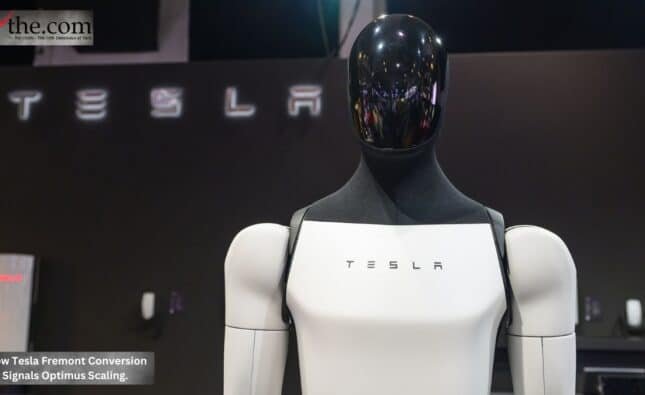
One of the most overlooked parts of Tesla’s (TSLA) strategy is not just making cars, but reusing its technology. The same system that powers FSD robotics also helps control new humanoid robots.
In this context, Hardware 3 is both helpful and limiting. It offers a huge amount of real-world data and experience, but HW3 V14 Lite also shows the gap between what’s needed for cars and what’s needed for more general robots.
The return on investment is no longer just about how many miles are driven without human help. Now it’s about how well Tesla can leverage its autonomy system across different areas without requiring much more computing power.
In controlled factory settings, inference services can mask these inefficiencies. In mobile robotic environments, latency constraints reassert themselves. That difference directly influences the long-term scalability assumptions baked into Tesla’s valuation.
Market Implications and the Software Horizon 2026
Investors have begun to parse roadmap signals more carefully, particularly around software cadence and hardware transition timing. The discussion increasingly centers on the release date of the Tesla HW3 V14 software update release date 2026, not as a product milestone, but as a strategic inflection point.
If HW3 V14 lite represents the final optimization layer for legacy computation, then 2026 becomes the boundary between incremental tuning and architectural shift. At that point, Tesla (TSLA) may need to decide whether to fully pivot FSD robotics workloads towards next-generation hardware or increase reliance on distributed inference services.
This decision has downstream effects on the timelines for humanoid robotics development. A restricted edge environment limits motion fidelity. A cloud-based system causes latency risk. Neither is ideal for generalization to the physical world.
For investors, the message is clear. Tesla’s valuation will increasingly depend on how well its computing strategy works for both self-driving cars and robotics, not just on car profits.
Forward Pressure On A Split Architecture
The path forward is becoming clearer. Hardware 3 is still useful, but it is now more specialized. HW3 v14 Lite shows both the limits and strengths of pushing software on older hardware as demands grow.
Tesla (TSLA) now uses two systems at once: one based on the car’s own hardware and another that adds inference services. This hybrid approach works for FSD robotics now, but it gets more complicated when applied to large-scale humanoid robots.
What comes next depends more on clear system design than on small software updates. The 2026 HW3v14 software release could mark not just a new version but a turning point from gradual improvements to a shift to a fully distributed robotics model. This will have a big impact on Tesla’s value in the years ahead.
Enterprise Procurement Checklist
- TSLA Outlook: Extend the operational lifespan of HW3-equipped fleets by 12-18 months via V14-lite.
- Procurement Bottleneck: New Optimus production will prioritize internal Tesla factory use before commercial sale.
- Deployment Challenge: V14-lite requires 10% more storage overhead; ensure older units have cleared cache.
- Infrastructure Redesign: Converge Tesla Supercharger data nodes to support high-speed Optimus “Brain” uploads.
- Operational Step: Monitor “Unsupervised FSD” rollouts (targeted Q4 2026) for industrial logistics impact.