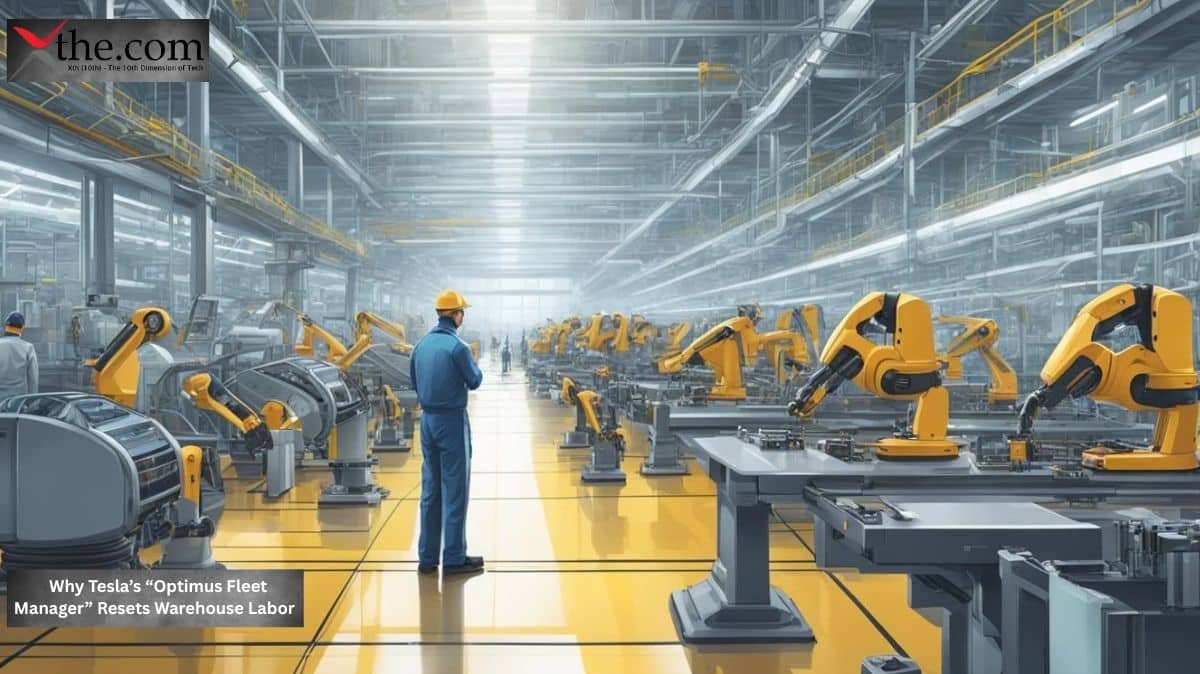
AUSTIN, Texas — Tesla is expanding its humanoid robotics operations by developing centralized coordination systems that will enable operators to control multiple autonomous robots across industrial workspaces.
The introduction of Tesla Optimus Fleet Manager robotics systems in 2026 represents a fundamental transformation that will shape warehouse automation methods during the upcoming industrial implementation of artificial intelligence.
Tesla has developed a robotic system that uses humanoid robots as components of a complete facility operations system, enabling them to collaborate through shared knowledge of their surroundings, work assignments, and operational understanding.
Why Fleet-Level Robotics Changes Automation
The development of Tesla Optimus Fleet Manager robotics in 2026 infrastructure shows that people now understand that robotic systems need coordination to achieve full scalability.
Individual robots can already perform many repetitive warehouse tasks under controlled conditions.
The operation of multiple autonomous robots requires new orchestration systems to handle their deployment across industrial sites with complex operational requirements.
Large-scale robotics operations depend on fleet management systems, which are essential components of their deployment.
Shared Spatial Awareness Becomes Essential
The development of humanoid robots for warehouse operations shows that future robots will rely on environmental awareness rather than their onboard systems for operation.
Through distributed memory networks, robots share their current positions, object positions, route improvements, and work progress information.
The system establishes a shared robotic workspace, enabling machines to learn operational spaces together rather than performing individual space-mapping tasks.
The implementation of humanoid robots with spatial memory mesh network systems will enhance efficiency throughout expansive industrial facilities.
Warehouse Automation Enters a New Phase
The growing emphasis on warehouse AI labor automation at Tesla demonstrates that industrial automation technology has advanced from stationary robotic arms and dedicated equipment to adaptable humanoid work systems.
Traditional warehouse robots operate with their capacity restricted to performing specific tasks, requiring them to repeat their work for extended periods.
Humanoid systems enable companies to perform various tasks in warehouse environments originally designed for human workers.
The system allows organizations to implement operational changes without undertaking extensive physical space upgrades.
Tesla Expands Beyond Vehicles Into Robotics Infrastructure
Tesla developed centralized fleet management systems because its executives wanted to create operational systems that would support their humanoid robot technology development.
Tesla follows the same strategy in its electric vehicle business, which requires equal importance to software network coordination and vehicle operations.
The future industrial robotics markets will use fleet orchestration systems as their main competitive advantage.
Boston Dynamics Competition Intensifies
The ongoing discussion surrounding Tesla Optimus vs Boston Dynamics Atlas reflects growing competition between different philosophies of humanoid robotics development.
Boston Dynamics has historically emphasized advanced physical mobility and highly dynamic robotic movement capabilities.
Tesla, however, appears increasingly focused on scalable deployment, manufacturing efficiency, and integrated fleet coordination infrastructure.
The two different methods the companies use to develop their technologies will yield different outcomes for industrial robotics adoption.
Amazon Faces Strategic Robotics Decisions
The emergence of debates over Amazon warehouse robotics OS decisions demonstrates that major logistics operators need to rethink their long-term robotics strategy.
Companies that operate extensive fulfillment networks face a fundamental decision: build their own robotic systems or use existing systems to handle their extensive automation needs.
The choice made here will affect how organizations manage their infrastructure and how flexible their operations can be, and will determine their expenses over time.
Robotics operating systems have the potential to reach the same level of strategic importance as cloud platforms.
Firmware Coordination Becomes Operational Infrastructure
The increasing focus on Tesla’s robot fleet firmware updates in their operational systems demonstrates how essential centralized software control systems are in extensive robot deployment environments.
The management of software consistency, together with behavioral updates, operational safety rules, and coordination logic, needs to be established through dependable infrastructure orchestration systems that operate across extensive robotic fleets.
The management of firmware updates is now an essential element that enables robots to achieve greater operational capacity.
This development shifts robotics research toward industrial systems that use software for their primary control functions.
Shared Memory Systems Improve Robot Adaptability
The broader significance of Tesla Optimus Fleet Manager’s shared spatial memory, which makes humanoid robots more plug-and-play than Boston Dynamics Atlas, lies in reducing deployment complexity for industrial customers.
The use of shared environmental intelligence enables robots to learn new sites faster than they would if they learned each site separately.
The implementation of shared spatial memory systems will enhance both warehouses’ and manufacturing facilities’ ability to deploy humanoid robots at scale.
The commercial value of robotics fleets grows significantly with this development.
Amazon’s Robotics Strategy Faces Pressure
The growing debate surrounding why Amazon is forced to choose between building its own warehouse robot or adopting Tesla’s robotics operating system reflects broader competitive tensions across industrial automation markets.
Amazon’s existing warehouse robotics systems face challenges from advanced external robotics systems, making it economically unfeasible to develop entirely proprietary methods.
The decision now appears to follow the traditional platform selection problem observed in both cloud computing platforms and mobile operating systems.
Control of the robotics software ecosystem will evolve into a crucial strategic asset for organizations.
Humanoid Robotics Expand Beyond Demonstration Phase
The rapid progress of fleet coordination systems demonstrates that humanoid robots have moved beyond the testing phase and are now productive components of industrial systems.
The challenge is no longer merely building robots capable of walking or lifting objects.
The present situation requires organizations to develop autonomous workforces that fulfill their operational needs through systems that achieve both economic viability and operational efficiency.
This represents a crucial development point for the robotics field.
Conclusion: Fleet Coordination Becomes the Core Robotics Layer
The Tesla Optimus Fleet Manager robotics system, which Tesla plans to launch in 2026, will create a fundamental shift in industrial automation operations.
The development of humanoid robots with spatial memory capabilities and mesh network systems and their implementation in warehouse AI labor systems will enable Tesla to achieve its operational goals.
The operational growth of Tesla’s robot fleet firmware update logistics systems, which compete with Tesla Optimus and Boston Dynamics Atlas, shows how quickly industrial robotics infrastructure advances.
As organizations evaluate how Tesla Optimus Fleet Manager’s shared spatial memory makes humanoid robots more plug-and-play than Boston Dynamics Atlas and debate why Amazon is forced to choose between building its own warehouse robot or adopting Tesla’s robotics operating system, the future of warehouse automation may increasingly revolve around robotics operating ecosystems rather than individual robots themselves.
Source: Tesla Blog