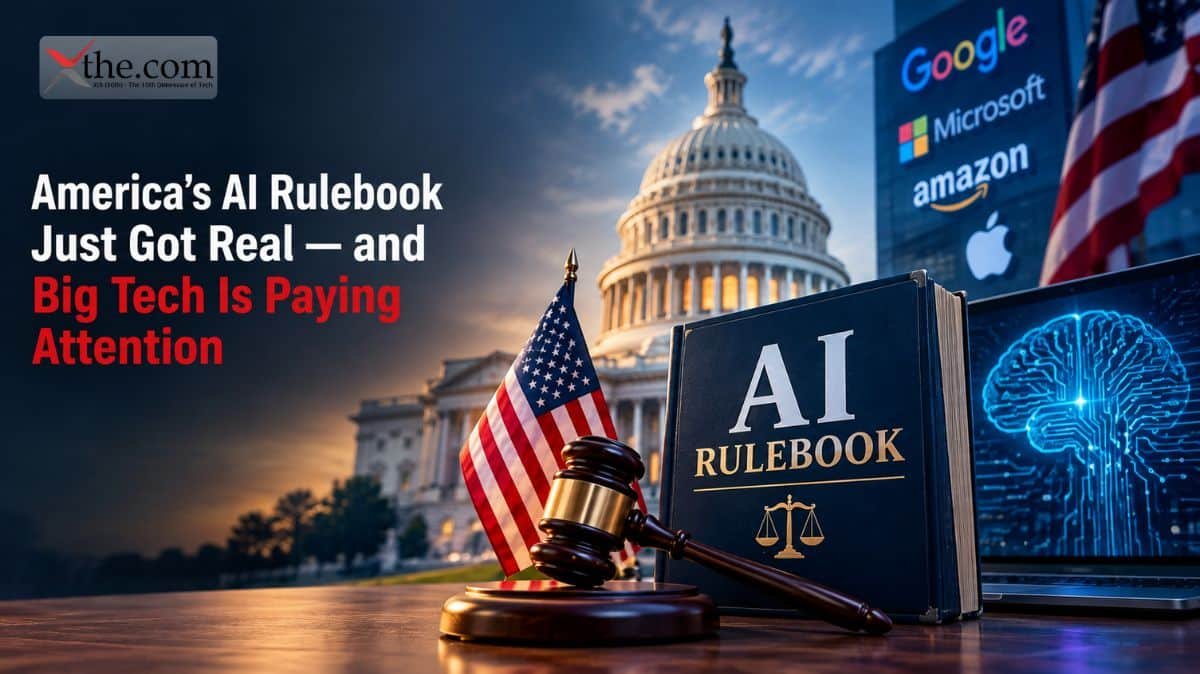
For years, the United States talked about regulating artificial intelligence the way people talk about going to the gym “someday.” Lots of noise, not much action. That changed this summer — and if you build, buy, or simply use AI tools in America, the ground just shifted under your feet.
Illinois Drops the Hammer
On July 6, Governor J.B. Pritzker signed the Artificial Intelligence Safety Measures Act, making Illinois the first state in the country to require annual independent third-party safety audits of the most powerful AI models. Read that again: not self-reported checklists, not pinky promises from Silicon Valley — actual outside auditors poking through a frontier lab’s safety practices.
The law targets the biggest players, companies pulling in more than $500 million a year that develop models above a set computing-power threshold. Those companies now have to publish safety frameworks, file transparency reports before deploying new models, and report critical safety incidents within 72 hours. There are whistleblower protections baked in, and the state’s attorney general can hit violators with civil penalties of up to $3 million per violation.
California and New York passed AI safety laws in 2025, but they mostly demanded disclosure. Illinois went a step further — it demands verification. Lawyers following the space describe it as the difference between a restaurant posting its own health grade and a health inspector actually walking into the kitchen.
The FTC’s Warning Shot
Washington isn’t sitting this one out either. On July 1, the Federal Trade Commission proposed a policy statement arguing that AI companies can violate federal deception laws when they quietly “steer” their systems’ outputs away from what users reasonably expect. In plain English: if your chatbot secretly pushes an agenda, the FTC says that’s a deceptive practice — full stop, no new law required.
That matters because it gives regulators a tool they can use today, while Congress continues to argue about tomorrow. The nearly 270-page federal AI framework bill floating around the House — which would override state laws for three years in exchange for national transparency and audit rules — is widely expected to stall. Industry lobbyists dislike it, and Democratic AI task force leaders came out against it within hours of its release.
So the state-by-state patchwork isn’t going anywhere. For businesses, that means compliance teams are now juggling Illinois audits, Colorado’s new chatbot safety law protecting minors, and California’s disclosure regime simultaneously.
The White House Is Spending, Too
Here’s the twist: while regulators tighten the screws, the administration is also writing enormous checks. The White House has committed more than $5 billion across at least 15 federal agencies to the “Genesis Mission,” an effort to weave AI into American scientific research — from energy and semiconductors to life sciences and defense. A companion report from the Office of Science and Technology Policy frames it as nothing less than “a new golden age of science.”
The administration also launched GOLD EAGLE in July, a public-private clearinghouse run by the Treasury, Homeland Security, and Defense departments that uses frontier AI models to spot software vulnerabilities in critical infrastructure and push fixes out faster.
The strategy is obvious once you see it laid out: regulate the risks hard, but fund the opportunity even harder. Carrot and stick, trillion-dollar edition.
What This Means for Ordinary Americans
Most people will never read a safety audit or an FTC policy statement. So why should you care?
Because these fights decide what the AI in your pocket is allowed to do. Colorado’s Chatbot Safety Act, signed July 1, forces companies to build baseline protections for every user and stronger guardrails for anyone under 18. Illinois’s incident-reporting rule means that when something goes badly wrong with a frontier model, the public will hear about it within days, not months. And the FTC’s stance means a company that rigs its AI’s answers can be treated like a company that rigs its advertising.
There’s also a quieter effect: jobs and investment follow regulatory clarity. Companies deciding where to build AI data centers and research hubs now have to weigh Illinois-style audit states against hands-off states. That tug-of-war will shape local economies for a decade.
The Business Scramble Has Already Started
Spend ten minutes talking to startup lawyers in Austin or San Francisco and you’ll hear the same story: clients who ignored AI compliance for two years are suddenly booking emergency calls. A mid-sized company deploying a customer-facing chatbot now has to map which state laws apply to it, decide whether its vendor contracts transfer enough risk, and figure out if its model provider will even pass an Illinois-style audit. Big cloud and AI vendors smell opportunity — several are quietly packaging “compliance-ready” tiers, effectively selling regulatory survival as a subscription feature. Smaller players without legal departments face a harder choice: pay up, restrict where they do business, or gamble that enforcement stays slow. History says enforcement starts slow and then arrives all at once.
What to Watch Next
Three things over the next six months. First, whether the federal framework bill gets a committee vote or quietly dies — that decides if the state patchwork hardens into permanence. Second, the first Illinois audit cycle, which will show whether “independent audit” means rigorous inspection or expensive theater. And third, whether the FTC actually brings an enforcement case under its new steering theory. One big case would rewrite every AI company’s playbook overnight.
America spent a decade letting AI grow wild. The age of the shrug is over — the age of the rulebook has started. Whether the rules keep up with the tech is the trillion-dollar question.
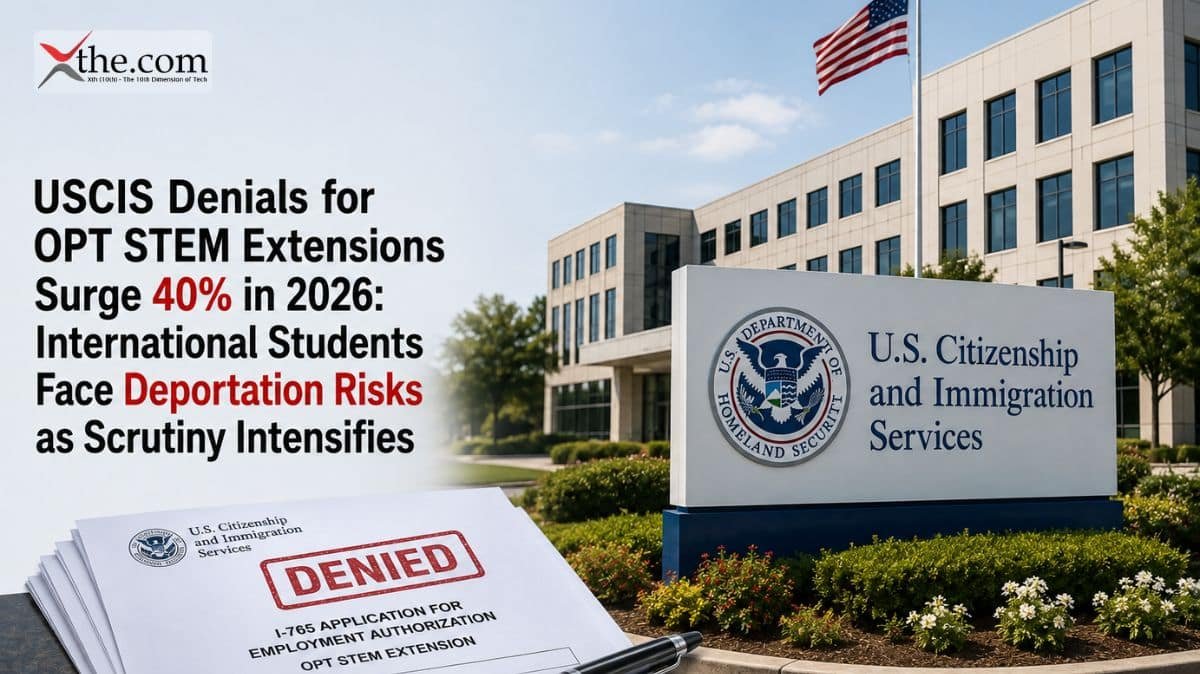
Optional Practical Training — the work authorization program that allows international students to remain in the United States for up to three years after graduation — has become a minefield of compliance requirements in 2026. Data obtained by the American Immigration Lawyers Association (AILA) through a Freedom of Information Act request reveals that USCIS denied 18,400 OPT STEM extension applications in the first seven months of 2026, a 40% increase over the same period in 2025. For the 250,000 international students currently on STEM OPT, the denial surge represents an existential threat to their American careers and legal status.
Why Denials Are Increasing
USCIS has not changed the statutory requirements for STEM OPT — the program still allows 24-month extensions for students with degrees in science, technology, engineering, and mathematics fields. What has changed is enforcement intensity and documentation scrutiny.
Reason 1: Training Plan Deficiencies
Form I-983 — the training plan agreement between student, employer, and university — has become the primary denial trigger. USCIS adjudicators are now rejecting applications for seemingly minor discrepancies:
Vague learning objectives: Phrases like “gain practical experience” or “contribute to team projects” are deemed insufficient. Adjudicators want specific, measurable skills the student will acquire.
Employer signature issues: Electronic signatures not using Adobe Sign or DocuSign are flagged. Hand-signed forms with illegible signatures trigger Requests for Evidence (RFEs).
Mentor qualification gaps: The designated mentor must hold a degree in a STEM field related to the student’s training. A software engineering student supervised by a business analyst with an MBA — even at a tech company — now faces denial.
Reason 2: Employer Legitimacy Challenges
USCIS has dramatically increased scrutiny of small employers and third-party consulting placements. Companies with fewer than 10 employees, those founded within the past two years, or those with no physical office (fully remote operations) are presumptively suspect.
The “employer-employee relationship” requirement — long a theoretical concept — is now aggressively enforced. If the student works at a client site rather than the employer’s office, USCIS demands extensive documentation proving the employer (not the client) directs and controls the work. Staffing agencies, body shops, and consulting firms that place students at Fortune 500 clients are facing blanket suspicion.
Reason 3: Unemployment Day Violations
STEM OPT allows 150 days of aggregate unemployment across the initial 12-month OPT and 24-month STEM extension. However, USCIS is now cross-referencing SEVIS employment records with state unemployment insurance databases and tax filings. Students who reported employment start dates before actually receiving job offers, or who remained in SEVIS as “employed” during unpaid training periods, are being caught in data mismatches.
Reason 4: Degree Field Mismatch
The expanded STEM degree list — now 580 CIP codes — has created confusion. A student with a Master’s in Financial Engineering (CIP 52.0803) is clearly STEM-eligible. But a student with a Master’s in Business Administration with a concentration in Business Analytics (CIP 52.1301) faces ambiguity. USCIS is interpreting “related field” narrowly, denying extensions where the job title does not closely match the degree name.
The Human Cost
Behind every denial statistic is a disrupted life.
Priya Sharma, 26, Austin, Texas: A University of Texas computer science graduate, Priya received her STEM OPT denial in June after working as a data engineer at a 12-person startup for 18 months. The denial cited an unsigned page 3 of her I-983 form — a technicality. Her 60-day grace period expires on August 28. She has job offers from Google and Meta but cannot accept them without valid work authorization. “I have $78,000 in student loans and a lease through May 2027,” she said. “If I leave, my American dream ends. If I stay illegally, I can never return.”
Wei Zhang, 28, Seattle, Washington: A University of Washington electrical engineering graduate employed at a semiconductor firm, Wei received an RFE questioning whether his job — testing chip designs — qualified as “training” since he performed identical work to American employees. His employer spent $15,000 on immigration attorneys to respond. The case remains pending after 4 months. “I cannot change jobs, cannot travel home for my grandmother’s funeral, and cannot focus at work because every email from USCIS makes my heart stop,” he said.
What the Data Shows
AILA’s analysis of the 18,400 denials reveals patterns:
47% of denials cited training plan deficiencies (Form I-983)
23% of denials challenged employer legitimacy or employer-employee relationship
18% of denials found unemployment day violations
12% of denials determined the job was not sufficiently related to the STEM degree
The remaining denials involved criminal background issues, prior status violations, or administrative errors.
Geographically, students in California (22% of denials), Texas (16%), and New York (12%) faced the highest denial rates — reflecting larger international student populations and higher concentrations of small tech employers that trigger scrutiny.
University Responses
Major universities are scrambling to protect their students. MIT hired four additional international student advisors and implemented automated I-983 pre-review software that flags common errors before submission. Stanford expanded its free legal clinic from 20 hours to 60 hours weekly, though wait times still stretch three weeks. The University of Texas at Austin — with over 6,000 international students — launched an emergency fund to cover attorney fees for students facing denials.
Smaller institutions lack these resources. Regional state universities in the Midwest and South, which have aggressively recruited international students to offset declining domestic enrollment, often have one advisor for every 800 students. These students are disproportionately affected by denials because they lack pre-submission support.
What Students Must Do to Avoid Denial
Treat Form I-983 Like a Legal Contract: Every field must be specific. Instead of “learn software development,” write “develop Python-based data pipelines using Apache Spark, gaining proficiency in distributed computing frameworks under direct supervision of a senior engineer with an M.S. in Computer Science.”
Verify Your Mentor’s Credentials: Confirm your designated mentor holds a STEM degree. Request a copy of their diploma or transcript. If they do not qualify, ask your employer to assign a different mentor immediately.
Document Employment Rigorously: Keep pay stubs, offer letters, W-2s, and timesheets. If you change jobs, report the new employer to your university’s international office within 10 days. Do not let even one day pass without reported employment.
Avoid High-Risk Employers: Startups with no physical office, staffing agencies that place you at client sites, and companies with fewer than 5 employees face heightened scrutiny. If you must work for a small employer, ensure they have a dedicated office and direct supervision structure.
File Early: Submit your STEM extension application 90 days before your current OPT expires. Early filing allows time to respond to RFEs without falling out of status.
Consult an Attorney Before Filing: The $2,000-$3,000 cost of an immigration attorney reviewing your application is trivial compared to the cost of deportation and career interruption.
Policy Debate
The OPT program has always existed in a political gray area. Created by regulation rather than statute, it has survived multiple legal challenges and political attacks. The Trump administration attempted to restrict OPT in 2020; the Biden administration maintained the program but increased oversight.
Senator Tom Cotton and Representative Andy Biggs have introduced legislation to eliminate OPT entirely, arguing it displaces American graduates. Conversely, the Chamber of Commerce and tech industry groups defend OPT as essential for filling STEM positions that American universities cannot supply domestically.
“OPT is not charity — it is workforce development,” said Todd Schulte, president of FWD.us. “International students who train at American companies often found startups, patent innovations, and create jobs for US citizens. Kicking them out is economic self-sabotage.”
The Bottom Line
For the 250,000 students on STEM OPT, 2026 is a year of heightened vigilance. The 40% denial surge is not a statistical anomaly — it reflects a deliberate shift toward stricter enforcement that shows no signs of reversing. Students who treat compliance as an afterthought risk losing everything they have invested: tens of thousands in tuition, years of study, and the careers they came to America to build.
The advice is simple but urgent: document everything, file early, verify every detail, and seek legal counsel before submission. In the current environment, there is no margin for error.
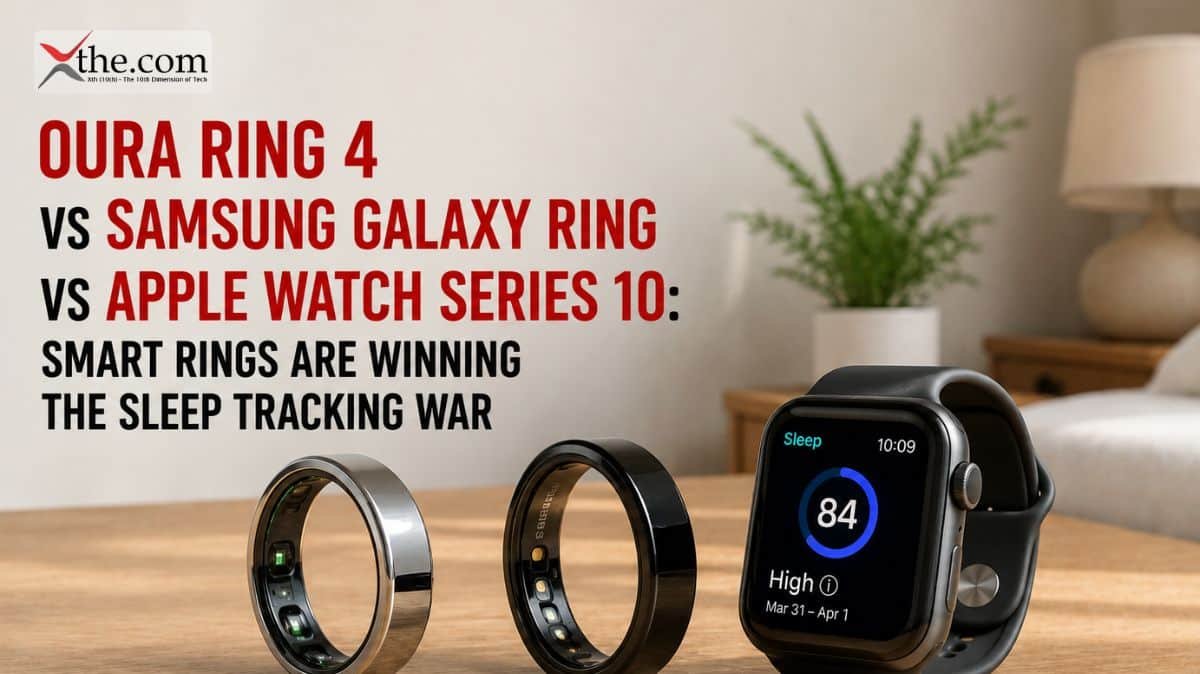
The wearable technology market is experiencing a quiet revolution. While Apple, Samsung, and Garmin dominate wrist-worn devices, a new category — smart rings — is capturing the attention of sleep scientists, biohackers, and health-conscious Americans who find watches uncomfortable for overnight wear. The Oura Ring 4, released in March 2026, and Samsung’s Galaxy Ring, launched in June, have both surpassed the Apple Watch Series 10 in clinical sleep tracking accuracy according to peer-reviewed studies published this month in the Journal of Clinical Sleep Medicine.
Why Smart Rings Beat Watches for Sleep
The physics is simple: a ring sits snugly against the palmar digital artery on the finger, where blood vessels are closer to the skin surface than on the wrist. This proximity yields stronger photoplethysmography (PPG) signals — the optical technique wearables use to measure heart rate, heart rate variability (HRV), and blood oxygen saturation.
Dr. Rebecca Robbins, a sleep researcher at Harvard Medical School and co-author of the study, explained: “We compared the Oura Ring 4, Samsung Galaxy Ring, and Apple Watch Series 10 against polysomnography — the gold standard sleep study conducted in labs. The Oura Ring achieved 92% agreement with polysomnography for sleep stage classification. The Galaxy Ring hit 89%. The Apple Watch managed 81%. That 10-11 percentage point gap is clinically significant.”
Oura Ring 4: The Premium Choice
The Oura Ring 4, priced at $349 plus a $6 monthly subscription, represents the fourth generation of the category pioneer. The titanium ring weighs just 4 grams — lighter than a standard wedding band — and comes in six finishes including brushed gold and matte black.
Key Upgrades Over Gen 3:
Dual-LED PPG sensors with green and infrared wavelengths for more accurate HRV during sleep
Temperature sensing with 0.1°C precision, enabling illness detection 1-2 days before symptoms appear
7-day battery life — more than double the Apple Watch’s 18-hour endurance
Stress resilience score combining HRV, temperature trends, and activity data to predict burnout risk
The Oura app generates a “Readiness Score” each morning (0-100) based on sleep quality, recovery, and physiological stress. Users report that the score genuinely predicts their subjective energy levels — a validation that most wearables fail to achieve.
However, Oura requires a $6 monthly subscription ($72 annually) to access full data analytics. Without it, users see only basic sleep duration and heart rate. This subscription model has drawn criticism, though Oura argues the ongoing revenue funds continuous algorithm improvements.
Samsung Galaxy Ring: The Ecosystem Play
Samsung’s Galaxy Ring, priced at $399 with no subscription required, is the most serious Oura competitor to date. It integrates seamlessly with Samsung Health, Galaxy Watches, and Galaxy smartphones — creating a multi-device health tracking ecosystem that no other manufacturer matches.
Galaxy Ring Features:
AI Energy Score using Samsung’s on-device Galaxy AI to analyze sleep, activity, and stress patterns
Automatic workout detection when paired with a Galaxy Watch — the ring handles recovery metrics while the watch captures GPS and pace
Gesture controls for Samsung smartphones — double-tap to silence alarms or trigger camera shutter
10-day battery life — the longest of any health wearable on the market
The Galaxy Ring’s sleep staging accuracy (89% vs polysomnography) is slightly behind Oura but ahead of every wrist-worn competitor. Where Samsung wins is ecosystem integration: sleep data automatically adjusts your Galaxy Watch’s morning alarm to wake you during light sleep, and Samsung Health correlates sleep quality with meal timing from Samsung Food.
Apple Watch Series 10: Still the Best Smartwatch
The Apple Watch Series 10 remains the best overall smartwatch — for daytime use. Its new sleep apnea detection feature, FDA-cleared in July, is genuinely groundbreaking for identifying undiagnosed breathing disorders. But for pure sleep tracking, the watch faces inherent limitations.
The wrist is a noisier signal environment than the finger. Arm movement during sleep creates motion artifacts. The watch’s 18-hour battery forces most users to charge overnight at least twice weekly, missing sleep data collection entirely. And many users find wearing a 40-45mm watch to bed uncomfortable, particularly side sleepers.
Apple’s sleep stage accuracy (81%) is not poor — it is actually the best among wrist-worn devices. But the gap to smart rings is widening as ring sensor technology improves.
Clinical Validation Matters
The Journal of Clinical Sleep Medicine study is significant because most wearable accuracy claims come from manufacturer-funded research. This independent evaluation, conducted across 240 participants over 30 nights at Stanford Sleep Medicine Center, controlled for age, BMI, skin tone, and sleep disorders.
Key findings beyond overall accuracy:
Deep sleep detection: Oura Ring 4 (88% accuracy), Galaxy Ring (85%), Apple Watch (74%)
REM sleep detection: Oura Ring 4 (90%), Galaxy Ring (87%), Apple Watch (79%)
Sleep onset latency: Oura Ring 4 (±4 minutes), Galaxy Ring (±7 minutes), Apple Watch (±12 minutes)
Heart rate variability: Oura Ring 4 (±3ms), Galaxy Ring (±5ms), Apple Watch (±11ms)
For athletes and biohackers who use HRV to guide training intensity, the ring’s precision is transformative. Overtraining syndrome — which affects 10% of competitive amateur athletes — can be predicted 48-72 hours in advance using ring-derived HRV trends.
The Market Shift
Smart ring sales have exploded. Oura reported 2.4 million rings sold in the first half of 2026, up 180% from the same period in 2025. Samsung has sold 800,000 Galaxy Rings since June. Apple is reportedly prototyping a “Apple Ring” for 2027 release, though the company has not confirmed this.
The trend reflects a broader consumer desire for “invisible health monitoring” — technology that collects data passively without demanding attention. Smart rings have no screens, no notifications, and no temptation to check emails at 2 AM. They simply observe and report.
Pricing and Value
Table
Device
Price
Subscription
Battery
Sleep Accuracy
Best For
Oura Ring 4
$349
$6/month
7 days
92%
Sleep optimization, HRV tracking
Galaxy Ring
$399
None
10 days
89%
Samsung ecosystem users
Apple Watch S10
$429
None
18 hours
81%
Daytime smartwatch features
For dedicated sleep tracking, the Oura Ring 4 offers the best accuracy but requires ongoing payment. The Galaxy Ring provides nearly equivalent performance with no subscription and superior battery life. The Apple Watch Series 10 is the wrong tool if sleep is your primary concern — buy it for everything else, and add a ring if sleep data matters.
Who Should Buy a Smart Ring?
Buy the Oura Ring 4 if you:
Prioritize the most accurate sleep and recovery data available
Are willing to pay $72 annually for full analytics
Want illness prediction through temperature tracking
Use Whoop, Garmin, or Apple Watch during the day and need dedicated sleep data
Buy the Samsung Galaxy Ring if you:
Own a Samsung Galaxy smartphone or watch
Refuse to pay subscriptions for health data
Want the longest battery life possible
Value gesture controls and ecosystem integration
Keep the Apple Watch Series 10 if you:
Need comprehensive daytime health features (ECG, blood oxygen, fall detection)
Want FDA-cleared sleep apnea screening
Are already embedded in the Apple ecosystem
Find rings uncomfortable or worry about losing them
The Verdict
Smart rings have legitimately surpassed smartwatches for sleep tracking. The Oura Ring 4 and Samsung Galaxy Ring deliver clinical-grade data from a device you forget you’re wearing. For the 50 million Americans who struggle with sleep quality, this technology offers actionable insights that wrist-worn devices simply cannot match. The Apple Watch remains the best general-purpose health wearable, but for sleep-specific optimization, 2026 is the year of the ring.
The Centers for Disease Control and Prevention issued a national health alert on Wednesday warning that supplies of respiratory syncytial virus (RSV) vaccines are critically low at pharmacies and pediatric clinics nationwide. The shortage, which affects both the infant monoclonal antibody Beyfortus (nirsevimab) and the adult vaccines Abrysvo and Arexvy, comes just weeks before the September onset of RSV season — a period that hospitalizes 58,000 American children under 5 and 177,000 adults over 65 annually.
Why the Shortage Is Happening
The shortage stems from a perfect storm of manufacturing delays, unexpectedly high demand, and distribution bottlenecks.
Manufacturing Delays: Sanofi, which manufactures Beyfortus in partnership with AstraZeneca, reported a contamination issue at its Lyon, France production facility in June that forced a 6-week shutdown. The facility produces 80% of the global supply. While production has resumed, the backlog cannot be cleared before peak season.
Demand Surge: Pediatricians and parents, alarmed by severe RSV seasons in 2022 and 2023 that overwhelmed children’s hospitals, have rushed to vaccinate infants earlier than usual. CDC data shows 340,000 doses of Beyfortus administered in July 2026 — triple the July 2025 figure. The surge exhausted the limited supply that manufacturers had allocated for early vaccination campaigns.
Distribution Inequity: Rural pharmacies and community health centers report receiving less than 20% of their ordered doses, while large hospital systems in major cities have maintained adequate stock. This geographic disparity leaves low-income and rural families most vulnerable.
What RSV Does
Respiratory syncytial virus is often dismissed as “just a cold,” but it is the leading cause of infant hospitalization in the United States. For babies under 6 months, RSV can cause bronchiolitis — inflammation of the small airways — leading to breathing difficulty, oxygen deprivation, and mechanical ventilation. In adults over 65, RSV triggers pneumonia and exacerbates chronic heart and lung conditions, with a mortality rate of 4-8% among hospitalized patients.
The 2022-2023 RSV season was historically severe, killing an estimated 6,000-10,000 Americans and sending pediatric ICUs into crisis mode with triage protocols and cancelled elective surgeries.
CDC Priority Recommendations
With insufficient supply for universal vaccination, the CDC has issued tiered prioritization guidance:
Highest Priority (Reserve First Doses):
Infants under 6 months born during RSV season (October through March)
Premature infants (born before 32 weeks gestation) regardless of age
Infants with chronic lung disease, congenital heart defects, or severe immunodeficiency
Adults over 75 with chronic heart, lung, or kidney disease
Secondary Priority (Administer If Supply Allows):
Infants 6-12 months without risk factors
Adults 60-74 with chronic medical conditions
Healthcare workers in neonatal and pediatric units
Defer If Possible:
Healthy adults 60-74 without chronic conditions
Infants over 12 months in low-incidence geographic areas
Pharmacy and Clinic Responses
CVS Health and Walgreens, which together operate 18,000 pharmacy locations, have implemented appointment-only RSV vaccination and are limiting doses to CDC priority groups. CVS spokesperson Amy Thibault stated: “We are working with manufacturers hourly to secure additional inventory, but we must allocate fairly based on medical need.”
Walmart pharmacies in rural areas have been particularly hard hit, with some locations in Montana, Wyoming, and North Dakota reporting zero available doses since early August. The Federal Retail Pharmacy Program is attempting to redirect surplus urban inventory to these underserved areas, but logistical challenges — cold chain requirements, short shelf life, and state-level licensing variations — complicate redistribution.
Manufacturer Statements
Sanofi issued a statement acknowledging the shortage and promising “maximum production acceleration.” The company expects to deliver 1.2 million additional doses by October 15 — enough to cover priority infants but insufficient for the broader eligible population. AstraZeneca is exploring emergency use authorization for a half-dose regimen that could stretch supply, though pediatricians express concern about reduced efficacy.
GSK, manufacturer of Arexvy for adults, reported no manufacturing disruptions but confirmed that wholesale distributors underestimated demand by 40%. The company is airlifting inventory from European warehouses to American distribution centers.
What Parents Should Do
If you have an infant or are expecting a baby before March 2027:
Call Your Pediatrician Now: Do not wait for September. Ask to be placed on a priority waiting list and inquire about alternative locations that may have supply.
Consider Maternal Vaccination: Pregnant women between 32 and 36 weeks gestation can receive the Abrysvo vaccine, which passes antibodies to the fetus. This provides infant protection even if Beyfortus is unavailable after birth.
Practice Rigorous Hygiene: Wash hands frequently, limit infant exposure to crowded indoor spaces during peak season, and ensure all family members are current on flu and COVID-19 vaccinations to reduce overall respiratory illness burden.
Know Warning Signs: Rapid breathing, chest retractions (skin pulling between ribs), blue lips, and refusal to feed are emergency symptoms requiring immediate hospitalization.
What Seniors Should Do
Adults over 60 should contact their primary care physician or pharmacy immediately. If adult RSV vaccine is unavailable, ensure you are current on pneumococcal and influenza vaccines, which reduce the severity of secondary infections if RSV is contracted.
Political and Policy Implications
The shortage has reignited debate about domestic pharmaceutical manufacturing. Senator Elizabeth Warren called for the Defense Production Act to be invoked for pediatric vaccine production, arguing that “relying on French factories for American babies’ health security is unacceptable.” The Biden administration has not yet taken that step but has authorized emergency importation of European-labeled Beyfortus doses, which will require relabeling and FDA verification before distribution.
The shortage also highlights ongoing challenges with the Vaccines for Children (VFC) program, which provides free vaccines to uninsured and underinsured children. VFC funding has been flat since 2022 despite inflation and expanded eligibility, leaving program administrators scrambling to cover the cost of scarce doses.
Long-Term Outlook
RSV vaccine technology is advancing rapidly. Moderna and Pfizer are developing combination COVID-flu-RSV mRNA vaccines that could simplify immunization schedules by 2028. Sanofi is building a $750 million US manufacturing facility in Massachusetts, expected online in 2027, that will eliminate foreign dependence for Beyfortus production.
For this season, however, American families face difficult choices and anxious waits. The shortage is a stark reminder that even in 2026, global supply chains remain fragile — and children’s health hangs in the balance.
China’s Ministry of Foreign Affairs announced sweeping sanctions against twelve American defense contractors on Wednesday, freezing all assets held within Chinese jurisdiction and prohibiting any organization or individual in China from conducting business with the targeted firms. The move, described by Beijing as “necessary countermeasures against American arms sales to Taiwan,” represents the most aggressive economic retaliation between the world’s two largest economies since the 2022 semiconductor export controls.
Boeing Defense — Military aircraft and satellite division
General Dynamics — Abrams tanks and nuclear submarines
L3Harris Technologies — Communications and electronic warfare
Huntington Ingalls Industries — Aircraft carrier construction
Leidos — Defense IT and intelligence systems
CACI International — Cybersecurity and intelligence
Science Applications International Corp (SAIC) — Engineering and technology
Amentum — Military base operations and logistics
Vectrus — Army installation management
The sanctions freeze any property, securities, bank accounts, or intellectual property licenses held by these companies or their subsidiaries in China, Hong Kong, and Macau. Chinese citizens and businesses are barred from providing services, technology, or raw materials to these firms.
Immediate Financial Impact
While none of these companies generate significant revenue from Chinese military sales — US law already prohibits most defense exports to China — the sanctions bite in unexpected ways.
Boeing Defense faces complications through its commercial aviation division, which sells roughly 25% of its aircraft to Chinese airlines. While the sanctions technically target only Boeing’s defense unit, Chinese regulators have already signaled “heightened safety inspections” for Boeing 737 MAX and 787 deliveries — a clear retaliatory move against the parent company.
Lockheed Martin and Raytheon maintain small supply chain operations in China for non-military electronics components. These will need immediate relocation, costing an estimated $200-400 million in restructuring expenses. More critically, both companies source rare earth elements — 80% of which are processed in China — for precision-guided munitions. Alternative supply chains in Australia and Vietnam cannot scale quickly enough to prevent production delays.
Stock Market Reaction
Defense stocks initially dipped 2-4% on the news before recovering as investors realized the direct revenue impact is minimal. Lockheed Martin closed down 1.2%, Raytheon fell 1.8%, and Northrop Grumman declined 0.9%. Boeing, with its commercial exposure, dropped 3.4%.
Paradoxically, the sanctions may benefit these companies long-term. The Pentagon is expected to accelerate “friend-shoring” initiatives, directing additional funding to build domestic rare earth processing capabilities. The Defense Production Act has already been invoked to subsidize Lynas Rare Earths’ Texas facility, and additional grants for MP Materials’ California mine are likely.
Rare Earth Vulnerability Exposed
The sanctions highlight a critical American vulnerability: dependence on Chinese rare earth processing. Neodymium, dysprosium, and terbium are essential for F-35 fighter jets, Tomahawk cruise missiles, and precision-guided artillery. China processes 87% of global rare earths and has previously threatened export restrictions.
“This is a wake-up call we should have heeded a decade ago,” said Senator Tom Cotton, ranking member of the Senate Armed Services Committee. “We cannot build the weapons to deter China using Chinese materials. This is a national emergency disguised as a trade dispute.”
The Pentagon’s Strategic Materials Reserve currently holds only 6 months of rare earth supplies for defense production. Legislation introduced Wednesday would mandate a 2-year strategic reserve and $8 billion in subsidies for domestic mining and processing.
Taiwan Context
The sanctions follow the US approval of $380 million in new military aid to Taiwan announced last week, including Harpoon anti-ship missiles and early warning radar. China views Taiwan as a breakaway province and has vowed “reunification” by 2030 if necessary.
Chinese state media has intensified coverage of military exercises near Taiwan, with the People’s Liberation Army Navy conducting “blockade rehearsals” involving 68 vessels and 156 aircraft. While no shots have been fired, the exercises practice the exact quarantine scenario that would cripple Taiwan’s economy without triggering a full American military response.
Impact on US-China Trade
Broader US-China trade relations are deteriorating rapidly. Bilateral trade volume fell 12% in Q2 2026 compared to the same period in 2025. American agricultural exports to China — soybeans, pork, and wheat — have declined 18% as Chinese buyers shift to Brazilian and Argentine suppliers.
Tesla, Apple, and NVIDIA — American companies heavily dependent on Chinese manufacturing and consumers — face increasing regulatory harassment. Chinese customs officials have delayed Tesla Model Y shipments for “safety inspections” and opened antitrust probes against Apple’s App Store pricing.
What Americans Should Watch
Gasoline Prices: If China restricts rare earth exports broadly, not just to defense firms, electric vehicle motor production and wind turbine manufacturing could face cost spikes. Oil prices are already elevated due to Middle East tensions.
401(k) and Investments: Mutual funds holding Boeing, Apple, or NVIDIA face headwinds. Consider diversifying into domestic-focused small-cap funds if US-China decoupling accelerates.
Consumer Electronics:iPhone and MacBook prices could rise 8-12% if Apple is forced to accelerate supply chain relocation from China to India and Vietnam.
National Service Debate: The sanctions have reignited discussions about reinstating selective service registration requirements and expanding domestic manufacturing apprenticeships.
The Bottom Line
China’s sanctions are largely symbolic in direct financial terms — American defense contractors do not sell to Beijing. But the move signals Beijing’s willingness to weaponize its economic leverage, particularly rare earth dominance, in ways that could disrupt American military production, commercial aviation, and consumer technology. The question is no longer whether US-China decoupling will happen, but how fast and how painfully.
The US dollar index (DXY) fell to 98.4 on Wednesday, its lowest level since August 2023, while gold futures shattered records by climbing past $2,800 per ounce for the first time in history. The simultaneous moves — currency weakness and precious metal strength — signal deep unease among global investors about American fiscal health, political instability ahead of the November midterm elections, and the Federal Reserve’s increasingly uncertain monetary policy path.
Why the Dollar Is Falling
The dollar’s decline accelerated after the Bureau of Economic Analysis revised Q2 2026 GDP growth downward from 2.1% to 1.4% — well below the 2.5% consensus forecast. Consumer spending, which drives 68% of the US economy, grew at just 0.8% annualized, the weakest reading since the pandemic recovery. Credit card delinquencies have risen for 14 consecutive months, and auto loan defaults are at their highest level since 2010.
“The consumer is tapped out,” said Diane Swonk, chief economist at KPMG. “Savings rates have collapsed from 8% in 2021 to 2.3% now. People are borrowing to pay for groceries. That is not sustainable, and currency markets are pricing in a harder landing than equity markets acknowledge.”
Additionally, foreign central banks are diversifying away from dollar reserves at the fastest pace since the 1970s. China reduced its Treasury holdings by $78 billion in Q2. Saudi Arabia began accepting yuan for oil shipments to Asian customers. Even traditional American allies like Japan and South Korea have slowed dollar purchases, with the Bank of Japan intervening in currency markets to strengthen the yen against the dollar for the first time since 2022.
Gold’s Historic Rally
Gold’s surge to $2,820 per ounce represents a 34% gain since January 2026. The rally has been driven by a perfect storm of factors:
Central Bank Buying: National banks purchased 1,200 metric tons of gold in the first half of 2026 — the highest six-month total on record. China, Russia, India, and Turkey are aggressively building gold reserves as alternatives to dollar-denominated assets.
ETF Inflows: American investors poured $18.3 billion into gold ETFs in July and August alone. The SPDR Gold Shares ETF (GLD) saw its largest single-month inflow since the 2008 financial crisis.
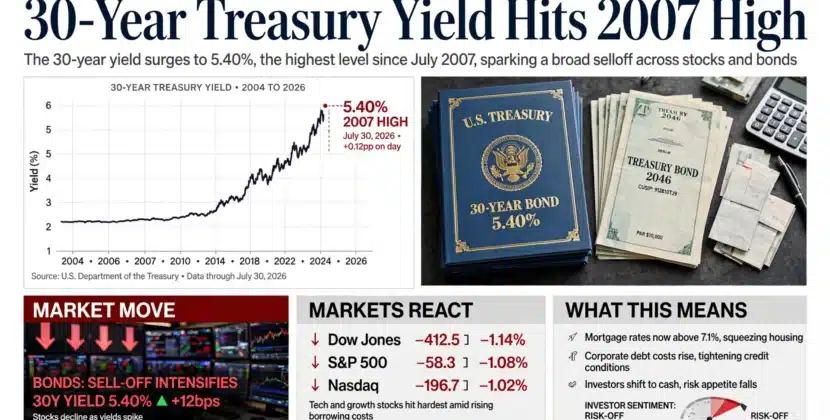
Real Yields Turning Negative: With inflation at 3.4% and 10-year Treasury yields at 3.84%, real returns on government bonds are negative. Gold, which pays no yield but preserves purchasing power, becomes relatively more attractive.
Geopolitical Risk Premium: The Israel-Iran conflict, ongoing tensions in the South China Sea, and uncertainty about the November US midterms have all increased demand for non-sovereign stores of value.
“Gold is doing what it always does when trust in fiat currencies erodes,” said Peter Schiff, chief economist at Euro Pacific Capital. “$2,800 is not the ceiling. If the Fed is forced to cut aggressively while inflation remains sticky, $3,000 gold is a conservative target.”
Impact on American Consumers
A weaker dollar is not abstract — it hits wallets directly. Imported goods become more expensive. The trade-weighted dollar decline has already pushed gasoline prices up 8% since June, as crude oil is priced globally in dollars. European car imports, electronics from Asia, and even food imports from Mexico cost more.
For travelers, the dollar now buys 12% fewer euros and 18% fewer yen than it did in January. A week in Paris that cost $3,500 in January now runs $4,100. Study abroad programs, international business travel, and imported consumer goods all face price pressure.
However, American exporters benefit. Boeing, Caterpillar, and agricultural producers are seeing stronger foreign demand as American goods become cheaper in local currency terms. The trade deficit, which hit a record $78 billion in June, may narrow in Q3.
What Investors Should Do
Financial advisors are divided on whether gold’s rally is sustainable or a bubble.
The Bull Case: If the Fed cuts rates aggressively in September and October while inflation proves sticky, real yields will plunge further. Gold could reach $3,000 by year-end. Central bank buying shows no signs of slowing, and retail investor FOMO has not yet peaked — Google searches for “how to buy gold” are up 340% since June but remain below 2011 levels when gold last hit nominal records.
The Bear Case: Gold pays no dividends, no interest, and generates no cash flow. At $2,800, it trades at historically extreme valuations relative to global GDP and stock market capitalization. If the US economy stabilizes, the dollar recovers, and geopolitical tensions ease, gold could correct 15-20% rapidly.
Practical Advice:
Do Not Put More Than 10% of Portfolio in Gold: Financial planners universally recommend gold as an insurance position, not a core holding. A 5-10% allocation through ETFs like GLD or IAU provides diversification without excessive risk.
Avoid Physical Gold for Small Investors: Coins and bars carry 5-10% dealer markups, storage costs, and liquidity challenges. ETFs and sovereign gold bonds are more practical.
Consider Gold Mining Stocks: Companies like Newmont (NEM) and Barrick Gold (GOLD) offer leveraged exposure to gold prices plus dividend yields of 2-3%. They outperform physical gold during rallies but fall harder during corrections.
Do Not Time the Top: Dollar-cost averaging into a small gold position over three months reduces the risk of buying at a local peak.
The Bigger Picture
The dollar’s weakness and gold’s strength are symptoms of a deeper shift in global finance. For 80 years, the dollar has been the world’s reserve currency — the foundation of international trade, central bank reserves, and global debt markets. That position is not collapsing overnight, but it is eroding. Gold’s record price is a vote of no confidence in American fiscal management and political stability.
Whether this represents a temporary correction or the beginning of a structural realignment will define investment returns for the next decade. For now, prudent diversification — including a modest gold allocation — is the only rational response.
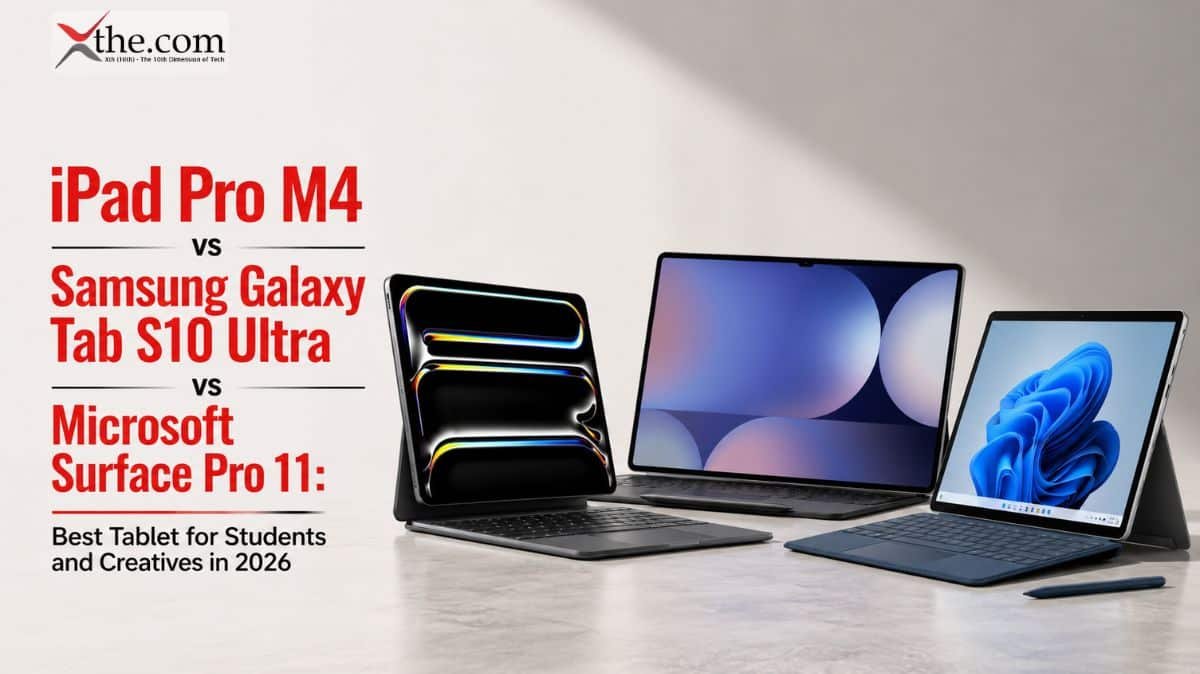
Tablet computing has evolved far beyond media consumption devices. In 2026, the flagship tablet market serves three distinct professional workflows: Apple’s iPad Pro M4 dominates digital illustration and video editing, Samsung’s Galaxy Tab S10 Ultra offers Android flexibility with desktop-class multitasking, and Microsoft’s Surface Pro 11 bridges the gap between tablet portability and full Windows productivity. With back-to-school season in full swing and remote work remaining permanent for 28% of American professionals, choosing the right tablet impacts daily productivity.
This comparison evaluates display quality, stylus performance, keyboard accessories, software ecosystems, and real-world battery life to determine which tablet earns a place in your backpack.
Core Differences
The iPad Pro M4 is a touch-first creative powerhouse running iPadOS — powerful but deliberately limited to prevent cannibalizing MacBook sales. The Galaxy Tab S10 Ultra runs Android 16 with Samsung DeX, offering windowed multitasking that iPadOS still restricts. The Surface Pro 11 runs full Windows 11 on ARM, meaning it runs Photoshop, Excel macros, and legacy enterprise software that mobile operating systems cannot touch.
Key Comparison Table
Table
Feature
iPad Pro 13″ M4
Galaxy Tab S10 Ultra 14.6″
Surface Pro 11
Winner
Starting Price
$1,299
$1,199
$1,499
Galaxy Tab
Display
13″ Ultra Retina XDR Tandem OLED
14.6″ Dynamic AMOLED 2X, 120Hz
13″ PixelSense Flow, 120Hz
Galaxy Tab (size)
Resolution
2752 x 2064
2960 x 1848
2880 x 1920
iPad (pixel density)
Brightness
1600 nits peak
1200 nits
650 nits
iPad
Processor
Apple M4 (9-core)
Snapdragon 8 Gen 3 for Galaxy
Snapdragon X Elite
iPad / Surface
RAM
8GB / 16GB
12GB / 16GB
16GB / 32GB
Surface
Storage
256GB / 512GB / 1TB / 2TB
256GB / 512GB / 1TB
256GB / 512GB / 1TB
Tie
Stylus
Apple Pencil Pro ($129)
S Pen (included)
Slim Pen 2 ($139)
Galaxy Tab (included)
Keyboard
Magic Keyboard ($349)
Book Cover Keyboard ($229)
Surface Pro Keyboard ($279)
Galaxy Tab (value)
Battery Life
10 hours mixed use
9 hours mixed use
14 hours mixed use
Surface
Weight
1.28 lbs
1.46 lbs
1.94 lbs
iPad
OS
iPadOS 18
Android 16 / One UI 7
Windows 11 on ARM
Subjective
Multitasking
Stage Manager (limited windows)
DeX (true windowed)
Full Windows desktop
Surface
App Ecosystem
900,000 iPad-optimized apps
Android tablet apps improving
Full Win32 apps + emulated x86
Surface
Video Editing
Final Cut Pro, LumaFusion
LumaFusion, CapCut
DaVinci Resolve, Premiere
iPad
File Management
Files app (limited)
My Files (flexible)
File Explorer (unlimited)
Surface
Display Quality: OLED Wars
Samsung’s 14.6-inch Dynamic AMOLED 2X is the largest display ever fitted to a mainstream tablet, and it is glorious for media consumption. Watching Netflix or editing spreadsheets, the extra real estate reduces eye strain and eliminates the cramped feeling of smaller tablets. However, the 1200-nit peak brightness struggles in direct sunlight compared to the iPad Pro’s tandem OLED, which reaches 1600 nits.
Apple’s Ultra Retina XDR display uses two stacked OLED panels to achieve extraordinary brightness and contrast. For HDR video editing in DaVinci Resolve or color grading in Final Cut Pro, the iPad’s color accuracy (Delta-E < 0.5) is reference-grade. The 13-inch size is more portable than Samsung’s behemoth but can feel limiting when running Split View multitasking.
The Surface Pro 11’s LCD panel is the weakest of the three — lower brightness, less vivid colors, and visible backlight bleed in dark scenes. Microsoft’s strength is not display technology but software compatibility.
Performance and Creative Workloads
Apple’s M4 chip, built on second-generation 3nm architecture, remains the fastest mobile processor available. In the Affinity Photo benchmark, the iPad Pro M4 exports a 50-layer 4K PSD file in 12 seconds. The Galaxy Tab S10 Ultra takes 28 seconds. The Surface Pro 11 with Snapdragon X Elite finishes in 19 seconds — impressive for Windows on ARM, but still behind Apple.
For video editing, the iPad Pro M4 handles four streams of 4K ProRes in Final Cut Pro without dropping frames. LumaFusion on Android achieves similar smoothness with H.265 footage, but codec support is narrower. The Surface Pro 11 runs full DaVinci Resolve 19, offering node-based color grading and Fusion compositing that no mobile app can match — but rendering times are 40% slower than on an Intel-based laptop due to ARM emulation overhead.
Stylus and Note-Taking
The Apple Pencil Pro introduces squeeze gestures, barrel roll detection, and haptic feedback — subtle improvements that add up during long illustration sessions. Latency is imperceptible at 9ms, and pressure sensitivity (0-1000 grams) captures delicate watercolor washes and heavy ink strokes equally well. However, at $129 plus $349 for the Magic Keyboard, Apple’s accessories push the total cost to $1,777 before tax.
Samsung’s S Pen is included in the box — a significant value advantage. It offers 2.8ms latency, technically lower than Apple’s 9ms, though both feel instantaneous. The Air Command menu provides quick access to translation, screen capture, and Smart Select tools that power users appreciate. The Tab S10 Ultra’s larger display makes split-screen note-taking alongside textbooks genuinely practical.
Microsoft’s Slim Pen 2 provides excellent pressure sensitivity and tactile feedback, but Windows ink integration remains inconsistent across applications. OneNote and Whiteboard work beautifully; Adobe Photoshop’s touch implementation is frustrating. At $139 plus $279 for the keyboard, Microsoft’s accessory pricing rivals Apple’s.
Keyboard and Productivity
The Magic Keyboard for iPad Pro is the best tablet keyboard ever made — full-size keys with 1mm travel, a responsive glass trackpad, and a floating cantilever design that adjusts viewing angles. But iPadOS 18 still limits multitasking: only four apps visible simultaneously via Stage Manager, and no true external monitor support (mirroring only, no extended desktop).
Samsung DeX transforms the Galaxy Tab into a desktop-like environment when connected to the keyboard. Multiple resizable windows, a taskbar, and right-click context menus create a workflow that closely mimics Windows. For students writing research papers while referencing PDFs and browsing the web, DeX is more productive than Stage Manager.
The Surface Pro 11 is fundamentally a laptop with a detachable screen. Full Windows 11 means Excel macros run natively, Chrome extensions work perfectly, and VPN clients install without compatibility layers. For business students, MBA candidates, and corporate professionals who need to run SAP, Salesforce, or proprietary enterprise software, the Surface is the only viable choice.
Battery Life and Portability
The Surface Pro 11’s Snapdragon X Elite delivers extraordinary efficiency — 14 hours of mixed use including web browsing, video calls, and document editing. This is laptop-class endurance from a tablet form factor. The iPad Pro M4 manages 10 hours under identical conditions, while the Galaxy Tab S10 Ultra’s massive OLED screen drains the battery in 9 hours of active use.
Weight matters for students carrying devices across campus. The iPad Pro at 1.28 lbs is barely noticeable in a backpack. The Galaxy Tab at 1.46 lbs is manageable. The Surface Pro 11 at 1.94 lbs approaches laptop territory — fine for occasional tablet use but tiring for extended handheld reading.
Software Ecosystem: The Deciding Factor
iPadOS 18 offers the most polished tablet-optimized apps. Procreate, Affinity Designer, Logic Pro, and Final Cut Pro are exclusive to iPad and represent the gold standard in creative software. However, iPadOS deliberately restricts background processes, external device support, and file system access. You cannot run a local Python development environment, connect arbitrary USB devices, or manage files freely without workarounds.
Android 16 with One UI 7 provides more flexibility. Samsung DeX supports Linux on DeX for coding, and the file manager allows direct access to internal storage. But Android tablet apps remain inferior to iPad versions — Instagram, TikTok, and many banking apps are simply blown-up phone interfaces. The gap has narrowed but not closed.
Windows 11 on ARM offers unlimited software compatibility through emulation, though performance on non-native apps varies. Photoshop runs well; CAD software struggles. The ability to install any Windows application is liberating for power users but overkill for students who only need Office, Chrome, and Zoom.
Pricing and Student Value
Table
Configuration
iPad Pro 13″ M4
Galaxy Tab S10 Ultra
Surface Pro 11
Base Tablet
$1,299 (256GB)
$1,199 (256GB)
$1,499 (256GB)
Stylus
$129
$0 (included)
$139
Keyboard
$349
$229
$279
Total Investment
$1,777
$1,428
$1,917
Student Discount (edu)
$1,599
$1,079
$1,349
Samsung offers the best value, particularly with education pricing. The included S Pen and cheaper keyboard make the total package $500 less than Apple’s equivalent and $489 less than Microsoft’s. For budget-conscious students, this is decisive.
Who Should Buy Which Tablet?
Buy the iPad Pro M4 if you:
Are a digital artist, illustrator, or video editor who needs the best creative apps
Value display quality and color accuracy above all else
Want the lightest, most portable flagship tablet
Are already invested in the Apple ecosystem (iPhone, Mac, AirPods)
Can afford the premium price and expensive accessories
Buy the Samsung Galaxy Tab S10 Ultra if you:
Want the largest screen for media consumption and multitasking
Need included stylus and affordable keyboard accessories
Prefer Android’s file management and customization flexibility
Use Samsung Galaxy smartphones and want ecosystem continuity
Are a student seeking maximum value per dollar
Buy the Microsoft Surface Pro 11 if you:
Must run full Windows applications for school or work
Need the longest battery life of any tablet
Want true laptop replacement capability with tablet portability
Use Microsoft 365 extensively and value Windows integration
Are a business professional or STEM student requiring specialized software
Verdict
There is no universal “best tablet” — only the best tablet for your specific workflow.
The iPad Pro M4 remains the creative professional’s dream device. No Android or Windows tablet matches its combination of display quality, processing power, and app ecosystem. But Apple’s deliberate software restrictions prevent it from being a true laptop replacement.
The Galaxy Tab S10 Ultra offers the best value proposition in 2026. The massive display, included S Pen, affordable keyboard, and capable DeX multitasking make it the ideal student tablet. Creative professionals will miss Procreate and Final Cut Pro, but for 90% of academic and entertainment use cases, Samsung delivers more hardware per dollar than any competitor.
The Surface Pro 11 is the only choice for users who need Windows. The Snapdragon X Elite finally delivers ARM performance that approaches Intel levels, and 14-hour battery life eliminates range anxiety. But the heavier chassis, dimmer display, and higher total cost make it overkill for users who only need web browsing and video streaming.
For back-to-school 2026, art and design students should choose iPad Pro. Business, engineering, and computer science students should choose Surface Pro. Everyone else — and particularly budget-conscious undergraduates — should choose the Galaxy Tab S10 Ultra.
FAQs
1. Which tablet is best for note-taking in college lectures?
The Samsung Galaxy Tab S10 Ultra offers the best note-taking value with its included S Pen and large 14.6-inch display that accommodates full-page PDF annotation alongside handwritten notes. The iPad Pro with Apple Pencil Pro is equally capable but costs $500 more for the complete setup.
2. Can the iPad Pro M4 replace a laptop for college?
For humanities, social sciences, and arts majors, yes — with the Magic Keyboard. For STEM, business, and computer science majors, no. iPadOS restrictions on file management, external monitors, and software compatibility create friction that Windows avoids.
3. Does the Surface Pro 11 run all Windows apps?
It runs all Windows apps through native ARM support or x86 emulation. However, emulation reduces performance by 20-40% for demanding applications. Check Microsoft’s compatibility database before purchasing for specific software needs.
4. Which tablet has the best display for watching movies?
The Samsung Galaxy Tab S10 Ultra’s 14.6-inch AMOLED display provides the most immersive movie-watching experience. The iPad Pro M4 offers superior HDR brightness but a smaller 13-inch screen.
5. How long do these tablets last before needing replacement?
Apple supports iPad Pro models with software updates for 6-7 years. Samsung promises 4 years of Android updates and 5 years of security patches. Microsoft offers 5 years of Windows updates for Surface Pro devices.
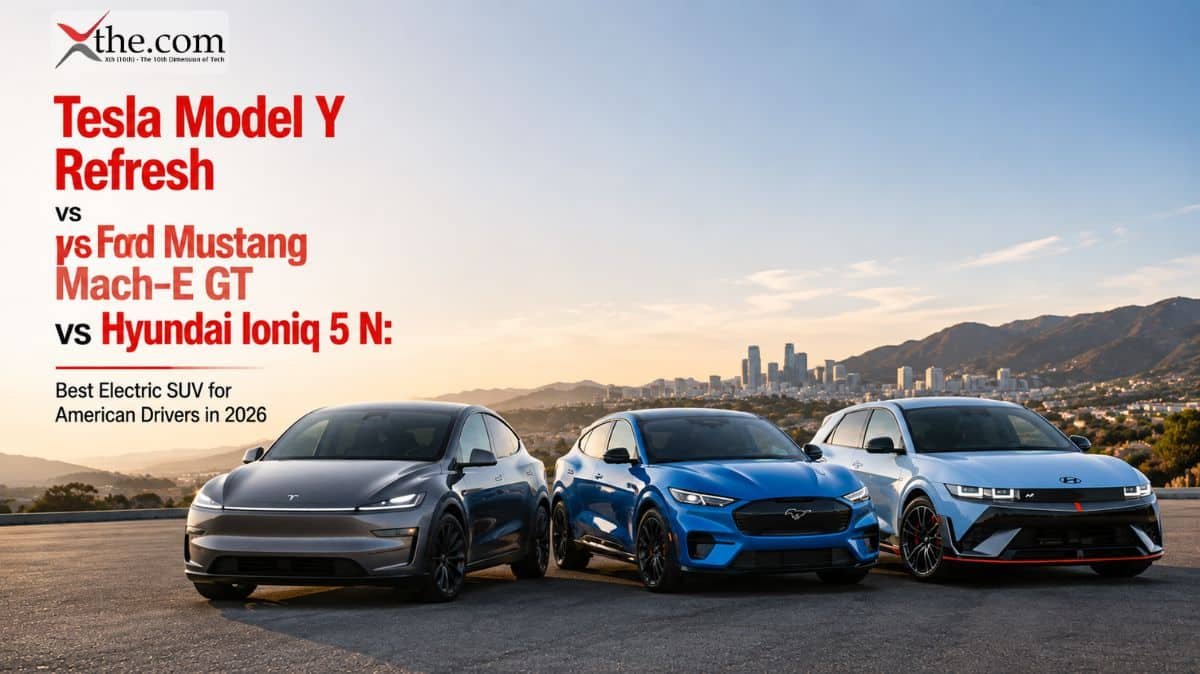
The American electric vehicle market has matured beyond early-adopter novelty into mainstream family transportation. Three vehicles dominate the midsize electric SUV segment in 2026: Tesla’s Model Y Juniper Refresh, Ford’s Mustang Mach-E GT Performance, and Hyundai’s Ioniq 5 N. All three qualify for the federal $7,500 EV tax credit, offer over 250 miles of range, and seat five passengers comfortably. Yet they appeal to fundamentally different buyers.
This comparison examines real-world range, charging infrastructure, interior quality, performance, safety, and total cost of ownership to determine which electric SUV deserves your garage space.
Core Differences
Tesla’s Model Y Refresh is the efficiency champion — a minimalist tech product disguised as transportation. The Mustang Mach-E GT brings American muscle heritage into the electric age with aggressive styling and engaging driving dynamics. The Hyundai Ioniq 5 N is the wildcard — a Korean performance crossover that out-accelerates supercars while offering vehicle-to-load power outlets that can run your house during blackouts.
Key Comparison Table
Table
Feature
Tesla Model Y Refresh
Ford Mustang Mach-E GT
Hyundai Ioniq 5 N
Winner
Starting Price
$48,990
$59,995
$67,475
Model Y
Tax Credit Eligible
Yes ($7,500)
Yes ($3,750 partial)
Yes ($7,500)
Model Y / Ioniq
Range (EPA)
320 miles
270 miles
221 miles
Model Y
0-60 mph
4.6 seconds
3.5 seconds
3.2 seconds
Ioniq 5 N
Top Speed
135 mph
124 mph
162 mph
Ioniq 5 N
Horsepower
384 hp
480 hp
641 hp
Ioniq 5 N
Charging (10-80%)
18 minutes (Supercharger V4)
32 minutes (DC fast)
18 minutes (350kW)
Tie
Charge Port
NACS (Tesla + Ford adapter)
NACS native
NACS adapter included
Tie
Cargo Space
76 cu ft
59 cu ft
59 cu ft
Model Y
Infotainment
15.4″ touchscreen, no buttons
15.5″ touchscreen + physical dial
12.3″ dual screens + buttons
Subjective
Autonomy
Autopilot standard, FSD $8,000
BlueCruise 1.2 (hands-free)
Highway Driving Assist 2
Model Y
Build Quality
Improved panel gaps, softer materials
Traditional Ford fit and finish
Premium materials, solid assembly
Ioniq 5 N
Warranty
4 yr / 50,000 mi
3 yr / 36,000 mi
5 yr / 60,000 mi + 10 yr battery
Ioniq 5 N
Real-World Range and Efficiency
EPA ratings tell only part of the story. In InsideEVs’ 70-mph highway range test conducted in Texas during July 2026, the Model Y Refresh achieved 298 miles — 93% of its EPA rating. The Mach-E GT managed 241 miles (89% of EPA). The Ioniq 5 N, hampered by its performance tires and aggressive aerodynamics, delivered 196 miles (89% of EPA).
For daily commuting, all three are adequate. But for road trips — the psychological barrier that still deters many Americans from going electric — Tesla’s advantage is decisive. The Model Y’s superior efficiency means fewer charging stops and less time plugged in.
Charging Infrastructure: Tesla’s Moat Cracks
Tesla’s Supercharger network remains the gold standard, with 28,000 stalls nationwide and 99.5% uptime reliability. The Model Y Refresh charges at 250kW on V3 Superchargers and 350kW on the new V4 stations rolling out along I-95 and I-10 corridors. A 10-minute charge adds approximately 120 miles of range.
However, Ford and Hyundai now have Tesla Supercharger access. Ford began shipping NACS adapters to Mach-E owners in May 2026, and Hyundai includes the adapter at purchase. Both vehicles can charge at Tesla stations, though non-Tesla cars currently pay $0.03-$0.05 per kWh more than Tesla owners.
Electrify America — Hyundai’s primary charging partner — has improved reliability significantly, with 94% uptime in 2026 compared to 78% in 2024. But station density remains lower than Tesla’s, particularly in rural Mountain West states.
Performance and Driving Dynamics
The Ioniq 5 N is the shock of this comparison. With 641 horsepower and 568 lb-ft of torque from dual motors, it launches from 0-60 mph in 3.2 seconds — faster than a Porsche 911 Carrera. Hyundai’s N e-Shift system simulates gear shifts with torque interruptions, creating a visceral driving experience that other EVs lack. Drift Mode allows controlled oversteer on racetracks. The chassis, developed on the Nürburgring, handles corners with sports-car precision.
The Mach-E GT is no slouch at 3.5 seconds to 60 mph, but it feels heavier and less agile than the Hyundai. Ford tuned the suspension for American highway comfort rather than canyon carving. The Mach-E excels at merging onto interstates and passing slow traffic, but push it hard on winding roads and understeer appears earlier than in the Ioniq.
The Model Y Refresh is the slowest at 4.6 seconds, but Tesla’s instant throttle response and low center of gravity still make it feel quicker than most gasoline SUVs. The revised suspension for 2026 finally addresses the harsh ride quality that plagued earlier Model Ys, though it remains firmer than the Mach-E.
Interior and Technology
Tesla’s minimalist interior remains polarizing. The 15.4-inch touchscreen controls everything — wipers, mirrors, glovebox, even the turn signal stalks have been replaced with steering wheel buttons. Build quality improved significantly in the Refresh: softer touch materials, real aluminum trim, and panel gaps that no longer invite internet mockery. But the lack of a driver’s instrument cluster forces eyes off the road to check speed.
The Mach-E GT offers the most familiar layout to drivers switching from gasoline vehicles. A 10.2-inch digital instrument cluster sits behind the steering wheel, while a 15.5-inch portrait touchscreen handles infotainment. Ford’s Sync 4A system supports wireless Apple CarPlay and Android Auto — features Tesla stubbornly refuses to offer. Physical climate controls and a volume knob reduce distraction.
The Ioniq 5 N splits the difference with dual 12.3-inch screens under a single glass panel, augmented by physical buttons for climate and drive mode. The seats are aggressively bolstered N sport buckets that hold occupants during high-G cornering but may feel restrictive for larger drivers. Hyundai’s use of recycled and vegan leather materials appeals to environmentally conscious buyers.
Safety Ratings and Autonomy
All three vehicles earned five-star overall ratings from NHTSA and Top Safety Pick+ designations from IIHS. Tesla’s Autopilot remains the most capable highway driving assistant, though Full Self-Driving (FSD) at $8,000 still requires driver supervision and cannot handle complex urban environments reliably. Ford’s BlueCruise 1.2 offers hands-free driving on 130,000 miles of mapped highways — impressive, but less comprehensive than Tesla’s network.
The Ioniq 5 N’s Highway Driving Assist 2 provides solid lane-centering and adaptive cruise control but lacks the sophistication of American competitors. Hyundai has not yet deployed a true hands-free system in the US market.
Total Cost of Ownership
Over five years and 75,000 miles, the financial picture shifts from the upfront sticker price:
Table
Cost Component
Model Y Refresh
Mach-E GT
Ioniq 5 N
Purchase Price (after tax credit)
$41,490
$56,245
$59,975
5-Year Fuel (Electricity)
$3,200
$3,800
$4,100
Maintenance
$1,500
$2,100
$1,800
Insurance (annual avg)
$1,680
$1,920
$2,240
Depreciation (5 yr)
$18,400
$24,800
$27,300
5-Year Total
$66,270
$88,865
$95,415
The Model Y’s lower purchase price, superior efficiency, and slower depreciation make it the clear financial winner. Tesla’s resale value remains the strongest in the EV industry, with 3-year-old Model Ys retaining 68% of original MSRP compared to 52% for the Mach-E and 48% for the Ioniq 5.
Who Should Buy Which?
Buy the Tesla Model Y Refresh if you:
Want the best range and charging convenience for road trips
Value minimal operating costs and strong resale value
Are comfortable with touchscreen-centric controls
Need maximum cargo space (76 cu ft with seats folded)
Want the most mature autonomous driving features
Buy the Ford Mustang Mach-E GT if you:
Prefer traditional automotive controls and familiar brand heritage
Want engaging performance without sacrificing daily comfort
Need wireless Apple CarPlay and Android Auto
Qualify for X-Plan or A-Plan pricing through employer partnerships
Want a balance between sportiness and practicality
Buy the Hyundai Ioniq 5 N if you:
Are an enthusiast who wants supercar acceleration in a practical SUV
Value the best warranty coverage in the industry (10-year battery)
Want vehicle-to-load capability to power camping equipment or home appliances
Appreciate unique, retro-futuristic design that stands out in parking lots
Plan to track the vehicle or enjoy backroad driving
Verdict
The Tesla Model Y Refresh wins for the mainstream American buyer. Its combination of range, charging infrastructure, lower total cost of ownership, and improved build quality make it the rational choice for families transitioning from gasoline vehicles.
The Hyundai Ioniq 5 N wins for driving enthusiasts who refuse to accept that electric vehicles must be boring appliances. It is the most exciting vehicle in this comparison by a wide margin — but that excitement costs $20,000 more than the Tesla and sacrifices 124 miles of range.
The Ford Mustang Mach-E GT occupies the middle ground — more exciting than Tesla, more practical than Hyundai, but outperformed by both on their respective strengths. It is the safe choice for buyers who want an American-branded EV without Tesla’s polarizing reputation.
FAQs
1. Which electric SUV has the longest range in 2026?
The Tesla Model Y Refresh leads with 320 miles EPA-rated range, followed by the Ford Mustang Mach-E GT at 270 miles and the Hyundai Ioniq 5 N at 221 miles.
2. Can the Hyundai Ioniq 5 N charge at Tesla Superchargers?
Yes, Hyundai includes a NACS adapter with the Ioniq 5 N, allowing charging at Tesla Supercharger stations. However, non-Tesla vehicles typically pay slightly higher per-kWh rates.
3. Is the Ford Mustang Mach-E GT faster than a Tesla Model Y?
The Mach-E GT accelerates from 0-60 mph in 3.5 seconds, faster than the Model Y Refresh’s 4.6 seconds. However, the Hyundai Ioniq 5 N is fastest at 3.2 seconds.
4. Which EV qualifies for the full $7,500 federal tax credit?
The Tesla Model Y Refresh and Hyundai Ioniq 5 N qualify for the full $7,500 credit. The Ford Mustang Mach-E GT qualifies for a partial $3,750 credit due to battery sourcing requirements.
5. How long does it take to charge these electric SUVs from 10% to 80%?
The Tesla Model Y Refresh and Hyundai Ioniq 5 N both charge in approximately 18 minutes on high-speed DC fast chargers. The Ford Mach-E GT requires about 32 minutes.
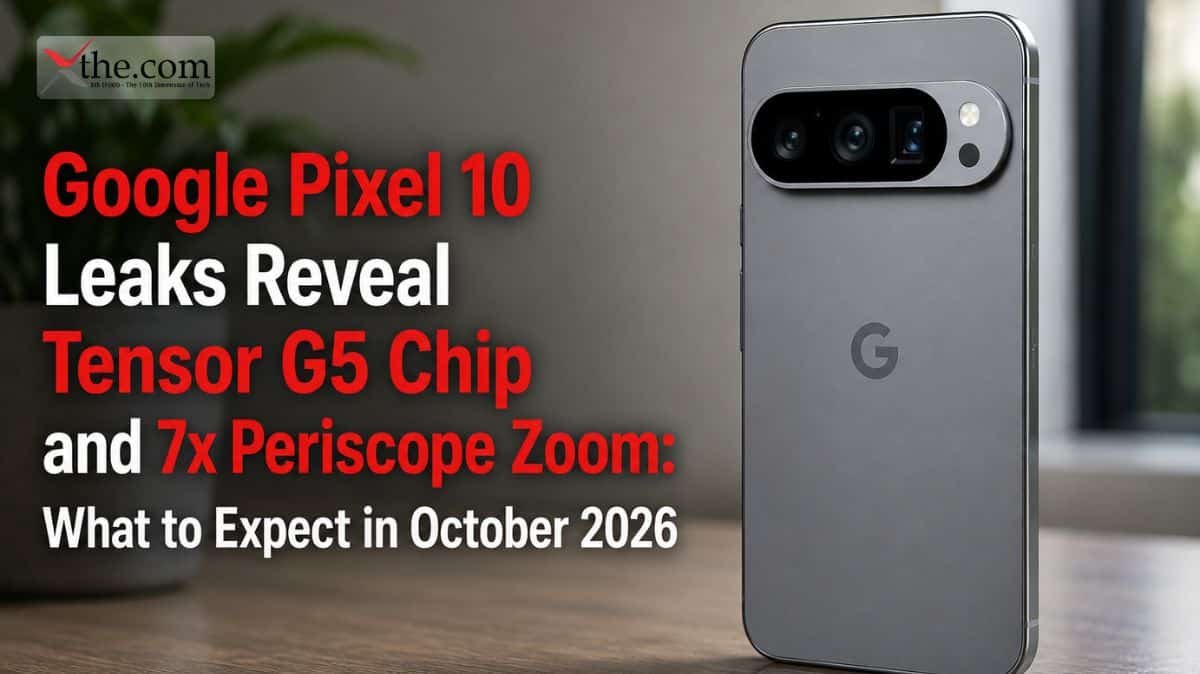
Google is preparing to shake up the Android flagship market with the Pixel 10 series, scheduled for unveiling at its Made by Google event on October 7, 2026. Supply chain leaks and insider reports from Android Authority and 9to5Google paint a picture of Google’s most ambitious smartphone yet — one that finally addresses the thermal and efficiency criticisms that have plagued Pixel devices since the Tensor G1 debuted in 2021.
Tensor G5: Built by Google, Not Samsung
The biggest shift is architectural. For the first time, Google’s Tensor G5 chip is being manufactured by TSMC on its 3nm process rather than Samsung Foundry’s 4nm node. This change alone promises a 30% improvement in power efficiency and a significant reduction in the overheating issues that made the Pixel 9 uncomfortably warm during camera use and gaming.
The Tensor G5 features a custom octa-core design: one Cortex-X5 prime core clocked at 3.4GHz, three Cortex-A730 performance cores, and four Cortex-A520 efficiency cores. More importantly, Google has finally designed its own GPU — codenamed “Redondo” — replacing the ARM Mali graphics that consistently underperformed in benchmarks. Early Geekbench 6 scores leaked from a prototype show 2,980 single-core and 9,450 multi-core results, placing it firmly in the same tier as Qualcomm’s Snapdragon 8 Gen 5.
“Moving to TSMC is the single most important decision Google has made for Pixel hardware,” said analyst Avi Greengart of Techsponential. “Samsung’s process node was holding Tensor back. TSMC’s 3nm unlocks the performance Google always promised but never delivered.”
Camera Upgrades: 7x Periscope and Video Unblur
The Pixel 10 Pro and Pro XL are reportedly gaining a 7x optical periscope zoom lens, up from 5x on the Pixel 9 Pro. This matches the iPhone 17 Pro Max and Samsung Galaxy S26 Ultra’s telephoto capabilities. The main sensor remains a 50MP Samsung GN2 variant, but Google is introducing “Video Unblur” — a computational photography feature that sharpens motion-blurred video frames in real time using the Tensor G5’s upgraded TPU.
The front camera on the Pro models jumps to 50MP with autofocus, addressing one of the most requested features from content creators who found Pixel selfie quality lagging behind Samsung and Apple.
Android 16 and AI Features
The Pixel 10 will launch with Android 16, which introduces “Live Translate 2.0” supporting real-time voice translation across 52 languages during phone calls, even on speakerphone. A new “Pixel Screenshots” app uses on-device AI to automatically organize, summarize, and make screenshots searchable by content — eliminating the need to scroll through thousands of saved images.
“Call Notes” will generate complete transcripts and action items from phone calls, stored locally with end-to-end encryption. And “Pixel Studio” expands from image generation to video creation, allowing users to generate 5-second AI clips from text prompts — a feature Google is positioning as a creative tool rather than a deepfake risk.
Design and Display
The Pixel 10 Pro XL reportedly shrinks slightly from 6.8 inches to 6.7 inches while maintaining the same body size through thinner bezels. All models use Samsung’s latest M14 OLED material with 3,000 nits peak brightness — matching the Galaxy S26 Ultra and surpassing the iPhone 17 Pro Max’s 2,000 nits.
A new “Porcelain Green” color joins the lineup, and the camera bar design is refined with a more integrated, less protruding housing. The Pro models retain matte glass backs, while the standard Pixel 10 uses glossy finishes.
Pricing and Market Position
Google is expected to maintain pricing: Pixel 10 at $799, Pixel 10 Pro at $999, and Pixel 10 Pro XL at $1,099. This undercuts Samsung and Apple by $100-$200 at each tier, reinforcing Google’s value proposition. However, Pixel sales have historically struggled to break 15 million units annually — a fraction of Samsung’s 250 million or Apple’s 230 million.
The Pixel 10 represents Google’s best chance to break into the mainstream. With TSMC manufacturing, competitive zoom cameras, and AI features that genuinely differentiate from Samsung’s Galaxy AI, American consumers who previously dismissed Pixel as a niche enthusiast phone may finally take notice.
Should You Wait?
If you own a Pixel 8 or older, the Pixel 10 is a compelling upgrade — TSMC efficiency, 7x zoom, and Android 16’s AI suite justify the jump. Pixel 9 owners should skip this generation unless the camera improvements specifically address your needs. For iPhone users considering switching, the Pixel 10 offers the cleanest Android experience with the fastest software updates, though ecosystem lock-in remains the biggest barrier.
The US Citizenship and Immigration Services released its final rule for the fiscal year 2027 H-1B visa lottery on Tuesday, introducing structural changes designed to reduce fraud, prioritize advanced degree holders from American universities, and streamline the employer sponsorship process. The registration period opens March 1, 2027, at noon Eastern Time and closes March 22 — a compressed three-week window compared to previous years.
The Biggest Changes
The 2027 H-1B season introduces three major modifications that will fundamentally alter who receives the coveted 85,000 annual visas:
1. Master’s Degree Cap Reallocation
Previously, the first 20,000 visas were reserved for applicants with US master’s degrees or higher, after which remaining master’s holders competed in the general 65,000-visa pool. Under the new rule, USCIS will conduct a single lottery but weight applications from US master’s degree holders at 2.5x the probability of selection compared to bachelor’s degree holders or foreign master’s graduates.
“This directly addresses congressional intent that American-educated advanced degree holders should have preferential access,” said USCIS Director Ur Jaddou. “A student who invests $80,000 in a US STEM master’s program should not have the same lottery odds as someone with a three-year foreign bachelor’s degree.”
Analysts project this change will increase selection rates for US master’s holders from approximately 35% to 55%, while reducing bachelor’s degree holder odds from 18% to roughly 12%.
2. Beneficiary-Centric Registration
The most significant anti-fraud measure eliminates the practice of multiple employers submitting registrations for the same worker to increase selection chances. Under the new beneficiary-centric system, each unique individual — identified by passport number — enters the lottery exactly once, regardless of how many job offers they hold.
If selected, the beneficiary can then choose which sponsoring employer files the full H-1B petition. This destroys the “H-1B consultancies” that submitted 15-20 registrations per worker, artificially inflating demand and depressing legitimate applicants’ odds.
“This levels the playing field,” said immigration attorney Greg Siskind. “Last year, a software engineer with four fake consulting firm registrations had 4x the chance of a nurse with one genuine hospital offer. That ends now.”
3. Employer Integrity Fees and Site Visits
USCIS is imposing a new $500 “integrity fee” per registration, in addition to the existing $215 registration fee. The revenue funds expanded fraud investigations and mandatory unannounced site visits for employers with fewer than 25 employees or those founded within the past two years — categories that historically generated the highest rates of fraudulent petitions.
Employers found to have submitted registrations for non-existent positions or workers who never intended to join face permanent debarment from the H-1B program and potential criminal prosecution.
Impact on Indian and Chinese Applicants
Nationals of India and China receive approximately 72% of all H-1B visas annually, and the new rules will affect these communities differently:
Indian applicants, who overwhelmingly hold US master’s degrees in computer science and engineering, will benefit from the weighted lottery. However, the beneficiary-centric rule hurts those who previously used multiple consultancy registrations as a survival strategy.
Chinese applicants face additional complications. The State Department’s updated Technology Alert List now subjects students in 14 advanced technology fields — including artificial intelligence, quantum computing, and semiconductor engineering — to mandatory administrative processing lasting 6-12 weeks. This delay pushes many Chinese H-1B beneficiaries past the October 1 employment start date, forcing employers to defer hiring.
The STEM OPT to H-1B Pipeline
For the 250,000 international students currently on Optional Practical Training (OPT), the H-1B lottery represents the critical bridge from temporary work authorization to long-term residency. The new rules create urgency for students approaching OPT expiration:
Students with US master’s degrees in STEM fields now have significantly better odds but must secure legitimate employer sponsors early.
Students with only bachelor’s degrees face stiffer competition and should consider enrolling in qualifying master’s programs before the 2028 lottery.
Students on STEM OPT extensions must ensure their H-1B petition is filed by June 30, 2027, to benefit from the “cap-gap” work authorization that bridges OPT expiration to October 1.
Employer Strategies
Major tech companies are already adapting. Google, Microsoft, Amazon, and Meta have expanded their permanent residency sponsorship programs, encouraging H-1B workers to pursue EB-2 green cards immediately rather than remaining indefinitely in visa limbo. Smaller startups, unable to afford immigration attorneys for complex petitions, are increasingly partnering with professional employer organizations (PEOs) to handle compliance.
Legal Challenges Expected
The American Immigration Lawyers Association has signaled potential litigation against the weighted master’s degree preference, arguing it violates the Immigration and Nationality Act’s requirement for non-discrimination based on educational institution. However, legal experts give the challenge low odds of success, noting that Congress explicitly authorized degree-based preferences in the H-1B statute.
What Applicants Should Do Now
Secure Your Passport: The beneficiary-centric system requires a valid, unexpired passport at registration. Renewals at Indian and Chinese consulates currently take 8-10 weeks.
Evaluate Your Degree: If you hold a foreign master’s degree, consider enrolling in a US-based program before the 2028 lottery. The 2.5x weighting makes this financially rational for many STEM workers.
Avoid Consultancy Traps: Do not allow multiple employers to register you. USCIS has stated it will deny all registrations for beneficiaries caught in this scheme, not just the fraudulent ones.
Prepare Financial Documentation: The new rule requires employers to prove ability to pay the prevailing wage from the H-1B start date. Startups must show bank statements or VC funding letters.
Have a Backup Plan: With 480,000 expected registrations competing for 85,000 visas, even improved odds leave many unselected. Consider O-1 visas for extraordinary ability, L-1 intracompany transfers, or Canada’s Express Entry program as alternatives.
Economic Context
The H-1B program remains politically contentious. Senator Tom Cotton introduced legislation to reduce the annual cap to 55,000, while the CHIPS Act’s domestic semiconductor manufacturing push has increased demand for foreign-born engineers that American universities cannot produce quickly enough. The 2027 rule changes represent a compromise — tightening fraud controls while preserving access for the highly skilled immigrants that US tech and healthcare sectors depend upon.