Apple is preparing its most radical iPhone redesign since the iPhone X, with supply chain sources confirming that the iPhone 17 lineup — set for unveiling in September 2026 — will finally eliminate the Dynamic Island in favor of a true full-screen experience. The change comes after years of engineering work to embed Face ID infrared sensors beneath OLED displays.
Under-Display Face ID Finally Arrives
According to analyst Ming-Chi Kuo and display expert Ross Young, the iPhone 17 Pro and Pro Max will use micro-lens array technology to bend infrared light around active display pixels, allowing the dot projector and flood illuminator to function through the screen. Users will see nothing but uninterrupted display where the Dynamic Island currently sits. The front camera will remain as a tiny punch-hole on the standard iPhone 17 and new iPhone 17 Air, with full under-display integration expected for the iPhone 18 series in 2027.
Periscope Zoom for Every Model
Currently, 5x tetraprism zoom is exclusive to the iPhone 16 Pro Max. The iPhone 17 series reportedly brings this feature to all four models, including the base iPhone 17 and the ultra-thin iPhone 17 Air. This means even buyers of the $799 entry model will get optical zoom capabilities previously reserved for $1,200 flagships. Additionally, Apple is testing a variable aperture main camera — adjustable from f/1.4 to f/4.0 — giving photographers real depth-of-field control without relying on computational portrait modes.
iPhone 17 Air: Thinnest iPhone Ever
Replacing the Plus model in Apple’s four-device strategy, the iPhone 17 Air is rumored to measure just 5.5mm thick — thinner than the 6.9mm iPhone 6 and approaching the 5.1mm iPad Pro M4. To achieve this, Apple is reportedly using a titanium-aluminum alloy frame, a single rear camera, and silicon-carbon battery technology. The device targets fashion-conscious buyers who prioritize pocketability over maximum camera specs.
A19 Pro Chip and Apple Intelligence 2.0
All iPhone 17 models will ship with the A19 series chips built on TSMC’s third-generation 3nm process. The Neural Engine is getting a major expansion to support on-device generative AI features that currently require cloud processing. Leaked iOS 20 beta code suggests real-time video translation during FaceTime calls, AI-generated video summaries, and a context-aware Siri that remembers what you asked three questions ago.
Pricing and Release
Apple typically announces new iPhones on the first or second Tuesday of September. For 2026, that points to September 8 or September 15. Pricing is expected to remain stable: iPhone 17 at $799, iPhone 17 Air at $899, iPhone 17 Pro at $1,099, and iPhone 17 Pro Max at $1,199.
Should You Upgrade?
If you own an iPhone 14 or older, the iPhone 17 represents a compelling leap. iPhone 15 and 16 owners may want to wait for 2027 unless the Air model’s ultra-thin design specifically appeals to them.
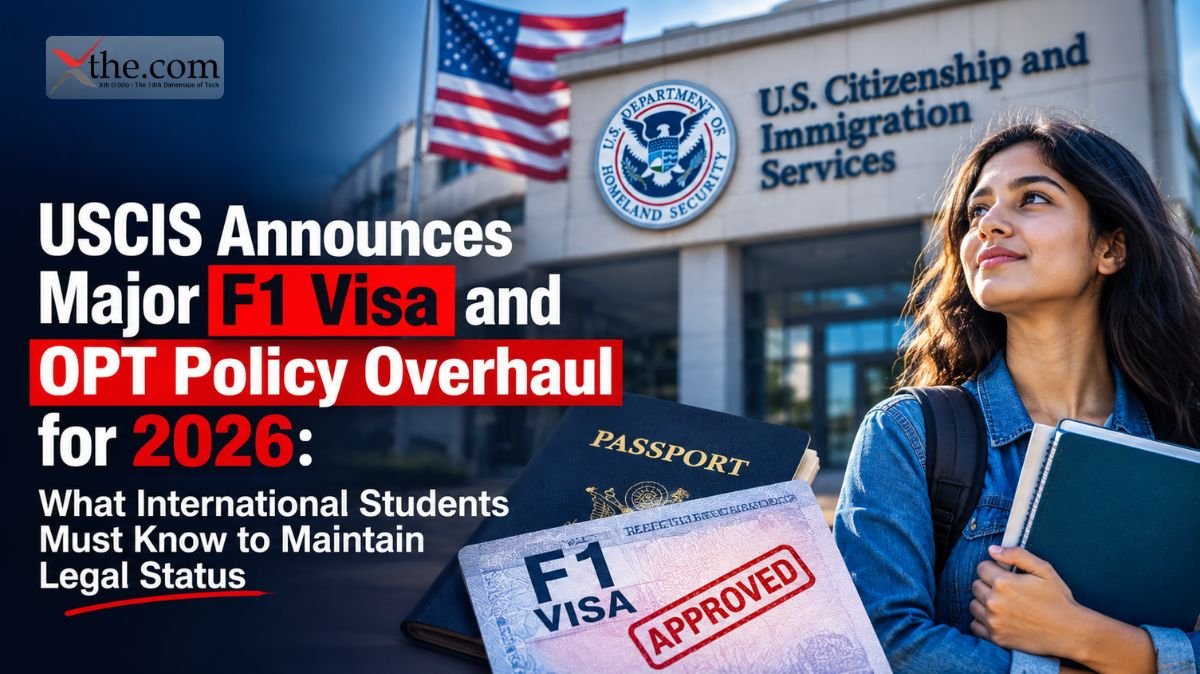
The US Citizenship and Immigration Services (USCIS) published a sweeping policy memorandum on August 5, 2026, that fundamentally alters how F-1 student visas, Optional Practical Training (OPT), and STEM extensions are administered. The changes, effective immediately for new applicants and rolling out for existing students through December 2026, represent the most significant restructuring of student immigration pathways since the 2016 STEM OPT final rule.
Background: Why Now?
International students contribute approximately $45 billion annually to the US economy and support over 368,000 jobs, according to NAFSA: Association of International Educators. However, the system has faced mounting criticism for processing delays, inconsistent adjudication standards, and vulnerability to fraud — particularly following the 2024 uncovering of a “pay-to-stay” scheme involving unaccredited California institutions.
The new policy aims to streamline legitimate student pathways while tightening enforcement against abuse. “We welcome the world’s best minds,” said USCIS Director Ur Jaddou, “but we must ensure the integrity of programs that are gateways to American opportunity.”
Key Changes for F-1 Students
Financial Documentation Requirements Doubled: Students must now demonstrate liquid funds covering 24 months of estimated expenses, up from 12 months previously. For a typical public university, this means showing $60,000-$80,000 in bank accounts rather than $30,000-$40,000. The change targets students who arrive underfunded and subsequently work illegally off-campus.
Online Course Limits Restored: During COVID-19, restrictions on online coursework were waived. Those waivers expired in 2023, but enforcement remained inconsistent. The new memo strictly enforces that F-1 students can count only one online class (3 credits) per semester toward full-course requirements. Violations will trigger automatic SEVIS record termination.
Reduced Course Load Scrutiny: Students requesting RCL for medical or academic reasons must now submit documentation from US-licensed physicians or academic advisors within 10 days of the request. Previously, students had 30 days. Late submissions will be denied, potentially jeopardizing status.
OPT and STEM OPT Overhaul
Optional Practical Training — the 12-month work authorization following degree completion — faces the most substantial changes:
STEM Extension Expansion: The list of eligible STEM degree fields has expanded from 400 to 580 CIP codes, adding fields like data science, financial analytics, and certain psychology specializations. However, students must now prove their specific degree title (not just major field) appears on the approved list.
E-Verify Mandate Strengthened: All STEM OPT employers must be enrolled in E-Verify at the time of training plan submission, not merely by the start date. USCIS will cross-reference employer E-Verify status weekly, and students whose employers drop out of the program face immediate OPT termination.
Unemployment Clock Accelerated: STEM OPT students now accumulate unemployment time at double speed during their 24-month extension — 60 days of allowed unemployment are consumed in 30 calendar days. This effectively halves the grace period for finding qualified employment after extension approval.
Remote Work Restrictions: Students on OPT may work remotely only if the employer has an established physical office within commuting distance (75 miles) of the student’s reported address. Fully remote positions at companies without local offices are no longer valid for OPT purposes.
Cap-Gap Relief Modified
The “cap-gap” extension — which allows F-1 students with pending H-1B petitions to remain in the US until October 1 — now requires students to file H-1B petitions by March 31 rather than the previous April 1 deadline. This one-day shift has significant practical implications, as USCIS historically receives 50,000+ petitions on April 1 alone.
Impact on Indian and Chinese Students
Students from India and China constitute 53% of all international students in the US and will feel these changes most acutely. Indian students, who overwhelmingly pursue STEM master’s degrees, face particular challenges with the new remote work restrictions — many currently work for US tech companies from their home countries during OPT, a practice now explicitly prohibited.
Chinese students face additional scrutiny under the renewed China Initiative, with enhanced background checks for students in advanced technology fields. Processing times for Chinese nationals have already stretched to 8-12 weeks for visa interviews at some consulates.
What Students Must Do Immediately
Review SEVIS Records: Log into the SEVP Portal and verify all information is accurate. Discrepancies discovered during OPT applications now trigger mandatory administrative processing lasting 60-90 days.
Update Employer Information: STEM OPT students working remotely must confirm their employer maintains a qualifying physical office within 75 miles and update Form I-983 training plans accordingly.
Bank Documentation: New and transfer students should prepare 24-month financial statements. Letters from sponsors must now include notarized affidavits of support.
Legal Consultation: Given the complexity, immigration attorneys report a 300% increase in consultation requests. Many universities are expanding free legal clinics, but appointment waits now stretch 3-4 weeks.
University Response
Major institutions are scrambling to adapt. The University of Southern California, which enrolls over 17,000 international students, hired 12 additional international student advisors. MIT updated its online systems to flag students approaching OPT deadlines automatically. However, smaller colleges with fewer resources worry they cannot comply with the accelerated documentation timelines.
Economic Impact
Education sector analysts warn that stricter requirements could reduce international enrollment by 8-12% over the next two academic years. Canada, Australia, and the UK are already marketing themselves as more welcoming alternatives. “The US risks losing its crown as the top destination for global talent,” said Dr. Rachel Banks of the Institute of International Education.
Legal Challenges
The American Immigration Lawyers Association (AILA) has announced plans to file a federal lawsuit challenging the remote work restriction and unemployment clock acceleration, arguing both provisions exceed USCIS statutory authority. A preliminary injunction request could be filed as early as September, potentially freezing implementation while courts review.
The US Food and Drug Administration granted full approval last week to OncoScan AI, a machine learning-powered diagnostic platform developed by Seattle-based health tech startup MedVision Labs. The system, which analyzes standard CT and MRI scans, can detect early-stage lung, breast, and colorectal cancers with 94% accuracy — outperforming experienced radiologists in head-to-head clinical trials involving 12,000 patients across 14 major US hospitals.
How It Works
OncoScan AI uses a proprietary deep learning architecture trained on over 5 million de-identified medical images. When a radiologist uploads a scan, the algorithm generates a heat map highlighting suspicious regions, assigns a malignancy probability score, and cross-references findings with the patient’s electronic health records to flag genetic risk factors.
“What makes this different from previous AI tools is its ability to detect ‘invisible’ micro-changes in tissue density that human eyes simply cannot perceive,” explained Dr. Sarah Chen, MedVision’s Chief Medical Officer and former radiology chair at Johns Hopkins. “We are finding tumors at Stage 0 and Stage 1 that would typically go unnoticed until Stage 3 or 4.”
Clinical Trial Results
The pivotal FDA approval study, published simultaneously in the New England Journal of Medicine, revealed striking outcomes:
Lung Cancer: 94.3% sensitivity in detecting nodules smaller than 5mm, compared to 78% for board-certified radiologists working alone.
Breast Cancer: 91.7% accuracy in dense breast tissue, where traditional mammography struggles significantly.
False Positive Rate: 3.2% — less than half the 7-8% rate typically seen in standard screening protocols.
Most importantly, the AI did not miss a single case of invasive cancer when operating as a “second reader” alongside human radiologists. The combination of human expertise plus AI assistance achieved 99.1% diagnostic accuracy.
Cost Implications
Early detection translates directly to cost savings. Treating Stage 1 lung cancer averages $72,000 per patient in the US healthcare system. Stage 4 treatment costs exceed $350,000. With approximately 1.9 million Americans diagnosed with cancer annually, widespread adoption of OncoScan AI could reduce national oncology spending by an estimated $18-24 billion over the next decade.
Medicare and Medicaid Services (CMS) announced it will issue a new reimbursement code for AI-assisted cancer screening starting January 2027, clearing the path for insurance coverage. Major private insurers including UnitedHealthcare, Blue Cross Blue Shield, and Aetna have indicated they will follow CMS guidance.
Addressing Healthcare Inequality
One of the most significant impacts may be on rural and underserved communities. The US currently faces a shortage of 10,000 radiologists, with severe maldistribution — rural hospitals often lack specialized radiologists entirely, forcing patients to travel hours or wait weeks for interpretations.
OncoScan AI can operate on standard hospital servers or cloud infrastructure, allowing a rural clinic in Montana to access diagnostic capabilities equivalent to Memorial Sloan Kettering. “This is how we democratize elite healthcare,” said HHS Secretary Xavier Becerra. “AI doesn’t replace doctors, but it extends their reach to places that desperately need it.”
Privacy and Ethical Concerns
Not all reactions have been positive. The Electronic Frontier Foundation raised concerns about the 5 million patient images used to train the algorithm, questioning whether consent protocols were sufficiently robust. MedVision insists all training data was fully de-identified under HIPAA Safe Harbor standards, but critics note that re-identification risks grow as datasets become more comprehensive.
Additionally, medical ethicists worry about “automation bias” — the tendency of overworked clinicians to defer to AI recommendations without independent critical thinking. The FDA approval requires that all OncoScan AI findings be reviewed by a licensed radiologist, maintaining the human-in-the-loop safeguard.
Competitive Landscape
MedVision is not alone in this space. Google Health’s DeepMind division recently published promising results for its breast cancer AI. IBM Watson Health, after early setbacks, has retooled its oncology platform. GE Healthcare and Siemens Healthineers are integrating AI modules directly into their imaging hardware.
Analysts at CB Insights project the AI medical imaging market will reach $18.4 billion by 2028, up from $4.2 billion in 2024. The FDA has now cleared over 850 AI-enabled medical devices, with radiology representing 75% of approvals.
What Patients Should Know
If you are due for cancer screening, ask your healthcare provider whether AI-assisted diagnostics are available. While the technology is powerful, it works best when combined with regular screening schedules — the AI cannot detect cancers in patients who never get scanned. Current guidelines recommend annual mammograms for women 40+, lung CT scans for adults 50-80 with smoking history, and colonoscopies starting at age 45.
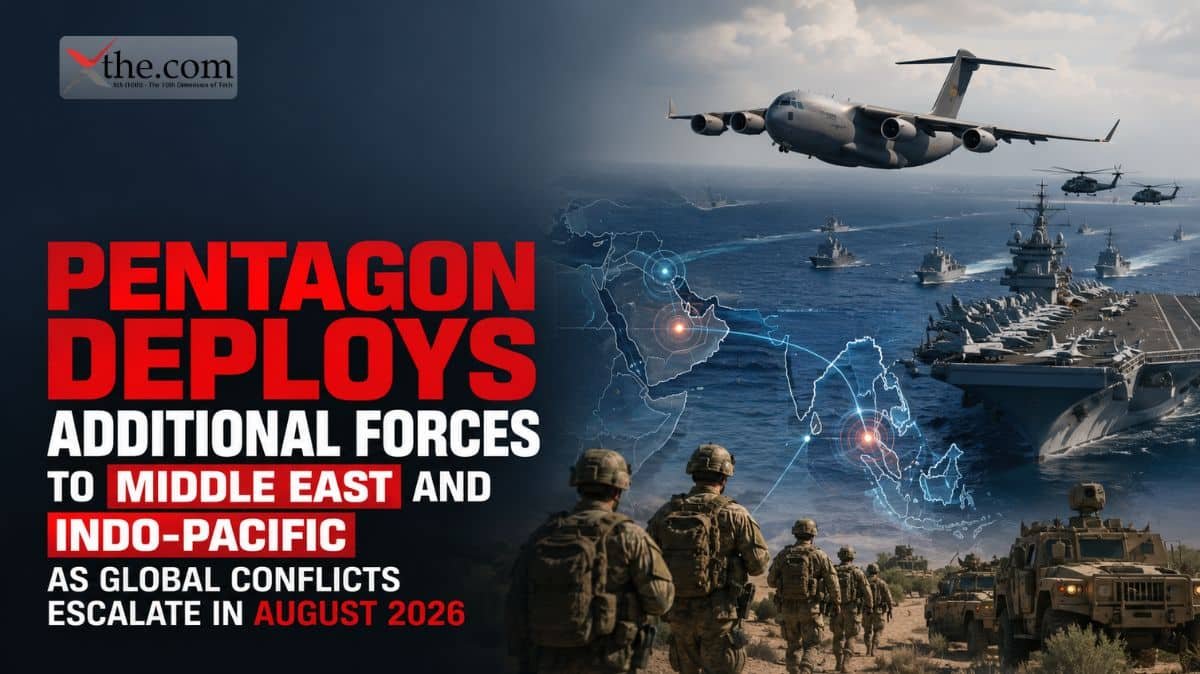
The US Department of Defense has ordered the deployment of an additional 12,000 troops across the Middle East and Indo-Pacific regions, marking the largest single reinforcement of American military presence since 2022. Defense Secretary Lloyd Austin confirmed the deployments during a press briefing at the Pentagon, citing “deteriorating security environments” in multiple theaters simultaneously.
Middle East: Gaza Ceasefire Collapses
The fragile ceasefire agreement brokered in June 2026 between Israel and Hamas has effectively collapsed following a series of rocket attacks on southern Israeli cities and retaliatory Israeli airstrikes on Gaza Strip targets. The USS Abraham Lincoln carrier strike group, already in the region, has been joined by the USS Bataan amphibious ready group carrying 2,400 Marines.
“We are not seeking escalation, but we will defend our interests and allies decisively,” Secretary Austin stated. The additional forces include Patriot missile defense batteries positioned in Jordan and Kuwait, along with F-22 Raptor fighter squadrons relocated from Alaska to Qatar.
Iran’s Revolutionary Guard Corps issued a statement warning that “US military expansion in the region will not go unanswered,” raising fears of proxy attacks on American bases in Iraq and Syria — similar to the 170 attacks that occurred between October 2023 and February 2024.
Indo-Pacific: South China Sea Tensions
Simultaneously, the Pentagon is reinforcing its Pacific posture following a near-collision incident between a Chinese J-16 fighter jet and a US RC-135 reconnaissance aircraft over international waters in the South China Sea. The incident, captured on video and released by US Indo-Pacific Command, shows the Chinese aircraft crossing within 30 feet of the American plane.
In response, the US has deployed an additional destroyer squadron to Yokosuka, Japan, and approved $380 million in new military aid to Taiwan, including Harpoon anti-ship missiles and early warning radar systems. China’s Foreign Ministry condemned the aid package as “dangerous provocation that undermines regional stability.”
Ukraine: Two Years Later
While media attention has shifted, the war in Ukraine continues with no clear resolution. The US has committed an additional $2.3 billion in military assistance for August, bringing total American aid since February 2022 to over $175 billion. Ukrainian forces have made marginal territorial gains in the Donetsk region but remain heavily dependent on Western ammunition supplies.
Critics in Congress, led by Senator Rand Paul, have renewed calls for greater oversight of Ukraine funding. “We cannot write blank checks while American cities face infrastructure crises,” Paul argued on the Senate floor. However, bipartisan majorities continue supporting aid packages, viewing Ukrainian resistance as essential to deterring broader Russian aggression in Europe.
Domestic Impact: What Americans Feel
The deployments carry significant domestic implications. Military families face extended separations as deployment rotations stretch from standard 6-month cycles to 9-12 months. The Army recently missed its recruiting target for the third consecutive quarter, falling 15,000 soldiers short of its annual goal, forcing increased reliance on National Guard and Reserve call-ups.
Economically, defense contractors are major beneficiaries. Lockheed Martin, Raytheon, and Northrop Grumman shares have risen 8-14% since deployment announcements. However, oil prices have climbed to $84 per barrel on supply disruption fears, translating to higher gasoline prices for American consumers already squeezed by persistent inflation.
Veterans Affairs Under Pressure
The VA healthcare system is bracing for increased demand as deployment-related mental health issues — PTSD, traumatic brain injury, and depression — typically surge 12-18 months after troop rotations begin. VA Secretary Denis McDonough announced a $400 million emergency funding request to expand telehealth mental health services and hire 1,200 additional psychiatric specialists.
Public Opinion
A Pew Research Center poll conducted August 1-7 shows 52% of Americans support maintaining current military commitments, down from 61% in January. Among 18-29 year-olds, support drops to 38%, with many expressing concern that US resources are spread too thinly across multiple global hotspots.
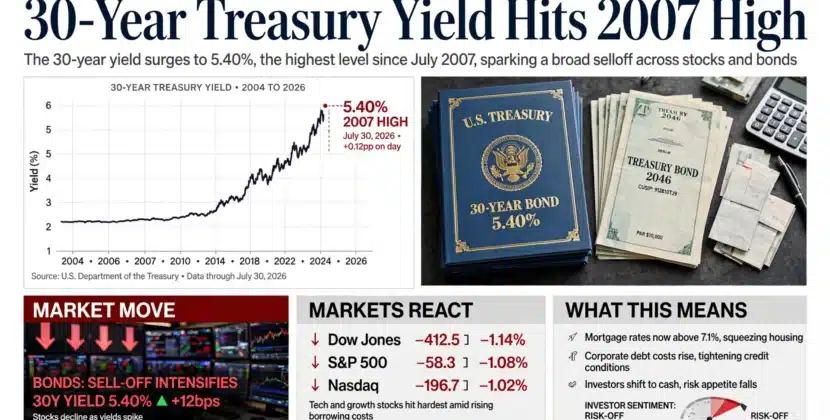
US financial markets are experiencing one of the most volatile trading periods of 2026 as investors grapple with a perfect storm of economic signals. The S&P 500 has swung over 800 points in the past two weeks, the VIX volatility index — Wall Street’s “fear gauge” — spiked to 28.4, and Treasury yields on 10-year notes briefly touched 4.6% before retreating.
The Inflation Puzzle
July 2026 Consumer Price Index (CPI) data released by the Bureau of Labor Statistics showed headline inflation at 3.4% year-over-year — down from 3.7% in June but still stubbornly above the Federal Reserve’s 2% target. Core inflation, which strips out volatile food and energy prices, actually ticked up to 3.6%, surprising economists who had predicted a modest decline.
“Services inflation is proving stickier than anyone anticipated,” said Dr. Elena Rodriguez, Chief Economist at Goldman Sachs. “Housing costs, healthcare services, and insurance premiums are keeping core metrics elevated despite goods deflation.”
Federal Reserve at a Crossroads
The Federal Open Market Committee (FOMC) faces its most consequential decision in months at the September 17-18 meeting. Futures markets are currently pricing in a 65% probability of a 25-basis-point rate cut, but dissenting voices within the Fed are growing louder.
Minneapolis Fed President Neel Kashkari warned in a CNBC interview that “premature easing could re-ignite inflationary pressures we spent three years fighting.” Meanwhile, Chicago Fed President Austan Goolsbee countered that “real interest rates are now restrictive enough to risk an unnecessary hard landing.”
Tech Earnings Disappoint
The so-called “Magnificent Seven” tech stocks that drove 60% of S&P 500 gains in 2025 are showing cracks. Apple missed iPhone revenue expectations for Q3 2026, citing weaker-than-anticipated demand in China and delayed AI feature rollouts. Tesla reported its third consecutive quarter of declining automotive gross margins. Only NVIDIA continued its streak, beating earnings estimates by 12% on surging demand for AI training chips.
“The tech trade is getting crowded,” warned Morgan Stanley strategist Mike Wilson. “When everyone owns the same seven names, any disappointment triggers forced selling.”
Where Smart Money Is Moving
Despite the turbulence, institutional investors are not sitting idle. Three sectors are seeing heavy inflows:
Utilities: Traditionally defensive, utilities are now being re-rated as “AI infrastructure plays” due to massive electricity demand from data centers. NextEra Energy and Constellation Energy have gained 18% and 24% respectively since January.
Healthcare: With an aging US population and GLP-1 weight loss drugs creating a $100 billion market, companies like Eli Lilly and Novo Nordisk continue attracting capital regardless of macro conditions.
Small-Cap Value: The Russell 2000 index has outperformed the Nasdaq over the past month for the first time since 2022, as investors rotate out of expensive mega-caps into domestically-focused smaller companies less exposed to global trade tensions.
Crypto Market Correlation
Bitcoin, long touted as “digital gold” and an inflation hedge, has traded increasingly in lockstep with tech stocks. BTC dropped from $71,000 to $64,200 following the CPI release, undermining its safe-haven narrative. Ethereum fared worse, falling 14% as concerns about ETF outflows mounted.
What Should Investors Do?
Financial advisors uniformly caution against panic selling. “Volatility is the price of admission for equity returns,” said Charles Schwab’s Liz Ann Sonders. “Dollar-cost averaging into diversified index funds remains the optimal strategy for 90% of investors.”
For active traders, options market data suggests hedging demand is highest since March 2026, with put-call ratios spiking. The “fear index” may be elevated, but history shows that buying during VIX spikes above 25 has generated positive 12-month returns 78% of the time since 1990.
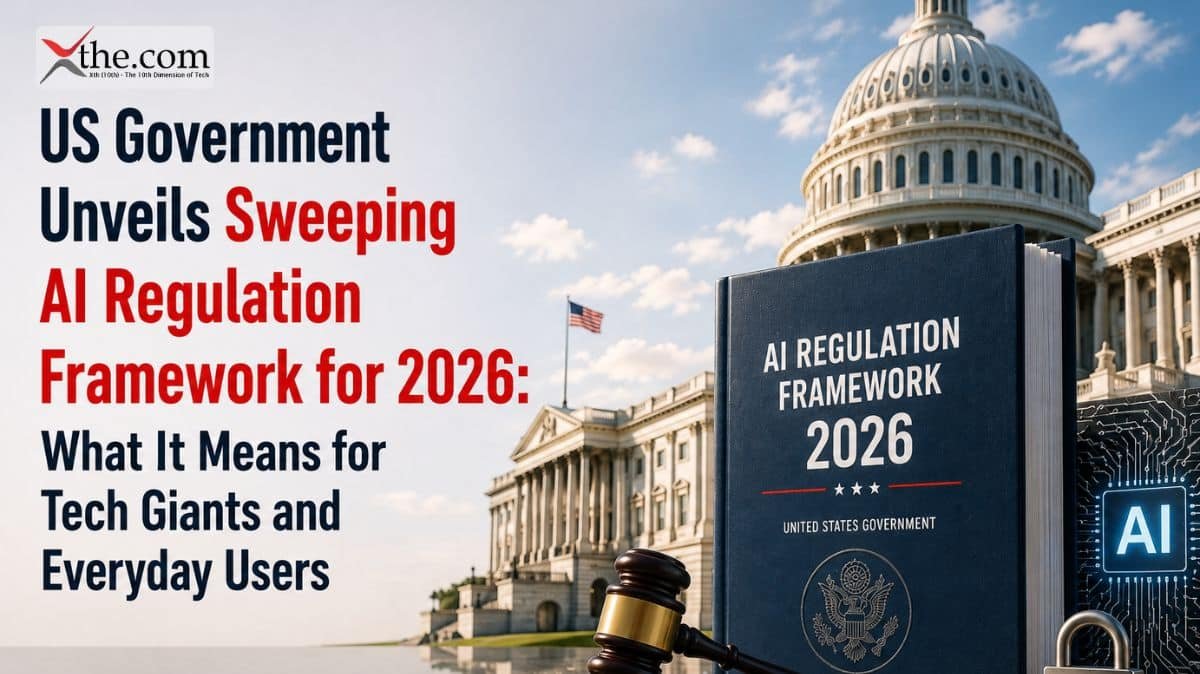
The Biden-Harris administration, in coordination with bipartisan congressional leaders, has officially rolled out the Artificial Intelligence Accountability Act of 2026 — the most comprehensive federal attempt to regulate artificial intelligence in United States history. The framework, announced last week, introduces mandatory safety testing, algorithmic transparency requirements, and strict penalties for AI systems that discriminate or spread misinformation at scale.
What Changed?
Under the new rules, any AI model with over 100 million monthly active users must undergo third-party safety audits before deployment. Companies like OpenAI, Google, Meta, and Anthropic will now be required to submit detailed “Algorithmic Impact Assessments” to a newly formed Federal AI Oversight Board (FAIOB). The board, operating under the Department of Commerce, will have the authority to halt deployments of AI systems deemed “high-risk” to public safety, national security, or democratic processes.
Key Provisions:
Mandatory Watermarking: All AI-generated images, videos, and audio must carry invisible digital watermarks detectable by standard software. This directly targets the rise of deepfakes ahead of the 2026 midterm elections.
Bias Audits: Companies must publish annual bias reports showing how their AI models perform across race, gender, age, and socioeconomic demographics. Failure to disclose will result in fines up to 4% of annual US revenue — matching the severity of EU GDPR penalties.
Worker Protection: The act explicitly bans employers from using AI hiring tools that haven’t been certified as bias-free by an accredited testing body. An estimated 83% of US employers now use some form of AI in recruitment, making this provision particularly impactful.
Data Privacy Expansion: The framework extends California’s CCPA-style rights nationwide, giving users the right to know when AI is making decisions about them, the right to opt out of AI-driven profiling, and the right to human review of automated decisions affecting employment, housing, and credit.
Industry Reaction
Tech industry response has been sharply divided. The Chamber of Progress, representing Google, Amazon, and Meta, issued a statement warning that “overly broad compliance requirements could stifle American innovation and push AI development overseas.” Conversely, AI safety advocates at the Center for AI Safety called the bill “a necessary first step, though enforcement mechanisms remain underfunded.”
Stock Market Impact
Nasdaq tech stocks showed immediate volatility following the announcement. Microsoft (MSFT) and Alphabet (GOOGL) shares dipped 2.3% and 1.8% respectively in after-hours trading, while smaller AI infrastructure companies like C3.ai and Palantir saw gains on expectations that compliance consulting will become a booming sub-industry.
What This Means for You
If you are a regular user of ChatGPT, Midjourney, or Google Gemini, expect more visible disclaimers, slower rollout of new features, and occasional prompts asking you to verify that you understand AI-generated content. For developers and startups, the compliance burden increases significantly — legal experts estimate that meeting baseline requirements could cost between $50,000 to $2 million depending on model complexity.
What’s Next?
The FAIOB begins accepting compliance filings on October 1, 2026. Legal challenges from major tech companies are already being prepared, with the US Chamber of Commerce signaling a likely lawsuit arguing federal overreach into private sector innovation.
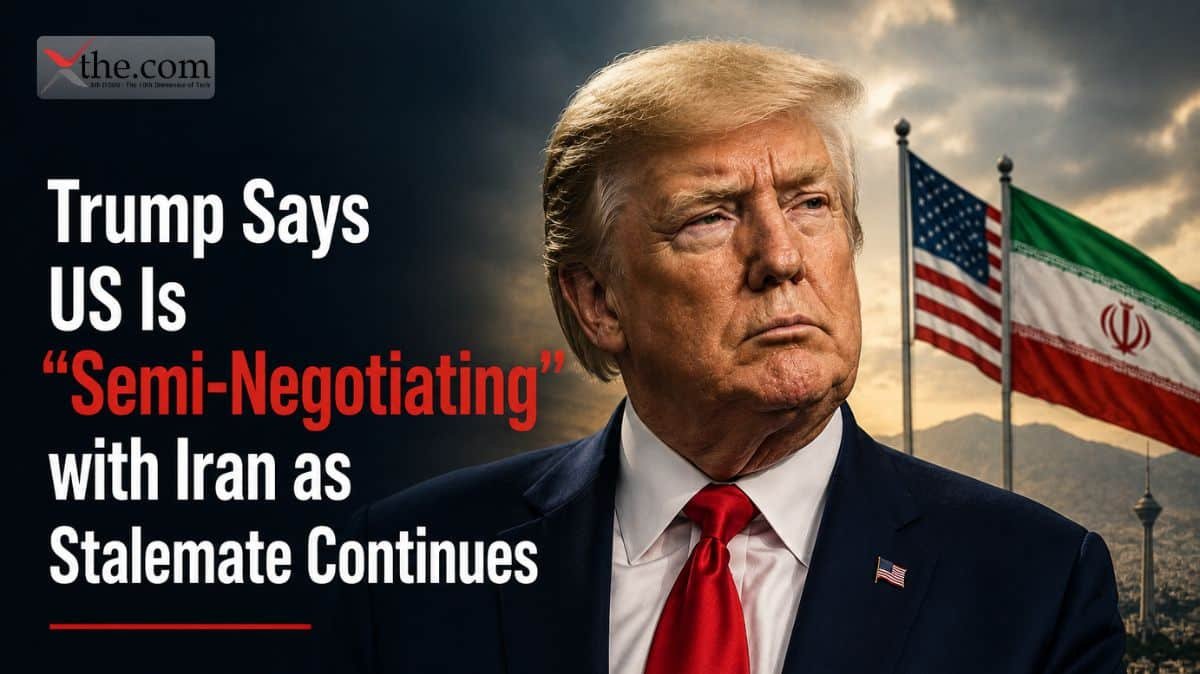
In a revealing interview with Axios published on August 9, 2026, President Donald Trump offered his most detailed public comments on the Iran crisis since the Strait of Hormuz was closed in February. Trump’s assessment was characteristically blunt: the United States is “only semi-negotiating” with Iran, relying primarily on economic pressure rather than active diplomacy to force Tehran’s hand.
The interview came as Iran’s Supreme National Security Council issued seven maximalist demands for reopening Hormuz — demands that US officials privately describe as “non-starters” but that Tehran insists are prerequisites for any meaningful dialogue.
Trump’s framing of the situation as “semi-negotiating” represents a middle path between all-out war and full diplomatic engagement. It allows the administration to maintain military pressure while keeping diplomatic channels open — but it also risks prolonging a conflict that is increasingly damaging to the US economy and Trump’s own political standing.
What Semi-Negotiating Means
“Semi-negotiating” is not a recognized diplomatic term, but Trump’s usage reveals the administration’s strategy:
What It Is:
Messages exchanged through intermediaries (primarily Oman)
Backchannel discussions about narrow technical issues (maritime safety, prisoner exchanges)
Public posturing designed to pressure Iran economically
What It Isn’t:
Direct US-Iran negotiations
A formal diplomatic process with defined goals
A ceasefire or de-escalation agreement
Trump told Axios the strategy is to let “economic pressures take their toll” on Iran. This reflects a belief that Tehran will eventually compromise as its economy collapses — a belief that Iran’s leadership is determined to prove wrong.
Iran’s Position: No Talks Until Demands Met
Iranian Foreign Minister Abbas Araghchi made clear on August 10 that direct negotiations are off the table until Washington meets conditions Tehran laid out through intermediaries.
Iran’s Core Conditions:
End the war with Iran and its armed allies (Houthis, Hezbollah)
Lift the naval blockade of Iranian ports
Withdraw US military forces from the Persian Gulf
Compensate Iran for war damage
Lift all economic sanctions
Release frozen Iranian assets
Commit to never threatening Iran again
The Supreme National Security Council, now led by hardliner Mohsen Rezaei, reinforced this position on August 10: “The strait will not reopen until the U.S. corrects its behavior.”
The Economic Squeeze on Iran
Trump’s bet is that economic pressure will eventually break Iranian resolve. The data supports his strategy — up to a point.
Iran’s Economic Crisis:
Table
Indicator
Feb 2026 (Pre-War)
Aug 2026 (Current)
Inflation Rate
35%
45%+
Currency (USD/IRR)
580,000
920,000
Oil Exports
1.2M barrels/day
~200K barrels/day
GDP Growth
-2.5%
-8.0% (projected)
Foreign Reserves
$25B
<$10B
Iranian officials have privately admitted that sanctions relief is “desperately needed.” But Supreme Leader Ayatollah Mojtaba Khamenei has publicly rejected any compromise that appears to reward American aggression.
Domestic Political Pressure on Trump
The Iran war is becoming a political liability for Trump. Multiple indicators show eroding public support:
Polling Data:
Reuters/Ipsos (Aug 2026): 33% support the Iran war
69% say Trump has not clearly explained war goals
54% believe the war is damaging the US economy
61% want direct negotiations to end the conflict
Congressional Pressure:
House Democrats seeking Pentagon casualty database records
Bipartisan calls for hearings on missile stockpile depletion
25 Democratic-led states sued Trump over tariff policies — partly motivated by economic pain from the Iran conflict
Economic Indicators:
July jobs report: -23,000 jobs — first contraction since pandemic
Oil prices: Elevated at $84+/barrel, adding $45-65/month to household costs
Stock market: Volatile, with defense stocks up and consumer stocks down
Trump’s “semi-negotiating” formulation may be an attempt to signal flexibility to domestic audiences without appearing weak to Iran or his political base.
The Oman Backchannel
Despite the public stalemate, Oman continues to facilitate quiet communication between Washington and Tehran. The sultanate’s proposed temporary maritime arrangement — allowing limited Hormuz transit without fees — represents the most concrete diplomatic progress in months.
The Oman Proposal:
Ships enter Hormuz near Iranian coast, exit near Oman
No transit fees during interim period
Endorsed by Gulf Cooperation Council
Joint announcement by Iran, Oman, US, and UN International Maritime Organization
The proposal is designed to create a “pause” that could lead to broader negotiations. But both sides remain far apart on fundamental issues, and hardliners in both capitals oppose any compromise.
Scenarios: What Happens Next
Three scenarios appear most likely over the next 60 days:
Scenario 1: Oman Deal Succeeds (30% probability) The temporary maritime arrangement is implemented, Hormuz reopens partially, and both sides claim victory while continuing backchannel talks. Oil prices drop to $75-80.
Scenario 2: Stalemate Continues (50% probability) Neither side budges. Hormuz remains closed through September. Oil prices spike toward $100. Global recession risk increases. Trump faces mounting political pressure.
Scenario 3: Military Escalation (20% probability) The US launches a naval operation to forcibly reopen Hormuz, or Iran attacks shipping in the broader Gulf. Full-scale regional war becomes possible.
Frequently Asked Questions
Q: What did Trump say about Iran negotiations? A: In an Axios interview published August 9, 2026, Trump said the US is “only semi-negotiating” with Iran and is letting economic pressure take its toll.
Q: Is the US in direct talks with Iran? A: No. Iran refuses direct negotiations while the US violates the June 2026 interim deal. Messages are exchanged through intermediaries, primarily Oman.
Q: What are Iran’s demands? A: Iran demands an end to the war, lifting of the naval blockade, US military withdrawal from the Gulf, war reparations, sanctions relief, release of frozen assets, and a US commitment to never threaten Iran again.
Q: Will the Strait of Hormuz reopen soon? A: Unlikely in the immediate term. Iran’s new security chief is a hardliner, and both sides remain far apart on core demands.
Q: How is the Iran war affecting the US economy? A: The war has contributed to elevated oil prices, job losses, stock market volatility, and depleted military stockpiles. A July 2026 poll found 54% of Americans believe the war is damaging the economy.
A deadly bacterial infection is spreading rapidly along the United States Gulf Coast, and health officials are sounding the alarm. On August 9, 2026, the Associated Press reported that five people have died in Louisiana from Vibrio vulnificus infections — commonly known as flesh-eating bacteria — and cases are being reported across Texas, Mississippi, Alabama, and Florida at rates far above historical averages.
The Louisiana Department of Health confirmed the deaths and issued an urgent advisory warning residents and visitors to avoid swimming in coastal waters with open wounds and to thoroughly cook all seafood harvested from Gulf waters.
2026 Gulf Coast Vibrio Cases (Year-to-Date):
Table
State
Confirmed Cases
Deaths
vs. 2025 (Same Period)
Louisiana
34
5
+89%
Texas
28
2
+65%
Mississippi
12
1
+140%
Alabama
9
0
+50%
Florida
41
3
+37%
Total
124
11
+58%
What Is Vibrio vulnificus
Vibrio vulnificus is a naturally occurring bacterium found in warm coastal waters. It is not truly “flesh-eating” in the sense of consuming tissue, but it causes necrotizing fasciitis — a rapidly spreading soft tissue infection that destroys skin, fat, and muscle layers. The misnomer “flesh-eating” persists because of the dramatic visual impact of advanced infections.
Two Routes of Infection:
Wound Exposure: Bacteria enter through cuts, scrapes, or puncture wounds (including insect bites) when swimming in contaminated water
Seafood Consumption: Eating raw or undercooked oysters, clams, or other shellfish that harbor the bacteria
The wound route is particularly dangerous because the infection progresses so rapidly. Without immediate antibiotic treatment and often surgical debridement (removal of infected tissue), mortality rates exceed 50%.
Louisiana: Ground Zero
Louisiana has been hit hardest, with five confirmed deaths representing the state’s worst Vibrio outbreak in at least a decade. The state’s warm, brackish coastal waters create ideal conditions for Vibrio proliferation, and the combination of summer heat and recent flooding has exacerbated the problem.
Louisiana Risk Factors:
Warm water temperatures: Gulf waters have averaged 86°F (30°C) this summer — optimal for Vibrio growth
Flood contamination: Heavy rainfall and storm surge have introduced additional bacteria into coastal ecosystems
Oyster harvesting: Louisiana is the nation’s largest oyster producer; raw oyster consumption is culturally embedded
The Louisiana Department of Health has closed several oyster harvesting areas and is working with the FDA to increase seafood safety inspections.
Why Infections Are Rising
The 58% year-over-year increase in Gulf Coast Vibrio cases is driven by multiple factors:
1. Warmer Waters: Climate change has raised average Gulf water temperatures by 1.5-2°F over the past decade. Vibrio bacteria multiply exponentially in warmer water, and the “Vibrio season” (May-October) has effectively lengthened by 3-4 weeks.
2. Extreme Weather: The 2026 Atlantic hurricane season has been unusually active. Storm surge and flooding introduce nutrients and contaminants that fuel bacterial blooms. Post-storm cleanup also increases wound exposure.
3. Population Growth in Coastal Zones: More Americans are living along the Gulf Coast than ever before. Florida’s Gulf Coast population has grown 18% since 2020, putting more people in contact with Vibrio-harboring waters.
4. Underreporting Correction: Health officials believe previous years undercounted cases due to inconsistent reporting. Improved surveillance in 2026 may account for some of the apparent increase.
Symptoms and Warning Signs
Early recognition is critical for survival. Vibrio infections progress from mild to life-threatening within 24-48 hours.
Early Symptoms (0-24 hours):
Redness, warmth, and swelling around a wound
Increasing pain disproportionate to the visible injury
Fever and chills
Fatigue and malaise
Advanced Symptoms (24-72 hours):
Skin discoloration (purple, black, or bronze patches)
Blisters or bullae filled with fluid
Rapid heart rate and low blood pressure
Confusion or altered mental state
Septic shock
When to Seek Emergency Care: Anyone with a wound exposed to Gulf coastal water who develops fever, increasing pain, or spreading redness should go to the emergency room immediately. Do not wait.
Who Is Most at Risk
While anyone can contract Vibrio vulnificus, certain populations face dramatically higher mortality rates:
High-Risk Groups:
Liver disease patients: Including hepatitis, cirrhosis, and fatty liver disease
Diabetics: Especially those with poor glycemic control
Immunocompromised individuals: Cancer patients, transplant recipients, HIV-positive individuals
Men over 50: Testosterone appears to increase susceptibility
Iron overload conditions: Hemochromatosis patients
For high-risk individuals, the mortality rate approaches 50% even with treatment. For healthy individuals, it drops to approximately 10-15%.
Prevention: What You Need to Know
For Coastal Residents and Visitors:
Table
Activity
Risk Level
Precautions
Swimming with open wounds
HIGH
Avoid entirely; cover wounds with waterproof bandages
Eating raw oysters
HIGH
Avoid if immunocompromised; healthy adults should ensure freshness
Handling raw seafood
MODERATE
Wear gloves; wash hands thoroughly
Swimming in warm Gulf water
LOW-MODERATE
Avoid if you have any skin breaks
Eating cooked seafood
VERY LOW
Ensure internal temperature reaches 145°F
Critical Rules:
If you have a cut, scrape, or recent piercing/tattoo, do not enter Gulf coastal water
If you must enter water, cover wounds with waterproof bandages and wash immediately afterward
Cook all seafood thoroughly — Vibrio is killed at 145°F internal temperature
Avoid cross-contamination — use separate cutting boards for raw seafood
Climate Change Connection
The Vibrio surge is not an isolated public health event — it is a climate change impact. As Gulf waters warm, the geographic range of Vibrio bacteria expands northward. Cases are now being reported as far north as Delaware, which would have been unheard of a decade ago.
Climate Projections:
By 2030, Vibrio-suitable waters could reach the Chesapeake Bay year-round
The “safe” swimming season in the Gulf may shrink by 4-6 weeks
Oyster harvesting seasons will require significant adjustment
The CDC has designated Vibrio as an “emerging infectious disease” requiring enhanced surveillance and research funding.
Frequently Asked Questions
Q: What is flesh-eating bacteria? A: The term refers to Vibrio vulnificus, a bacterium found in warm coastal waters that causes necrotizing fasciitis — a rapidly spreading soft tissue infection.
Q: How many people have died in Louisiana? A: Five deaths have been confirmed in Louisiana from Vibrio vulnificus infections as of August 9, 2026.
Q: Can you get infected from swimming? A: Yes. The bacteria enter through open wounds, cuts, or scrapes. Do not swim in Gulf coastal water if you have any skin breaks.
Q: Is it safe to eat oysters? A: Only if thoroughly cooked. Raw oysters are the second most common source of infection. High-risk individuals should avoid raw seafood entirely.
Q: What are the symptoms? A: Early symptoms include redness, warmth, swelling, and increasing pain around a wound, plus fever. Advanced symptoms include skin discoloration, blisters, and septic shock.
Q: Is this related to climate change? A: Yes. Warmer Gulf waters create ideal conditions for Vibrio bacteria. Climate models project the problem will worsen as temperatures rise.
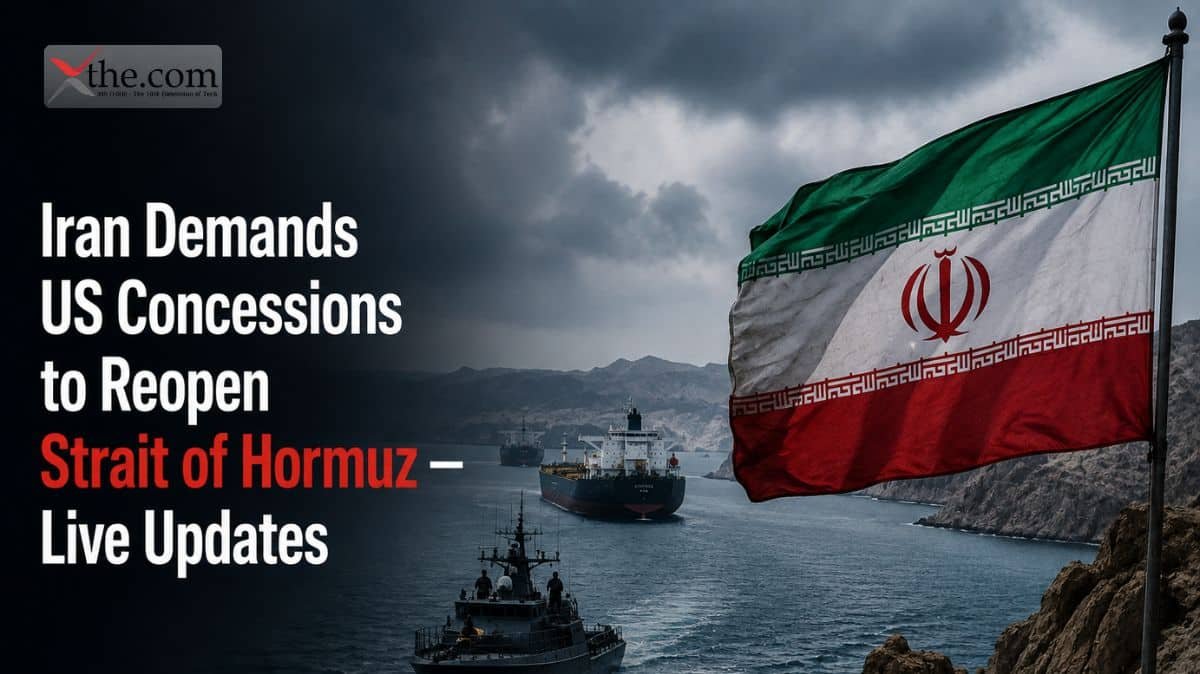
On August 10, 2026, Iran’s Supreme National Security Council issued a formal list of demands that must be met before the Strait of Hormuz — the world’s most critical oil chokepoint — can reopen. The demands represent Tehran’s most comprehensive negotiating position since closing the strait in February 2026, and they go far beyond what Washington has previously indicated it would accept.
Iran’s Seven Demands:
Table
#
Demand
US Likely Response
1
Permanent end to the war with Iran and its armed allies
Partially possible via ceasefire
2
Lifting of the naval blockade of Iranian ports
Possible as part of deal
3
Withdrawal of US military from the Persian Gulf region
Highly unlikely
4
Full compensation for war damage to Iranian infrastructure
Unprecedented; unlikely
5
Lifting of all sanctions against Iran
Possible over time
6
Unconditional release of frozen Iranian assets (~$6-8 billion)
Possible as goodwill gesture
7
US must never threaten Iran again
Impossible to guarantee
Iranian Foreign Minister Abbas Araghchi stated bluntly: “Negotiations cannot resume until violations of the interim deal end and the U.S. has remedied provisions it violated.”
What Iran Wants from the US
The demands reveal Iran’s negotiating strategy: start with maximalist positions and negotiate downward. But some demands are genuinely non-negotiable for Tehran.
The Non-Negotiables:
Sanctions relief: Iran’s economy is collapsing under the combined weight of war damage, sanctions, and the Hormuz closure. Inflation exceeds 45%, and the rial has lost 60% of its value since February.
Asset unfreezing: Approximately $6-8 billion in Iranian assets are frozen in South Korean, Japanese, and European banks. Iran needs this liquidity immediately.
End to military threat: The assassination of senior Iranian officials (including former SNSC head Ali Larijani in March) has made Tehran paranoid about US and Israeli strikes.
The Bargaining Chips:
War reparations: The demand for “full compensation” is likely a negotiating position Iran expects to compromise on.
US withdrawal: Tehran knows American forces won’t leave the Gulf entirely, but a reduction in carrier presence might be achievable.
Trump’s Response: Semi-Negotiating
President Trump has taken a characteristically ambiguous position. In an interview with Axios published August 9, Trump asserted that the US is “only semi-negotiating” with Iran and is letting economic pressures take their toll.
The “semi-negotiating” formulation suggests Trump is keeping channels open through intermediaries while publicly maintaining a hard line. This approach allows the administration to:
Avoid appearing weak during an election year
Maintain military pressure while exploring diplomatic options
Blame Iran if talks collapse
However, Trump’s position is complicated by domestic politics. With the economy losing jobs, oil prices elevated, and missile stockpiles depleted, continuing the war indefinitely carries significant political risk. A recent Reuters/Ipsos poll found only 33% of Americans support the Iran conflict.
The Oman Mediation Effort
Behind the scenes, Oman is playing a critical mediation role. The sultanate, which maintains friendly relations with both Washington and Tehran, is working to finalize a temporary maritime arrangement that would allow limited shipping through Hormuz while broader negotiations continue.
The Proposed Oman Arrangement:
Ships would enter the strait near the Iranian coast and exit near Oman
No fees or tolls during the interim period
Endorsed by Gulf Cooperation Council members
Joint announcement by Iran, Oman, the US, and the UN’s International Maritime Organization
The deal is designed to restore the separate interim agreement signed between the US and Iran in June 2026 — an agreement that both sides accuse the other of violating. Two sources familiar with the talks stressed that “terms still could change.”
Economic Impact: Oil Prices and Global Trade
The Hormuz closure has already caused significant economic damage:
Table
Metric
Pre-War (Feb 2026)
Current (Aug 2026)
Impact
Brent Crude
$78/barrel
$84.41/barrel
+8.2%
Global Shipping Costs
Baseline
+35-50%
Major inflationary pressure
Iranian Oil Exports
1.2M barrels/day
~200K barrels/day
83% reduction
Global Oil Supply Buffer
3.5M barrels/day
1.2M barrels/day
Critical tightness
Brent crude traded 1.03% higher at $84.41 per barrel on August 10 as markets priced in continued uncertainty.
If Hormuz remains closed through the winter, energy analysts warn that oil could spike above $100/barrel — triggering a global recession.
Iran’s New Security Chief
Complicating negotiations further, Iran named a new head of its Supreme National Security Council on August 10. Mohsen Rezaei — a former Revolutionary Guard commander and military adviser to Supreme Leader Ayatollah Mojtaba Khamenei — replaces Mohammad Bagher Zolghadr.
Rezaei is a hardliner who earlier this month stated Iran will “never allow an unauthorized route through the Strait of Hormuz.” His appointment signals that Khamenei is not preparing for compromise — at least not yet.
The reshuffle is the latest in a series of leadership changes following Israeli strikes that killed several senior Iranian officials, including former SNSC head Ali Larijani in March. The council is adapting to wartime losses while maintaining a unified hardline position.
What Happens If Hormuz Stays Closed
If negotiations fail and Hormuz remains closed through September, three scenarios become likely:
Scenario 1: Economic Pressure Forces Iranian Compromise Iran’s economy cannot survive indefinitely. Without oil exports and with imports crippled, domestic unrest could force Tehran to accept less favorable terms.
Scenario 2: US Military Action to Reopen Strait The Pentagon has reportedly drafted plans for a naval operation to forcibly reopen Hormuz. This would be the largest naval engagement since WWII and carries enormous escalation risk.
Scenario 3: Stalemate Continues Through Winter The most likely near-term outcome. Both sides maintain positions, global energy markets tighten, and the world braces for $100+ oil.
Frequently Asked Questions
Q: What are Iran’s demands to reopen the Strait of Hormuz? A: Iran demands an end to the war, lifting of the naval blockade, US military withdrawal from the Gulf, war reparations, sanctions relief, release of frozen assets, and a US commitment to never threaten Iran again.
Q: Is the US negotiating with Iran directly? A: No. Iran says it will not engage in direct talks while the US violates the June 2026 interim deal. Messages are being exchanged through intermediaries, primarily Oman.
Q: What did Trump say about Iran negotiations? A: Trump told Axios the US is “only semi-negotiating” with Iran and is letting economic pressure take its toll.
Q: What is the Oman mediation proposal? A: Oman is brokering a temporary arrangement where ships would transit Hormuz near the Iranian coast (entering) and Omani coast (exiting) without fees during an interim period.
Q: How much are Iranian assets frozen overseas? A: Approximately $6-8 billion in Iranian assets are frozen in banks in South Korea, Japan, and Europe.
Q: Who is Iran’s new security chief? A: Mohsen Rezaei, a former Revolutionary Guard commander and hardliner, was named head of Iran’s Supreme National Security Council on August 10, 2026.
In the span of 18 months, the AI industry has gone from “one model to rule them all” to “use the right model for the right job.” The technology enabling this shift is the AI model router — a software layer that automatically selects the cheapest, fastest, or most capable AI model for each individual query. And in 2026, every major enterprise is scrambling to implement one.
Think of a model router as a smart traffic controller for AI requests. When a user asks a simple question (“What’s the weather?”), the router sends it to a lightweight, cheap model like GPT-5.6 Luna or DeepSeek V4-Flash. When a user asks a complex coding question, it routes to GPT-5.6 Sol or Claude 4. When creative writing is needed, it might choose a model optimized for narrative generation.
The result: companies get 90% of the capability at 40-60% of the cost.
Why 2026 Is the Tipping Point
Three converging factors have made model routing essential in 2026:
1. Model Proliferation: In 2024, most companies used one AI provider (usually OpenAI). By mid-2026, enterprises routinely evaluate 8-12 models from OpenAI, Anthropic, Google, Meta, DeepSeek, Mistral, and specialized providers. Managing this manually is impossible.
2. Price Wars: AI pricing has collapsed. DeepSeek’s V4-Flash costs $0.14 per million input tokens — compared to OpenAI’s GPT-5.6 Sol at $1.86 per million. For high-volume applications, that’s a 13x cost difference. Companies cannot afford to use expensive models for simple tasks.
3. Quality Convergence: The gap between frontier and mid-tier models has narrowed. For many business tasks — summarization, classification, basic Q&A — a $0.14 model performs nearly as well as a $1.86 model. Only specialized tasks (coding, reasoning, creative writing) require premium models.
How Model Routing Saves Money
The cost savings are staggering. Consider a mid-sized SaaS company processing 10 million AI queries per month:
Without Router (Using Premium Model for Everything):
Model: GPT-5.6 Sol at $1.86/million tokens
Average query: 2,000 tokens
Monthly cost: $37,200
With Router (Smart Routing):
60% simple queries → DeepSeek V4-Flash at $0.14/million = $1,680
25% medium queries → GPT-5.6 Luna at $0.50/million = $2,500
15% complex queries → GPT-5.6 Sol at $1.86/million = $5,580
Router overhead: $500
Total monthly cost: $10,260
Savings: $26,940 per month (72% reduction)
At enterprise scale (100M+ queries), savings reach millions of dollars annually.
The Major Players
Several companies have emerged as leaders in the model routing space:
Table
Company
Product
Approach
Notable Customers
OpenRouter
OpenRouter API
Aggregates 100+ models with unified API
Startups, indie developers
Martian
Model Router
Predictive routing based on query complexity
Fortune 500 enterprises
LangChain
LangSmith Router
Open-source framework with routing plugins
Mid-market tech companies
Amazon Bedrock
Intelligent Prompt Routing
AWS-native, integrates with cloud infrastructure
Enterprise AWS customers
Cloudflare
AI Gateway
Edge-based routing with caching
High-traffic web apps
Amazon’s approach is particularly significant. Bedrock’s Intelligent Prompt Routing automatically selects the optimal model from Amazon’s portfolio (including Anthropic Claude, Meta Llama, and Amazon Nova) without requiring customers to manage multiple API keys or pricing tiers.
Real-World Use Cases
Customer Support:
Simple FAQs → Cheap model ($0.14/million)
Technical troubleshooting → Premium model ($1.86/million)
Escalation detection → Medium model ($0.50/million)
Content Generation:
Social media posts → Lightweight model
Long-form articles → Premium model with larger context window
SEO metadata → Cheapest available model
Code Assistance:
Auto-complete → Fast, cheap model
Code review → Reasoning-focused model
Architecture design → Most capable model
Legal and Compliance:
Contract summarization → Mid-tier model
Risk analysis → Premium model with safety guardrails
Document classification → Cheapest model
The Technical Challenge
Building an effective model router is harder than it sounds. The core challenge is query classification — determining which model is appropriate before actually running the query.
Approaches:
Rule-Based: Keywords and regex patterns (fast but brittle)
Premium models: Stable or slight increases as providers differentiate on capability
Router providers: Become the new gatekeepers, potentially capturing margin from both ends
OpenAI’s recent decision to offer unlimited free text chats to free-tier users is partly a response to router-driven price pressure. If users can access comparable models for free through routers, OpenAI must make its own free tier competitive.
Frequently Asked Questions
Q: What is an AI model router? A: An AI model router is software that automatically selects the most appropriate AI model for each query based on cost, speed, and capability requirements.
Q: How much money can model routing save? A: Enterprises typically see 40-70% cost reductions by routing simple queries to cheaper models while reserving expensive models for complex tasks.
Q: Which companies make AI model routers? A: Major players include OpenRouter, Martian, LangChain, Amazon Bedrock Intelligent Prompt Routing, and Cloudflare AI Gateway.
Q: Is model routing difficult to implement? A: Simple rule-based routing can be deployed in hours. Sophisticated predictive routing requires ML expertise but is increasingly available as managed services.
Q: Will AI model routers make premium models obsolete? A: No. Premium models remain essential for complex tasks. Routers simply ensure companies don’t waste money using premium models for simple tasks.